English
 Chinese
info@dagyee.com
+8613961861780

Introduction
Unplasticized Polyvinyl Chloride (UPVC) static mixers have secured a solid position within inline fluid mixing applications across municipal water supply, industrial wastewater treatment and continuous chemical dosing processes. Plant contractors and system integrators frequently favour this equipment thanks to its competitive upfront price, lightweight construction and reliable resistance against common dilute acidic and alkaline water treatment reagents. Typical applications include pH neutralization, flocculant blending, disinfection chemical injection and gentle liquid-liquid homogenisation inside pressurized pipelines.
Despite widespread adoption in mid and small-scale water projects, practical field operation continuously reveals a set of overlooked limitations. Many end users only identify equipment defects after installation, leading to unstable water quality parameters, unplanned pipeline shutdowns, extra maintenance labour and unexpected early replacement expenditure. Most of these operational headaches stem from inherent material characteristics of UPVC rather than manufacturing defects. Without a clear understanding of applicable boundaries, engineers often select UPVC static mixers for unsuitable working environments, creating long-term operational risks.
This article systematically analyses core industry pain points of UPVC static mixers, compares UPVC against alternative thermoplastic materials, sorts out typical operating threshold parameters, and delivers actionable specification guidance for water treatment engineering practitioners. The content combines academic material research and years of on-site project feedback to help designers avoid common selection mistakes.
1. Inherent Material Limitations of UPVC Static Mixers
UPVC is a rigid non-plasticised polymer. Its physical and chemical properties establish clear application boundaries that cannot be eliminated through simple structural improvement. Many industry failures occur when project teams ignore these natural constraints.
1.1 Strict Operating Temperature Threshold
Standard industrial-grade UPVC maintains stable mechanical performance within a continuous working temperature range of -20°C to 60°C. Once the medium temperature sustains above 60°C, the polymer matrix gradually generates creep deformation. Internal spiral mixing elements will slowly distort under continuous fluid pressure, disrupting pre-designed flow splitting paths. As flow patterns change, mixing uniformity declines visibly, and pressure loss inside pipelines shifts unpredictably.
For facilities processing warm wastewater or hot chemical dosing streams, UPVC static mixers are generally not viable long-term solutions. Temporary temperature spikes caused by seasonal variation or upstream process fluctuation can accelerate material ageing and crack formation.
1.2 Poor Resistance to Ultraviolet Radiation
Conventional grey UPVC formulations do not contain high-performance UV stabilisers. When installed above ground with direct sunlight exposure, the material surface gradually loses plasticity. Micro-cracks spread across pipe walls and mixing blades within several months to two years. Brittle fractures and medium leakage often emerge without obvious early warning signals.
Engineers who arrange outdoor pipeline layouts must consider additional shielding measures or specify modified UV-resistant UPVC grades. Such upgrades inevitably push up procurement costs and erase part of the original price advantage.
1.3 Restricted Pressure Bearing Capacity
Compared with stainless steel, thick-wall CPVC and PVDF static mixing units, UPVC possesses relatively low tensile strength and impact resistance. Systems suffering recurring water hammer or sustained working pressure exceeding 1.0 MPa carry hidden cracking risks. The risk becomes more prominent for large-diameter models starting from DN150 and above.
In high-pressure pipeline networks, designers must either increase wall thickness significantly or switch to alternative materials. Thickened UPVC components grow heavier, complicating pipeline support design and increasing overall construction workload.
1.4 Chemical Resistance Blind Spots
UPVC delivers stable performance when contacting dilute inorganic acids, weak alkalis, sodium hypochlorite and routine water treatment agents. However, prolonged contact with strong oxidising agents, ketones, ester solvents and aromatic hydrocarbons triggers swelling, softening and surface cracking.
Factories discharging mixed organic wastewater need to conduct medium compatibility verification before confirming material selection. Blind specification of UPVC static mixers for complex chemical waste streams frequently results in premature component damage.
1.5 Brittle Structure and Weak Anti-Impact Properties
UPVC belongs to rigid brittle plastic. Vibration generated by adjacent pumps, accidental collision during maintenance, and instantaneous water hammer shock can crack mixer housings and internal helical inserts. Engineering specifications require dense fixed support points for long UPVC pipeline sections, which adds layout complexity during site construction.
Table 1: Core Technical Parameter Reference – Standard UPVC Static Mixer
| Parameter Item | Standard UPVC Static Mixer Specification | Supplementary Remarks |
|---|---|---|
| Continuous working temperature | -20 °C ~ 60 °C | Intermittent peak temperature shall not exceed 65 °C |
| Maximum allowable working pressure | ≤1.0 MPa (DN15–DN100) ≤0.6 MPa (DN125–DN250) | Pressure rating drops as nominal diameter increases |
| Connection form | Flange connection / solvent cement socket | Socket joint quality highly depends on on-site construction |
| Internal component structure | Integral injection molded helical element | Non-detachable for conventional low-cost versions |
| Recommended medium | Clean water, municipal wastewater, dilute acid & alkali dosing solution | Not suitable for organic solvent containing fluid |
| UV resistance | Ordinary grade: Poor Modified grade: Moderate | Modified UV-stabilized type requires custom order |
| Applicable Reynolds number range | Re ≥ 2000 for stable liquid mixing | Performance deteriorates sharply under laminar flow |
2. Operational Performance Bottlenecks Observed in Field Applications
Even under temperature, pressure and chemical conditions matching UPVC material limits, static mixing equipment still faces universal operational challenges. These mixing performance pain points cannot be fully solved by only adjusting UPVC material formulas; rational process design becomes essential.
2.1 Narrow Turn-Down Ratio Causes Unstable Homogenisation
Static mixers rely on fluid turbulence to realise continuous flow splitting, recombination and shearing. If actual flow falls far below design parameters, Reynolds number decreases and flow transfers from turbulent state to laminar state. Under laminar flow conditions, helical structures lose efficient mixing capacity.
Many water treatment sites operate under variable flow loads. When inflow fluctuates widely, operators frequently encounter unstable pH readings, uneven residual disinfectant distribution and inconsistent flocculation outcomes. To mitigate this risk, designers need to reserve sufficient flow margin during sizing or adopt multi-stage combined mixing arrangements.
2.2 High Tendency of Fouling and Internal Blockage
Continuous spiral blades create multiple solid-liquid boundary surfaces inside the mixer. For wastewater carrying calcium ions, suspended sludge, metal hydroxide precipitates and biofilm, contaminants gradually adhere to mixing element surfaces over operating cycles. Partial blockage alters internal flow routes, raises pipeline pressure drop and weakens mixing efficiency. Severe accumulation can fully block the pipeline and force system shutdown.
High-pressure online flushing works well for metal static mixers. For integrated UPVC static mixers, thorough cleaning requires complete disassembly from pipelines, generating lengthy downtime and higher labour expenditure.
2.3 Limitations in Inspection and Daily Maintenance
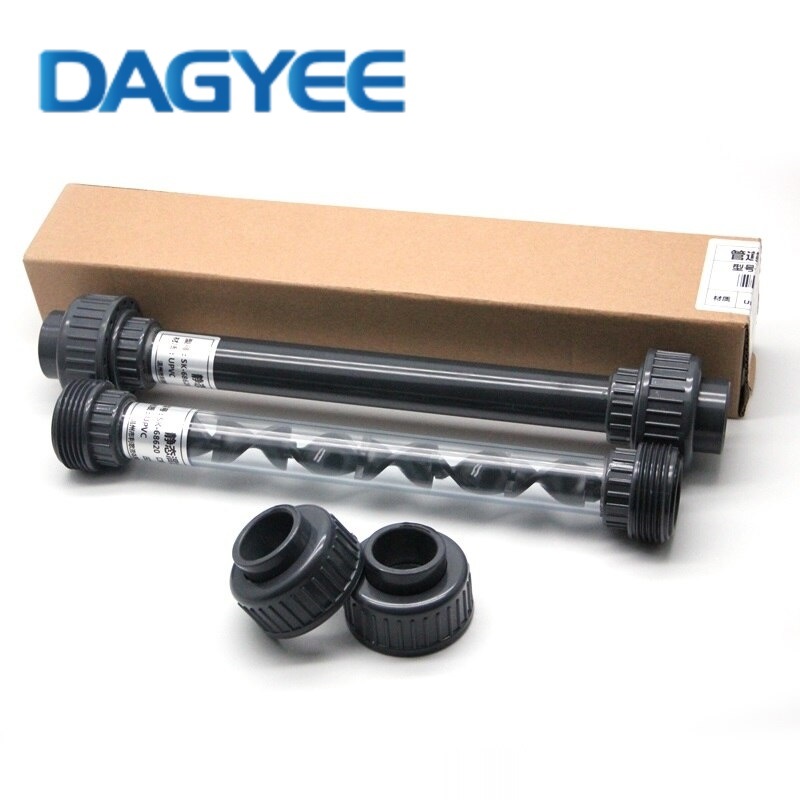
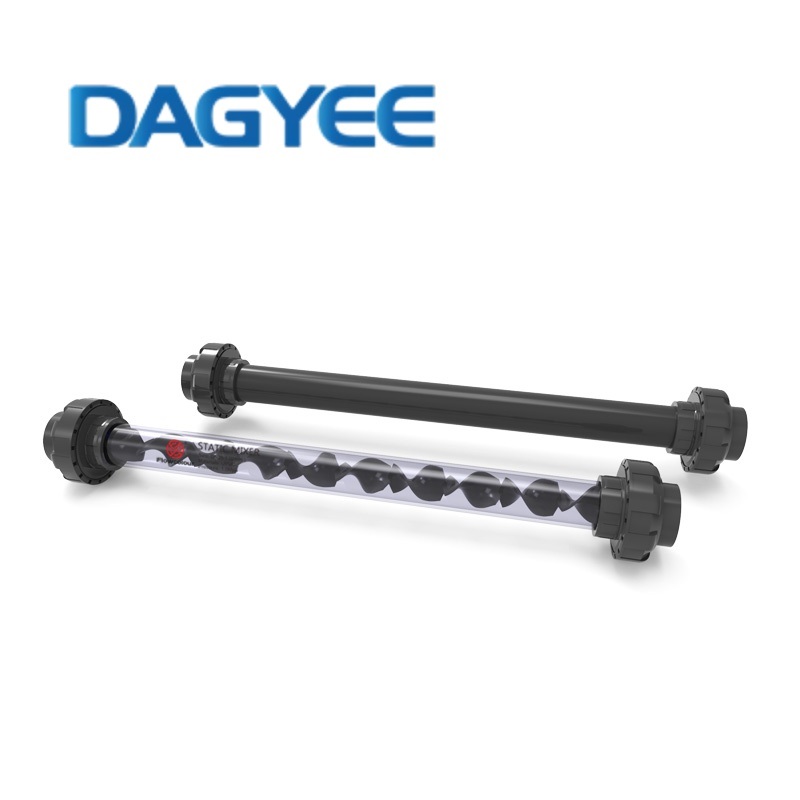
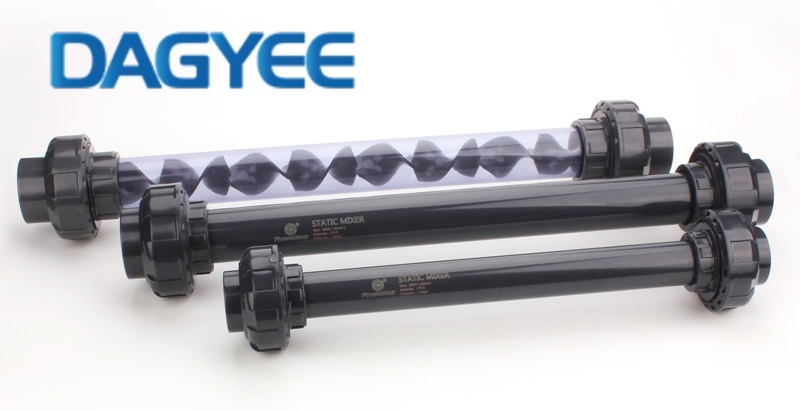
Most economy-grade UPVC static mixers adopt one-piece injection molding structures. Internal mixing inserts cannot be separated independently. Standard configurations exclude transparent viewing windows. Operators cannot directly observe scaling, deformation or internal damage without cutting or removing the whole mixer section from piping. Any serious fault triggers production interruption, creating tangible economic losses for continuous-operation facilities.
2.4 Drawbacks for Gas-Liquid Two-Phase Mixing Scenarios
In ozone disinfection, pipeline aeration and other gas-liquid blending processes, large fluctuation of gas-liquid proportion easily causes gas short-circuit inside static mixers. Large bubbles escape through preferential flow channels without sufficient shear dispersion. The final result is low gas utilisation efficiency and increased chemical consumption. When gas-liquid mixing stands as a core requirement, project teams need to optimise internal blade geometry or consider multi-stage mixing schemes.
Table 2: UPVC Static Mixer vs Alternative Thermoplastic Static Mixers – Material Performance Comparison
| Material Grade | Continuous Temperature Limit | Pressure Resistance | UV Resistance | Organic Solvent Tolerance | Typical Relative Cost Level |
|---|---|---|---|---|---|
| UPVC | ≤60 °C | Medium | Poor | Low | Lowest |
| CPVC | ≤95 °C | Medium-High | Moderate | Medium | Mid-range |
| PPH | ≤90 °C | High | Moderate | Good | Mid-to-high |
| PVDF | ≤120 °C | High | Excellent | Excellent | Highest |
3. Engineering Construction Issues & Hidden Lifecycle Costs
Most buyers focus merely on initial procurement prices while ignoring long-term hidden risks associated with UPVC static mixers. Total cost of ownership often exceeds expectations when service conditions are mismatched.
Solvent cement bonded socket joints demand strict standardised curing time. Irregular operation by field construction staff leads to slow, delayed leakage, which remains hard to detect in early operation stages. Minor leakage gradually worsens, contaminating surrounding equipment and requiring partial pipeline reconstruction.
Furthermore, UPVC cannot withstand high-temperature cleaning-in-place (CIP) cycles. Production lines that require regular hot medium flushing cannot rely on UPVC mixing units for long-term operation. Replacing equipment mid-project brings extra modification costs and schedule delays.
Another easily overlooked factor is installation space. Brittle UPVC pipelines demand more fixing brackets than flexible plastic or metal piping. In compact containerised water treatment equipment, dense support layout raises structural design difficulty.
Table 3: Typical Working Condition Matching Suggestion – Select or Avoid UPVC Static Mixers
| Working Condition Profile | Recommendation | Core Reason |
|---|---|---|
| Municipal clean water, stable low temperature, fixed flow rate | Recommended | Cost-effective, fully match material limits |
| Variable flow wastewater, high suspended solids, scaling risk | Conditionally acceptable | Must reserve regular flushing interface |
| Medium temperature consistently above 60 °C | Not recommended | Risk of creep deformation and efficiency loss |
| Outdoor exposed pipeline without sun shielding | Not recommended unless modified UPVC is specified | Accelerated UV ageing and embrittlement |
| Wastewater containing ketones, esters or aromatic organics | Not recommended | Chemical attack causes swelling and cracking |
| High-pressure pipeline with frequent water hammer | Not recommended | Risk of sudden brittle fracture |
| Ozone gas-liquid mixing with large gas proportion fluctuation | Conditionally acceptable | Optimise internal structure and install upstream flow stabiliser |
4. Practical Selection Guidelines to Mitigate UPVC Static Mixer Pain Points
Based on summarised material limitations and operational bottlenecks, engineering teams can adopt the following specification principles to reduce equipment failure probability:
First, confirm medium temperature as the primary screening index. If continuous running temperature exceeds 55–60°C, switch material options to CPVC or PPH static mixers without hesitation. Short-term temperature peaks must be fully counted into design evaluation.
For pipelines arranged outdoors with direct sunlight, choose UV-modified UPVC versions or arrange external sunshade structures. Ordinary unmodified UPVC is not suitable for long-term exposed installation.
When handling variable flow systems, reserve adequate flow range margin during sizing. Where flow fluctuation remains severe, multi-stage static mixer series layout helps stabilise mixing performance under different loads.
For wastewater rich in suspended solids and scale-forming ions, design online flushing interfaces at both upstream and downstream sides of the mixer. Alternatively, select static mixers with open-type blade geometry to reduce contaminant adhesion area.
Any medium containing organic solvents requires direct material upgrade to PVDF. Cost savings from selecting UPVC will be offset by frequent replacement and system downtime.
If regular internal inspection is required for process control, specify detachable flange-type UPVC static mixers or install transparent observation sections nearby. Integral welded injection models do not support convenient internal visual checks.
End users should also negotiate spare part supply cycles with suppliers. Once internal blades deform or crack, integral UPVC static mixers usually need full replacement instead of partial component maintenance.
Frequently Asked Questions (FAQ)
Q1: Can UPVC static mixers be repaired after internal blade deformation?
A: Most standard integral injection UPVC static mixers cannot be repaired separately. Once helical elements deform, the whole unit needs replacement. Detachable split designs are available at higher cost for maintenance-sensitive projects.
Q2: Is it acceptable to install UPVC static mixers for seasonal hot wastewater?
A: Intermittent short-duration high temperature may be tolerable, but recurring seasonal temperature peaks will accelerate material ageing. Long-term economic analysis usually favours CPVC if temperature regularly approaches 60°C.
Q3: How to reduce fouling inside UPVC static mixers in wastewater treatment?
A: Arrange periodic online water flushing, reduce dead zones inside the pipeline, and select static mixer designs with smoother blade surfaces. Avoid long-time shutdown without flushing, which allows sediment to solidify on internal surfaces.
Q4: What difference does modified UV-stabilised UPVC bring?
A: UV additives slow surface embrittlement and micro-crack generation, extending outdoor service life significantly. However, stabilised grades still cannot match the outdoor durability of PVDF and remain vulnerable under extreme continuous solar radiation.
Conclusion
Nevertheless, the series of industry pain points outlined in this article must be fully evaluated during the engineering design phase. Mismatch between material characteristics and site working conditions turns low-cost equipment into a persistent source of operational trouble. System integrators and water treatment equipment manufacturers should balance material expenditure, medium properties and long-term operating stability, rather than defaulting to UPVC static mixers for all mixing requirements.
Careful condition assessment, rational material comparison and targeted structural optimisation allow practitioners to maximise mixing consistency and extend equipment service cycles. When UPVC falls outside suitable application boundaries, proactive material upgrade prevents unplanned downtime and reduces overall lifecycle operating expenditure for water treatment facilities.
Name: Ashely Li
Mobile:+8613961861780
Tel:+8613961861780
Whatsapp:8613961861780
Email:info@dagyee.com
Add:Room 302, Building 11-4, Hongyi Road, Xinan Town, Xinwu District, jiangsu Province, China