English
 Chinese
info@dagyee.com
+8613961861780

Introduction
For industrial liquid processing operations spanning wastewater polishing, chemical manufacturing, electroplating treatment, food and beverage clarification, and raw water pre-treatment, cartridge filters and bag filters remain the most widely adopted disposable filtration hardware. System integrators and plant operators consistently select these two solutions thanks to relatively low upfront capital investment for filter housings, straightforward installation workflows, and flexible availability across broad micron retention grades.
Even with decades of real-world application, countless production facilities struggle with recurring operational setbacks tied to these standard filtration technologies. Many project designers and end buyers focus excessively on the one-time purchase price of filter consumables while overlooking persistent, costly operational pain points. Premature media fouling, unstable differential pressure spikes, unplanned production downtime, recurring labour expenses for filter replacement, and growing hazardous waste handling fees continuously erode operational profitability.
A common misconception across the filtration sector involves simplistic selection between cartridge filters and bag filters based solely on individual element pricing. Hidden long-term expenses and process contamination risks frequently outweigh minor differences in initial consumable costs. This article breaks down shared weaknesses of cartridge and bag filtration, unique inherent limitations for each equipment type, root causes of common failures, and implementable solutions tailored to typical industrial working conditions.
1. Shared Operational Pain Points for Cartridge Filters and Bag Filters
1.1 Accelerated Fouling and Uncontrolled Differential Pressure Build-up
Media fouling represents the most pervasive challenge facing all disposable liquid filter elements. When process fluids carry suspended solids, colloidal contaminants, oily residues, biological biomass, or mineral scaling compounds, pollutants steadily accumulate on filter surfaces and within internal media pore structures.
As filter cake thickness increases, differential pressure across the filter housing rises steadily. Elevated pressure differentials force feed pumps to consume extra electrical power, pushing up daily energy overhead. Once pressure difference exceeds pre-defined operational thresholds, operators face two undesirable outcomes: frequent filter element replacement, or media rupture that allows unfiltered particles to pass through the filtration barrier.
Wastewater facilities with variable inlet water quality face extreme risk from sudden suspended solids surges, which can blind filter media within just a few hours of operation. Most manufacturing sites follow fixed-cycle filter replacement schedules instead of pressure-differential-triggered change-outs. This outdated management strategy creates two avoidable problems: unnecessary waste of partially usable filter media, or extended filter operation beyond safe limits that risks downstream water quality failures.
1.2 Continuous Recurring Costs of Disposable Consumables
Standard polypropylene cartridge filters and filter bags function as single-use consumables in most chemical and wastewater environments. Unlike automated self-cleaning filtration equipment, these systems require consistent ongoing procurement of new filter elements throughout the facility’s operating lifespan.
Full total cost of ownership (TCO) covers three core components: raw procurement cost for filter media, on-site labour expenditure during filter change-out procedures, and waste collection and disposal charges. In applications processing heavy metal-laden wastewater, organic solvents, or toxic chemical waste, spent filter elements qualify as hazardous waste. Treatment fees for hazardous filtration waste can account for more than 30% of overall filtration expenditure, a factor many engineering firms omit during initial project quotation stages.
1.3 Media Shedding and Risk of Secondary Liquid Contamination
Budget-grade filter materials carry measurable risks of fibre shedding. Melt-blown filter cartridges and needle felt filter bags lacking sufficient thermal bonding will release micro fibre fragments into process liquid under fluctuating operating pressure.
Secondary contamination creates severe consequences for high-precision industrial sectors. Micro fibre debris can disrupt electronics ultrapure water circuits, spoil beverage batches, interfere with pharmaceutical intermediate purification, and block flow channels inside downstream reverse osmosis and ultrafiltration membrane systems. Membrane blockages often trigger expensive chemical cleaning cycles or premature membrane module replacement.
Even premium-grade filter materials cannot fully eliminate shedding risk under unstable operating conditions. Water hammer effects, repeated equipment start-stop cycles, and excessive fluid flow velocity all amplify mechanical stress on filter media and increase fibre detachment probability.
1.4 Restricted Chemical and Thermal Compatibility
Polypropylene remains the dominant construction material for commercially available filter cartridges and filter bags. PP materials deliver reliable resistance against common weak acids and alkalis, yet degrade rapidly when exposed to strong oxidising agents and high-temperature organic solvents. Alternative construction materials including PTFE, polyester, and nylon offer improved chemical tolerance but drastically increase consumable purchasing costs.
Material mismatch is a frequent field issue. Chemical erosion makes filter media brittle over time, generating microscopic perforations that eliminate targeted particle retention performance. Without routine sampling and inspection, unfiltered suspended solids travel downstream, damaging precision pipelines and sensitive processing machinery.
1.5 Limited Capabilities for Real-Time Integrity Verification
Standard bag filter vessels and conventional multi-cartridge filter housings lack built-in integrity testing functionality. Operators cannot rapidly confirm pinholes, structural cracks, or imperfect sealing without offline water sampling and laboratory analysis.
Poor sealing forms another hidden operational hazard. Damaged cartridge O-rings, incorrectly positioned filter bags inside support baskets create bypass channels. Contaminants travel through these gaps without capture, while pressure monitoring data remains seemingly normal. Operators can remain unaware of complete filtration failure for days or weeks.
Table 1: Core Performance & Limitation Comparison | Cartridge Filter VS Bag Filter
| Parameter | Cartridge Filter | Bag Filter |
|---|---|---|
| Typical Filtration Rating | 0.2 μm – 50 μm (mostly absolute rating) | 1 μm – 200 μm (predominantly nominal rating) |
| Dirt Holding Capacity | Low to Medium | Medium to High |
| Recommended Flow Per Unit Element | Low-Medium | High |
| Typical Change-out Labour Time | Longer; requires vertical overhead clearance | Shorter; compact removal procedure |
| Risk of Media Collapse | High for unreinforced melt-blown cartridges | Low; flexible felt structure |
| Bypass Sealing Risk | Linked to O-ring aging and installation torque | Linked to uneven flange placement |
| Suitability for High Solid Loading | Poor; prone to rapid clogging | Good for pre-filtration heavy turbidity fluid |
| Unit Consumable Cost | Higher | Lower |
| Integrity Test Compatibility | Supports bubble point testing (premium models) | Not compatible with standard bubble point checks |
2. Unique Pain Points of Industrial Cartridge Filters
Engineers select cartridge filters for applications requiring consistent fine filtration precision, yet the structural design of these elements creates inherent operational drawbacks that cannot be overlooked during system planning.
2.1 Limited Dirt Holding Volume
Compared to standard Size 2 filter bags, regular 20-inch, 30-inch and 40-inch melt-blown or pleated cartridges store far smaller volumes of intercepted solids. When processing high-solids wastewater streams, cartridges experience rapid clogging. Even high-flow pleated cartridge variants cannot match the contaminant loading capacity of deep felt filter bags.
This characteristic makes cartridge filters economically unviable for raw water pre-treatment and heavily polluted sludge-containing wastewater. Numerous clients incorrectly deploy cartridge filters for high-turbidity inlet fluid, resulting in daily filter replacement cycles and unsustainably high long-term operational expenditure.
2.2 Space Dependence and Cumbersome Replacement Process
Multi-cartridge filter housings demand sufficient vertical overhead space for technicians to extract long filter elements. Facilities with compact workshop layouts often require auxiliary lifting tools to complete replacement tasks, extending production downtime.
Liquid trapped within filter housings frequently spills during element removal, creating slip hazards and site contamination. On average, completing a full cartridge change-out takes significantly longer than servicing an equivalent-capacity bag filter housing.
2.3 Risk of Structural Collapse Under Elevated Differential Pressure
Unreinforced melt-blown cartridges deform and collapse once pressure difference rises sharply. Structural collapse compresses the effective filtration surface area and creates irreversible blockage. Reinforced support cores improve mechanical durability but push consumable procurement costs further upward.
3. Unique Pain Points of Industrial Filter Bags
3.1 Nominal Filtration Efficiency Cannot Meet Strict Purification Standards
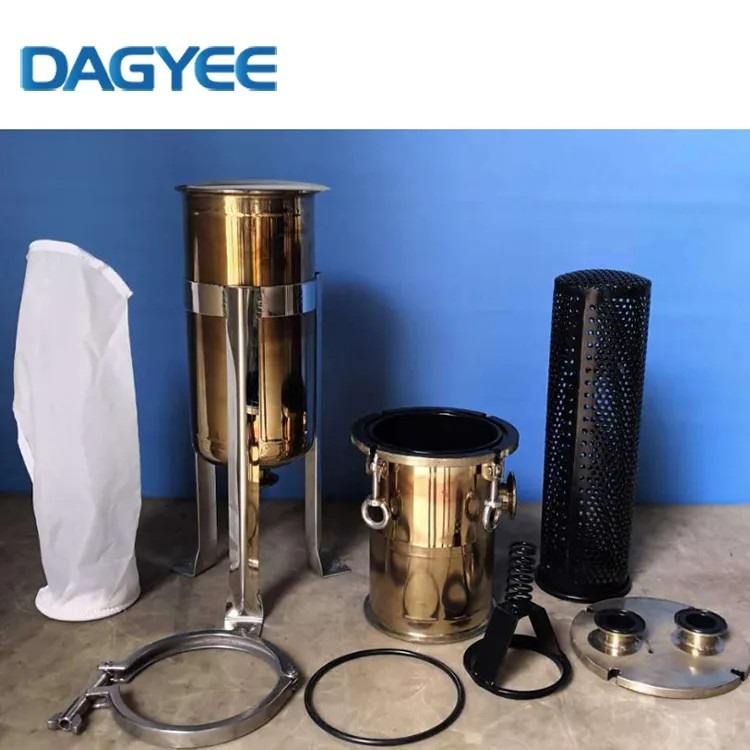
Nearly all standard filter bags deliver nominal particle retention efficiency rather than absolute filtration performance. Tiny particles penetrate gaps within felt fibre structures during extended continuous operation. Filter bags do not support reliable bubble point integrity testing, disqualifying them for sterile food processing, pharmaceutical manufacturing, and electronics-grade ultrapure water production.
3.2 Extrusion and Tearing Against Support Baskets
As operating pressure increases, soft needle felt filter bags squeeze through perforations in metal support baskets. Extruded fabric sections become trapped inside basket openings, and technicians often tear filter bags during removal. A single ruptured filter bag can trigger massive contaminant leakage directly into downstream pipelines.
3.3 Installation Quality Directly Determines Sealing Effectiveness
Filter bags rely entirely on top flange contact to form an effective internal seal inside filter vessels. Slightly skewed positioning, residual solid particles trapped underneath the flange surface, or minor fabric deformation create bypass gaps. Filtration performance becomes heavily dependent on technician skill; consistent sealing quality is difficult to maintain across rotating shift teams.
3.4 Limited Reusability Even After Backwashing
Many suppliers market thick felt filter bags as reusable after cleaning. However, wastewater containing colloids, oil, and biological slime embeds pollutants deep inside fibre layers. Standard backwashing protocols cannot fully remove deeply trapped contaminants. After one or two cleaning cycles, dirt holding capacity drops substantially, making repeated reuse uneconomical for most industrial scenarios.
3.5 Delayed Detection of Minor Fabric Damage
Small pinholes forming on filter bags do not generate immediate, noticeable changes in differential pressure. Operators usually identify leakage only after downstream turbidity rises dramatically. At this stage, unfiltered contaminants have already damaged downstream equipment or compromised product quality.
Table 2: Typical Failure Modes & Root Causes for Disposable Liquid Filters
| Failure Symptom | Root Cause | Affected Filter Type |
|---|---|---|
| Rapid pressure differential rise | High inlet suspended solids, insufficient upstream pre-treatment | Cartridge & Bag Filter |
| Media rupture and particle breakthrough | Excessive ΔP, water hammer, ageing filter material | Cartridge & Bag Filter |
| Fluid bypass without pressure signal | Poor sealing, damaged O-rings, misaligned filter installation | Cartridge & Bag Filter |
| Structural collapse of filter element | Lack of internal support core, overload pressure | Cartridge Filter Only |
| Fabric tearing during removal | Bag extrusion through support basket perforations | Bag Filter Only |
| Fibre contamination in effluent | Low-quality unbonded filter media, frequent pressure fluctuation | Cartridge & Bag Filter |
| Uneven filter service lifespan | Improper flow distribution inside filter housing | Cartridge & Bag Filter |
4. Actionable Strategies to Alleviate Filtration System Pain Points
Drawing on decades of field experience across water treatment and chemical processing projects, experienced system designers apply the following optimisation methods to minimise the negative impact of inherent filter limitations.
4.1 Implement Staged Graded Filtration Layout
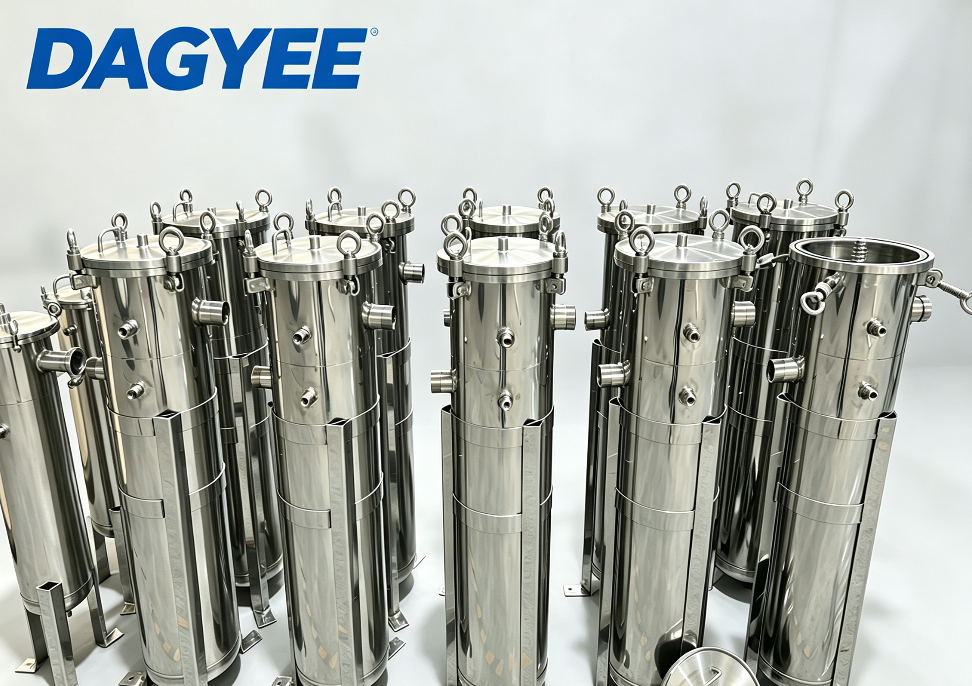
Engineers commonly deploy filter bags as primary pre-filtration units to capture larger suspended solids. Cartridge filters act as secondary polishing filtration downstream. This tiered arrangement prevents heavy solid loads from quickly blinding expensive fine-grade cartridges and significantly extends filter service cycles.
4.2 Install Continuous Differential Pressure Monitoring
Analogue or digital pressure transmitters deliver real-time ΔP readings. Facilities can configure automatic alarm thresholds and replace fixed-period filter change schedules. Operators swap filter elements only when pressure difference reaches pre-set limits, balancing operational cost control and process safety.
4.3 Optimise System Flux and Flow Velocity
Overly high flow rates accelerate media fouling and mechanical damage to filter elements. Expanding filter housing capacity reduces fluid flux across each unit area of filter media, slowing contaminant accumulation and extending element service life.
4.4 Select Filter Media Matched to Process Fluid Chemistry
Material selection must align with wastewater pH value, operating temperature, and oxidising agent concentration. Plant managers need to avoid chemical incompatibility that causes media embrittlement and perforation. When standard polypropylene cannot satisfy working conditions, PTFE or polyester alternatives should be evaluated in advance.
4.5 Add Upstream Pre-Treatment Infrastructure
Coagulation-flocculation units, dissolved air flotation systems, and automatic self-cleaning filters reduce incoming solid loads before fluid reaches cartridge and bag filters. Upstream treatment delivers the most fundamental long-term solution to reduce filter consumption frequency.
4.6 Establish Standardised Inspection and Installation SOPs
Regular maintenance checks target O-ring integrity, filter flange seating, and visual media conditions. Formal operating procedures reduce human error during filter replacement and eliminate avoidable bypass risks caused by careless installation.
Table 3: Total Cost of Ownership Breakdown for Cartridge & Bag Filtration Systems
| Cost Category | Cartridge Filter System | Bag Filter System |
|---|---|---|
| Initial Filter Housing Investment | Medium-High | Medium |
| Regular Consumable Purchase Cost | Higher | Lower |
| Labour Cost for Filter Replacement | Higher (longer service time) | Lower |
| Hazardous Waste Disposal Fee | Medium | Medium |
| Energy Consumption (pumping loss) | Medium (higher baseline ΔP) | Low-Medium |
| Cost of Downstream Equipment Damage (if filtration fails) | High for fine polishing circuits | High for pre-treatment lines |
| Long-Term Annual Comprehensive Cost | Favorable for low-solids, high-precision flow | Favorable for high-flow, high-turbidity pre-filtration |
5. Conclusion
Neither cartridge filters nor bag filters serve as universal perfect solutions for all industrial liquid filtration requirements. Both technologies face unavoidable operational obstacles including progressive fouling, ongoing consumable expenditure, secondary contamination hazards, and sealing reliability challenges.
Filter bags deliver clear advantages for high-flow, high-solids pre-filtration with affordable consumable pricing. Cartridge filters remain the preferred selection for applications demanding stable, precise fine particle retention. The core principle of system design is matching filter type to actual water quality parameters rather than making purchasing decisions based purely on upfront hardware price.
As industrial wastewater discharge standards grow stricter globally, more asset owners begin evaluating full-lifecycle filtration expenditure instead of only comparing one-off equipment costs. Proper staged pre-treatment layout, scientifically selected filter media, flux optimisation, and standardised daily operation protocols can effectively offset the inherent limitations of cartridge filters and bag filters. Optimised filtration setups support consistent effluent quality and cut cumulative operational expenses for wastewater and chemical processing facilities.

Name: Ashely Li
Mobile:+8613961861780
Tel:+8613961861780
Whatsapp:8613961861780
Email:info@dagyee.com
Add:Room 302, Building 11-4, Hongyi Road, Xinan Town, Xinwu District, jiangsu Province, China