English
 Chinese
info@dagyee.com
+8613961861780

Cartridge filters and bag filters remain the most widely adopted depth filtration equipment across industrial liquid processing sectors, including municipal and industrial wastewater treatment, chemical manufacturing, food and beverage processing, surface finishing and pure water preparation systems. Both filter types intercept suspended solids, colloidal contaminants, sediment particles and organic residues to safeguard downstream assets such as centrifugal pumps, ultrafiltration membranes, heat exchangers and precision processing equipment.
Numerous production operators overlook subtle early warning signals generated by malfunctioning filter assemblies. Running filtration systems under abnormal operating conditions gradually triggers irreversible outcomes: filter media rupture, unfiltered fluid bypass, continuously rising power consumption, unexpected production halts and excessive emergency replacement costs. While cartridge filters and bag filters exhibit overlapping failure symptoms, their distinct structural design leads to differentiated fault mechanisms that maintenance teams must distinguish accurately.
This industry-focused guide systematically sorts observable warning indicators, digs into root drivers of recurring malfunctions, delivers field-verified troubleshooting procedures, and establishes long-term maintenance protocols for both cartridge and bag filter systems. All guidance targets liquid-phase filtration applications, eliminating confusion with dust collection baghouses used in air pollution control.
2. Key Monitoring Metrics to Detect Filter Faults In Advance
Before technicians disassemble filter housings for inspection, real-time operational data serves as the most reliable judgment basis for evaluating filter operating conditions. Two core measurable parameters reveal over 85% of potential filtration faults: differential pressure (ΔP) and filtrate turbidity.
2.1 Differential Pressure Warning Benchmarks
Differential pressure refers to the pressure gap measured between filter inlet and outlet pipelines. It acts as the primary early alarm signal for most filtration units. Brand-new filter elements deliver a baseline pressure drop ranging from 0.02 MPa to 0.05 MPa under rated flow rates. Operators should arrange comprehensive inspection once pressure difference climbs to 0.07–0.10 MPa, defined as the early warning threshold. If differential pressure surpasses 0.15–0.20 MPa, facility managers must suspend system operation immediately. Sustained operation beyond this critical threshold creates extreme internal stress that tears filter bags or collapses pleated cartridge media, resulting in massive contaminant breakthrough into downstream pipelines.
2.2 Filtrate Turbidity Variation
Stable filtration processes maintain consistent low turbidity on the outlet side. A sharp turbidity spike paired with stable or low differential pressure strongly indicates fluid bypass, media damage or defective sealing components. When turbidity rises simultaneously with growing pressure drop, media clogging and surface blinding become the primary suspects requiring investigation.
3. Shared Malfunctions for Cartridge & Bag Filters: Alarms, Causes & Fixes
3.1 Progressive Pressure Drop Rise – Media Clogging and Blinding
Observable Warning Indicators Steady flow reduction under fixed pump operating frequency; day-by-day upward movement of differential pressure readings; repeated backwashing fails to recover rated flow capacity; effective processing output decreases without changes to incoming water quality parameters.
Root Causes Raw fluid carries high loads of suspended solids, grease and colloidal substances while upstream pre-treatment facilities lack sufficient processing capacity. Improper selection of filter accuracy represents another common mistake: excessively fine filter media intercepts massive particle volumes within short operating cycles. Permanent blinding occurs when organic gel, mineral scaling and oily sludge embed deeply into filter pore structures, where conventional backflushing cannot strip accumulated contaminants. Low fluid viscosity induced by low working temperature accelerates particle adhesion onto media surfaces. Extended system shutdown without routine pipeline flushing enables trapped pollutants to dry and solidify permanently on filter surfaces.
Troubleshooting Solutions For rapid response, complete standardized backwashing cycles and deploy targeted chemical cleaning. Acid washing removes inorganic mineral scale, while alkaline cleaning dissolves organic sludge and oil contamination. Medium-term optimization involves installing upstream pre-filters to capture large particles and reduce pollutant load on cartridge and bag filters. Long-term adjustments require matching filter fineness to actual raw water characteristics; avoid over-specifying ultra-fine filter media to extend service cycles. Operation protocols should include full housing flushing before prolonged shutdowns to prevent contaminant solidification.
Operational Tip: Build a continuous differential pressure logbook to predict reasonable filter replacement cycles, instead of following rigid scheduled replacement schedules regardless of actual operating status.
3.2 Sudden Filtrate Turbidity Surge – Contaminant Breakthrough and Fluid Bypass
Observable Warning Indicators Outlet liquid turns visibly turbid; online particle testing and turbidity monitoring fail to meet production specifications; differential pressure readings remain normal or appear abnormally low.
Root Causes Filter media sustains pinholes, tearing or rupture caused by overpressure impacts or erosion from sharp solid particles. Degraded sealing hardware is another major contributor: aged O-rings, deformed gaskets and uneven bolt tightening create gaps around sealing surfaces. Improper installation procedures cause cartridge deflection or folded filter bags, breaking tight contact between filter components and sealing surfaces. Mismatched filter dimensions prevent complete fitting between filter elements and housing tube sheets.
Troubleshooting Solutions Isolate the filter unit and halt operation instantly. Open the filter housing and perform visual inspection to confirm media integrity. Check all sealing accessories thoroughly and replace cracked, hardened or chemically swollen O-rings. Reinstall all filter components strictly following official assembly guidelines to guarantee flat positioning without distortion. Verify chemical compatibility between sealing materials and process fluid; select EPDM, PTFE or NBR seals according to liquid pH, temperature and solvent composition.
3.3 External Liquid Leakage on Filter Housing
Observable Warning Indicators Fluid seepage emerges at flange joints, quick-opening covers, air vent valves or drain outlets on filter housings.
Root Causes Uneven tightening of flange bolts creates partial gaps amplified by thermal expansion cycles. Sealing gaskets shift during assembly or suffer long-term corrosion and aging. Housing defects including welding cracks, internal corrosion and damaged thread connections also trigger leakage. Frequent pump startup and shutdown generate water hammer pressure shocks that gradually damage sealing structures.
Troubleshooting Solutions Tighten flange bolts using diagonal sequences to achieve uniform stress distribution across the entire flange surface. Replace all damaged gaskets; technicians should never reuse aged sealing parts after disassembly. Conduct welding repair or anti-corrosion coating treatment for cracked housing structures. Install buffer fittings on pipelines to mitigate water hammer pressure fluctuations.
4. Exclusive Faults of Cartridge Filters
4.1 Pleated Cartridge Collapse and Deformation
Warning Signs: Pressure difference rises rapidly after new cartridge installation; clogging cycles become noticeably shorter than design expectations.
Root Causes: Internal support core fractures under hydraulic load; long-duration operation beyond critical differential pressure; incompatible chemical fluids dissolve plastic supporting structures. Solutions: Choose cartridges equipped with reinforced polypropylene or stainless steel support cores. Enforce shutdown rules once pressure approaches critical limits. Confirm full chemical compatibility between cartridge raw materials and process liquid before procurement.
4.2 End Cap Seepage of Filter Cartridges
Warning Signs: Intermittent unstable fluctuation of outlet turbidity without obvious pressure changes.
Root Causes: Adhesive detachment at cartridge end caps; missing flat gaskets placed between cartridge bottom and tube sheet. Solutions: Inspect flat sealing gaskets during every cartridge replacement task. Prioritize thermally integrated bonded cartridges for harsh chemical operating environments to reduce leakage risks.
5. Exclusive Faults of Liquid Bag Filters
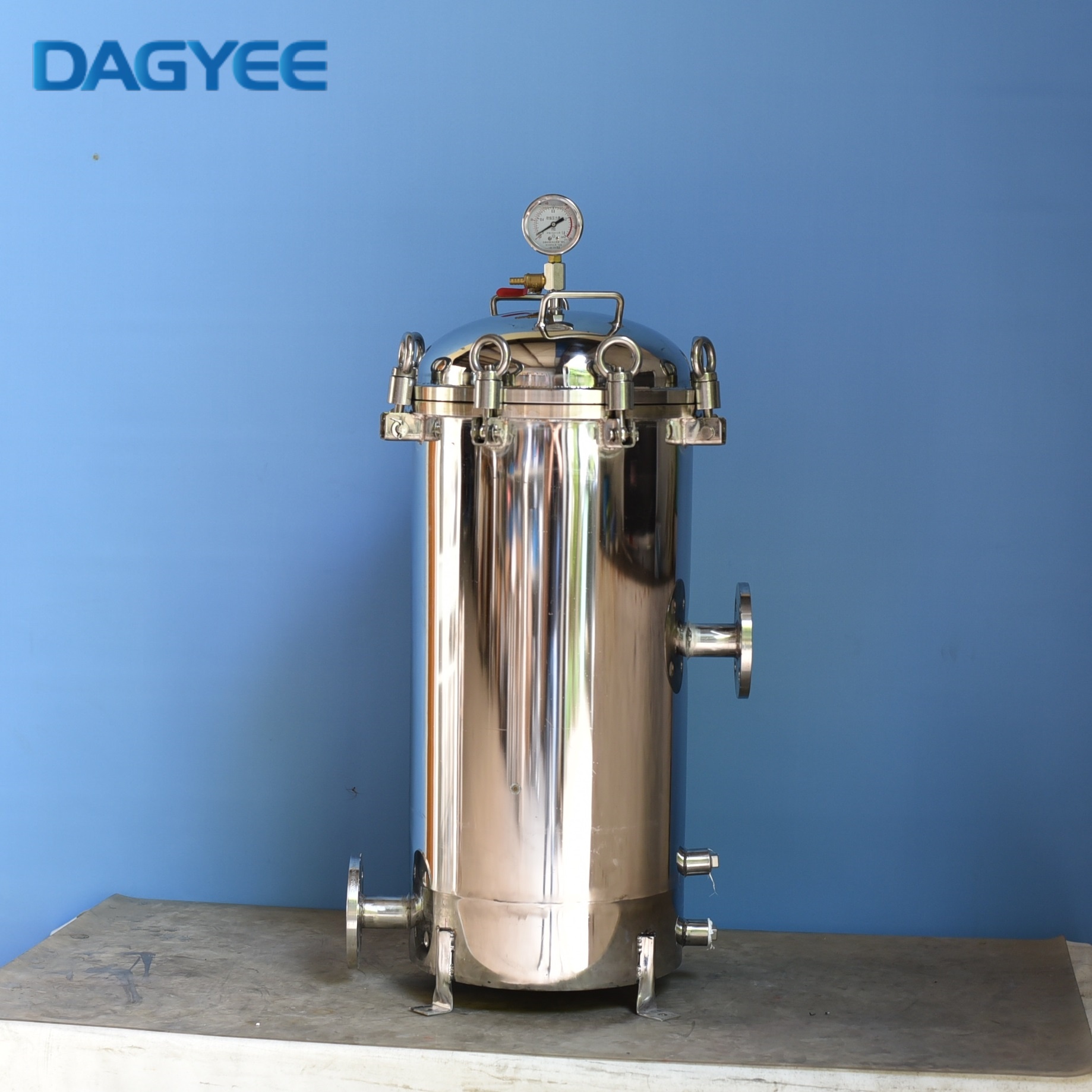
5.1 Filter Bag Abrasion and Bottom Rupture
Warning Signs: Abrupt turbidity spike after a long stable filtration period.
Root Causes: Direct inlet flow impacts the bottom section of filter bags; sharp solid particles continuously scour filter fabric; filter bags rub against burrs on internal support baskets.
Solutions: Install internal flow baffles inside filter housings to adjust fluid flow paths. Remove sharp burrs from filter baskets during routine maintenance. Deploy thickened felt filter bags for wastewater containing high quantities of hard, sharp particles.
5.2 Filter Bag Floating and Displacement
Warning Signs: Continuous unstable filtrate quality, inconsistent monitoring data.
Root Causes: Poor matching between filter bag snap band and tube sheet; trapped air inside the housing lifts filter bags away from sealing surfaces.
Solutions: Complete full air exhaust through vent valves before formal filtration startup. Confirm retainer rings fully compress the snap band of each filter bag during installation.
5.3 Flow Channeling Inside Filter Bags
Warning Signs: Weak filtration efficiency and abnormally short filter service life.
Root Causes: Filter bags fold and twist during installation, allowing fluid to flow through crevices without passing through filter media.
Solutions: Fully unfold filter bags during assembly and eliminate twisting or wrinkling before closing the housing.
6. Comparative Analysis: Failure Traits of Cartridge Filter vs Bag Filter
Table 1: Failure Character Comparison between Cartridge Filter and Bag Filter
| Comparison Item | Cartridge Filter | Liquid Bag Filter |
|---|---|---|
| Most Common | End cap leakage, pleat collapse, tube sheet seal failure | Bag abrasion, bottom rupture, snap band sealing failure |
| Overpressure Resistance | Moderate; pleated media prone to permanent deformation | Higher tensile strength; felt fabric withstands greater pressure impact |
| Vulnerable Contaminants | Fine colloids leading to surface blinding | Sharp hard particles causing mechanical abrasion |
| Maintenance Inspection Feature | Minor leakage hard to detect visually; full disassembly required | Visible bag damage; simple visual inspection after opening housing |
| Suitable Operating Load | Low suspended solid load, fine polishing filtration | Medium and high solid load, primary and intermediate filtration |
7. Operational Risk Checklists & Daily Monitoring Standards
Most filter failures originate from non-standard operation protocols rather than inherent product defects.
Maintenance teams should follow standardized daily inspection checklists.
a) Record inlet and outlet pressure readings for every shift
b) Maintain continuous real-time monitoring of outlet turbidity
c) Conduct visual inspection of housing leakage every working day
d) Watch for abnormal vibration and noise from filter assemblies
e) Verify air vent valve functionality to avoid air locking
f) Regularly recheck chemical compatibility between fluid and filter media
7.1 Air Locking Hidden Risk
Trapped air inside filter housings reduces effective filtration area, accelerates local flow velocity and media abrasion, and generates distorted pressure measurement data. Operators must open vent valves to exhaust accumulated air before system startup.
7.2 Pressure Surge & Water Hammer Risk
Frequent valve switching and pump startup produce instantaneous pressure spikes. Long-term pressure shocks fatigue filter media and sealing components. Adjust operating procedures to slow valve opening and closing speed to suppress pressure fluctuations.
Table 2: Daily Filter System Inspection Checklist
| Inspection Point | Inspection Frequency | Acceptable Standard | Alarm Condition |
|---|---|---|---|
| Inlet & Outlet Differential Pressure | Every shift | Within baseline warning threshold | Reaches critical shutdown ΔP |
| Housing Flange & Connection Leakage | Daily | No visible liquid seepage | Continuous dripping or spraying |
| Air Vent Function | Startup each time | Smooth air exhausting, no blockage | Vent blocked, persistent air locking |
| Filtrate Turbidity | Continuous online monitoring | Meet process design standard | Turbidity rises above threshold |
| Pipeline Vibration & Abnormal Noise | Daily patrol | Gentle stable operation | Strong vibration, impact noise |
8. Technical Parameter Reference for Standard Liquid Filter Units
Table 3: Typical Technical Specifications of Cartridge Filter and Bag Filter Housing
| Parameter | Cartridge Filter Housing (Liquid Type) | Single-Bag Filter Housing (Liquid Type) |
|---|---|---|
| Standard Working Pressure | 0.6–1.0 MPa | 0.6–1.0 MPa |
| Maximum Allowable Temperature | 80°C (PP) / 120°C (304 Stainless Steel) | 80°C (PP) / 120°C (304 Stainless Steel) |
| Common Housing Material | 304 SS, 316L SS, Polypropylene | 304 SS, 316L SS, Polypropylene |
| Conventional Filtration Accuracy | 0.1 μm ~ 100 μm | 1 μm ~ 200 μm |
| Standard Sealing Material | EPDM, PTFE, NBR | EPDM, PTFE, NBR |
| Recommended Initial ΔP | 0.02–0.05 MPa | 0.02–0.05 MPa |
| Critical Alarm ΔP | 0.15 MPa | 0.20 MPa |
| Main Application Scenario | Polishing filtration, low solid content water | Primary filtration, high suspended solids wastewater |
9. Long-Term Preventive Maintenance Framework
Emergency troubleshooting only resolves immediate faults. Standardized maintenance schedules effectively minimize unplanned downtime and cut recurring filter procurement expenses.
9.1 Pre-Procurement Material Compatibility Verification
Confirm operating temperature, fluid pH value, solvent composition and particle characteristics before selecting filter elements. Improper material selection causes chemical swelling, corrosion and premature media failure. Widely applied filter materials include polypropylene, polyethylene and PTFE for diverse industrial environments.
9.2 Standardized Installation Specifications
Improper assembly leads to more than 35% of early-stage filter failures. Technicians must avoid scratching filter media, twisting components and omitting sealing gaskets during installation.
9.3 Optimize Upstream Pre-Treatment
For wastewater carrying heavy sludge, oil or large particles, deploy sedimentation tanks, self-cleaning strainers or coarse filters upstream to reduce pollutant burden on cartridge and bag filter equipment.
9.4 Planned Cleaning Cycles
Carry out periodic backwashing and chemical cleaning according to raw water quality characteristics. Facilities should not wait until differential pressure reaches extreme limits before implementing cleaning work.
9.5 Reasonable Spare Parts Inventory
Maintain sufficient stock of matching O-rings, replacement filter bags, filter cartridges and retainer rings to shorten waiting time during emergency equipment maintenance.
10. Final Summary
Cartridge filters and bag filters feature relatively simple mechanical structures, yet their abnormal operation is capable of paralyzing the whole water treatment process. Stable long-term operation relies on timely capture of early warning signals extracted from differential pressure and turbidity monitoring data.
When faults emerge, maintenance staff must accurately identify root causes: media physical damage, sealing assembly failure, unreasonable operating parameters or inadequate upstream pre-treatment. Blind replacement of filter elements without eliminating source problems results in repeated malfunctions and steadily rising operational costs.
Through consistent real-time monitoring, scientifically matched filter material selection and standardized preventive maintenance routines, industrial facilities can maximize filter service life, stabilize outlet water quality, and reduce the comprehensive operating expenditure of liquid filtration systems.

Name: Ashely Li
Mobile:+8613961861780
Tel:+8613961861780
Whatsapp:8613961861780
Email:info@dagyee.com
Add:Room 302, Building 11-4, Hongyi Road, Xinan Town, Xinwu District, jiangsu Province, China