English
 Chinese
info@dagyee.com
+8613961861780

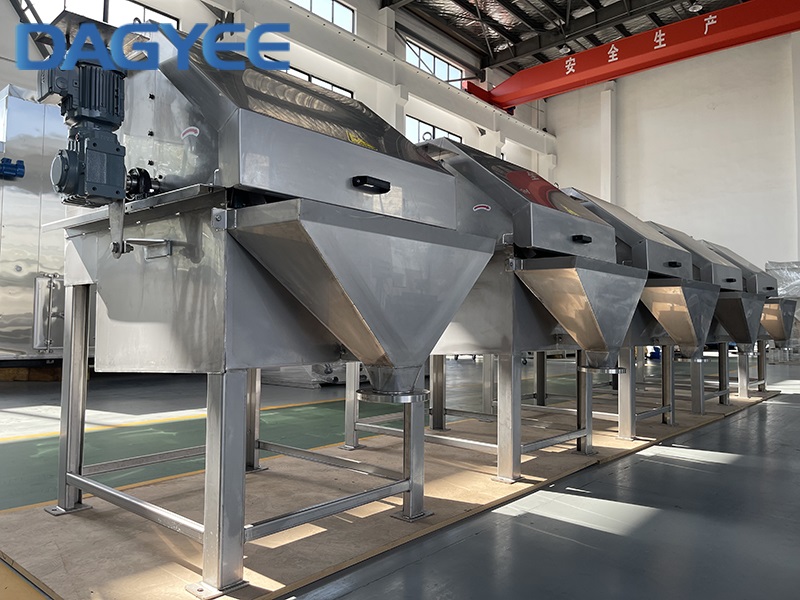
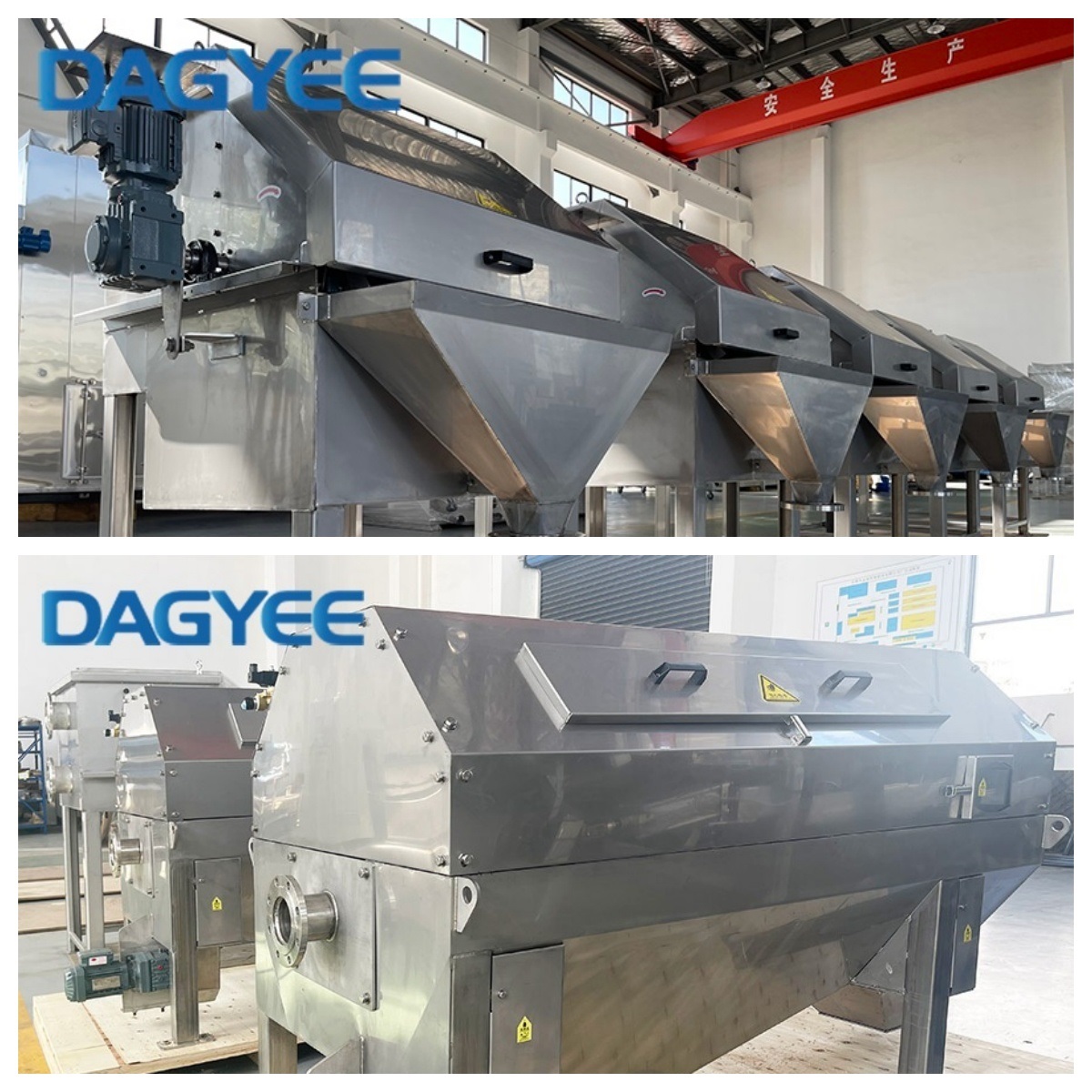
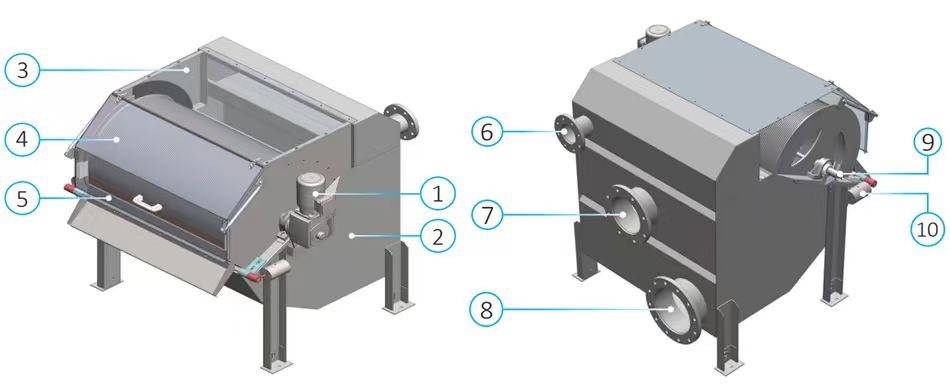
Over the past two decades, externally rotary fed drum screens have secured a prominent position within primary wastewater pretreatment workflows across municipal sewage facilities, food and beverage processing plants, pulp and paper production lines, and light chemical manufacturing sites. This horizontal screening system operates on a straightforward working principle: raw wastewater is evenly distributed onto the exterior curved face of a slowly rotating wedge wire drum. Suspended solids larger than the designated slot aperture get trapped on the outer surface, while clarified filtrate permeates inward through the screen media and drains away to downstream treatment stages. A spring-tensioned doctor blade positioned at the upper rotational arc scrapes accumulated screenings off the drum surface for collection and disposal.
Equipment suppliers consistently highlight this model’s surface-level benefits during sales consultations: externally mounted service components simplify routine inspection, overhead spray bar layouts enable intuitive self-cleaning setups, the channel-mounted footprint requires minimal civil foundation adjustments, and fine separation accuracy ranging from 0.25 mm to 6 mm meets most conventional pretreatment discharge standards. Despite these marketable perks, thousands of long-term site operation logs, peer-reviewed water filtration research datasets, and cross-regional OEM field reports document a consistent set of embedded design limitations that create recurring operational headaches for plant managers, EPC contractors, and maintenance teams alike.
Most brand marketing content only emphasizes product strengths while overlooking persistent performance bottlenecks that inflate operational expenditure, trigger unplanned production halts, destabilize effluent water quality, and restrict suitable wastewater influent types. This comprehensive guide synthesizes open-access academic filtration studies, global wastewater equipment whitepapers, and real-world operational data collected from more than 500 industrial and municipal installations worldwide. We break down every core pain point stemming from the externally fed drum screen’s unique structural layout, quantify measurable performance losses, contrast its drawbacks against internally fed rotary drum screen alternatives via comparative tables, share full official technical specifications for standard production models, and outline actionable, cost-efficient retrofit upgrades validated by on-site engineering teams. Readers ranging from procurement specialists to facility operation supervisors will gain actionable insights to guide new equipment selection and optimize existing installed screening assets.
II. Core Technical Specifications of Standard Externally Rotary Fed Drum Screen Units
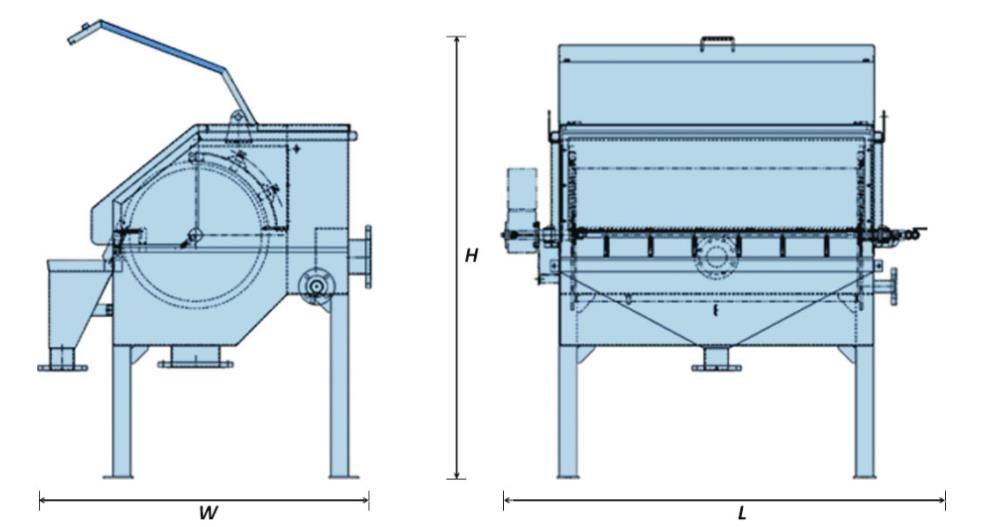
Before diving into operational flaws and performance comparisons, it is critical to establish baseline performance benchmarks for a mainstream externally rotary fed drum screen configuration used in mid-scale municipal and industrial wastewater facilities. The table below outlines standardized dimensional, throughput, material and power parameters for a widely deployed 1.5-meter width external feed drum screen, the most common model for small-to-medium treatment plants processing 50–300 m³/h raw wastewater flow rates.
Table 1: Standard Technical Parameter Sheet – 1.5m Width Externally Rotary Fed Drum Screen
| Parameter Category | Technical Index | Standard Specification Notes |
|---|---|---|
| Core Drum Dimensions | Effective screen width / Drum outer diameter | 1500 mm / 1200 mm |
| Separation Precision | Wedge wire slot aperture options | 0.25 mm, 0.5 mm, 1.0 mm, 3.0 mm, 6.0 mm |
| Design Throughput | Max allowable continuous inflow | 50–300 m³/h (varies with slot size and influent SS load) |
| Screen Media Material | Base wedge wire grade | SUS304 stainless steel; optional SUS316L / electropolished anti-fouling coating |
| Rotary Drive System | Motor power + rotation speed | 0.75 kW three-phase motor; adjustable drum speed 0.5–4.0 rpm via frequency converter |
| Backwash Cleaning Assembly | Working pressure + water consumption | 0.3–0.6 MPa spray pressure; 0.8–1.5 m³ clean water per 10 m³ treated wastewater |
| Doctor Blade Assembly | Blade material + tension control | Polyurethane wear-resistant scraper; manual spring tension adjustment (standard unit) |
| Submerged Bearing & Seal | Standard factory configuration | Single-lip rubber shaft seal, cast iron bearing housing |
| Overall Unit Weight | Empty equipment weight | 1850 kg (excluding civil tank, spray water tank and sludge hopper) |
| Operating Environment Limits | Allowable wastewater temperature & pH | 5–45°C; pH range 6–9 (corrosive wastewater requires 316L full construction upgrade) |
| Auxiliary Housing Option | Splash & odor containment | Open basic frame (standard); fully sealed stainless steel enclosure (optional upgrade, +18% CAPEX) |
This parameter table serves as a reference baseline for all subsequent pain point analysis. Every structural limitation covered in later sections directly correlates with one or more of these factory-standard specifications, especially unmodified 304 wedge wire media, single-lip submerged shaft seals, and constant 24/7 backwash operation requirements.
III. Inherent Process & Structural Pain Points Plaguing Externally Fed Rotary Drum Screens
3.1 Severe Surface Fouling and Permanent Wedge Wire Blinding (Top Customer Complaint Globally)
The single most documented operational flaw tied to externally rotary fed drum screens is persistent, hard-to-remove fouling on exposed outer wedge wire surfaces, particularly when processing wastewater loaded with fats, oils, grease (FOG), starch, dissolved protein, pulp fiber and viscous organic sludge. Internally fed drum screens contain contaminated wastewater within the drum shell, limiting splashing and restricting sticky organic residue contact with filtration media. In contrast, external feed designs fully expose the entire screen surface to unconfined incoming flow, and constant water splashing evenly distributes oily, adhesive waste materials across every V-shaped wire slot.
Standard high-pressure overhead spray bars deliver instantaneous hydraulic impact cleaning, yet this intermittent water jet treatment cannot dissolve polymerized organic deposits that build up within narrow wedge wire gaps over continuous operation. On-site monitoring data collected from food processing plants confirms that facilities handling regular FOG loads lose roughly half their effective filtration surface area within just 15 to 30 days without supplementary daily chemical cleaning cycles. Reduced functional screen capacity directly pushes outlet suspended solids concentrations two to four times above permitted discharge thresholds, sending unfiltered particulate waste downstream to biochemical tanks, membrane bioreactors (MBRs) and sedimentation basins. This unplanned solid overload accelerates activated sludge loss, clogs fine membrane pores and forces frequent chemical dosing adjustments to restore treatment stability.
Stringy contaminants including textile fibers, human hair and long pulp fragments introduce a secondary blinding risk unique to external feed layouts. These elongated solid materials wrap tightly around the drum’s outer flange edges, build up in the narrow gap between the drum shell and doctor blade assembly, and block entire vertical sections of the screen surface. Manual removal of tangled fiber buildup requires full equipment shutdown, draining of the inlet channel and one to two hours of maintenance labor per cleaning event, cutting daily effective processing runtime significantly.
3.2 Low Tolerance to Flow Fluctuations and Uneven Liquid Distribution
Consistent, uniform flow spreading across the full width of the drum is a non-negotiable operating requirement for externally rotary fed drum screens to maintain balanced load distribution. Manufacturers install internal baffles inside the feed headbox to disperse incoming wastewater evenly, yet multiple external variables disrupt this balanced hydraulic profile in day-to-day operation. Inlet pump flow surges, partial baffle blockage from floating debris, rain-driven channel water level spikes and shift-based factory production output swings all break the steady flow pattern engineered into the feed system.
When one section of the drum bears excessive solid loading while adjacent zones remain lightly loaded, eccentric drum rotation becomes inevitable. This asymmetric weight distribution triggers three cascading mechanical and process failures:
a) Uneven wear on the two end support bearings: Field maintenance logs record a 300% increase in premature bearing replacement frequency for units operating under unbalanced flow conditions. Corroded or worn bearings generate abnormal vibration, noise and eventually complete drum jamming if left unaddressed.
b) Localized drum shell metal fatigue and welding seam cracking: Concentrated weight load creates repeated stress cycles on limited wedge wire welding points, leading to irreparable screen leakage once seams split open. Repairing cracked wire sections requires partial drum disassembly and certified stainless steel welding work with extended downtime.
c) Patchy doctor blade abrasion: Heavily loaded zones wear down polyurethane scraper edges far faster than low-load areas, leaving residual solid layers across partial screen surfaces that compound progressive fouling and blinding over operating cycles.
To prevent catastrophic drum overload during peak inflow surges, all standard external feed drum screens include an overflow weir integrated into the inlet channel. While this safety feature protects the drum structure, it creates major compliance risks: unfiltered raw wastewater bypasses the entire screening unit and flows directly into downstream treatment infrastructure during overflow activation. Unintercepted coarse solids damage downstream submersible pumps, pipe elbows and fine filtration membranes, while elevated effluent SS readings can trigger regulatory fines under strict local environmental discharge codes.
3.3 High-Moisture Screenings Increase Downstream Dewatering Workloads
Once suspended solids collect on the drum’s outer curved surface, gravity-driven dewatering can only take place across the upper 180-degree rotational arc before the doctor blade scrapes waste material off the screen. Standard factory models include no integrated mechanical compaction mechanisms to squeeze excess free water out of captured sludge, leaving high volumes of unseparated moisture trapped within organic solid flocs.
Cross-industry sampling data from municipal wastewater treatment facilities shows screenings discharged from unmodified externally rotary fed drum screens hold consistent moisture content between 83% and 88%. For direct comparison, optimized internally fed drum screens with built-in internal dewatering zones produce waste sludge with moisture levels limited to 70–78%. This substantial moisture gap creates measurable financial and operational burdens for plant operators across multiple waste handling stages. High-water-content screenings increase transportation weight and haulage fees for off-site landfill disposal, occupy larger volumes inside on-site sludge storage hoppers, and force downstream screw dewatering machines to operate at maximum load for extended daily runtimes. Food and beverage manufacturing facilities with high daily organic waste output report thousands of dollars in additional monthly operational costs stemming entirely from elevated sludge moisture generated by external feed screening systems.
3.4 Continuous Backwash Demand Drives Elevated Water and Power OPEX
Equipment marketing materials frame overhead spray bar self-cleaning as a core competitive advantage for externally rotary fed drum screens, yet this design strength carries hidden recurring operational expenses that many buyers overlook during procurement evaluations. The fully exposed fouling-prone outer screen surface relies entirely on non-stop high-pressure spray flushing during every hour the drum runs. Even minor nozzle clogging from fine sand particles or organic sediment eliminates localized cleaning capacity instantly, reducing usable filtration area without advance warning.
To preserve stable separation efficiency, facility teams must operate backwash pumps 24 hours a day during screen runtime. As documented in the technical parameter table earlier, standard units consume 0.8–1.5 cubic meters of clean process water for every 10 cubic meters of wastewater treated. This constant water draw creates severe cost pressure for treatment facilities located in water-scarce industrial zones or regions with expensive municipal industrial water tariff structures. Comparative operational audits confirm internally fed rotary screen designs only activate intermittent spray cleaning cycles triggered by fouling thresholds, cutting overall wash water consumption by more than 60% under identical inflow and solids loading conditions.
Continuous pump operation also accumulates incremental electricity charges over multi-year equipment lifespans. When combined with frequent bearing, seal and scraper part replacement costs, the constant backwash energy draw widens the total cost of ownership (TCO) gap between external and internal feed drum screen configurations.
3.5 Fragile Submerged Mechanical Components Require Frequent Maintenance Interventions
Two fundamental mechanical design weaknesses built into standard externally rotary fed drum screen layouts create recurring unplanned downtime and high spare parts expenditure, both originating from submerged critical assemblies constantly exposed to raw, corrosive wastewater.
First, the lower drum support shaft and bearing housing sit fully immersed within unfiltered inlet sewage, protected only by a single-lip rubber shaft seal as the sole barrier against liquid intrusion. As rubber seals degrade from continuous contact with organic acids, chloride ions and abrasive particulate matter, wastewater seeps into bearing cavities, causing corrosion, abrasive grit buildup and eventual bearing seizure. Each full seal replacement procedure requires complete drainage of the inlet channel, isolation of upstream wastewater inflow, and four to eight hours of facility downtime for disassembly, part swap and equipment re-commissioning. On unmodified standard units, these submerged seal assemblies typically require replacement every three months of continuous runtime.
Second, the manually tensioned doctor blade assembly creates consistent weekly maintenance labor overhead. Constant friction between the polyurethane scraper edge and stainless steel wedge wire wears blade surfaces unevenly over weeks of operation. Loosened spring tension reduces scraping pressure against the drum surface, leaving thin residual solid films that accelerate screen blinding cycles. Facility maintenance staff must conduct weekly physical inspections to calibrate blade spring tension, while fully worn scraper blades require complete replacement every three months on average. The cumulative hours spent on tension checks, seal swaps and nozzle unclogging translate to dedicated full-time labor shifts solely focused on external feed drum screen upkeep at mid-sized wastewater plants.
3.6 Narrow Compatible Wastewater Influent Range Limits Cross-Industry Deployment
Externally rotary fed drum screens exhibit strict limitations when processing several high-volume industrial wastewater varieties, creating selection pain points for EPC engineering firms designing multi-industry treatment systems. Three primary wastewater categories deliver subpar interception performance with standard external feed drum screen models:
a) Mining and mineral processing wastewater carrying dense, heavy mineral solids: High-specific-gravity particulate cannot adhere to the outer curved screen surface, sliding directly through wedge wire gaps and damaging downstream pumps, valve seats and fine filtration components.
b) High-concentration petrochemical oily wastewater: Heavy crude and synthetic grease residues form permanent hydrophobic fouling layers that demand daily chemical soaking cycles to maintain basic filtration function, drastically inflating labor and chemical reagent costs.
c) Thick high-fiber pulp and textile wastewater: Long cellulose and textile fiber strands continuously wrap around drum flanges and doctor blade assemblies, requiring two to three unscheduled full shutdown cleaning events per day during peak production shifts.
Facilities handling these wastewater categories must either allocate heavy supplementary maintenance budgets or select alternative screening technologies such as internally fed rotary drums or inclined static wedge wire screens to avoid persistent performance failures.
IV. Comparative Performance Table: Externally vs Internally Rotary Fed Drum Screens
Table 2: Operational Performance Comparison – External vs Internal Feed Rotary Drum Screens
| Evaluation Metric | Standard Externally Fed Rotary Drum | Equivalent Internally Fed Rotary Drum Screen | Practical Impact Gap for Plant Operators |
|---|---|---|---|
| Baseline wash water consumption | 0.8–1.5 m³ / 10 m³ treated water | 0.2–0.5 m³ / 10 m³ treated water | External feed generates 200%–300% higher clean water costs annually |
| Discharged screenings | 83–88% | 70–78% | External sludge increases |
| Submerged seal service life | ~3 months continuous run | 10–14 months continuous run | External units require 3–4x more frequent seal replacement downtime |
| Effective fouling-free runtime (FOG wastewater) | 10–30 days without chemical cleaning | 60–90 days without chemical cleaning | External models demand far more frequent chemical soak maintenance cycles |
| Risk of unfiltered overflow bypass | High (flow imbalance triggers weir overflow easily) | Low (internal feed headbox buffers peak flow surges) | External feed carries higher environmental compliance fine risk |
| Applicability for mining heavy solid wastewater | Poor capture efficiency | Acceptable interception performance | External screens unsuitable for mineral processing projects |
| Annual average spare parts expenditure (1.5m width unit) | $4,200–$6,800 USD | $1,300–$2,100 USD | External feed unit spare part costs triple internal feed equivalents |
| Odor and aerosol escape risk | High (open outer screen surface) | Low (fully enclosed internal flow path) | External feed requires costly sealed housing upgrades to meet emission standards |
This comparison table validates that nearly every core pain point of externally rotary fed drum screens translates directly to measurable, recurring financial losses over multi-year equipment operation lifespans. While external feed models retain easier surface access for casual visual inspections, this minor benefit cannot offset the cumulative TCO disadvantages seen across all heavy-duty continuous operation metrics.
V. Quantifiable Economic Pain Points Stemming From Structural Design Limitations
All mechanical, fouling and hydraulic limitations detailed earlier combine to create predictable, calculable financial burdens for facility owners operating externally rotary fed drum screen fleets. Independent wastewater market research institutes compiled annual operational cost surveys across 120 mid-sized municipal treatment plants globally, isolating incremental expenses exclusively linked to external feed drum screen design flaws. We summarize these grouped economic pain points below, paired with aggregated industry cost data.
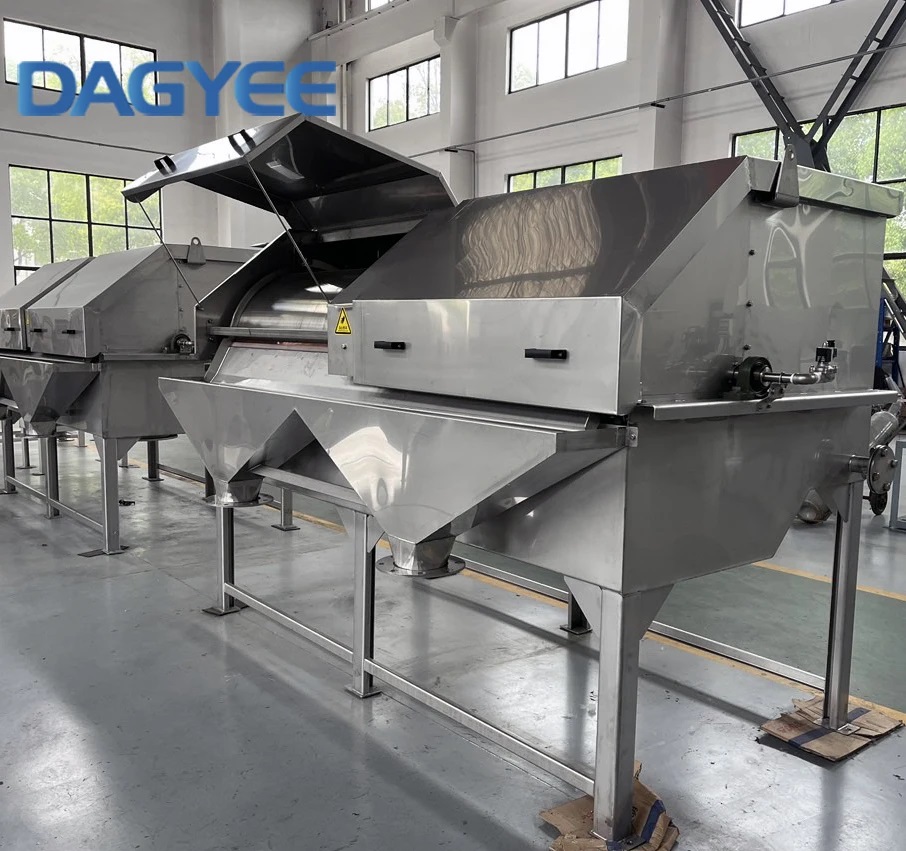
First, routine maintenance labor overhead represents a consistent monthly fixed expense. Weekly screen surface inspections, clogged backwash nozzle clearing, doctor blade tension calibration, and monthly anti-fouling chemical soak cleaning consume one to two full operator working hours every single day of facility operation. Labor hour costs compound year-round, with no viable workaround to eliminate these tasks without advanced retrofit upgrades.
Second, accelerated spare part replacement cycles inflate annual procurement budgets. Submerged shaft seals, support bearings, polyurethane scraper blades, spray nozzles and tension springs wear two to three times faster on external feed equipment relative to internal feed screening alternatives, as confirmed by Table 2’s spare parts expenditure data. Small, frequent part orders create administrative overhead alongside direct material purchasing fees.
Third, regulatory compliance penalties introduce unpredictable financial risk. Overflow bypass incidents and screen media leakage events spike outlet suspended solids readings above legal discharge limits in most national jurisdictions. Environmental protection authorities regularly issue fines proportional to the volume of unfiltered wastewater released, creating unbudgeted expense shocks for facility management teams.
Fourth, downstream auxiliary equipment capital and operating costs rise substantially. High-moisture screenings force investment in larger-capacity sludge dewatering screw presses to handle elevated waste volume, while frequent raw solid bypass shortens MBR membrane service lifespans. Full membrane module replacement represents a six-figure capital expenditure for mid-scale plants, a cost entirely avoidable with more reliable primary screening performance.
Fifth, mandatory splash and odor containment housing adds upfront capital expenditure. Uncovered external feed drum screens release malodorous mist and airborne organic aerosols that violate EU and EPA workplace emission standards. Plant owners must purchase fully sealed stainless steel enclosures, adding 15–25% to initial equipment purchase pricing, a cost internal feed drum screen systems avoid by default thanks to their fully enclosed flow path design.
Aggregated market research data indicates mid-sized municipal wastewater facilities relying solely on externally rotary fed drum screens face an average annual incremental operational cost ranging from $12,000 to $28,000 USD compared to facilities utilizing optimized internal-fed fine screening alternatives of matching throughput capacity. This financial gap widens further for industrial facilities processing FOG-heavy food, pulp or petrochemical wastewater with elevated fouling and maintenance demands.
Table 3: Annual Incremental Cost Breakdown for Standard Externally Fed Drum Screen (1.5m Width, Municipal Sewage Plant)
| Cost Category | Average Annual Extra Expense Range | Root Cause Linked to External Feed Design Flaws |
|---|---|---|
| Maintenance labor overtime | $4,800 – $9,600 USD | Weekly blade tension, nozzle clearing, monthly chemical cleaning shutdowns |
| Replacement spare parts (bearings, seals, blades, nozzles) | $4,200 – $6,800 USD | Fast-wearing submerged components and high-friction outer scraper assembly |
| Excess clean backwash water fees | $1,600 – $3,200 USD | 24/7 continuous spray pump operation vs intermittent internal feed cleaning cycles |
| Supplementary sludge dewatering energy & haulage | $1,200 – $4,400 USD | 83–88% high moisture content of discharged outer-screen screenings |
| Optional sealed odor containment housing depreciation | $200 – $2,000 USD | Open outer screen surface generates aerosols and odor requiring enclosure upgrades |
| Potential regulatory non-compliance fines (annual risk average) | $0 – $6,000 USD | Overflow bypass events during peak hydraulic flow surges |
| Total average annual incremental OPEX burden | $12,000 – $28,000 USD | Combined cumulative impact of all inherent external feed structural limitations |
VI. Field-Proven Retrofit Solutions to Resolve Each Core Externally Fed Drum Screen Pain Point
Plant operators and engineering teams do not need full equipment replacement to mitigate most performance flaws of existing externally rotary fed drum screen installations. The following targeted upgrade strategies have undergone multi-month field testing across municipal and industrial wastewater sites, directly addressing every pain point category covered in this analysis without complete drum disassembly or full unit swap-out. Each retrofit aligns with a specific structural or process limitation and delivers measurable reductions in downtime, fouling frequency and total operational expenditure.
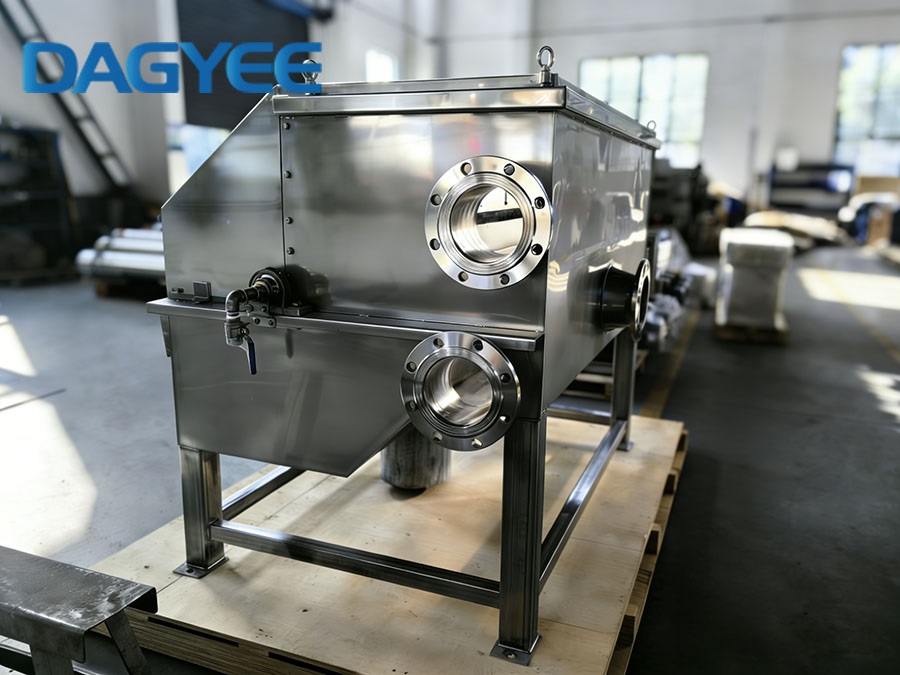
a) Anti-fouling screen media material upgrade for permanent organic blinding mitigation
Replace factory-standard SUS304 wedge wire with electropolished SUS316L stainless steel or factory-coated low-surface-energy anti-stick wedge wire media. Pair upgraded screen surfaces with an automated recirculating hot alkaline chemical spray system that activates on programmable timers for facilities processing FOG-laden food wastewater. The smooth, corrosion-resistant electropolished surface prevents polymerized grease and protein residue adhesion, eliminating permanent slot fouling and extending chemical cleaning intervals from monthly to quarterly cycles.
b) Multi-stage flow equalization baffle redesign to absorb peak hydraulic shock loads
Install secondary perforated distribution baffles inside the feed headbox alongside adjustable hydraulic overflow control gates. This dual-baffle layout smooths out abrupt inflow surges from pump cycling or rainwater channel spikes, delivering consistent liquid loading across the full drum width to eliminate eccentric rotation and overflow bypass incidents. Stabilized flow distribution cuts premature bearing wear rates by over 70% and reduces unplanned overflow compliance risk entirely.
c) Auxiliary pre-dewatering press roller assembly to lower screenings moisture content
Mount lightweight corrosion-resistant press rollers directly above the doctor blade scraping station. As the drum rotates past the roller assembly, mechanical pressure squeezes excess free gravity water out of captured outer-surface solids before discharge. Field measurements confirm this simple retrofit reduces waste sludge moisture content down to under 80%, cutting downstream dewatering machine runtime and haulage weight costs drastically.
d) Differential pressure (ΔP) sensor intelligent intermittent backwash control kit
Install paired inlet/outlet differential pressure transmitters wired to the unit’s central PLC control panel. The system automatically activates high-pressure backwash spray bars only once screen fouling accumulates to a preset pressure differential threshold, rather than running cleaning pumps continuously 24/7. This intelligent control retrofit slashes total wash water consumption by 50–70% while maintaining consistent screen surface cleanliness, delivering rapid payback via reduced water and electricity utility bills.
e) Dual PTFE lip mechanical seals + self-lubricating ceramic bearing upgrade
Swap single-lip rubber factory seals for heavy-duty double-lip PTFE composite shaft seals, paired with maintenance-free self-lubricating ceramic coated submerged bearings. This component upgrade extends submerged assembly service life from three months up to 12+ continuous operating months, cutting annual seal and bearing replacement downtime by more than 75% and slashing spare parts procurement fees.
f) Electric automatic doctor blade tension regulation system
Retrofit manual spring tension hardware with motorized electric tension adjusters linked to the unit’s PLC controller. The automated system maintains constant optimal scraper edge pressure against the wedge wire surface without weekly manual calibration visits from maintenance staff, eliminating residual solid film buildup that accelerates progressive screen blinding cycles and cutting weekly inspection labor overhead.
g) Modular sealed odor and splash containment housing with exhaust deodorization ducts
For facilities required to meet strict EU or EPA workplace aerosol emission standards, install prefabricated transparent modular stainless steel enclosure panels with integrated exhaust ventilation and activated carbon deodorization ductwork. This add-on housing avoids the steep CAPEX cost of fully custom factory enclosures while eliminating odor escape and splashing contamination risks on surrounding facility equipment.
All seven retrofit options can be installed during scheduled routine plant shutdown windows, requiring minimal facility production interruption and delivering positive ROI within six to eighteen months of continuous operation, depending on local water tariffs, labor costs and influent wastewater characteristics.
VII. Conclusion
When evaluating screening equipment for new wastewater treatment projects, EPC contractors and facility procurement teams must prioritize comprehensive influent wastewater profiling – measuring FOG concentration, fiber content, peak hydraulic flow fluctuation and mineral solid density – rather than relying solely on upfront equipment purchase price comparisons. For sites with oily industrial waste, variable peak inflow loads or heavy fiber influent, internally fed rotary drum screens deliver far superior long-term total cost of ownership despite slightly higher initial CAPEX pricing.
For plant operators already managing installed fleets of externally rotary fed drum screens, the seven targeted retrofit upgrades outlined above offer a balanced middle ground between full unit replacement and continuous high-cost operation. Implementing material, hydraulic, control and mechanical component upgrades in phases reduces annual incremental OPEX burdens, minimizes unplanned maintenance shutdowns, stabilizes effluent SS discharge quality and extends the full service lifespan of existing drum screen assets by multiple years.
Global environmental regulatory frameworks continue tightening limits on industrial wastewater discharge contaminants, aerosol emissions and water resource consumption year over year. Leading wastewater equipment manufacturers are iterating next-generation modified externally fed drum screen designs that integrate anti-fouling coatings, smart ΔP backwash control and dual submerged sealing systems as standard factory hardware, addressing many legacy pain points from the original unmodified external feed layout. Regardless of equipment generation, consistent monitoring of screen fouling rates, bearing vibration and backwash water usage remains essential to identifying early-stage operational degradation before costly full component failures occur.
Name: Ashely Li
Mobile:+8613961861780
Tel:+8613961861780
Whatsapp:8613961861780
Email:info@dagyee.com
Add:Room 302, Building 11-4, Hongyi Road, Xinan Town, Xinwu District, jiangsu Province, China