English
 Chinese
info@dagyee.com
+8613961861780

I. Core Principles and Structure Analysis of Lag Screw Sludge Dewatering Machine
1. Core Structure Composition
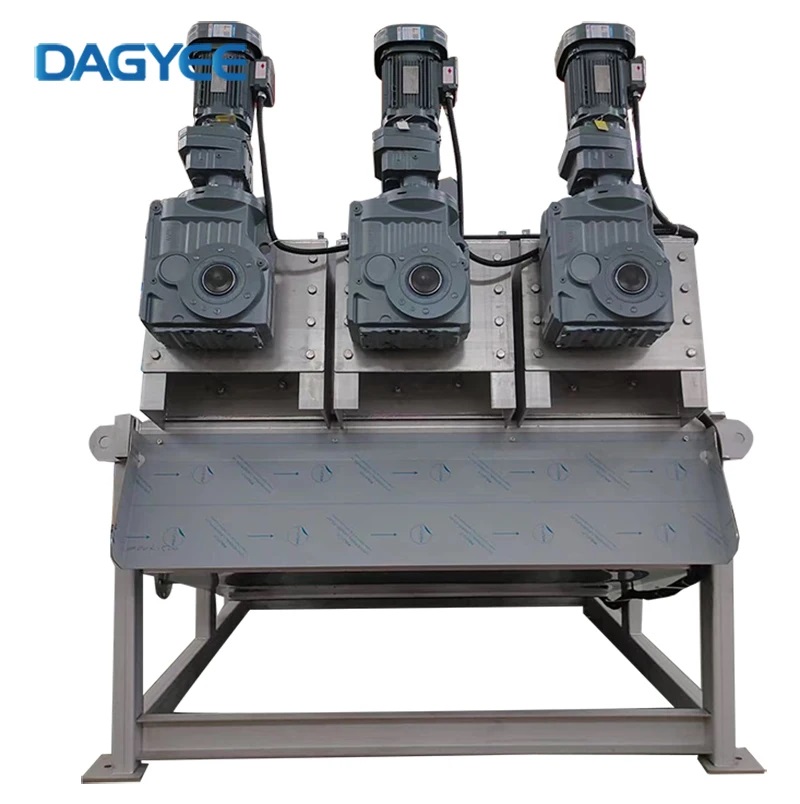
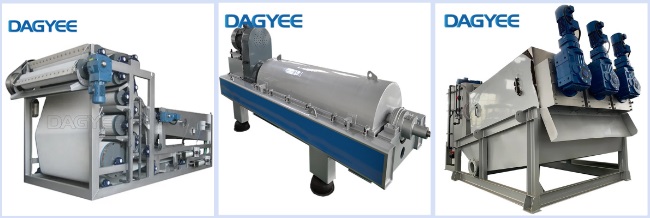
The structure of the lag screw sludge dewatering machine is compact and highly integrated. It is mainly composed of four core components, which work together to ensure a stable and efficient dewatering process. The specific structure is as follows (combined with the three-dimensional modeling and design calculation content from the design research papers):
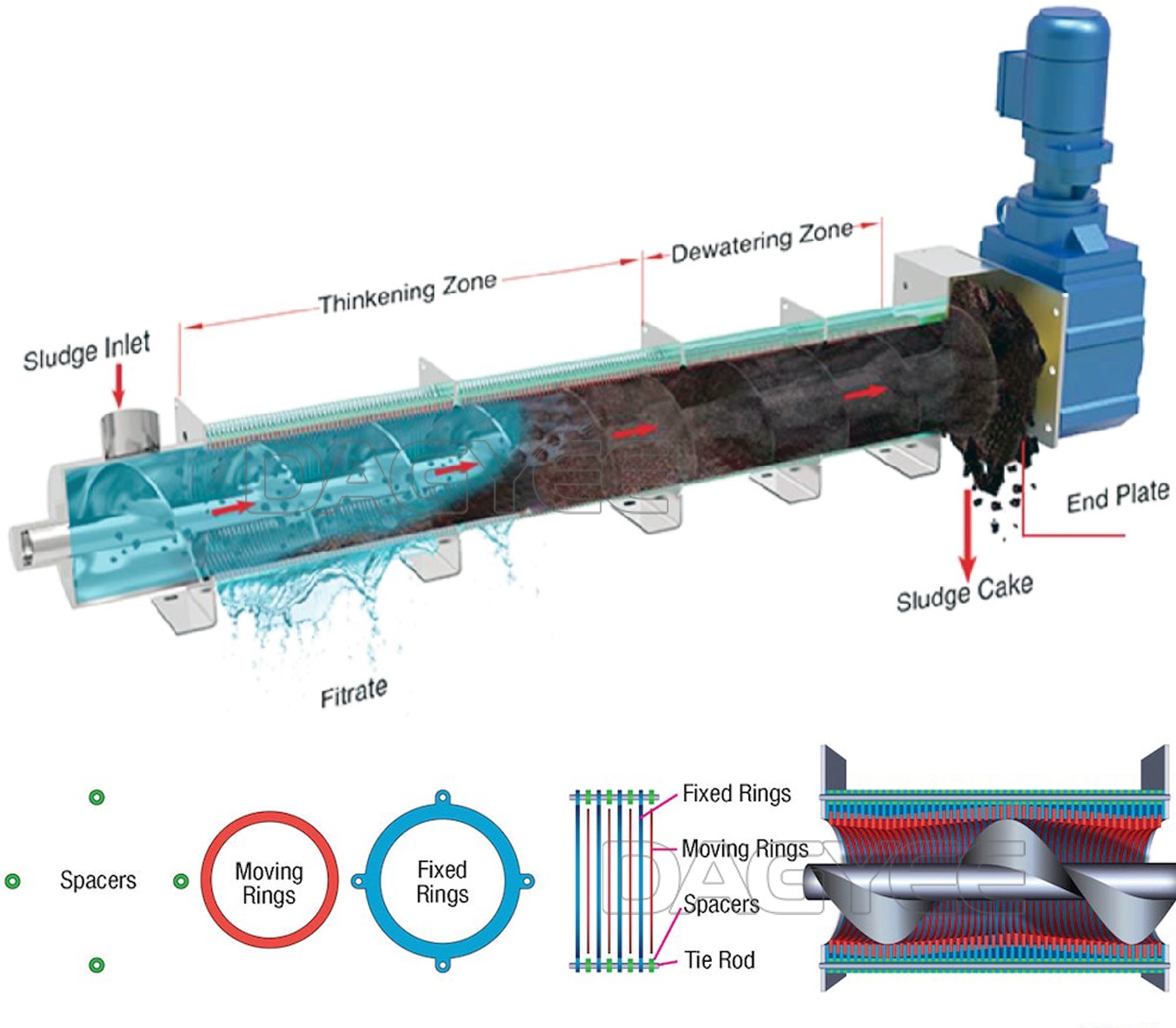
1) Screw Shaft: The core power component of the equipment, with a gradually increasing diameter from the feed end to the discharge end and a gradually decreasing pitch, through rotation, it generates a strong squeezing force, providing the core power for sludge dewatering; at the same time, the surface of the screw shaft is specially treated, wear-resistant and corrosion-resistant, extending the equipment's service life. The design calculation needs to be precisely verified based on parameters such as processing capacity and squeezing pressure.
2) Stack Plate Group: Composed of multiple fixed rings and moving rings alternately stacked, the ring gap is 0.5-1mm, serving as both the sludge filtration channel and the key structure to prevent clogging; the moving ring can rotate synchronously with the screw shaft, achieving automatic cleaning without the need for additional rinsing equipment, significantly reducing water resource consumption.
3) Drive System: Composed of a motor, reducer, bearings, etc., with a low-speed drive design (rotation speed usually between 0.25-1r/min), low energy consumption, low noise, and avoiding damage to sludge particles due to high-speed rotation, ensuring stable dewatering effect; the selection of the motor and reducer needs to be strictly verified to match the equipment's processing capacity and squeezing pressure requirements.
2. Working Principle (Concentration + Dewatering + Self-Cleaning Integrated)
The working process of the lag screw sludge dewatering machine does not require manual intervention and operates fully automatically, with the overall process divided into three core stages, clear and efficient, as follows:
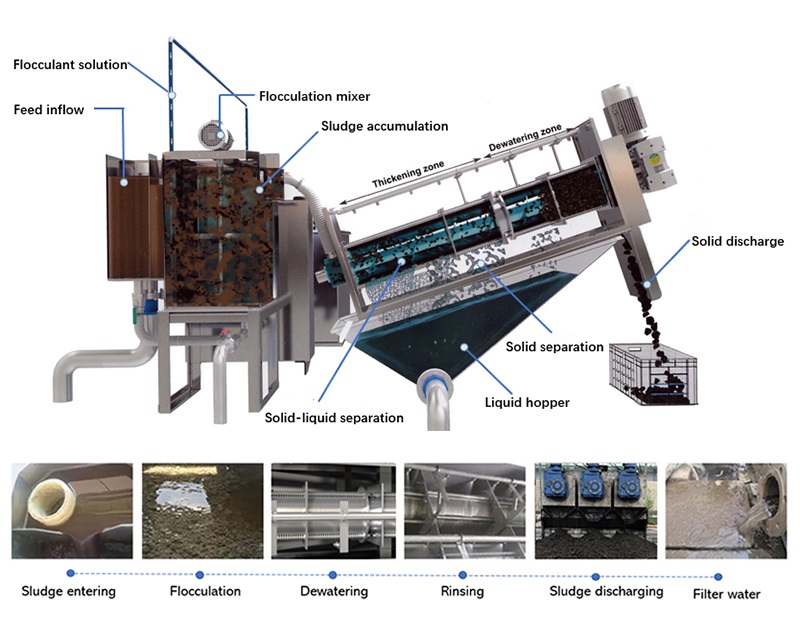
1) Concentration Stage: The sludge is fed into the equipment's concentration section through the feed pump. Under the influence of gravity, the free water in the sludge passes through the tiny filter gaps of the filter plate assembly and rapidly seeps out, achieving an initial reduction in the sludge volume. The solid content of the concentrated sludge significantly increases, laying the foundation for the subsequent dewatering process. No additional chemicals are required in this stage; it is completed solely through the force of gravity, significantly reducing operating costs.
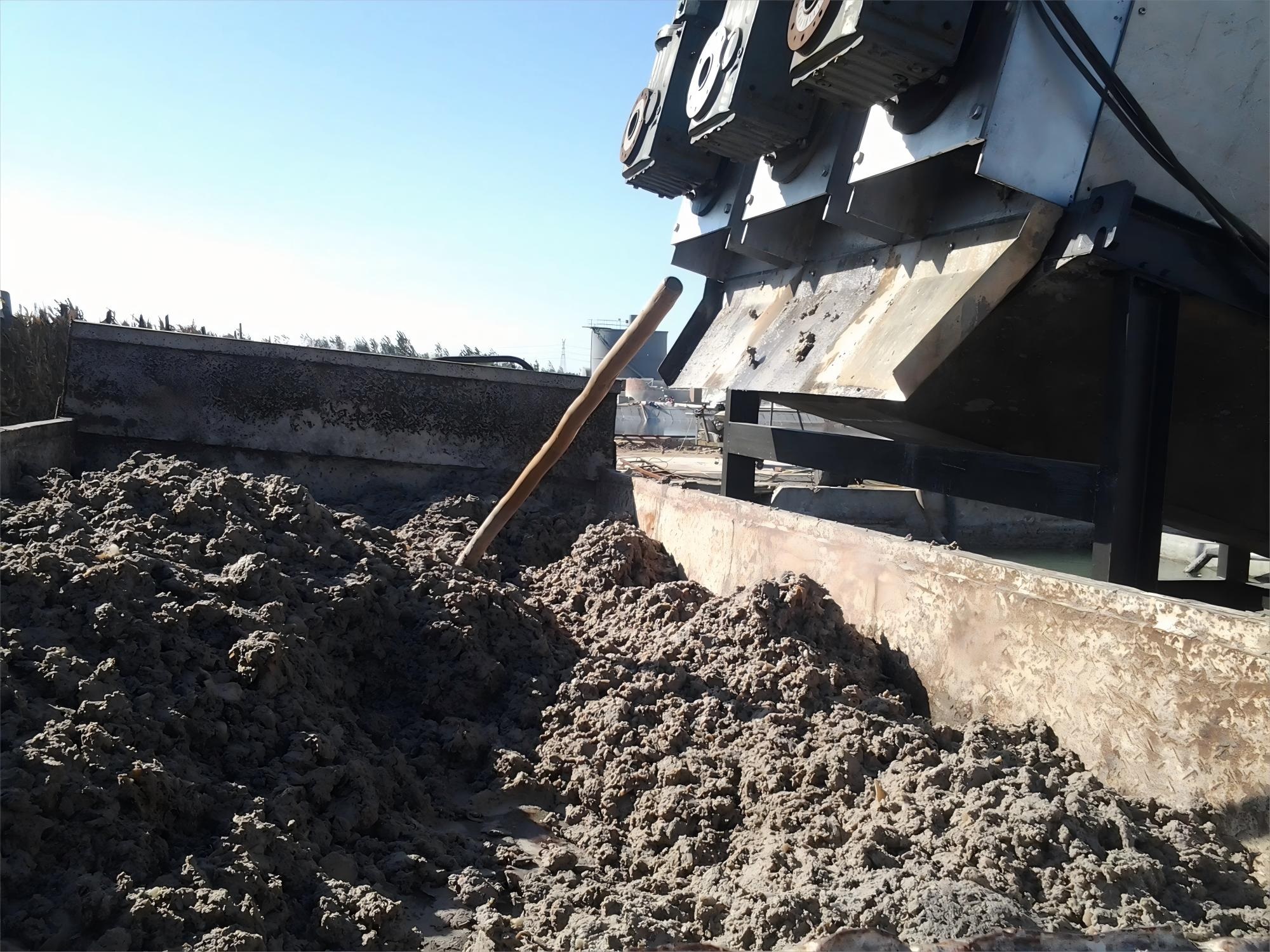
2) Dewatering Stage: The concentrated sludge is gradually pushed into the dewatering section by the helical shaft. As the helical shaft's pitch decreases, the diameter increases, and the back pressure plate's blocking effect come into play, the squeezing force on the sludge gradually increases, and the interstitial water in the sludge is forcibly expelled and discharged through the filter gaps to the collection tank. Eventually, the dewatered sludge forms a stable mud cake with a stable moisture content, which is automatically discharged from the discharge end, completing the dewatering process.
3) Self-Cleaning Stage: During the rotation of the helical shaft, the moving ring moves synchronously with the helical shaft, generating relative friction between the moving ring and the fixed ring, thereby automatically removing the residual sludge particles in the filter gaps and preventing the filter gaps from getting clogged. This self-cleaning design enables the equipment to operate continuously without frequent shutdowns for cleaning, addressing the pain point of clogging in traditional dewatering equipment, while reducing the amount of flushing water and further lowering operating costs.
II. Technical Parameter Table of Screw-Type Sludge Dewatering Machine
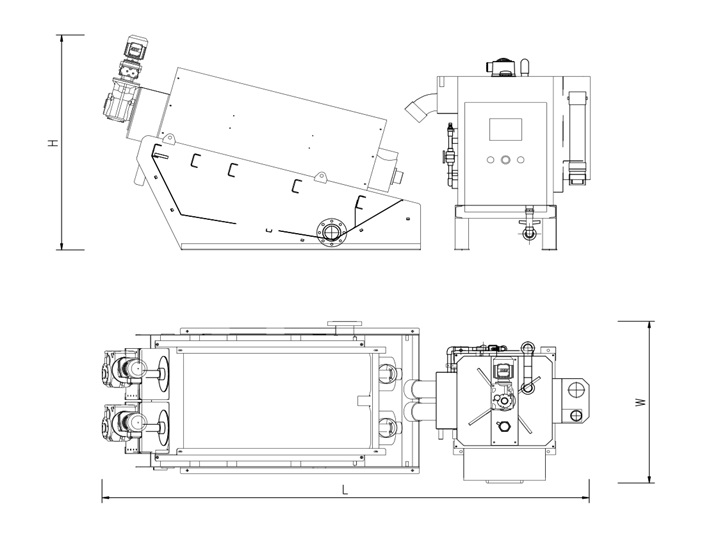
The core technical parameters of different types of screw-type sludge dewatering machines cover key indicators such as processing capacity, moisture content, and energy consumption, making it convenient for users to select models according to their actual needs:
| Model | DS Capacity kg/h Min | DS Capacity kg/h Max | 2 g/L | 5 g/L | 10 g/L | 20 g/L | 25 g/L | 50 g/L | Size (mm) | Net Weight (kg) | Running Weight (kg) | Power (kW) | Washing Q (m³/h) |
|---|---|---|---|---|---|---|---|---|---|---|---|---|---|
| DL101 | 3 | 5 | 1.5 | 0.6 | 0.5 | 0.25 | 0.2 | 0.1 | 1816 | 756 | 1040 | 200 | 0.2 |
| DL131 | 6 | 10 | 3 | 1.2 | 1 | 0.5 | 0.4 | 0.2 | 1969 | 756 | 1040 | 220 | 0.36 |
| DL132 | 12 | 20 | 6 | 2.4 | 2 | 1 | 0.8 | 0.4 | 2069 | 910 | 1040 | 275 | 0.62 |
| DL202 | 18 | 30 | 9 | 3.6 | 3 | 1.5 | 1.2 | 0.6 | 2500 | 935 | 1270 | 470 | 1.11 |
| DL301 | 30 | 50 | 15 | 6 | 5 | 2.5 | 2 | 1 | 3255 | 985 | 1600 | 850 | 0.74 |
| DL302 | 60 | 100 | 30 | 12 | 10 | 5 | 4 | 2 | 3455 | 1295 | 1600 | 1200 | 1.11 |
| DL303 | 90 | 150 | 45 | 18 | 15 | 7.5 | 6 | 3 | 3605 | 1690 | 1600 | 1520 | 1.86 |
| DL352 | 120 | 200 | 60 | 24 | 20 | 10 | 8 | 4 | 4240 | 1550 | 2190 | 1950 | 3.75 |
| DL353 | 180 | 300 | 90 | 36 | 30 | 15 | 12 | 6 | 4460 | 2100 | 2190 | 2600 | 6 |
| DL402 | 120 | 200 | 60 | 24 | 20 | 10 | 8 | 4 | 4140 | 1550 | 2250 | 2450 | 3.75 |
| DL403 | 180 | 300 | 90 | 36 | 30 | 15 | 12 | 6 | 4420 | 2100 | 2250 | 3350 | 6 |
Note: The above parameters are based on the summary of experimental data and engineering applications. The actual parameters can be customized and adjusted according to the properties of the sludge and the treatment requirements; the dosage rate refers to the results of the orthogonal experiment in the paper, and can be further optimized based on the sludge concentration.
III. Practical Application Cases of Screw-Type Sludge Dewatering Machines
Two typical application scenarios are presented, detailing the actual operation results, data performance and application advantages of the screw-type sludge dewatering machine. This is tailored to meet the "practicality" requirements of Google's independent website, enabling users to have a clear understanding of the value of the equipment.
Case 1: Sludge Dewatering Test Application in Municipal Sewage Treatment Plant
A municipal sewage treatment plant mainly treats urban domestic sewage, and the generated sludge is mainly divided into digested sludge (with a moisture content of 97.9%) and residual sludge (with a moisture content of 99.7%). Traditional methods use belt dewatering machines, which have problems such as high energy consumption, filter cloth easy clogging, and excessive sludge cake moisture content. To solve these problems, the plant conducted a test using a screw-type sludge dewatering machine. The test period was 30 days. The specific test plan and results are as follows:
Test Plan
1) Test Equipment: DL-201 Type Screw-Type Sludge Dewatering Machine (Motor power 2.2kW, screw rotation speed 0.3-0.75r/min);
2) Test Materials: Digestion sludge (with a moisture content of 97.9%), residual sludge (with a moisture content of 99.7%);
3) Test Parameters: Through orthogonal experiments, optimize the dosage rate and screw rotation speed to determine the optimal operating conditions;
4) Detection Indicators: Sludge cake moisture content, processing capacity, energy consumption, chemical consumption, equipment operation stability.
Test Results
| Model | Range | Range (Imperial) |
|---|---|---|
| V-X20 | 0.1-30 mm | 0~1.19 in |
| Weight | 2000 kg | 4409 lb |
| Dimensions | 2600*2000*2150 mm | 102.36*78.74*84.64 in |
| Power | 23.67 kW | 31.74 hp |
| Processing Capacity | 200-300 kg/h | 441-661 lb/h |
Test conclusion: The screw-type sludge dewatering machine has achieved remarkable results in treating municipal sludge. The moisture content of the digested sludge cake can be reduced to 70.3%, and the remaining sludge can be reduced to 82.5%, both meeting the national sludge disposal standards. The energy consumption is only about 50% of that of the traditional belt dewatering machine, and it has no noise or clogging. It can operate continuously for 24 hours, significantly reducing maintenance costs and labor input. The moisture content of the digested sludge cake can be reduced to 70.3%, and the remaining sludge can be reduced to 82.5%, both meeting the national sludge disposal standards. The energy consumption is only about 50% of that of the traditional belt dewatering machine, and it has no noise or clogging. It can operate continuously for 24 hours, significantly reducing maintenance costs and labor input.
Case 2: Application of Sludge Discharge Water Treatment Project in Large Water Plants
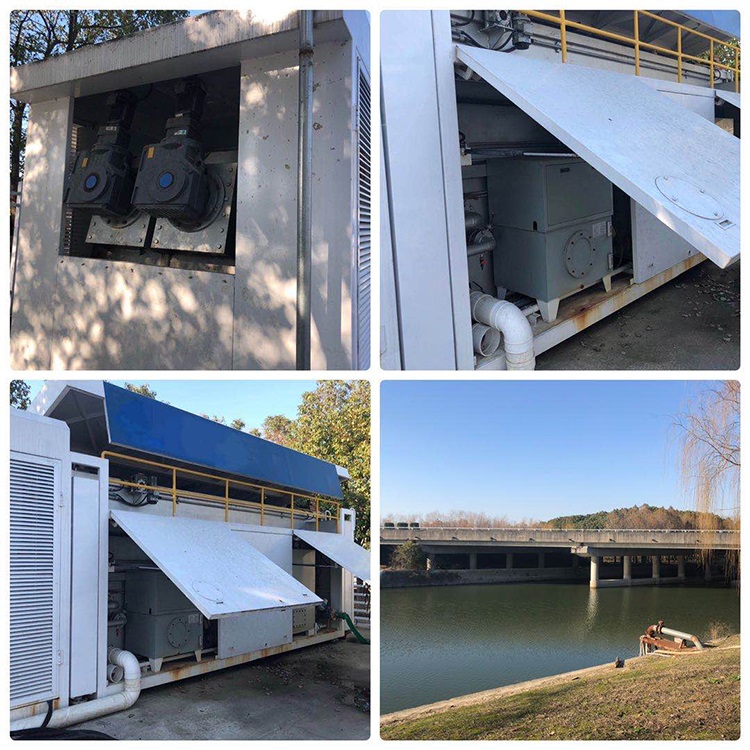
A large water plant in Shanghai, with a designed treatment capacity of 200,000 m³/d, has a large amount of sludge discharge water. The original treatment method used belt filter presses, which had problems such as low treatment efficiency, complex operation, high operation cost, and easy wear of equipment due to sandy sludge. To optimize the sludge discharge water treatment process, the plant adopted screw-type sludge dewatering machines for the renovation. The operation effect of the equipment after the renovation is as follows:
Project Overview
After the renovation, the "efficient sedimentation and concentration + screw-type sludge dewatering" process was adopted. Four DL-301 screw-type sludge dewatering machines were selected, with each machine having a processing capacity of 10 m³/h. Auxiliary equipment such as dosing devices and collection tanks was also provided. The main treatment was the sludge water from the water plant (with an inlet water moisture content of 97.5%).
Operation results and economic analysis
1) Treatment effect: The inlet water moisture content was 97.5%, and the moisture content of the dewatered sludge cake was ≤75%. The sludge reduction rate was ≥90%. The filtrate met the discharge standards and there was no secondary pollution.
2) Operation points: Due to the high sand content in the sludge water from the water plant, it is prone to wear the plate and frame assembly (rotating and stationary rings), so the wear parts need to be replaced once a year. Routine regular inspections of the equipment operation status are sufficient.
3) Economic cost: The direct operating cost is only 0.17 yuan/m³. The cost of chemicals is 0.08 ten thousand yuan/day, and the electricity cost is 0.11 ten thousand yuan/day. Compared with traditional belt filter presses, the annual operating cost can be saved by approximately 120,000 yuan.
4) Equipment advantages: The floor area is only 1/3 of that of traditional belt filter presses. No dedicated personnel are required for operation. It operates automatically, significantly reducing labor costs and site occupancy costs.
Application summary: The screw-type sludge dewatering machine performed excellently in the renovation of the sludge water from the water plant. Not only was the treatment effect stable, but it also effectively reduced operating costs and operational difficulties. It is suitable for large-scale processing needs of water plants and solves the problem of sludge with sand content wearing out the equipment. It has high promotion value.
IV. Comparison between Screw-type Sludge Dewatering Machine and Traditional Dewatering Equipment
| Equipment Type | Cake Moisture (%) | Energy Consumption (kWh/m³) | Clogging Tendency | Automation Level | Maintenance Cost | Footprint | Typical Application Scenarios |
|---|---|---|---|---|---|---|---|
| Screw Press (Volute Dew) | 65 – 82.5 | 0.42 – 0.6 | No clogging (self-cleaning) | Fully automatic (unattended) | Low (only scheduled wear-part replacement) | Small (1/3 – 1/5 of cost) | Municipal WWTP, waterworks, chemical, feed and many other industries; adapts to low-concentration, sandy, sticky, and oily sludge |
| Belt Filter Press | 75 – 85 | 0.8 – 1.2 | Easy clogging (filter cloth gets dirty) | Semi-automatic (requires attended operation) | Medium (frequent cloth cleaning and replacement) | Large | High-concentration sludge, applications with few impurities and little hair/fiber |
| Filter Press (Plate and Flocculator) | 60 – 75 | 1.0 – 1.5 | Easy clogging (filter plates scale easily) | Manual / Semi-automatic | High (manual cake discharge, frequent plate cleaning) | Medium to Large | High-concentration, high-viscosity sludge; batch processing scenarios |
| Centrifuge Dewaterer | 70 – 80 | 1.2 – 1.8 | Easy clogging (solids accumulate in bowl) | Fully automatic | High (complex maintenance, requires skilled technicians) | Medium to Large | Large municipal WWTP, high-throughput and high-concentration sludge treatment |
Note: The table data is based on experimental data and summary of engineering applications. The actual operational results may vary slightly due to the nature of the sludge and the model of the equipment; the screw-type sludge dewatering machine has obvious advantages in comprehensive performance, and is particularly suitable for small and medium-sized treatment scenarios as well as for handling sludge with easy blockage and low concentration requirements.
V. Summary
Screw-type sludge dewatering machines, as a new and efficient sludge treatment equipment,with their unique self-cleaning structure, low energy consumption, anti-clogging, and fully automatic operation, effectively solve the pain points of traditional dewatering equipment. They have been widely used in municipal sewage treatment plants, waterworks, chemical industries, food, paper, and other industries.
Warm reminder: If you need more customized solutions, experimental data, or engineering cases for screw-type sludge dewatering machines, you can leave a message for consultation. We will provide you with professional technical support and solutions.
Name: Ashely Li
Mobile:+8613961861780
Tel:+8613961861780
Whatsapp:8613961861780
Email:info@dagyee.com
Add:Room 302, Building 11-4, Hongyi Road, Xinan Town, Xinwu District, jiangsu Province, China