English
 Chinese
info@dagyee.com
+8613961861780

Introduction
Anyone who’s managed waste treatment or bulk material processing lines will know how much trouble traditional shafted screw conveyors can bring. Built with a central steel shaft and hanger bearings spaced every two to three meters, these augers work fine for dry, free-flowing pellets or powders. But throw in sticky dewatered sludge, stringy paper fiber, or grease-covered kitchen scraps, and problems pile up fast. Fibrous materials wrap tight around the central shaft, forming thick blockages that force full line shutdowns for manual cleaning. Hanger bearings wear out constantly under damp, corrosive conditions, meaning maintenance crews show up monthly to swap out worn parts and relubricate assemblies. On top of that, open trough designs let foul odors and liquid leachate escape, making work zones uncomfortable and failing environmental compliance standards.
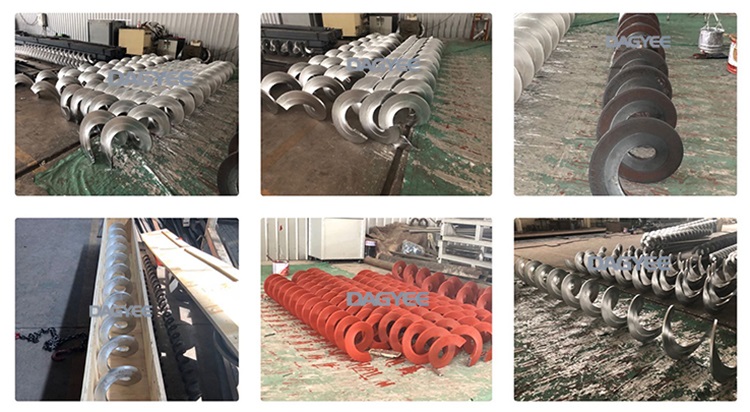
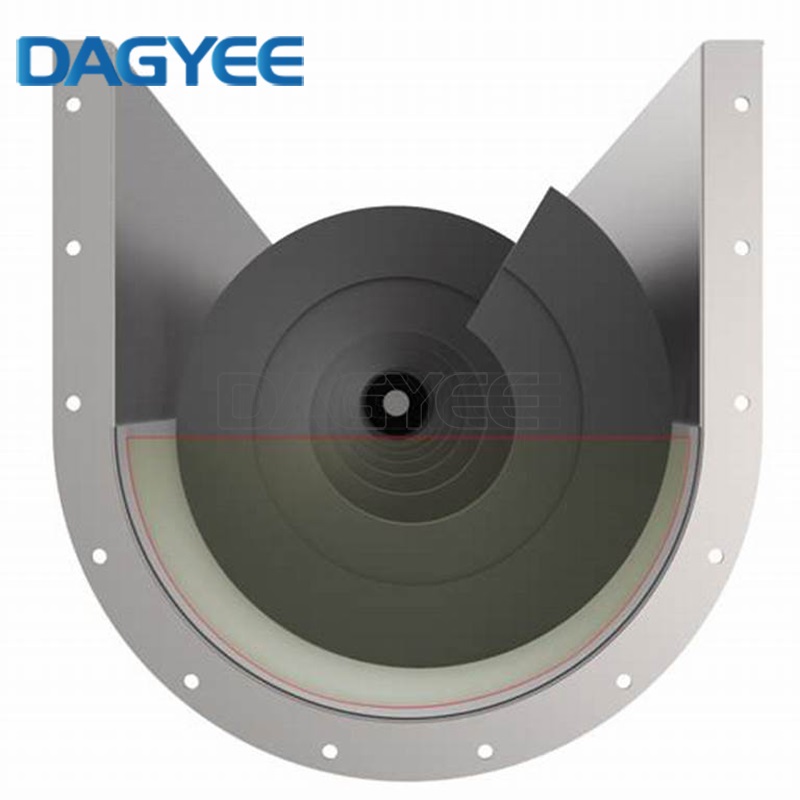
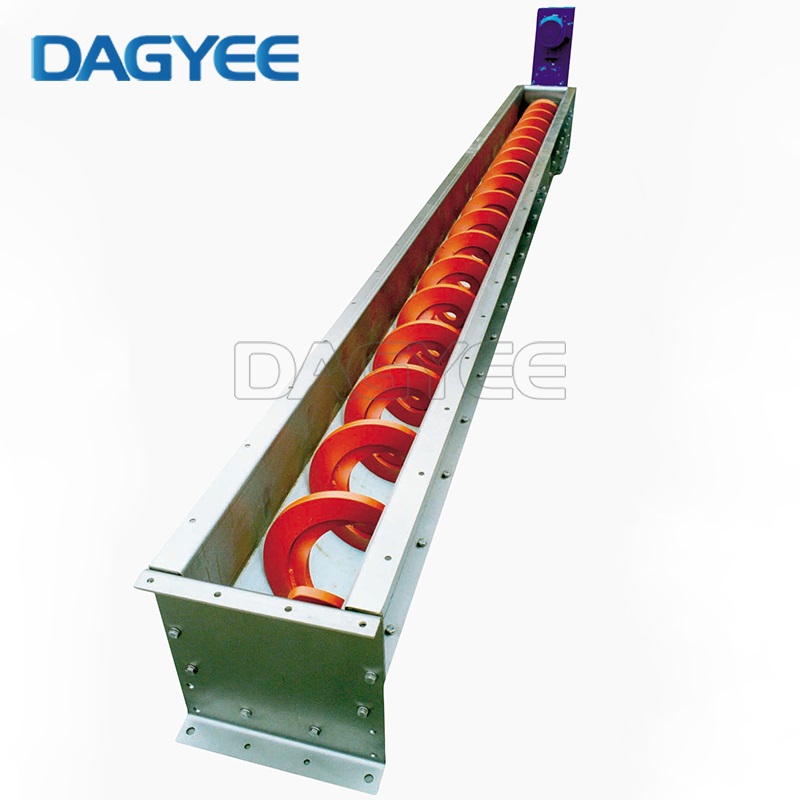
The shaftless screw conveyor, also called shaftless spiral auger, was developed specifically to solve these long-standing operational headaches. Its core design removes the entire central shaft and intermediate hanger bearings. Instead of segmented flight blades mounted on a core, a single one-piece heavy spiral ribbon connects directly to a high-torque gear drive at the discharge head. This ribbon slides over replaceable low-friction wear liners fitted inside U-shaped or octagonal troughs. Without any internal support points for waste to tangle around, the unit handles viscous, lumpy, fiber-rich materials that routinely cripple standard augers.
This piece shares hands-on sizing logic built from years of on-site equipment commissioning, clear material matching rules, real plant operation cases, side-by-side performance comparisons against shafted conveyors, and common costly sizing mistakes I’ve seen engineering and procurement teams repeat across wastewater, solid waste, food and chemical plants. Every calculation standard and material grade suggestion comes from actual field testing rather than generic manufacturer marketing language. By following the step-by-step selection process laid out below, you can pick a properly sized shaftless spiral conveyor that matches your unique production flow, avoiding both underpowered hardware and unnecessary overspending on over-spec components.
1. Real-World Functional Benefits of Shaftless Spiral Conveyors
The structural gap between shaftless and conventional screw conveyors creates tangible daily operational improvements for sites processing hard-to-handle bulk waste. Below are the five biggest practical advantages operators notice right after switching over:
1.1 Minimal Blockages & Zero Fiber Winding
There’s simply no central steel shaft running through the trough for long fiber, vegetable peelings, or textile scraps to wrap around. For kitchen waste treatment facilities, this eliminates daily downtime spent cutting away grease and tangled fiber buildup that clogs regular augers. Municipal sewage plant operators I’ve worked with report blockage-related downtime drops by over 80% after retrofitting shaftless spiral systems for filter-press sludge transport.
Traditional shafted augers can only safely run at 15%–30% trough fill capacity to prevent material compacting around the core shaft. Shaftless units operate stably at 50% to 90% fill rate on horizontal runs, delivering far higher material throughput within the same floor footprint. For large-scale waste processing facilities, this means fewer conveyor lines to install, saving space and cutting overall equipment investment.
1.2 Far Less Regular Maintenance Work
Hanger bearings are the fastest-wearing component on standard screw conveyors, requiring inspection, lubrication and replacement every one to three months when running with high-moisture waste. Since shaftless models remove all intermediate bearing assemblies, routine maintenance work shrinks down to two core tasks: checking wear liner thickness every quarter, and changing gearbox lubricant on a semi-annual schedule. The wear liners slide out for replacement without fully dismantling the heavy spiral ribbon, cutting labor hours spent on equipment service by more than half each year.
1.3 Fully Sealed Troughs Control Odor & Liquid Spills
Most shaftless screw conveyor troughs come fitted with bolted sealed cover plates and rubber flange gaskets, which trap malodorous vapors and free liquid runoff inside the equipment. This design makes compliance straightforward for sewage treatment, biogas fermentation and chemical waste facilities that face strict local environmental emission rules. Unlike open-top shafted augers, sealed shaftless troughs stop leachate from dripping onto workshop floors and prevent odor drift that disturbs nearby staff or neighboring buildings.
1.4 Flexible Layouts Fit Tight or Uneven Plant Spaces
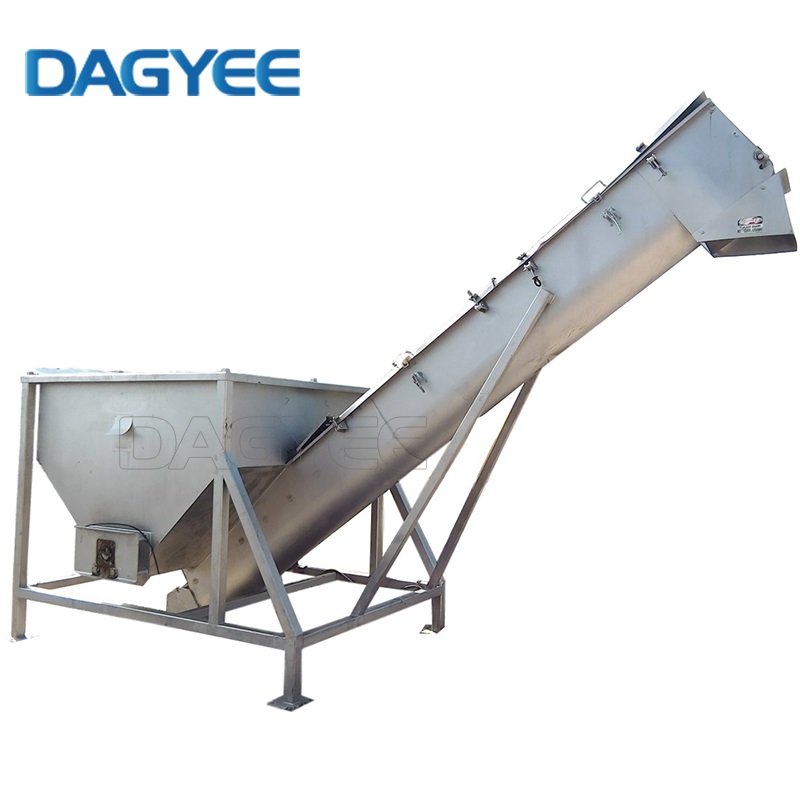
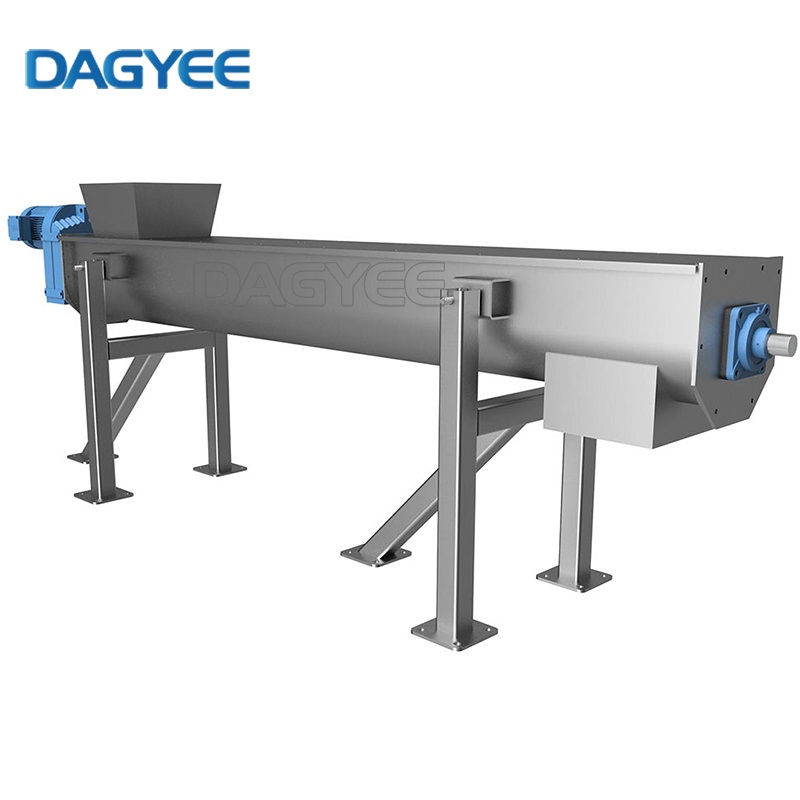
Equipment manufacturers customize shaftless spiral systems to suit three common installation layouts: horizontal material transport, low-angle inclined runs up to 20° with standard U-shaped troughs, and steep lifting sections between 20°–30° using reinforced octagonal trough casings. Short custom vertical elevator variants work well for compact sites that need vertical sludge transfer between different processing stages. For factories with uneven floor levels or segmented processing zones, bolted segmented trough sections simplify on-site assembly and minor alignment adjustments during installation.
1.5 Handles Irregular, Lumpy Feedstock Without Jams
Large soft chunks such as compost piles, shredded organic waste and clumped chemical filter cake move unobstructed through the empty trough interior. The maximum lump size the conveyor can process nearly matches the full internal width of the trough. On regular shafted augers, the central shaft creates a narrow bottleneck that traps oversized material, triggering frequent jam alarms and emergency stops.
1.6 Practical Design Drawbacks You Need to Account For
Shaftless spiral conveyors aren’t a universal fit for every material transport task, and ignoring their built-in limitations leads to poor long-term return on investment. Two key constraints must factor into early-stage equipment selection:
a) The friction between spiral ribbon and wear liner creates much higher torque loads, so matching motors need 20%–40% more power than same-diameter shafted conveyors. This pushes up upfront costs for drive assemblies on 24/7 continuous operation lines.
b) The one-piece spiral ribbon can’t span unlimited distances. A single shaftless conveyor unit shouldn’t cover more than 30 meters of transport path. Sites needing longer runs need to split the route into multiple independent conveyor sections with separate drive motors, rather than ordering an over-length single spiral that bends under heavy load and rapidly grinds down wear liners.
Table 1: Standard Shaftless Screw Conveyor Practical Technical Parameter Chart
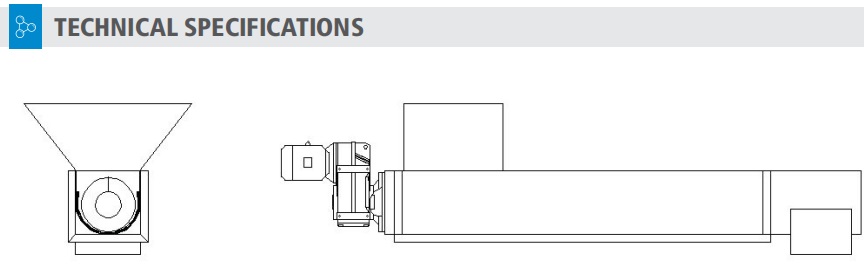
| Spiral Outer Diameter | Standard Matching Pitch | Max Hourly Throughput (Horizontal, 70% Fill Ratio) | Practical Rotational Speed Range | Minimum Spiral Ribbon Thickness | Matching Drive Power Range | Common Trough Selection | Typical Application Scales |
|---|---|---|---|---|---|---|---|
| 150 mm | 150 mm | 4–8 m³/h | 30–40 RPM | 8 mm | 1.5–3 kW | U-shaped open/closed | Lab test lines, small food residue transport, mini decentralized sewage stations |
| 200 mm | 200 mm | 9–16 m³/h | 25–35 RPM | 10 mm | 2.2–4 kW | Sealed U-trough | Small restaurant kitchen waste, livestock farm manure transfer |
| 260 mm | 260 mm | 18–32 m³/h | 20–30 RPM | 12 mm | 3–5.5 kW | Standard U-trough | Medium-sized sewage plant sludge, brewery spent grain conveying |
| 320 mm | 320 mm | 35–60 m³/h | 20–28 RPM | 14 mm | 4–7.5 kW | Switchable U/octagonal | Mid-scale municipal wastewater plants, pulp mill waste fiber recovery |
| 380 mm | 380 mm | 62–95 m³/h | 18–25 RPM | 16 mm | 5.5–11 kW | Octagonal trough preferred | Large kitchen waste disposal centers, biogas digestate transport |
| 470 mm | 470 mm | 98–135 m³/h | 15–22 RPM | 18 mm | 7.5–15 kW | Heavy-duty sealed | Industrial chemical sludge, waste tire pyrolysis slag delivery |
| 630 mm | 630 mm | 140–190 m³/h | 12–18 RPM | 20–25 mm alloy ribbon | 15–30 kW | Reinforced thickened octagonal | Large municipal waste sorting lines, mass compost material handling |
Table Usage Notes: All throughput figures apply to materials with bulk density between 0.8–1.2 t/m³. When installed on inclines, actual output drops based on correction factors: 0.82 at 10°, 0.65 at 20°, below 0.45 for angles steeper than 25°. If your feedstock carries grit or sharp abrasive particles, upgrade the spiral ribbon to alloy steel as standard.
2. Step-by-Step On-Site Sizing Workflow for Shaftless Screw Conveyors
2.1 Step 1: Analyze Your Feedstock to Judge Conveyor Suitability
Material physical characteristics decide two critical things: whether a shaftless spiral design will deliver reliable performance, and what metal grades, liner materials and spiral thickness you need to order. From years of site visits, I split all common bulk waste into three simple groups for quick reference: ideal feedstock, conditional feedstock that needs custom upgrades, and materials that you should never run through a shaftless conveyor.
2.1.1 Materials That Work Perfectly With Shaftless Spiral Conveyors
a) Sticky, high-moisture semi-solids: Dewatered municipal sludge, industrial wastewater filter cake, farm livestock manure slurry, fruit and vegetable pomace from food processing
b) Long fibrous waste streams: Waste paper pulp, textile fiber scraps, vegetable waste strands from kitchen waste lines, algae sludge from aquaculture wastewater treatment
c) Lumpy organic bulk materials: Screened domestic waste residue, compost piles, shredded crop straw, crushed leftover food waste
d) Odorous, mildly corrosive semi-solids: Biogas fermentation digestate, pickling plant sludge, fermentation tank leachate residue
2.1.2 Conditional Feedstock (Must Add Custom Component Upgrades)
High-temperature furnace slag, sludge mixed with light grit residue, low-viscosity chemical waste. These materials require alloy spiral ribbons, cast metal wear liners and heat-resistant sealing gaskets to extend service life and avoid frequent part replacement.
2.1.3 Materials Not Suitable for Shaftless Conveyor Systems
Dry ultra-fine powders like cement dust and lime flour slide backward along the spiral surface when the conveyor runs at an incline. This cuts real-world throughput by over half and wastes excess motor power. Hard, sharp heavy bulk such as uncrushed rock, solid metal scrap and large stone aggregate will quickly tear the continuous spiral ribbon and gouge plastic wear liners, leading to irreversible equipment failure within a few weeks of continuous running. For free-flowing dry granular goods such as plastic pellets and dried grain, standard shafted augers cost far less and consume less electricity long-term.
Table 2: Spiral & Trough Material Matching Chart Based On Site Operating Conditions
| Working Environment Type | Spiral & Trough Base Material | Default Wear Liner Option | Max Continuous Working Temperature | Main Matching Industry Scenarios |
|---|---|---|---|---|
| Non-corrosive low-moisture organic waste | Hot-dipped galvanized carbon steel | UHMWPE plastic liner | ≤120°C | Livestock breeding farms, outdoor compost processing yards |
| Food-grade weak acid/alkali residues | SUS304 stainless steel | Food-safe non-toxic UHMWPE liner | ≤100°C | Fruit juice processing, brewery spent grain, seafood byproduct transport |
| Moderate to strong corrosive chemical sludge | SUS316L stainless steel | Nylon composite wear plate | ≤150°C | Electroplating wastewater workshops, chemical plant filter cake discharge |
| High-temperature abrasive industrial slag | Heat-resistant alloy steel | Cast alloy metal liner | ≤400°C | Waste tire pyrolysis plants, thermal industrial waste treatment lines |
2.2 Step 2: Calculate Required Throughput & Lock In Spiral Diameter
The volumetric transport capacity formula for shaftless screw conveyors takes all core operating variables into account: Q = D² × Pitch × RPM × Fill Factor × Bulk Density × Incline Correction Coefficient Q stands for hourly volumetric output in cubic meters. For balanced material pushing force, most standard spirals use equal pitch matching the outer diameter. We add reduced-pitch sections at feed hoppers to boost intake volume during peak feeding, while wider pitch segments at discharge ends speed up material evacuation and stop buildup at outlet openings.
From on-site commissioning experience, I don’t recommend ordering a single spiral unit sized for throughput over 140 m³/h. Installing two parallel mid-diameter shaftless conveyors delivers much more stable operation and simpler maintenance compared to one oversized spiral ribbon that bends easily under heavy torque loads.
2.3 Step 3: Select Trough Style Based On Installation Angle
Two mainstream trough constructions cover nearly all factory installation needs, each with clear pros and cons for different elevation requirements:
a) U-shaped trough: Lower manufacturing cost, easy access for liner inspection and replacement. Best for horizontal transport or inclines below 20°, and the most common choice for wastewater and food waste processing lines thanks to simple daily inspection access.
b) Octagonal reinforced trough: Angled side walls prevent material sliding back when lifting materials between 20°–30°. The fully sealed shell locks in odors and liquid leachate, making this the go-to design for vertical sludge lifting sections at municipal sewage treatment plants.
c) Hard layout limit to remember: A single spiral unit can’t maintain stable material transport over runs longer than 30 meters. For longer-distance transport projects, split the conveyor path into multiple independent shaftless spiral sections with separate geared drive assemblies to avoid spiral deflection and accelerated liner abrasion.
2.4 Step 4: Choose Spiral Ribbon Thickness According To Abrasion Levels
Light-load, low-abrasion feedstock such as brewery grain and soft fruit pomace works well with 8–12 mm thick spiral ribbons. Medium-duty municipal sludge and waste paper fiber need 14–18 mm thickness to resist bending under constant torque pressure. If your feedstock carries grit, shredded hard waste or high-temperature abrasive slag, upgrade to heavy 20–25 mm alloy reinforced ribbons to stop tearing or permanent deformation during continuous operation.
2.5 Step 5: Oversize Drive Power With Ample Safety Margin
Friction between the spiral ribbon and trough liner creates much higher torque loads than standard shafted augers. Industry field standards suggest reserving at least a 30% power safety margin above the theoretical calculated motor load, to handle unexpected sudden feed surges and minor material compact blockages. Helical gear reducers with flange direct-drive mounting are the most reliable standard configuration on the market. For biogas plants, chemical waste workshops and any zone with flammable volatile organic vapors, explosion-proof motor variants become a mandatory safety upgrade.
3. Real Industrial Site Applications of Shaftless Screw Conveyors
3.1 Municipal & Industrial Wastewater Treatment (Largest Application Market)
Sewage treatment facilities rely on shaftless screw conveyors to move dewatered sludge discharged from belt filter presses and centrifugal dewatering machines into storage silos or sludge transport trucks. Take a mid-sized municipal plant in Southeast Asia processing 120,000 cubic meters of wastewater each day as an example: six sets of 320 mm diameter SUS304 shaftless spiral units run 24 hours a day all year round, moving 35 cubic meters of 80% moisture sludge per hour for each line. After installation, operational audits showed annual bearing replacement maintenance costs dropped by 87%, and downtime spent clearing blockages fell from 12 hours each month to less than one full hour per quarter.
Sealed trough shells contain hydrogen sulfide odors released by anaerobic sludge, keeping plant work areas compliant with workplace air quality regulations. Small decentralized community sewage stations adopt compact 150–260 mm diameter models for low-volume sludge transfer with minimal daily operator supervision.
3.2 Kitchen Waste & Municipal Solid Waste Sorting
Greasy, fiber-rich food waste wraps tightly around central shafts of regular augers, often causing full line blockages within two to three production shifts. Shaftless spiral design removes this recurring failure risk completely. Waste processing facilities order thickened heavy-duty spiral variants for mixed waste containing bone fragments and hard vegetable cores, to prevent gouging damage on the ribbon surface.
Common integration positions include transporting screening residue from waste sorting lines, circulating pulped kitchen waste before anaerobic digestion, and moving finished compost mass to curing bunkers. Fully covered sealed troughs stop grease-laden leachate from spilling onto workshop floors and cut down pest activity around waste handling zones.
3.3 Pulp & Paper Production Plants
Waste paper fiber, pulp slurry and white mud residue cause constant winding blockages on traditional screw transport equipment. Manufacturers install SUS304 food-grade shaftless spiral conveyors to transfer wet pulp between processing stages and evacuate waste fiber recovery streams. The smooth, unbroken spiral surface reduces fiber adhesion buildup, simplifying daily washdown sanitation steps required to stop mold growth inside conveying equipment.
3.4 Food & Beverage Manufacturing Lines
Fruit pomace, seafood processing sludge, spent brewery grain and vegetable cutting residues all count as ideal feedstock for shaftless screw conveyors. Food-grade design requirements demand full SUS304 product contact surfaces, non-toxic FDA-compliant UHMWPE liners and quick-disassemble trough frames to support CIP clean-in-place sanitization cycles. Sealed silicone gaskets avoid cross-contamination between different production batches and block insect infiltration points inside the equipment shell.
3.5 Chemical & Hazardous Waste Disposal Workshops
Pickling sludge, paint production residues and polymer viscous waste carry corrosive properties and often release toxic volatile vapors. SUS316L stainless steel spiral and trough assemblies withstand long-term chemical exposure, while fully enclosed trough casings trap hazardous fumes to protect on-site operators. Any unit installed within solvent storage or reaction zones must use certified explosion-proof drive motors to eliminate ignition risks from electrical sparks.
3.6 Biomass & Waste Tire Thermal Pyrolysis Lines
Crushed rubber tire fragments, shredded plastic waste and high-temperature biomass slag bring both abrasion and heat stress during furnace feeding operations. Custom alloy shaftless spiral conveyors paired with cast metal wear liners handle continuous working temperatures up to 350°C without warping. Traditional shafted augers fail quickly in this working condition because intermediate hanger bearings degrade under high heat, making shaftless hardware the only practical long-term transport choice for thermal waste recovery workflows.
3.7 Livestock Breeding & Biogas Fermentation Yards
Farm manure, biogas digestate and chopped crop straw create low-corrosion, moderately sticky bulk transport demands. Hot-dipped galvanized carbon steel shaftless spiral units lower upfront equipment costs, and UHMWPE liners resist organic acid wear from manure runoff. Outdoor sealed drive housings stand up to humid barn and fermentation yard environments without fast gearbox corrosion.
Table 3: Side-by-Side Performance Comparison – Shaftless vs Conventional Shafted Screw Conveyor
| Evaluation Index | Shaftless Screw Conveyor | Traditional Shafted Screw Conveyor |
|---|---|---|
| Anti-blockage & anti-winding effect | Excellent; no central shaft for fiber to wrap around | Poor; fibrous materials tangle around core shaft frequently |
| Maximum safe trough fill ratio | 50%-90% for horizontal running | 15%-30%, limited by central shaft obstruction |
| Frequency of routine maintenance & labor load | Low; only liner and gearbox service needed | High; monthly hanger bearing lubrication, inspection and replacement |
| Required drive motor power consumption | Needs 20%-40% higher torque output | Low power draw for the same spiral diameter |
| Initial equipment purchase cost | Base price 2–3 times higher than shafted models | Low upfront hardware investment |
| Maximum single-unit transport distance | Max 30 meters to avoid spiral deflection | Up to 60 meters with supporting hanger bearings |
| Most suitable feedstock type | Sticky, fibrous, lumpy semi-solids and high-moisture sludge | Dry free-flowing granular materials, fine powder, low-viscosity plastic pellets |
| Long-term stability under high temperature | Very stable; no internal heat-sensitive bearings | Poor; hanger bearings degrade rapidly above 120°C |
4. Frequent Costly Sizing Mistakes & Practical Fixes From Site Experience
Many factories waste capital and production uptime by rushing equipment sizing without full feedstock and layout analysis. Below are four mis-specification scenarios I encounter repeatedly during new plant construction and equipment replacement projects, paired with proven on-site solutions:
4.1 Picking Shaftless Conveyors For Dry Ultra-Fine Powder Transport
Dry cement dust, mineral lime flour and other low-friction powders slide backward along inclined spiral runs, cutting real throughput to less than half the designed figure while wasting extra electricity. The simple fix is switching to tubular shafted screw conveyors built specifically for low fill-rate dry powder transport, which eliminates backslide and cuts long-term power bills.
4.2 Using Thin Standard Carbon Steel Ribbons For Gritty Abrasive Waste
Factories transporting sludge mixed with construction grit, metal scrap residue or crushed rock fragments often choose low-cost 10–12 mm spiral ribbons, which tear completely within three months of continuous operation. Upgrading to 20 mm alloy reinforced spiral ribbon plus cast metal wear liners extends equipment service life for multiple years, even with higher initial material costs.
4.3 Installing Standard U-Trough For Inclines Steeper Than 25° Without Adjusting Parameters
When operators mount standard U-shaped troughs on steep lifting angles and ignore incline throughput correction formulas, materials slide backward constantly and barely move toward the discharge outlet. Switching to reinforced octagonal trough bodies and reducing the design fill ratio to 40% stabilizes material movement and recovers target hourly transport capacity.
4.4 Ordering One Over-Length Spiral For Transport Runs Over 35 Meters
Some engineers specify a single extra-long shaftless spiral unit to skip purchasing multiple drive assemblies, unaware that unsupported long ribbon sections bend under heavy torque loads. Constant bending creates concentrated hotspots that grind down liners rapidly and leave permanent deformation on the spiral ribbon. Splitting the transport line into two or three independent shorter conveyor segments removes deflection risks and drastically cuts liner replacement frequency.
5. Practical Operation Tips To Extend Shaftless Conveyor Service Life
Even perfectly sized shaftless screw conveyors wear out components early without consistent standardized operating rules. These five simple maintenance and operation habits extend liner and spiral lifespan while keeping throughput stable day in and day out:
a) Keep steady rotational speed within the 20–40 RPM economic range matched to your spiral diameter. Long-running high-speed rotation far above recommended thresholds accelerates liner abrasion drastically and speeds up gearbox fatigue damage.
b) Maintain steady, controlled feed volume with buffer hoppers and variable-speed feeders. Sudden massive material surges overload spiral torque and create impact stress cracks along the ribbon edge over months of continuous running.
c) Inspect liner thickness every three months. Schedule liner replacement once residual liner thickness drops below 3 millimeters to avoid metal-on-metal friction between spiral ribbon and steel trough casing.
d) Fit automatic spray wash systems at discharge ends if you process grease-heavy sticky feedstock such as kitchen waste and oil-contaminated sludge. Regular washing prevents permanent caked material buildup that increases spiral drag torque during operation.
e) Install torque overload protection sensors on geared drive units. The system triggers automatic shutdown when blockages spike torque load, stopping irreversible spiral ribbon deformation before staff can manually clear the jam.
Conclusion
Getting sizing right relies on a full review of feedstock physical traits, target hourly throughput, on-site installation geometry, chemical corrosion exposure and sustained operating temperature, rather than picking generic one-size-fits-all options from manufacturer catalogs. Plant engineers and procurement teams that follow the six-stage sizing framework covered in this article avoid expensive mis-specification errors that drag down production efficiency and push multi-year maintenance spending far above budget.
If your core priorities are anti-clog performance, sealed odor control and minimal regular maintenance work, shaftless spiral conveyors are your ideal dedicated transport equipment. If you handle dry free-flowing granular materials or need single-unit transport runs longer than 30 meters, conventional shafted screw augers remain the more cost-balanced alternative. Matching equipment design precisely to your workshop workflow guarantees consistent throughput, longer component service life and stable daily production performance across all bulk waste handling industrial sectors.

Name: Ashely Li
Mobile:+8613961861780
Tel:+8613961861780
Whatsapp:8613961861780
Email:info@dagyee.com
Add:Room 302, Building 11-4, Hongyi Road, Xinan Town, Xinwu District, jiangsu Province, China