English
 Chinese
info@dagyee.com
+8613961861780

Belt filter presses remain one of the most widely adopted solid-liquid separation equipment across municipal wastewater treatment, mining tailings disposal, pulp and paper manufacturing, and industrial sludge treatment industries. Thanks to their continuous working mode, low initial capital investment, and simple installation requirements, belt filters have become the mainstream dewatering solution for small and medium-sized industrial plants and urban sewage stations worldwide.
However, after decades of field application and repeated industrial verification, the inherent structural and technical defects of traditional belt filter presses have gradually become prominent. From excessive chemical consumption and unstable dewatering efficiency to frequent equipment failures and high daily maintenance costs, these long-standing industry pain points have severely restricted production efficiency and increased the overall operating expenditure of enterprises.
Based on open-access industrial research data from the U.S. EPA, Western Australian mining engineering studies, and long-term field monitoring reports of pulp and paper sludge treatment, this article systematically analyzes the core operational drawbacks of conventional belt filter presses in complex working conditions. It also provides targeted practical optimization references, helping industrial users accurately identify equipment problems and reduce unnecessary production losses.
1. Over-Reliance on Flocculants and Excessive Chemical Operating Costs
One of the most prominent and costly pain points of traditional belt filter presses is their extreme dependence on polymer flocculants, mainly PAM (Polyacrylamide). Unlike pressure filter presses that rely on high mechanical pressure for solid-liquid separation, belt filter dewatering depends entirely on flocculated sludge flocs to intercept fine particles on the filter belt surface. Without stable and dense floc formation, tiny sludge particles will directly penetrate the filter cloth, causing severe solid loss and turbid filtrate.
Relevant data from Cape Peninsula University of Technology’s field research shows that polymer consumption accounts for 30% to 40% of the total annual operating cost of belt filter press systems. In actual industrial operation, most factories adopt manual visual dosing adjustment, which cannot respond dynamically to real-time changes in sludge concentration, viscosity, organic content, and particle size. When sludge water content fluctuates slightly, manual dosing either leads to excessive polymer waste or insufficient flocculation effect.
For mining tailings and high-fiber paper sludge scenarios, the problem becomes more serious. Ultra-fine mineral particles and fragmented cellulose fibers require higher flocculant dosage to form stable flocs. Statistical data from mining filtration experiments shows that medium-sized mineral processing plants waste 20% to 35% of flocculant resources every year due to inaccurate manual dosing, forming a long-term hidden cost burden for enterprise production.
2. Low Cake Dryness Ceiling and Elevated Transportation & Disposal Costs
Limited by the structural design of low-pressure belt extrusion, traditional belt filter presses have an insurmountable upper limit on sludge dewatering dryness. According to the U.S. EPA biosolids treatment technical manual, the total solid content (TS) of sludge cake discharged by conventional belt filters is only between 14% and 35%, far lower than the 50% to 65% solid content of chamber filter presses.
Low cake dryness brings a series of derivative cost problems. The high-moisture sludge cake increases the overall transportation weight, directly raising trucking frequency and logistics costs. In terms of terminal disposal, wet sludge with excessive water content will generate higher landfill tipping fees and cannot meet the dry-stacking standards of mining tailings. Many mining enterprises have to reserve large-area temporary storage yards for natural air drying, which occupies production land and delays the overall project progress.
In municipal sewage treatment scenarios, low-dryness sludge cake also increases the load of subsequent sludge incineration and resource utilization. Excessive moisture requires more fuel consumption for drying, further amplifying the secondary operating cost of the entire sewage treatment system.
3. Frequent Filter Belt Blinding, Wear and Short Service Life
Filter belt blinding and premature wear are the most common recurring faults of belt filter presses in long-term operation. Industrial sludge often contains grease, organic colloids, fine clay particles, and plant cellulose fibers. These tiny substances are easy to adhere to the micropores of the polyester filter belt and form hardened dirt after continuous extrusion and air drying, resulting in belt blinding.
Once the filter belt is blinded, the water permeability of the gravity drainage area drops sharply, the equipment processing capacity decreases significantly, and the sludge cake cannot be completely discharged. To restore filtration performance, workers must conduct high-pressure water washing for a long time after each shift, which causes huge water resource waste. For mining and sand washing working conditions, abrasive quartz sand and hard mineral particles will continuously scratch the filter belt surface during operation.
According to Western Australian university mining filtration research data, the average service life of the filter belt in mineral tailings treatment is only 4 to 8 months. Frequent filter belt replacement not only increases the consumable cost but also requires repeated shutdowns for disassembly, replacement, and debugging, resulting in continuous production downtime losses. In addition, filter belt deviation, slipping, and local tearing caused by uneven tension are also common sudden faults that affect stable production.
4. Huge Water Consumption and Secondary Filtrate Pollution Risks
Continuous high-pressure spray cleaning is a necessary supporting process for belt filter press operation, which is an inherent high water consumption pain point of the equipment. A single medium-sized belt filter press consumes 5 to 12 tons of clean water per working shift to wash residual sludge on the filter belt surface and unclog blocked micropores.
The washing wastewater and equipment filtrate contain a large number of suspended fine solids, colloidal impurities, and residual polymer components. Most enterprises need to recycle this part of the wastewater back to the front-end sedimentation tank and biochemical treatment system, which significantly increases the treatment load of the entire sewage process. For small and medium-sized factories without complete filtrate recovery systems, direct discharge of unqualified filtrate will bring environmental compliance risks and additional sewage treatment surcharges.
5. Narrow Working Condition Adaptability and Sensitive to Feed Fluctuations
Traditional belt filter presses have extremely strict requirements on incoming sludge parameters and poor adaptability to complex and variable working conditions. Slight changes in feed flow rate, solid concentration, pH value, organic matter content, and particle size distribution will lead to a sharp decline in dewatering performance.
Field monitoring data of paper mill sludge dewatering shows that when the proportion of cellulose fibers in sludge increases or the viscosity of anaerobic fermented sludge rises, conventional belt filters are prone to sludge leakage from the belt gap, uneven cake thickness, and incomplete dewatering. The equipment cannot independently adapt to ultra-fine particle sludge, high-oil industrial sludge, and high-viscosity organic sludge, requiring manual adjustment of operating parameters and enhanced pre-conditioning processes, which greatly increases the difficulty of automatic production.
6. Complex Mechanical Structure and High Daily Maintenance Workload
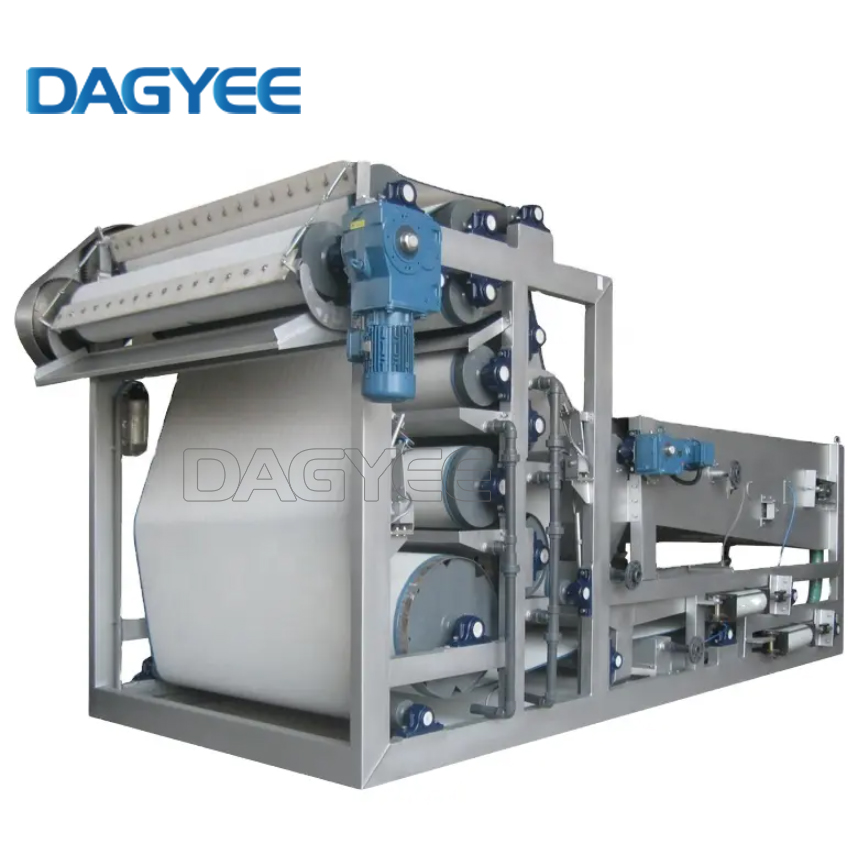
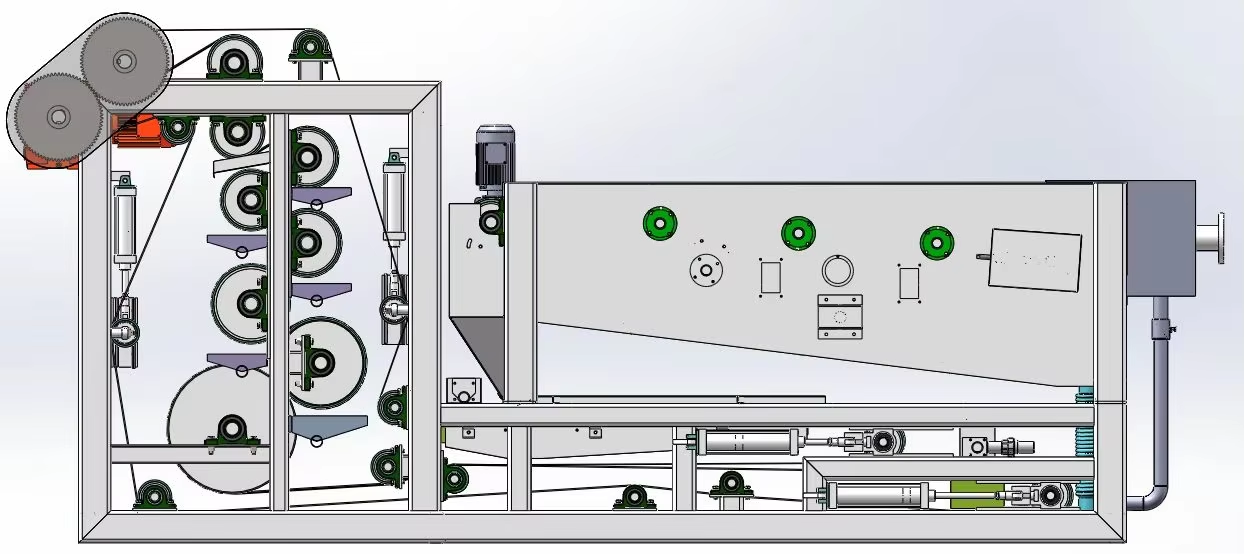
Compared with centrifuges and integrated plate filter presses, belt filter presses have more scattered moving parts and complex mechanical structures, including tension rollers, pressure rollers, drive gears, pneumatic deviation correction cylinders, bearing assemblies, and spray pipeline systems. Multiple operating components mean multiple fault points and higher daily maintenance costs.
Daily routine maintenance includes filter belt tension calibration, roller lubrication, nozzle blockage cleaning, deviation correction system inspection, and aging component replacement. For most industrial sites, minor faults such as bearing wear, roller misalignment, and valve aging occur every 2 to 4 weeks, requiring frequent shutdown inspections and maintenance. Small and medium-sized enterprises without professional maintenance engineers often face prolonged production shutdowns due to minor equipment faults, causing invisible economic losses.
7. Open Structure Design and Environmental Compliance Pressure
Most traditional belt filter presses adopt an open-frame structure without fully sealed protective design. In the process of gravity drainage and low-pressure extrusion of anaerobic sludge, harmful gases such as hydrogen sulfide and volatile organic compounds will be continuously released, producing pungent odor pollution.
For urban sewage treatment plants and factories close to residential areas, odor emission is easy to trigger environmental complaints and supervision inspections. To meet increasingly strict environmental protection standards, enterprises must additionally invest in fully sealed enclosures, exhaust ventilation systems, and deodorization equipment, which increases the initial investment cost of the dewatering system by 15% to 25%. The open structure also leads to splashing of sludge and filtrate during operation, causing on-site environmental sanitation problems.
8. Low Fine Solid Interception Rate and Resource Waste
The conventional polyester filter belt of belt filter presses has limited interception capacity for ultra-fine particles below 10μm. A large number of fine mineral particles, biomass fibers, and recyclable organic solids penetrate the filter belt and flow out with the filtrate, resulting in serious resource loss.
Mining and bio-fermentation industry data shows that traditional belt filter systems cause 6% to 12% of recyclable raw material loss every year. While reducing the resource recovery rate of enterprises, the leaked fine solids will also accumulate in the circulating water system, causing pipeline and equipment blockage and affecting the long-term stable operation of the production system.
II. Core Data Tables for Belt Filter Press Performance & Pain Point Analysis
Table 1: Standard Technical Parameters of Industrial Belt Filter Press (2026 Specification)
| Parameter Item | 750mm Model | 1500mm Model | 2500mm Model | 3000mm Model |
|---|---|---|---|---|
| Filter Belt Effective Width | 750mm | 1500mm | 2500mm | 3000mm |
| Effective Filtration Area | 6.5 m² | 16.4 m² | 26.7 m² | 31.9 m² |
| Sludge Processing Capacity | 8–12 m³/h | 20–30 m³/h | 35–45 m³/h | 45–55 m³/h |
| Discharged Cake Solid Content (TS) | 14–28% | 16–30% | 18–32% | 20–35% |
| Flocculant Consumption | 3–5 g/kg DS | 3–6 g/kg DS | 4–6 g/kg DS | 4–7 g/kg DS |
| Working Water Consumption | 5 t/shift | 8 t/shift | 10 t/shift | 12 t/shift |
| Belt Tension Pressure | 0.2 MPa | 0.3 MPa | 0.5 MPa | 0.6 MPa |
| Main Motor Power | 2.2 kW | 4.0 kW | 7.5 kW | 11 kW |
| Filter Belt Service Life (Normal Working Condition) | 6–8 months | 6–8 months | 4–6 months (mining) | 4–6 months (mining) |
Table 2: Belt Filter Press Pain Point Comparison in Different Industrial Working Conditions
| Application Scenario | Core Pain Points | Main Losses & Impacts |
|---|---|---|
| Municipal Wastewater Treatment | High polymer consumption, odor emission, unstable cake dryness, frequent belt blinding by organic sludge | High daily chemical cost, environmental complaint risks, unstable sludge disposal efficiency |
| Mining Tailings & Sand Washing | Severe filter belt wear, low fine solid interception rate, low cake dryness, large water consumption | Frequent consumable replacement, mineral resource loss, tailings dry stacking failure |
| Pulp & Paper Industry | Fiber-induced belt blinding, incomplete cake discharge, flocculant overdosage, low filtration efficiency | Continuous productivity decline, increased wastewater treatment load, high operating cost |
| Industrial Chemical Sludge | Sludge viscosity fluctuation, poor working condition adaptability, easy roller corrosion | Unstable equipment operation, frequent shutdown maintenance, low production continuity |
Table 3: Operating Cost & Maintenance Loss Comparison of Belt Filter Press
| Cost & Loss Item | Average Annual Expense | Proportion of Total OPEX | Optimization Potential |
|---|---|---|---|
| Flocculant Polymer Cost | $18,000–$35,000 | 30–40% | Reduce 20–35% consumption via automatic dosing system |
| Filter Belt Replacement Cost | $8,000–$15,000 | 15–20% | Extend service life by 30% with anti-blocking belt & intelligent cleaning |
| Water Consumption Cost | $5,000–$9,000 | 8–12% | Save 40% water via circulating filtration system |
| Maintenance & Downtime Loss | $12,000–$22,000 | 20–25% | Reduce 60% downtime via intelligent fault monitoring |
| Environmental & Disposal Additional Cost | $6,000–$12,000 | 10–15% | Eliminate odor & discharge risks through sealed optimization |
III. Root Cause Analysis of Belt Filter Press Technical Bottlenecks
After sorting out the above practical pain points, it can be concluded that all defects of traditional belt filter presses stem from two core technical bottlenecks.
First, the low-pressure extrusion design cannot provide sufficient mechanical pressure to remove deep water in sludge flocs, fundamentally limiting the upper limit of cake dryness. Second, the passive filtration mode relying solely on filter belt physical interception and manual auxiliary adjustment cannot adapt to the diversified and fluctuating industrial sludge characteristics, resulting in high energy consumption, high loss, and low efficiency operation.
In addition, the mechanical structure design of multiple moving parts and open operation mode are incompatible with the current industrial production trend of high automation, low energy consumption, and strict environmental protection. In the past decade, with the upgrading of global environmental protection policies and the increasing labor cost of industrial production, the inherent disadvantages of traditional belt filter presses have become more and more obvious, and the market demand for optimized and upgraded dewatering equipment is increasingly urgent.
IV. Practical Optimization Directions to Solve Belt Filter Press Pain Points
Aiming at the eight major industry pain points of belt filter presses, combined with the latest industrial filtration optimization technology, we summarize targeted and feasible improvement solutions for enterprise reference:
1. Adopt automatic closed-loop Polymer Dosing System:
Replace manual visual adjustment with intelligent sensing equipment to monitor sludge concentration, flow rate, and floc state in real time, dynamically adjust flocculant dosage, effectively reduce 20–35% polymer waste, and stabilize flocculation effect.
2. Upgrade high-pressure composite filter belt and intelligent cleaning system:
Use anti-blocking, wear-resistant composite filter belt materials to adapt to fine particles and abrasive working conditions. Equip with timing variable-pressure spray cleaning equipment to reduce water consumption and avoid residual sludge hardening and belt blinding.
3. Add sealed enclosure and deodorization system:
Transform the open structure into a fully sealed operating system, equipped with centralized exhaust and deodorization equipment, completely eliminate odor emission, and meet modern environmental protection supervision standards.
4. Optimize mechanical structure and intelligent monitoring:
Upgrade tension and deviation correction systems, add real-time fault monitoring
modules for rollers, bearings, and transmission parts, realize early warning of potential faults, reduce unplanned downtime, and cut daily maintenance workload.
5. Match graded pre-conditioning process:
Set up targeted sludge pre-treatment links for different working conditions, adjust sludge pH value and particle uniformity in advance, improve the adaptability of belt filter equipment, and reduce fine solid loss.
V. Conclusion
In the context of industrial upgrading and energy conservation and emission reduction in 2026, only by accurately identifying the root causes of equipment pain points and adopting targeted technical optimization and equipment upgrading can enterprises effectively reduce operating costs, improve sludge dewatering efficiency, and meet increasingly strict environmental protection and production standards. For filtration and dewatering enterprises, solving the pain points of belt filter presses is not only a way to reduce production costs but also a key to realizing standardized, automated, and green intelligent production.

Name: Ashely Li
Mobile:+8613961861780
Tel:+8613961861780
Whatsapp:8613961861780
Email:info@dagyee.com
Add:Room 302, Building 11-4, Hongyi Road, Xinan Town, Xinwu District, jiangsu Province, China