English
 Chinese
info@dagyee.com
+8613961861780

In the field of fluid mixing in industrial production, stainless steel static mixers have gradually replaced traditional mechanical stirring equipment due to their core advantages such as no moving parts, high efficiency and energy conservation, and corrosion resistance. They are widely used in multiple industries including chemical engineering, water treatment, food and pharmaceuticals, and petrochemicals. Compared with static mixers made of carbon steel or plastic, stainless steel static mixers (304/316/duplex steel) can not only adapt to complex working conditions such as high corrosion, high temperature, and high pressure, but also meet the requirements of hygienic production, making them a core device in industrial mixing systems.
I. Core Structure and Working Mechanism of Stainless Steel Static Mixers
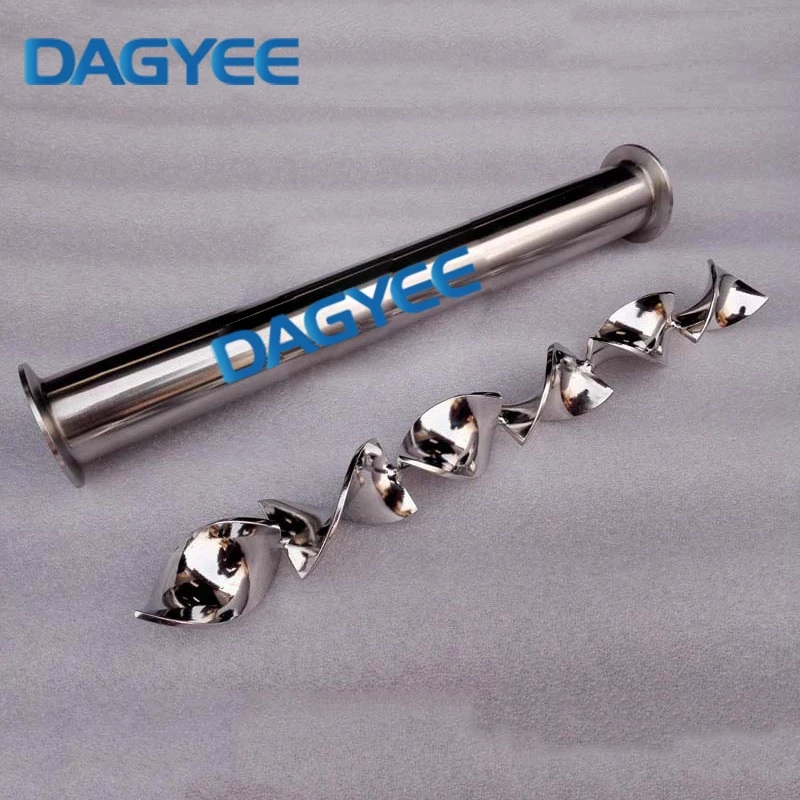
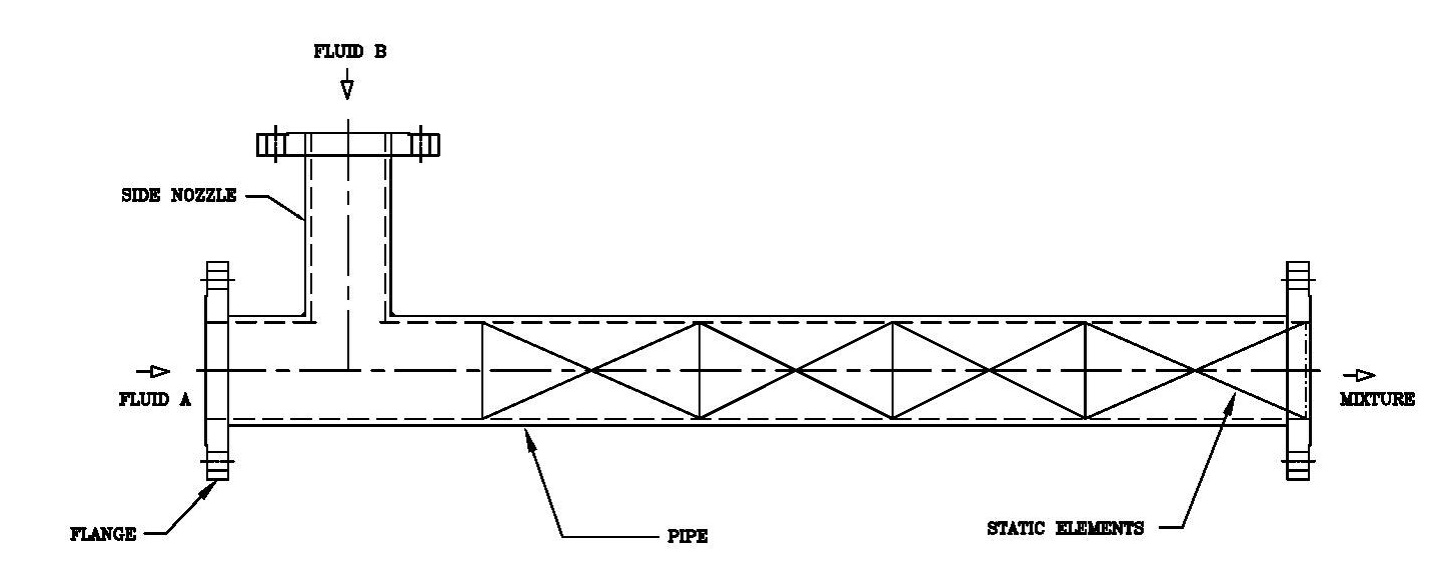
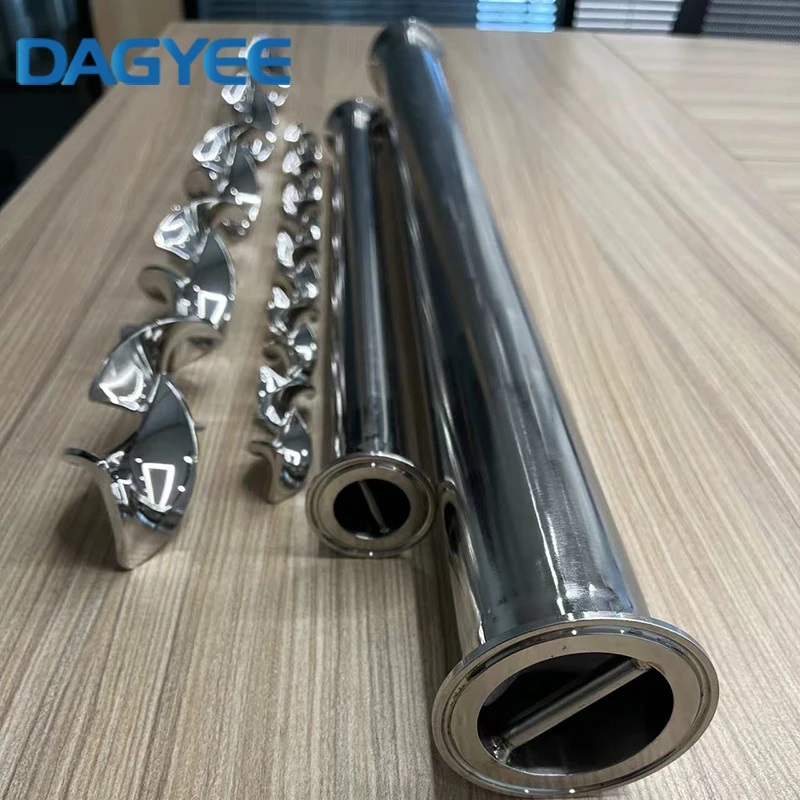
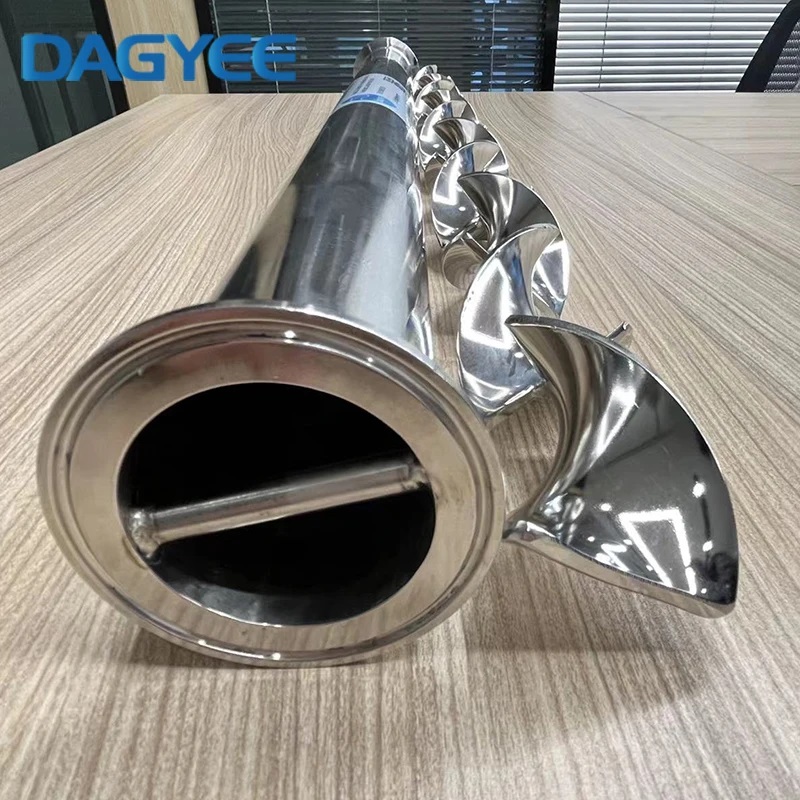
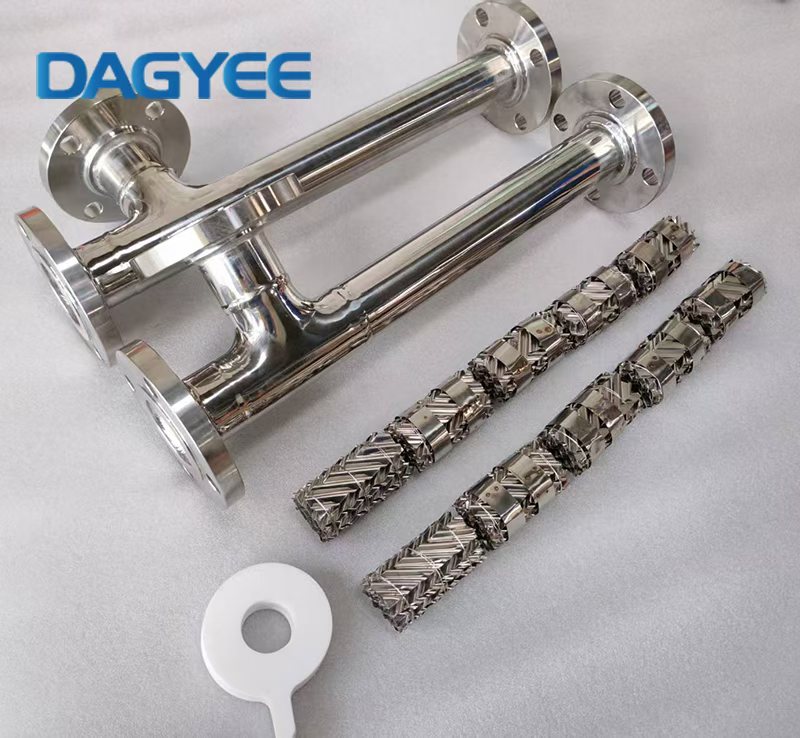
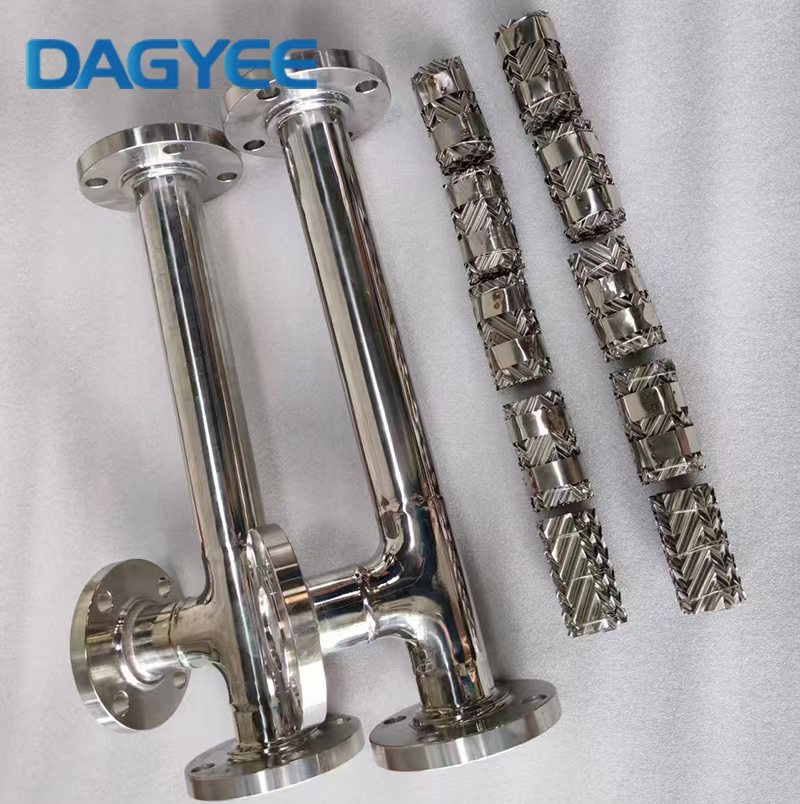
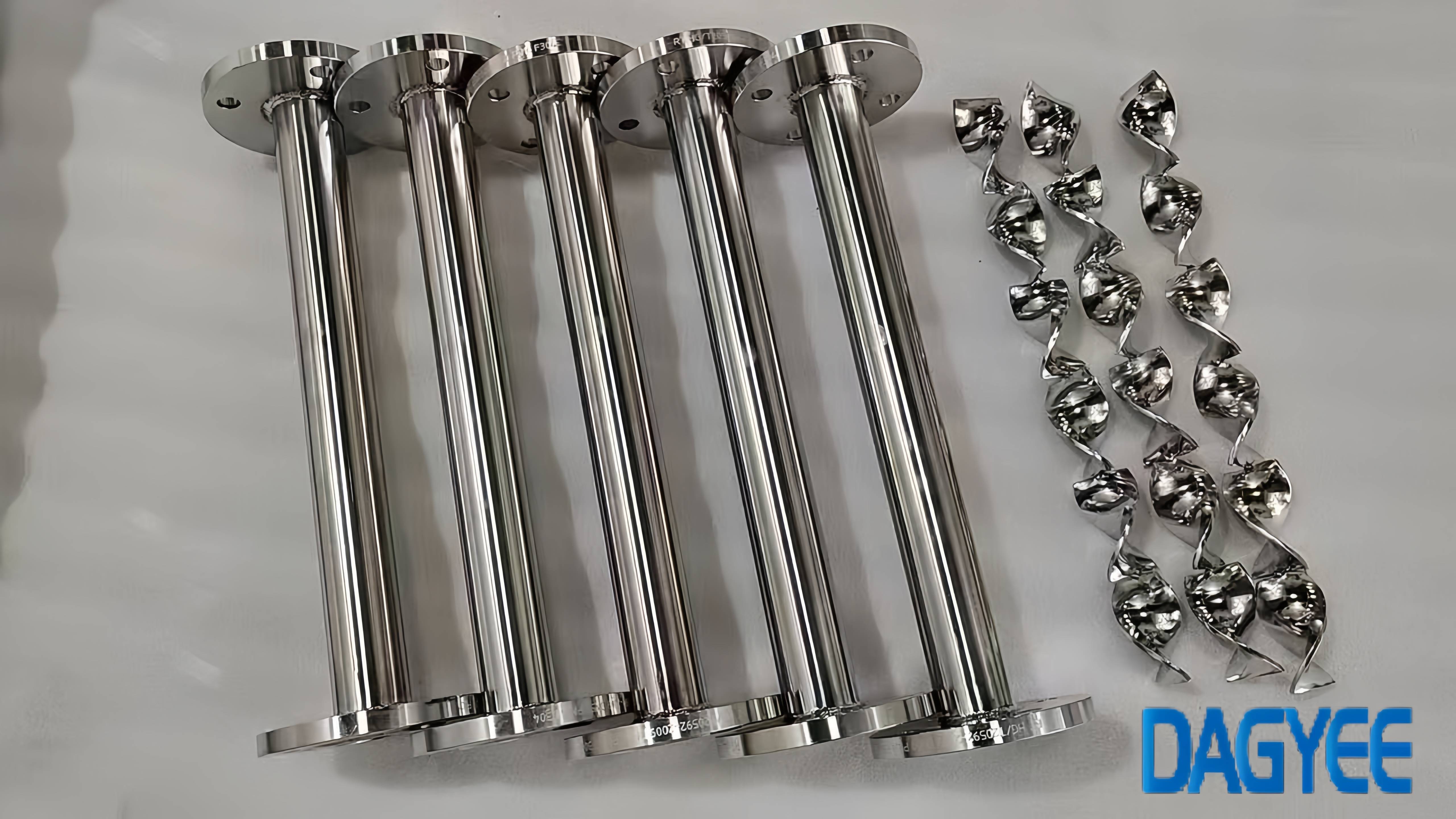
Stainless steel static mixers are pipeline devices that do not require power drive and achieve mixing by relying on the pressure of the fluid itself. Their core components are the built-in mixing units (also known as internals) in the pipeline, all made of stainless steel, and can be selected from 304, 316, 316L, or duplex stainless steel according to the working conditions. Unlike traditional mechanical stirrers, stainless steel static mixers have no moving parts such as motors or stirring paddles. They have a compact structure, occupy a small area, and can be directly connected in series to the existing pipeline system without additional modifications, significantly reducing equipment investment and maintenance costs.
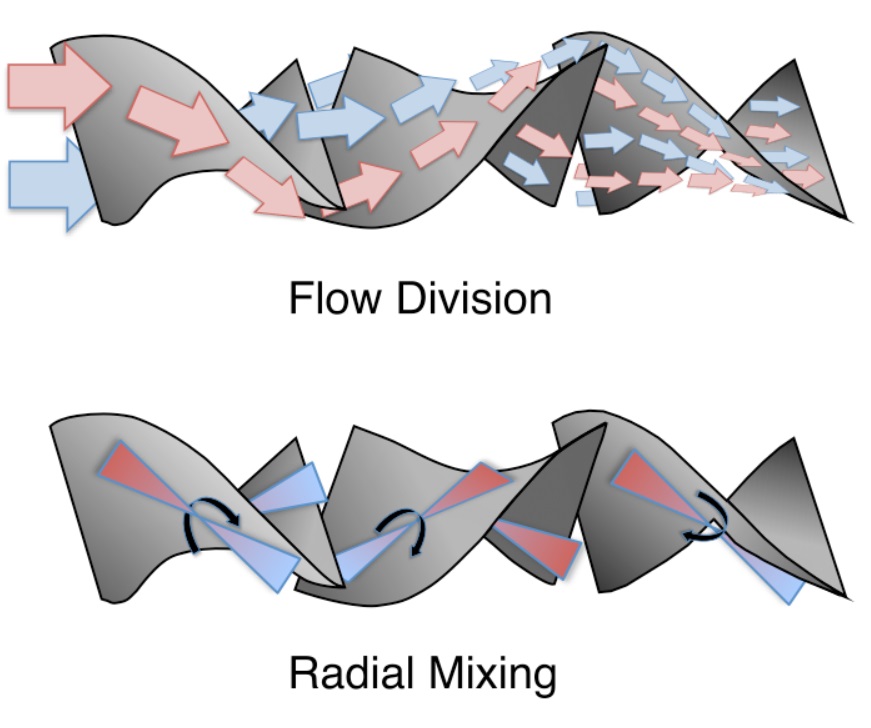
The core working mechanism lies in the "division-rotation-confluence" cycle process, which can be divided into three stages: First, after the fluid enters the mixer, it is divided into several fine flow streams by the stainless steel mixing units, breaking the laminar flow state of the fluid. Second, the divided flow streams rotate and twist in the pipeline, forming a strong turbulent effect, allowing different components of the fluid to fully contact. Finally, the rotated flow streams re-converge. Through multiple cycles of division-rotation-confluence, uniform mixing of all components is achieved. According to experimental data, the uniformity of mixing in stainless steel static mixers can reach over 95%, far exceeding traditional mixing equipment, and the mixing efficiency is stable, not significantly affected by fluid viscosity or flow rate.
Different types of stainless steel static mixers have different structural designs for their mixing units. The mainstream types include SK type, SV type (corrugated plate type), ST type, and SM type. Different structures correspond to different mixing efficiencies and applicable working conditions.
II. Core Advantages of Stainless Steel Static Mixers (Compared to Other Materials)
| Material Type | Corrosion Resistance | High Temp & Pressure Resistance | Hygienic Grade | Service Life | Application Scenarios |
|---|---|---|---|---|---|
| 304 Stainless Steel | Moderate, resistant to weak acids/alkalis, fresh water, conventional organic solvents | Pressure ≤16MPa, -20°C ~ 400°C | Hygienic grade, polishable with no dead corners | 8~10 years | Food & beverage, drinking water, conventional chemicals |
| 316/316L Stainless Steel | Excellent, resistant to strong acids/alkalis, seawater, corrosive organic solvents | Pressure ≤25MPa, -20°C ~ 450°C | High hygienic grade, meets FDA/GMP standards | 10~15 years | Fine chemicals, pharmaceuticals, water treatment, seawater desalination |
| Duplex Stainless Steel | Superior, resistant to high corrosion and high salt conditions | Pressure ≤30MPa, -40°C ~ 500°C | Hygienic grade, adaptable to extreme conditions | 15~20 years | Petrochemical, high-end applications with corrosive fluid mixtures, high-temperature reactions |
| Carbon Steel | Poor, prone to rust, not corrosion resistant | Pressure ≤10MPa, -10°C ~ 300°C | Non-hygienic, has dead corners prone to material buildup | 3~5 years | General clean water mixing, non-corrosive conditions |
| Plastic | Moderate, not resistant to high temperatures, prone to aging | Pressure ≤2MPa, 0°C ~ 80°C | Hygienic grade, but easily deformed | 2~3 years | Low temperature, non-corrosive, low pressure conditions |
In addition to the inherent advantages of the material itself, the stainless steel static mixer also has the following outstanding features:
1. Energy-efficient and highly effective: With no moving parts, it is driven solely by the pressure of the fluid itself, consuming 50% less energy than traditional mechanical agitators. It operates silently and without wear, significantly reducing operating costs and maintenance workload.
2. High mixing uniformity: Through multiple divisions, rotations, and mergers, it can achieve uniform mixing of various systems such as liquid-liquid, gas-liquid, and solid-liquid. The mixing uniformity can reach 95% to 99%, meeting the requirements of high-precision production.
3. Compact structure and easy installation: It is small in size and light in weight, and can be directly connected in the pipeline without occupying additional space. Installation and disassembly are simple, and it is compatible with different pipe systems (DN50 to DN2000).
4. Wide adaptability: The number and structure of the mixing units can be adjusted according to different working conditions to adapt to the mixing of fluids with different viscosities (≤10⁶mPa·s) and different components. It can also withstand extreme conditions such as high temperature, high pressure, and high corrosion.
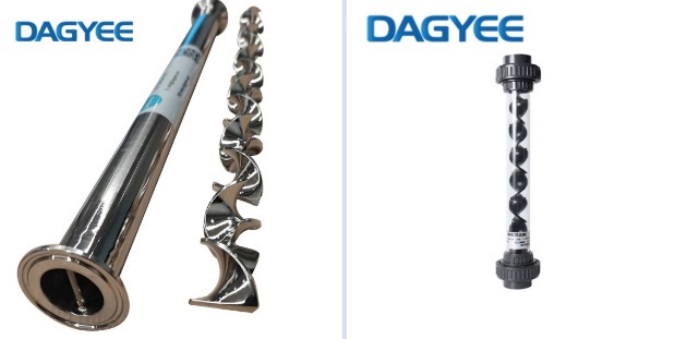
III. Technical Parameters of Stainless Steel Static Mixer
Customization function
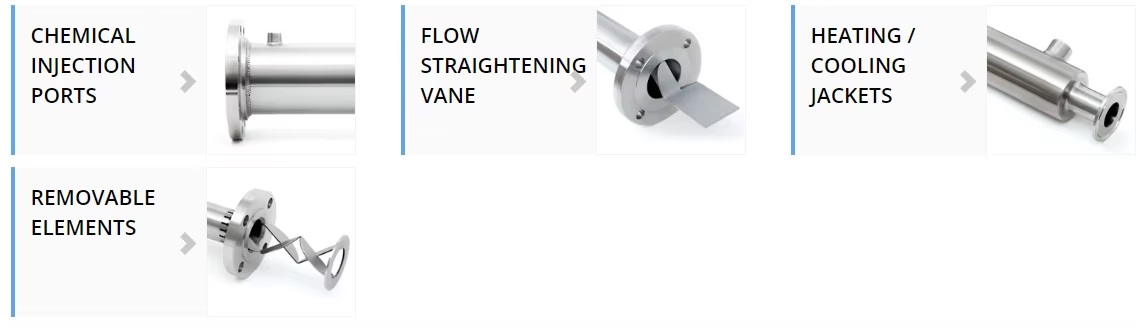
These custom static mixers offer versatile optional features to enhance process performance and adapt to diverse application requirements:
1. Chemical Injection Ports: Integrated ports for introducing treatment chemicals directly into the process stream, enabling immediate, in-line mixing and eliminating the need for pre-mixing tanks.
2. Flow Straightening Vane: A precision-engineered internal vane designed to eliminate fluid swirl and turbulence upstream, ensuring uniform flow profiles for optimal mixing efficiency and consistent downstream results.
3. Heating/Cooling Jackets: External jackets that allow for temperature control of the process fluid, supporting heating, cooling, or maintaining constant temperatures for temperature-sensitive mixing reactions.
4. Removable Mixing Elements: Easily detachable internal mixing elements that simplify cleaning, inspection, and maintenance, making the mixers ideal for sanitary, food-grade, or batch process applications requiring frequent sanitization.
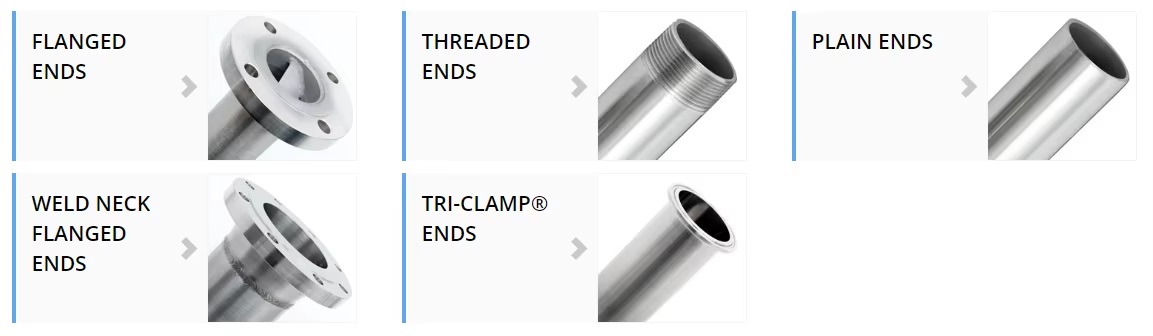
Ends connector
Available in a wide range of end connections to seamlessly integrate with existing piping systems across industrial, sanitary, and chemical processing setups:
1. Flanged Ends: Standard flange connections (ASME, DIN, or custom specifications) for high-pressure, high-vibration applications, providing robust, leak-tight connections suitable for most industrial process lines.
2. Threaded Ends: Male/female NPT or BSP threaded connections for low-to-medium pressure applications, offering quick, tool-free installation in compact, space-constrained systems.
3. Plain Ends: Smooth, unthreaded pipe ends for direct welding or socket weld connections, ideal for permanent, high-integrity installations in custom process layouts.
4. Weld Neck Flanged Ends: High-strength weld neck flanges with full penetration welds, engineered for extreme pressure, temperature, and cyclic loading conditions in critical industrial applications.
5. Tri-Clamp® Ends: Sanitary tri-clamp connections designed for food, beverage, pharmaceutical, and biotech industries, enabling fast disassembly for cleaning, sterilization, and validation in sanitary process lines.
| Model | Dg (mm) | dh (mm) | Q (m³/h) |
|---|---|---|---|
| SK-5/10 | 10 | 5 | 0.15-0.3 |
| SK-7.5/15 | 15 | 7.5 | 0.3-0.6 |
| SK-10/20 | 20 | 10 | 0.6-1.2 |
| SK-12.5/25 | 25 | 12.5 | 0.9-1.8 |
| SK-16/32 | 32 | 16 | 1.4-3.2 |
| SK-2040 | 40 | 20 | 2.2-4.5 |
| SK-25/50 | 50 | 25 | 3.5-7.0 |
| SK-32.5/65 | 65 | 32.5 | 5.9-12 |
| SK-40/80 | 80 | 40 | 9-18 |
| SK-50/100 | 100 | 50 | 14-28 |
| SK-62.5/125 | 125 | 62.5 | 22-44 |
| SK-75/150 | 150 | 75 | 31-64 |
| SK-100/200 | 200 | 100 | 56-110 |
| SK-125/250 | 250 | 125 | 88-177 |
| SK-150/300 | 300 | 150 | 127-255 |
| SK-175/350 | 350 | 175 | 173-346 |
| SK-200/400 | 400 | 200 | 226-452 |
| SK-250/500 | 500 | 250 | 353-706 |
Additional note: The number of mixing units can be adjusted according to the mixing requirements. The more units there are, the higher the mixing uniformity will be, but the pressure drop will also increase accordingly. The diameter of the pipeline can be customized based on the actual production flow rate. The working temperature and pressure can be further optimized according to the material selection. The duplex stainless steel material can withstand higher temperatures and pressures.
IV. Industry Application Cases of Stainless Steel Static Mixers
(1) Water Treatment Industry (Mainly 316L Stainless Steel)
The water treatment industry is one of the main application fields for stainless steel static mixers. They are mainly used in processes such as flocculation mixing, acid-base neutralization, iron and manganese removal, ozone disinfection, etc. Compared with traditional mixing equipment, they can significantly improve processing efficiency and reduce the amount of chemicals used.
Case: A municipal sewage treatment plant used a 316L stainless steel SK type static mixer (DN300, with 6 mixing units) for the mixing of flocculant and sewage. Experimental data showed that the uniformity of mixing improved from 82% of traditional mechanical stirring to 98%, the flocculation reaction time was shortened by 30%, the dosage of polyaluminum chloride (PAC) was reduced by 22%, and the turbidity of the effluent decreased from 15 NTU to 1.2 NTU, meeting the national first-level A discharge standard. At the same time, the equipment operated without noise or wear, and annual maintenance costs could be saved by approximately 15,000 yuan, with a predicted service life of up to 12 years.
In addition, in the seawater desalination project, the dual-phase stainless steel SMV type static mixer can be used for the mixing of seawater and scale inhibitors. It can withstand the high salt corrosion of seawater, has a mixing efficiency of over 97%, effectively prevents pipe scaling, and improves the desalination efficiency.
(2) Fine Chemical Industry (316)
In the production of fine chemicals, there are often complex processes involving high corrosion resistance, high viscosity, and high precision for mixing reactions. Stainless steel static mixers can replace traditional reaction vessel agitation, improving reaction conversion rates and reducing energy consumption.
Case: A pharmaceutical intermediate production enterprise used 316L stainless steel SM and SV type static mixers (DN150, with 8 mixing units) for the synthesis reaction of pharmaceutical intermediates, replacing traditional mechanical stirring reaction vessels. Experimental comparisons showed that the mixing uniformity was improved by 15%, the reaction conversion rate increased from 78% to 92%, the reaction time was shortened by 40%, energy consumption was reduced by 28%, and it avoided the material wear and contamination caused by mechanical stirring, with the product purity increased to 99.5%.
(3) Food and Beverage Industry (Mainly 304/316 Stainless Steel)
The food and beverage production industry has extremely high hygiene requirements for equipment. The 304/316 stainless steel static mixer (with seamless polishing treatment) has no dead corners and is easy to clean, meeting FDA/GMP standards. It is mainly used for juice blending, syrup mixing, emulsification, CIP cleaning, etc. processes.
Case: A juice production enterprise used a 304 stainless steel SV type static mixer (DN100, with 5 mixing units) for the dilution mixing of concentrated juice with water and the uniform mixing of additives (vitamins, preservatives). After application, the mixing uniformity reached over 97%, without local excessive concentration problems. The consistency of the juice improved, and the product shelf life was extended by 15%. The equipment was easy to clean, allowing for quick product variety switching, and the production efficiency increased by 25%, meeting the food hygiene production requirements.
In the production of emulsified products such as yogurt and salad dressings, the stainless steel static mixer can achieve uniform emulsification of water, oil, and emulsifiers. The emulsification effect is stable, the product shelf life is extended by 15%, and there are no residues or pollution.
(4) Other Industry Applications
Apart from the aforementioned industries, stainless steel static mixers are also widely used in fields such as biodiesel production, starch sugar enzymatic hydrolysis, flue gas desulfurization and denitrification, and polymer material synthesis. For instance, in biodiesel production, the SK type stainless steel static mixer can achieve uniform mixing of methanol and oils, increasing the reaction conversion rate by 35% and reducing energy consumption by 25%; in the starch sugar enzymatic hydrolysis process, the uniformity of mixing is improved by 12%, the enzymatic hydrolysis time is shortened by 28%, and the product yield is increased by 10%.
V. Selection, Installation and Maintenance Techniques of Stainless Steel Static Mixers
(1) Selection Techniques
1. Material Selection: Select based on the corrosiveness, temperature, and pressure of the fluid. For weak corrosion and normal conditions, choose 304 stainless steel; for strong acid, strong alkali, and seawater, choose 316/316L stainless steel; for extreme conditions with high temperature, high pressure, and strong corrosion, choose duplex stainless steel.
2. Type Selection: For low viscosity (≤10⁴ mPa·s) liquid-liquid and gas-liquid mixing, prefer SK type; for medium-high viscosity (≤10⁶ mPa·s) and high corrosion conditions, prefer SM and SV types; for scenarios with high hygiene requirements (food, pharmaceuticals), prefer S type.
3. Specification Selection: Determine the number of mixing units and the length of the equipment based on the pipe diameter, flow rate, and mixing requirements. The greater the flow rate and the higher the mixing requirements, the more mixing units are needed; the pipe diameter must match the equipment specification to avoid uneven flow.
(2) Installation Tips
1. Installation Location: Install in a straight section of the pipeline system, avoiding installation near elbows or valves to ensure uniform flow velocity when the fluid enters the mixer, improving the mixing effect; also, reserve sufficient installation and maintenance space to facilitate equipment disassembly and cleaning.
2. Installation Direction: The spiral direction of the mixing unit should be consistent with the flow direction of the fluid. Installing in reverse will reduce mixing efficiency and increase pressure drop; use flanges at both ends of the equipment for connection, ensuring a tight seal to prevent leakage.
3. Pre-treatment: Before installation, clean the pipeline of debris and oil to prevent debris from entering the mixer and damaging the mixing unit; after installation, conduct a water pressure test to ensure no leakage before putting the equipment into use.
(3) Maintenance Techniques
1. Regular Cleaning: Clean the mixing units regularly based on the working conditions to avoid material residue and scaling, which can affect the mixing efficiency; for hygiene scenarios (food, pharmaceuticals), clean daily using a CIP cleaning system to ensure no bacterial growth.
2. Regular Inspection: Inspect the flange sealing condition and wear of the mixing unit once every six months. If any aging sealing parts or damaged mixing units are found, replace them promptly; conduct a comprehensive overhaul of the equipment once a year to clean the accumulated materials and scale in the pipeline.
3. Corrosion Prevention and Maintenance: For strong corrosion conditions, regularly apply anti-corrosion treatment to the stainless steel surface to prevent material corrosion; before long-term shutdown, clean the internal fluid, dry it, and seal it to prevent rusting.
VI. Summary and Future Trends
Stainless steel static mixers, with their core advantages of high efficiency, energy saving, corrosion resistance, hygiene level, and wide adaptability, have become the mainstream equipment in the industrial mixing field, widely used in water treatment, fine chemicals, food and pharmaceuticals, petrochemicals, and other industries. They not only improve production efficiency and product quality but also reduce energy consumption and maintenance costs, bringing significant economic benefits to enterprises.
Based on the latest research progress, the future development trends of stainless steel static mixers mainly include three aspects: First, structural optimization, using CFD simulation technology to optimize the structural design of the mixing unit to further improve the mixing efficiency and reduce pressure drop; second, material upgrading, developing more corrosion-resistant, high-temperature-resistant, and high-strength stainless steel materials to adapt to more extreme conditions; third, intelligence, combining IoT technology to realize real-time monitoring of equipment operation status and fault warning, improving the intelligent management level of the equipment.
For enterprises, choosing the appropriate stainless steel static mixer not only meets production needs but also enhances production competitiveness. It is suggested that enterprises, based on their own operating conditions and mixing requirements, refer to the selection guidelines and application cases in this article to choose the appropriate materials, types and specifications. At the same time, they should ensure proper installation and maintenance to fully utilize the advantages of the stainless steel static mixer and achieve cost reduction and efficiency improvement.
If you need to customize the selection plan for the stainless steel static mixer according to specific industry operating conditions, or obtain more application cases and technical materials, please feel free to contact us at any time. We will provide you with professional technical support and solutions.

Name: Ashely Li
Mobile:+8613961861780
Tel:+8613961861780
Whatsapp:8613961861780
Email:info@dagyee.com
Add:Room 302, Building 11-4, Hongyi Road, Xinan Town, Xinwu District, jiangsu Province, China