English
 Chinese
info@dagyee.com
+8613961861780

I. Basic Definition & Industry Background
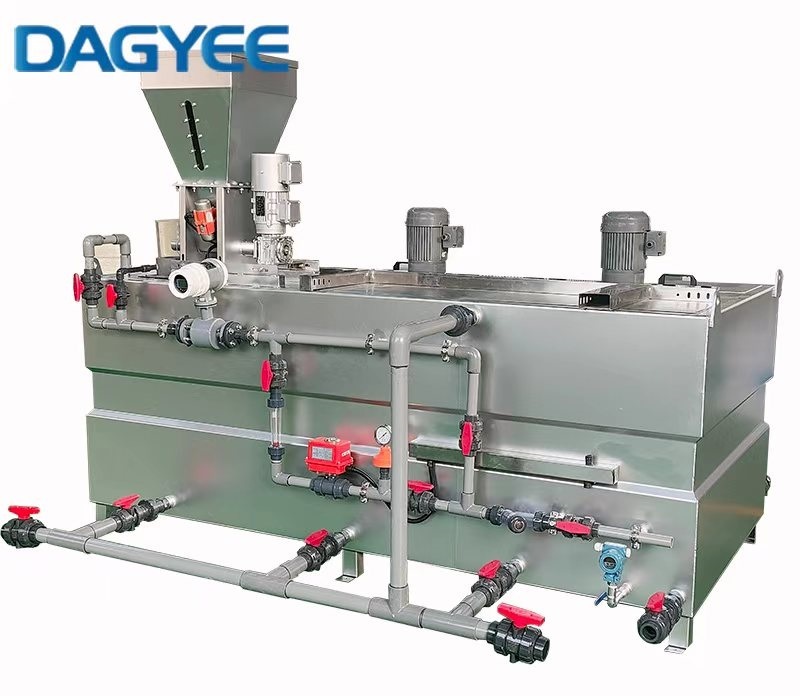
A polymer preparation unit (PPU), also known as a polymer make-up system or polymer dissolution unit, is a core automated auxiliary equipment widely used in municipal wastewater treatment plants, industrial sewage treatment projects, and sludge dewatering production lines. Its core function is to quantitatively dissolve dry powdered water-soluble polymers—primarily Polyacrylamide (PAM), including anionic, cationic, and non-ionic types—into a uniform, fully hydrated, high-activity liquid flocculant solution with stable and controllable concentration.
In the early stage of water treatment industry development, manual stirring and mixing was the mainstream way of polymer preparation. This traditional manual operation mode relies entirely on workers’ experience, leading to many unavoidable operational defects. Rapid artificial feeding often causes polymer powder to agglomerate instantly, forming insoluble particle impurities commonly known as "fish eyes". These undissolved polymer lumps cannot exert flocculation activity, which not only causes serious waste of chemical agents but also blocks subsequent pipelines and dosing pumps. In addition, manual mixing leads to unstable solution concentration and viscosity, resulting in fluctuating flocculation and sedimentation effects, greatly reducing the efficiency of sludge dewatering, water quality purification and other key processes.
With the continuous upgrading of water treatment technology and the increasingly strict requirements of industrial energy conservation and consumption reduction, modern automatic Polymer Preparation Units have completely replaced traditional manual operation equipment. Equipped with integrated quantitative feeding, sealed wetting dispersion, graded stirring dissolution, independent maturation and constant-pressure storage modules, as well as intelligent PLC automatic control systems, PPUs standardize and automate the entire polymer preparation process. According to full-scale long-term operation test data of municipal sewage plants, a reasonably configured and properly operated automatic three-chamber PPU can reduce polymer chemical consumption by 20%–30%, stabilize effluent water quality, reduce equipment failure rate by more than 40%, and greatly cut labor and maintenance costs. At present, the polymer preparation unit has become an indispensable key equipment for standardized and intelligent operation of modern water treatment projects.
II. Core Structure, Classification & Complete Technical Parameters
1. Main Classification of PPU
In the global water treatment equipment market, polymer preparation units are mainly divided into two types according to structural design and functional configuration: single-chamber PPU and three-chamber PPU. The two types have obvious differences in working principle, operation stability and applicable scenarios, which need to be selected according to the actual treatment scale and operation requirements of the project.
The single-chamber PPU features a simple integrated structure, low manufacturing cost and small floor space. It completes powder dispersion, stirring dissolution and solution storage in a single tank body, with no independent maturation area. Due to the lack of graded treatment process, the polymer solution prepared by single-chamber equipment has insufficient hydration degree and unstable activity, which is only suitable for small-scale domestic sewage stations, industrial temporary water treatment projects and low-demand sludge dewatering scenarios.
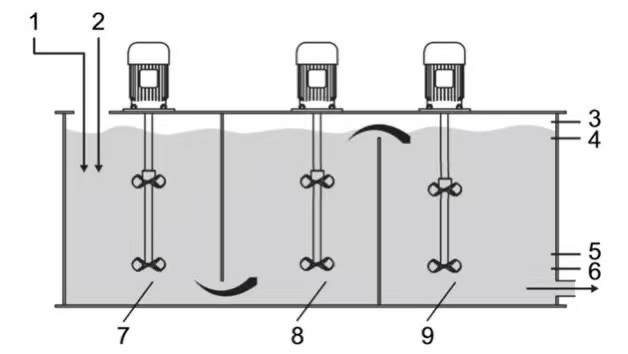
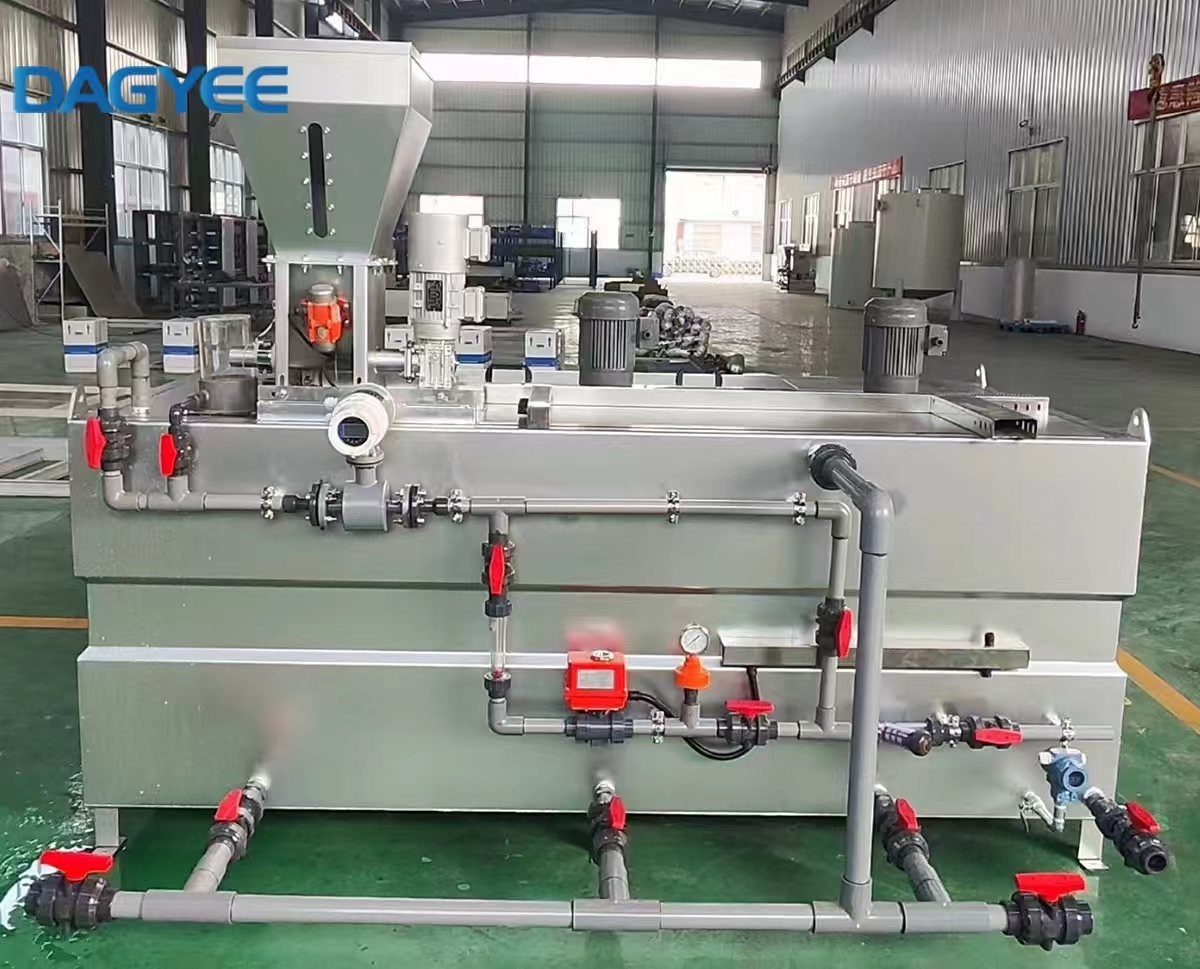
The three-chamber PPU is the mainstream high-performance configuration for medium and large-scale water treatment projects. It adopts a segmented independent design, including wetting & mixing chamber, constant-temperature maturation chamber and constant-pressure storage chamber. Each process link is relatively independent and connected in series, which can strictly distinguish the polymer dispersion, hydration and maturation stages. This structural design completely avoids the problems of incomplete dissolution and insufficient molecular chain stretching, ensuring the maximum flocculation activity of the polymer solution. It is widely used in large municipal sewage plants, chemical industry, printing and dyeing, papermaking and other industrial wastewater treatment scenarios.
2. Standard Core Components
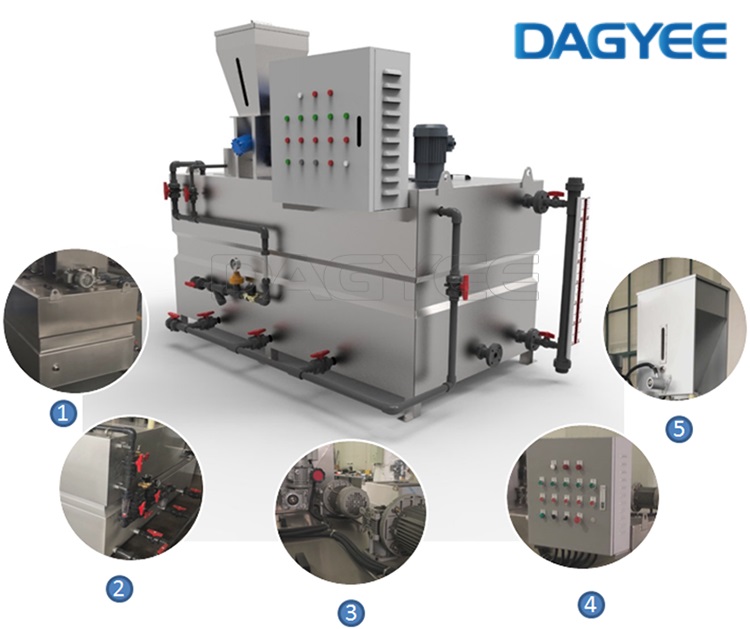
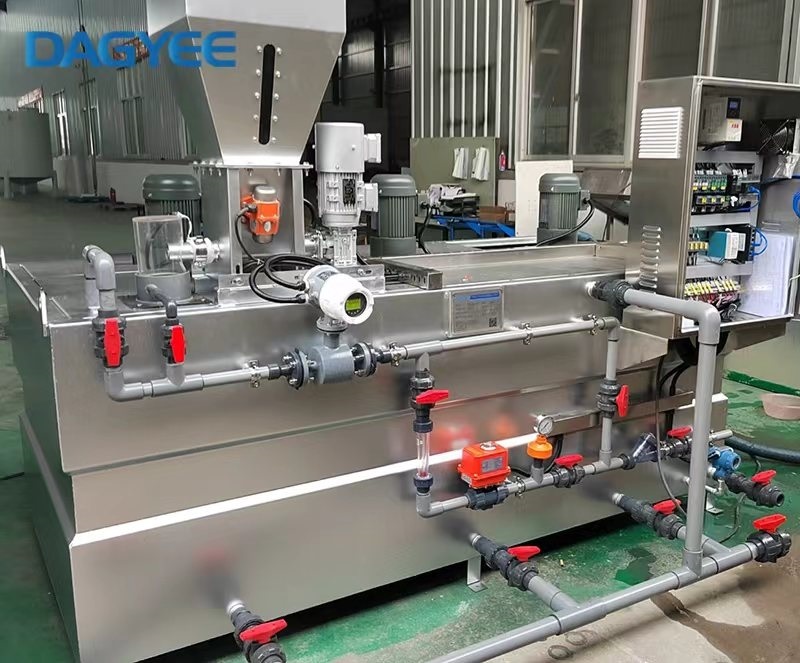
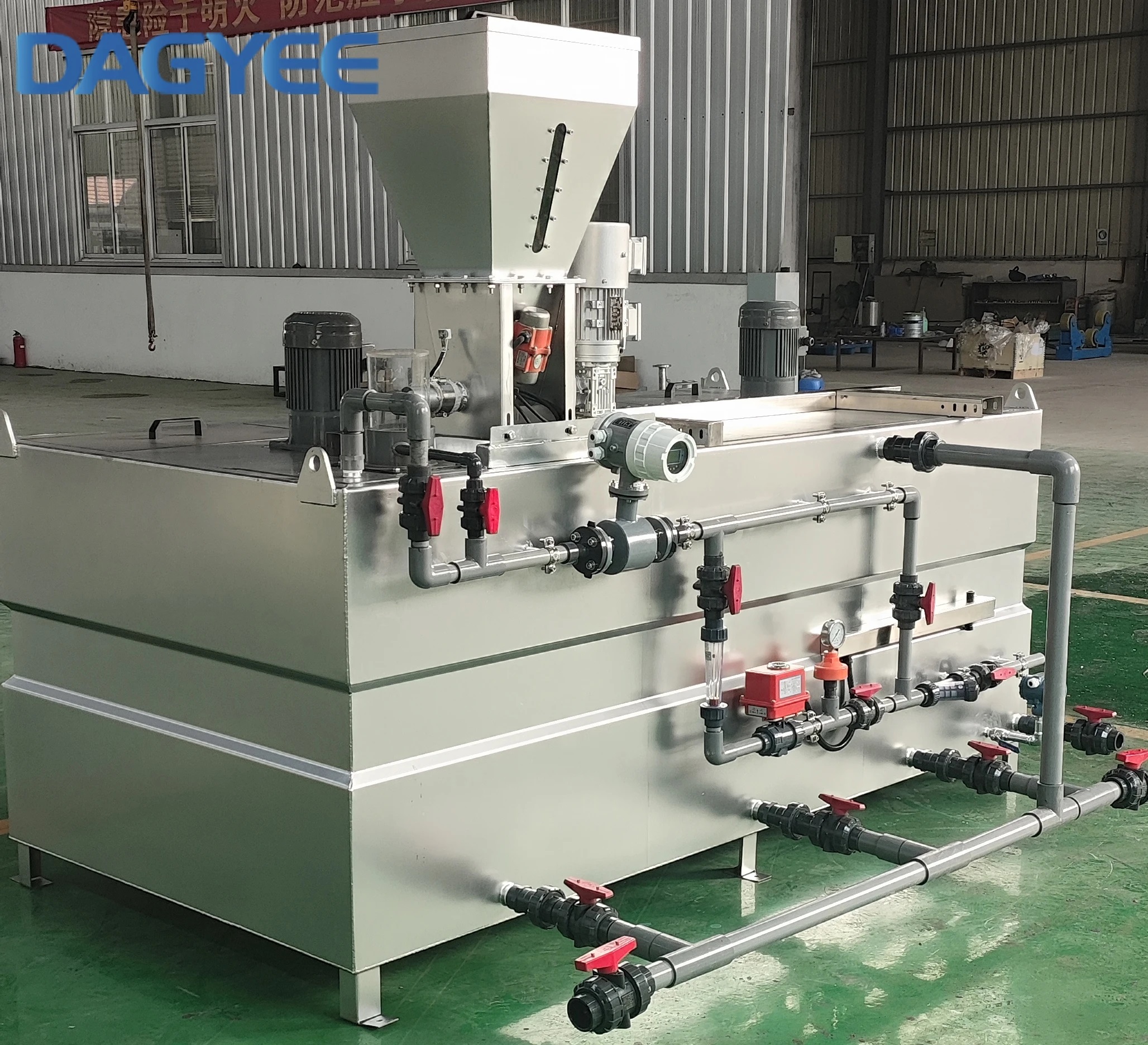
The complete set of three-chamber automatic polymer preparation unit consists of six core functional components, each of which plays an irreplaceable role in the solution preparation process, and the coordination of all components determines the final solution quality and operation stability.
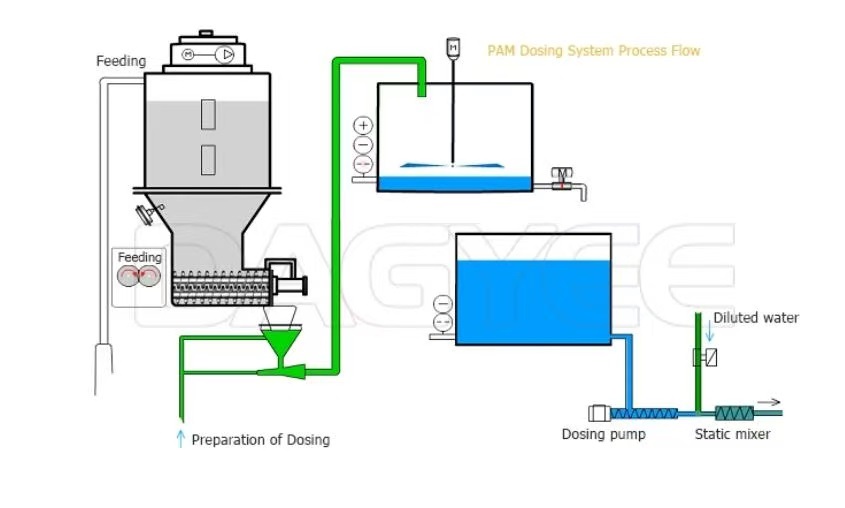
First, the sealed hopper and quantitative screw feeder adopt fully sealed structural design, which can quantitatively convey dry polymer powder accurately, effectively prevent powder leakage and moisture absorption and caking caused by humid air contact, and ensure the stability of feeding amount.
Second, the special anti-blocking wetting cone is the key component to eliminate fish eyes. It can disperse the falling polymer powder evenly in the water flow in advance, realize full pre-wetting of single powder particles, and avoid particle agglomeration.
Third, the high-shear mixing chamber is equipped with high-speed stirring agitators, which can rapidly disperse pre-wetted powder in water to complete preliminary dissolution.
Fourth, the low-speed constant-temperature maturation chamber provides a gentle stirring environment, which is specially used for the stretching and hydration relaxation of polymer molecular chains, and is the core link to ensure solution activity.
Fifth, the constant-pressure storage chamber stores the matured qualified polymer solution to ensure continuous and stable dosing supply for subsequent processes.
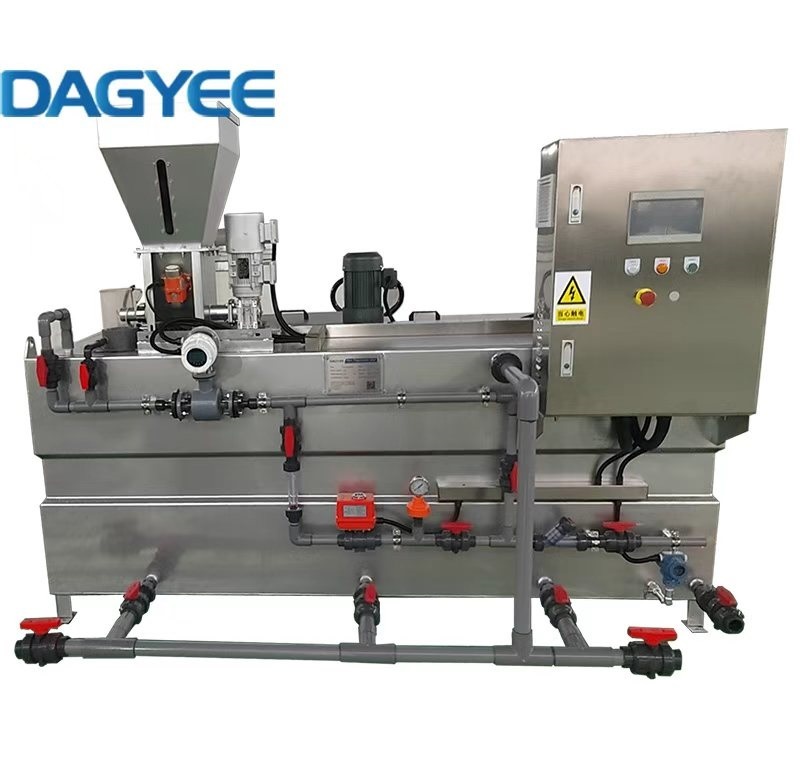
Sixth, the intelligent PLC control system is equipped with a touch screen operation panel, which can realize automatic water inflow, quantitative feeding, graded stirring, liquid level real-time monitoring and fault automatic alarm, realizing unattended automatic operation.
3. Complete PPU Technical Parameter Table (Industrial Standard)
The following technical parameters can be directly used for equipment selection, project design and customer reference.
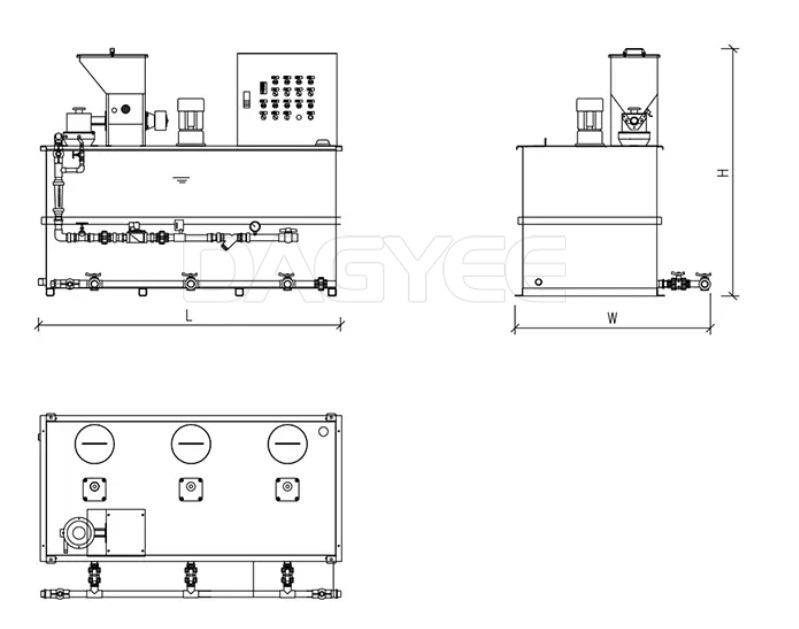
| DT Model | Capacity (L/h) | Dimension L*W*H (mm) | Weight (kg) | Power (kW) |
|---|---|---|---|---|
| DT200 | 200 | 940*520*1450 | 250 | 0.54 |
| DT500 | 500 | 1370*730*1450 | 350 | 0.92 |
| DT1000 | 1000 | 1800*950*1620 | 480 | 1.3 |
| DT1500 | 1500 | 2130*1120*1620 | 560 | 1.7 |
| DT3000 | 3000 | 2450*1270*2000 | 790 | 2.4 |
| DT4000 | 4000 | 2780*1440*2250 | 1050 | 3.2 |
| DT6000 | 6000 | 3100*1600*2650 | 1200 | 4.8 |
| DT10000 | 10000 | 3970*2040*2650 | 1450 | 6.4 |
III. Polymer Dissolution Mechanism & Operational Principle
The dissolution and maturation process of water-soluble polymer powder is a complex physical hydration reaction, which directly determines the flocculation performance of the final solution. According to the research results of Dissolution Kinetics of Water-Soluble Polymers: A Review, the entire preparation process is divided into four continuous and indispensable stages: surface wetting, particle dispersion, water molecule hydration and molecular chain relaxation and stretching. Any missing or incomplete stage will lead to the decline of solution activity.
In the first wetting stage, the dry polymer powder particles contact with the circulating water flow in the wetting cone, and the water molecules quickly cover the particle surface to complete preliminary wetting. The special structural design of the wetting cone can ensure that each powder particle is in full contact with water, avoiding the phenomenon of internal dry core caused by surface adhesion of particles. In the second dispersion stage, the high-shear agitator in the mixing chamber breaks up the slightly agglomerated particles, so that all polymer particles are evenly dispersed in the water body, laying a foundation for full hydration.
The third hydration stage is the key to solution forming. Water molecules continuously penetrate into the interior of polymer molecular chains, replacing the intermolecular gaps of dry powder, and gradually expand the volume of polymer particles. In this process, the polymer changes from solid powder to colloidal liquid state. The fourth maturation stage is the core link to improve flocculation efficiency. After preliminary dissolution, the polymer molecular chains are still curled and folded. Through low-speed and gentle stirring in the maturation chamber, the curled molecular chains are fully stretched to form a linear structure with high adsorption activity, which can efficiently adsorb suspended solids, colloids and sludge particles in sewage.
In actual operation, many enterprises ignore the importance of maturation, resulting in poor water treatment effect. Insufficient maturation time will lead to incomplete stretching of molecular chains and low adsorption capacity. Excessively high stirring shear force will directly break the long polymer molecular chains, permanently damage the flocculation activity of the solution, and cannot be recovered in subsequent processes. In addition, too low water temperature will slow down the hydration rate, while too high temperature will denature the polymer molecular structure, both of which will affect the final use effect.
IV. Design & Sizing Guidelines for PPU
For conventional municipal wastewater treatment projects, the polymer dosage is mainly determined by the sludge dewatering link. The design principle of the equipment is to ensure that the effective volume of the PPU system can meet the continuous solution supply demand of 4–8 hours, avoid frequent start and stop of the equipment, and stabilize the operation state of the system. Considering the seasonal fluctuation of sewage water quality and sludge concentration in rainy season and dry season, the equipment design needs to reserve 15%–20% of extra processing capacity to cope with peak working conditions.
In terms of model selection matching, small sewage stations with a daily treatment capacity of less than 100 cubic meters can choose compact single-chamber PPUs, which can meet basic production needs and control equipment investment costs. For medium and large water treatment projects with a daily treatment capacity of more than 500 cubic meters, three-chamber full-automatic PPUs must be selected to ensure the stability of solution concentration and activity. In terms of material design, all wetted parts in contact with the solution must adopt anti-corrosion stainless steel materials; SUS316L stainless steel is preferred for industrial wastewater with high salinity and strong corrosivity to extend the service life of the equipment.
In addition, the installation environment also affects the design configuration of the equipment. For outdoor open-air installation in cold areas, the PPU needs to be equipped with thermal insulation and heating devices to ensure that the water temperature in the tank is maintained within the optimal hydration temperature range in winter, preventing the reduction of dissolution efficiency caused by low temperature. For indoor humid and dusty workshops, the fully sealed dust-proof structure is configured to reduce equipment failure and environmental pollution.
V. Standard Operation, Daily Maintenance & Safety Specifications
1. Standard Startup & Shutdown Sequence
Standardized operation steps are the premise to ensure long-term stable operation of PPU. The correct startup sequence is divided into five steps:
First, start the water supply system, inject clean water into each chamber of the equipment, and stop water inflow when reaching the set standard liquid level;
Second, start the agitators of the mixing chamber and maturation chamber in sequence to pre-run and stabilize the stirring state;
Third, turn on the quantitative screw feeder to realize uniform and slow feeding of polymer powder;
Fourth, the powder is wetted, dispersed and mixed in the mixing chamber, and automatically flows into the maturation chamber for constant-temperature maturation after reaching the preliminary dissolution standard;
Fifth, after the preset maturation time, the qualified high-activity solution flows into the storage chamber for continuous dosing and use.
The shutdown operation needs to follow the principle of first stopping feeding and then stopping stirring. First, turn off the powder feeding device, continue to stir for 10–15 minutes to ensure that all the powder in the equipment is completely dissolved, and then close the water supply system and stirring device to avoid residual powder agglomeration and scaling in the tank.
2. Daily & Regular Maintenance Rules
Regular maintenance can effectively reduce equipment failure rate and extend the service life of PPU. Daily routine maintenance includes checking whether the water pressure and liquid level monitoring system are normal, observing whether the feeding speed is uniform, and checking for powder leakage and solution leakage. It is necessary to clean the wetting cone and the inner wall of the tank every 7–15 days to remove residual polymer sediment and scale, prevent pipeline and equipment blockage, and ensure the dissolution effect.
Monthly maintenance focuses on calibration and inspection: calibrate the screw feeder accuracy to ensure stable quantitative feeding; check the bearing tightness and lubrication degree of the agitator, and supplement lubricating oil regularly; inspect the sealing performance of all pipelines and joints. Quarterly maintenance needs to comprehensively detect the operation state of the PLC control system, clean the electrical control box, and test the automatic alarm and protection functions to ensure the intelligent control system operates normally.
3. Operation Safety Specifications
Dry polymer powder is easy to form floating dust in the air, which has certain hidden dangers of inhalation and dust accumulation. Operators need to wear dust-proof masks and protective gloves during feeding and maintenance. The whole set of PPU adopts fully sealed structural design, which can effectively reduce dust emission. All internal electrical components are waterproof, moisture-proof and explosion-proof, adapting to the humid working environment of water treatment workshops. In addition, the polymer powder storage area needs to be kept dry and ventilated to prevent powder moisture absorption and caking, which affects the feeding and dissolution effect.
VI. Common Faults, Causes & Professional Troubleshooting
In the long-term operation process of polymer preparation units, some common faults such as undissolved fish eyes, unstable concentration and insufficient solution activity often occur due to improper operation, parameter mismatch and lack of maintenance. Combined with the long-term operation data of water treatment plants and professional research conclusions, the targeted fault analysis and solutions are summarized as follows to help enterprises quickly eliminate faults and restore efficient operation.
First, undissolved polymer fish eyes and agglomerated lumps. This is the most common fault in PPU operation. The main causes include excessively fast powder feeding speed leading to untimely water wetting, blockage and failure of the wetting cone resulting in poor pre-wetting effect, and insufficient water inflow and unstable water pressure. The targeted solutions are to appropriately reduce the feeding speed to match the water flow rate, regularly clean the blocked wetting cone to ensure uniform powder dispersion, adjust the water supply pipeline pressure, and stabilize the water inflow of the equipment.
Second, unstable solution concentration and viscosity fluctuation. The main reasons are the deviation of screw feeder feeding accuracy, frequent fluctuation of liquid level in the tank, and unstable water supply pressure. Unstable concentration will directly lead to inconsistent flocculation effect and affect the stability of water quality. The solutions are to recalibrate the feeding system regularly, set up liquid level interlock automatic control to maintain stable liquid level in the tank, and install a pressure stabilizing valve on the water supply pipeline to eliminate water pressure fluctuation.
Third, low solution activity and poor flocculation effect. After the polymer is dissolved, the sludge settling and dewatering effect is not ideal. The core causes are insufficient maturation time leading to incomplete molecular chain stretching, excessive stirring shear force breaking active molecular chains, and excessive water temperature denaturing polymer activity. The solutions are to adjust the system parameters, extend the maturation time appropriately, reduce the stirring speed of the maturation chamber, and strictly control the inlet water temperature within the optimal range of 20–35℃.
Fourth, pipeline and tank body blockage. Long-term operation is prone to residual polymer deterioration and scaling, coupled with excessive preparation concentration and mixed impurity particles, resulting in pipeline blockage. The solutions are to prepare the solution strictly in accordance with the standard concentration range, conduct regular deep cleaning of the tank body and pipelines, and install precision filters at the water inlet to block impurity particles.
VII. Full-Scale Industrial Case Study
To verify the actual operation effect of automatic three-chamber PPU, this article cites the 2-year continuous operation monitoring data of a large municipal wastewater treatment plant in North America, which intuitively reflects the economic and operational advantages of optimized intelligent polymer preparation equipment.
Before the renovation, the plant adopted a traditional single-chamber semi-automatic polymer preparation unit, relying on manual auxiliary feeding and fixed stirring operation. Due to the lack of independent maturation function and unstable feeding accuracy, the polymer solution prepared had low activity and serious agent waste. The average polymer consumption was 0.32 kg per ton of sludge, the water content of dewatered sludge was as high as 82%, the flocculation effect was unstable, and the manual operation cost was high, requiring special personnel on duty for feeding and debugging every day.
In 2022, the plant completed the full equipment renovation, replacing the old single-chamber equipment with a new full-automatic three-chamber PPU with intelligent PLC linkage control. After two years of continuous operation and data tracking, the equipment has stable operation and fully standardized preparation process. The average polymer consumption is reduced to 0.24 kg per ton of sludge, achieving a 25% reduction in agent consumption. The water content of dewatered sludge is stably controlled at 75%, which greatly improves the sludge reduction effect. At the same time, the automatic operation mode reduces manual operation links, cutting labor costs by 80%, and the equipment failure rate is reduced by more than 45%, realizing long-term stable and low-cost operation.
VIII. Conclusion & Future Industry Development Trends
As the core supporting equipment of water treatment and sludge dewatering process, polymer preparation units play a vital role in reducing industrial operation costs and stabilizing water treatment quality. The performance of PPU is directly affected by structural design, parameter configuration, standardized operation and daily maintenance.
The traditional single-chamber and manual polymer preparation equipment can no longer meet the high-efficiency and energy-saving operation requirements of modern water treatment projects, and is gradually phased out of the market. The intelligent, graded three-chamber automatic PPU has become the mainstream choice of the industry by virtue of stable solution quality, low agent consumption and unattended operation advantages.
In the future, with the continuous development of industrial Internet of Things and intelligent manufacturing technology, polymer preparation units will usher in three major development trends.
First, intelligent precise control, realizing real-time linkage with water quality and sludge concentration data, automatic adjustment of feeding amount and maturation time, and achieving zero manual intervention.
Second, energy-saving and environmental protection upgrade, optimizing stirring power and water circulation system, reducing equipment energy consumption and water resource waste.
Third, modular integrated design, realizing rapid installation and flexible debugging of equipment, adapting to diversified and customized construction requirements of different water treatment projects, and further helping the water treatment industry achieve cost reduction, efficiency improvement and intelligent upgrading.
If you are interested in the polymer preparation unit, please feel free to contact us.
Name: Ashely Li
Mobile:+8613961861780
Tel:+8613961861780
Whatsapp:8613961861780
Email:info@dagyee.com
Add:Room 302, Building 11-4, Hongyi Road, Xinan Town, Xinwu District, jiangsu Province, China