English
 Chinese
info@dagyee.com
+8613961861780

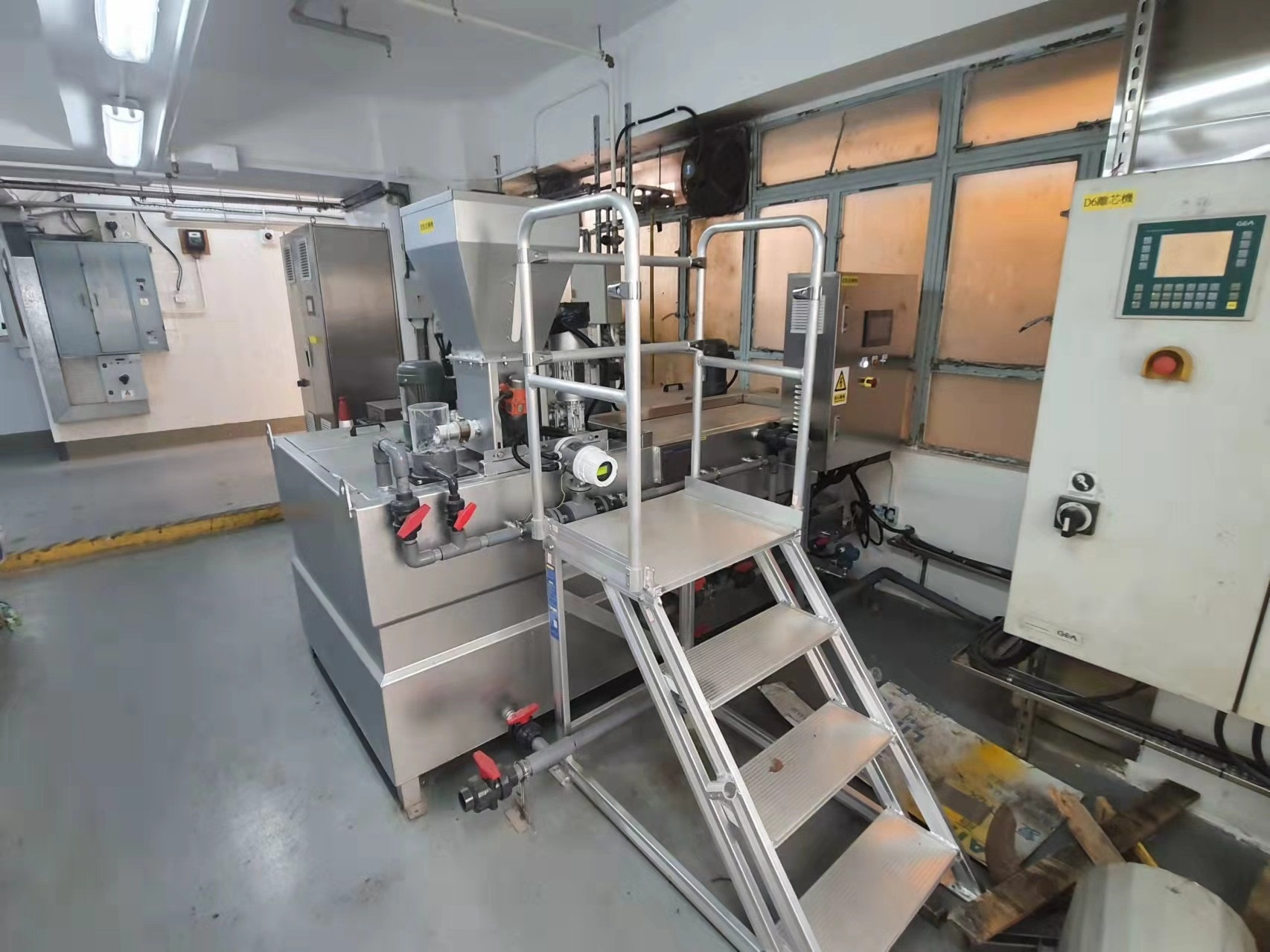
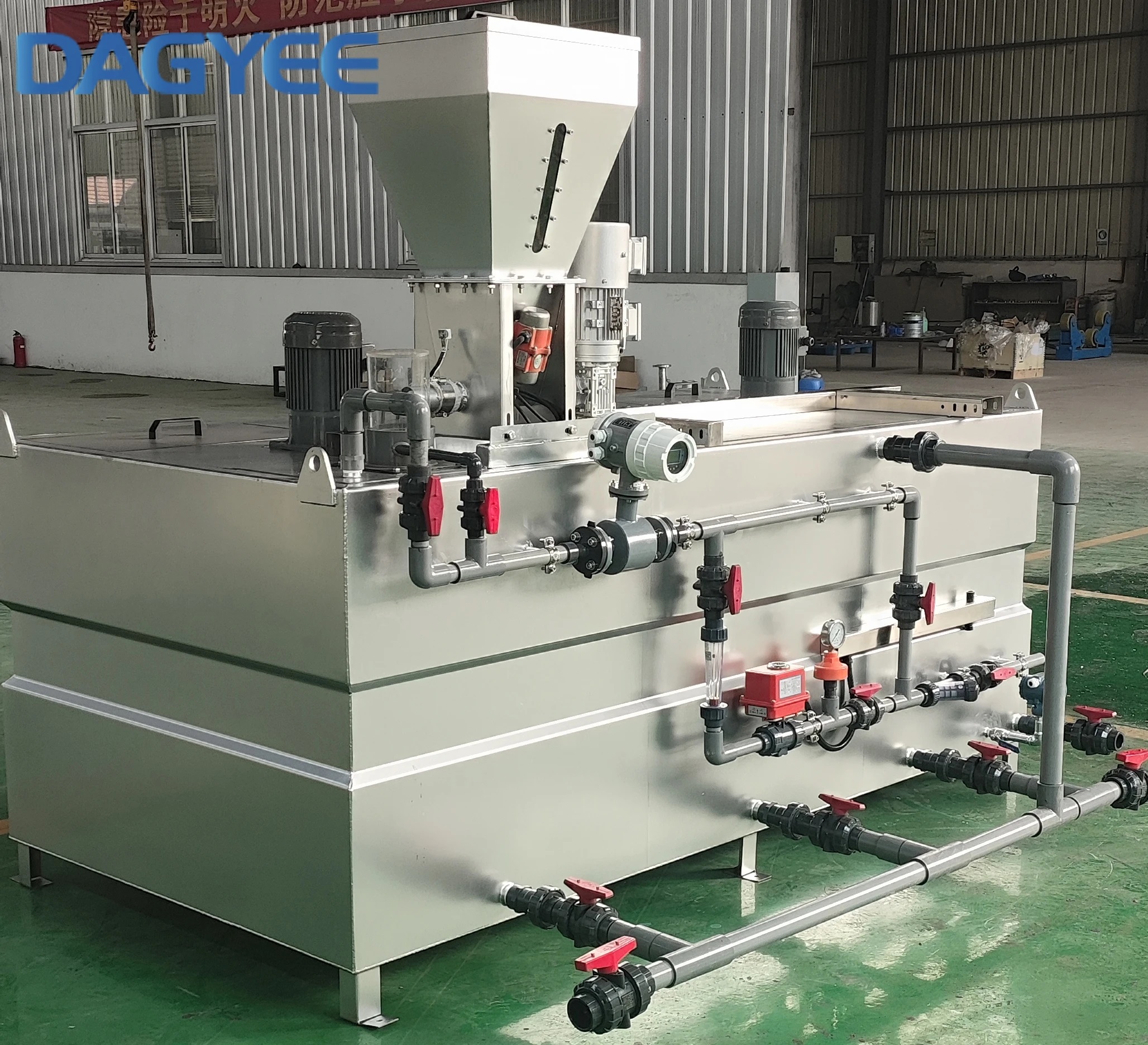
polymer preparation units (PPUs) stand as indispensable core equipment in modern wastewater treatment, industrial sewage disposal, and sludge dewatering systems. Also widely referred to as automatic PAM dissolution and dosing systems, these devices are designed to convert dry polyacrylamide powder into uniform, stable dilute polymer solutions through precise automatic feeding, wetting, dispersion, dissolution, and aging processes. The standard working concentration of polymer solutions ranges from 0.1% to 0.5%, which perfectly meets the flocculation, sedimentation, and sludge conditioning requirements of most municipal and industrial water treatment projects.
In actual on-site operation, polymer preparation units are frequently exposed to harsh working conditions, including humid workshop environments, continuous 24-hour uninterrupted operation, and uneven manual operation habits. These factors lead to frequent equipment failures such as undissolved polymer fish eyes, pipeline and pump blockage, unstable solution concentration, agitator abnormal vibration, and feeding system jams. Minor faults will directly reduce flocculation efficiency, increase polymer chemical consumption, and raise operational costs. Long-term unresolved failures will cause permanent damage to mechanical components, shorten equipment service life, and even lead to system shutdown and affect the overall operation of the water treatment production line.
Most on-site operation and maintenance personnel only master basic start-stop operation and lack systematic fault diagnosis and professional maintenance knowledge. Most existing online guides only list simple fault phenomena without in-depth root cause analysis and standardized repair steps. This comprehensive guide combines years of field operation data, equipment maintenance experience, and industrial standard technical specifications, sorting out all common PPU failures, targeted repair schemes, complete equipment technical parameters, and standardized preventive maintenance plans. It aims to provide field engineers and equipment managers with a practical, operable, and comprehensive technical reference to stabilize PPU operation and reduce failure rates.
II. Working Principle and Core Technical Parameters of Polymer Preparation Unit
1. Basic Working Principle
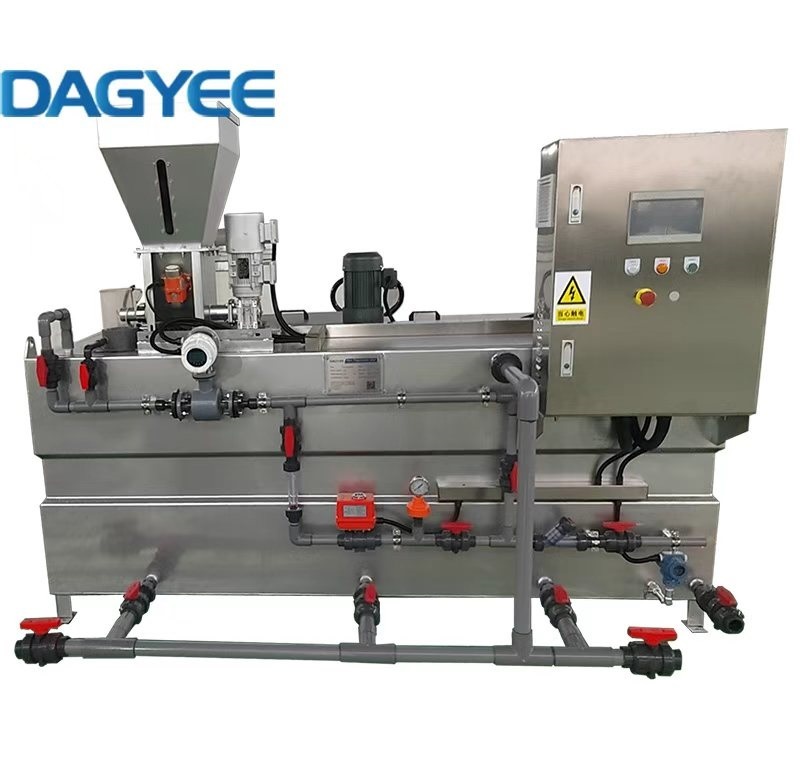
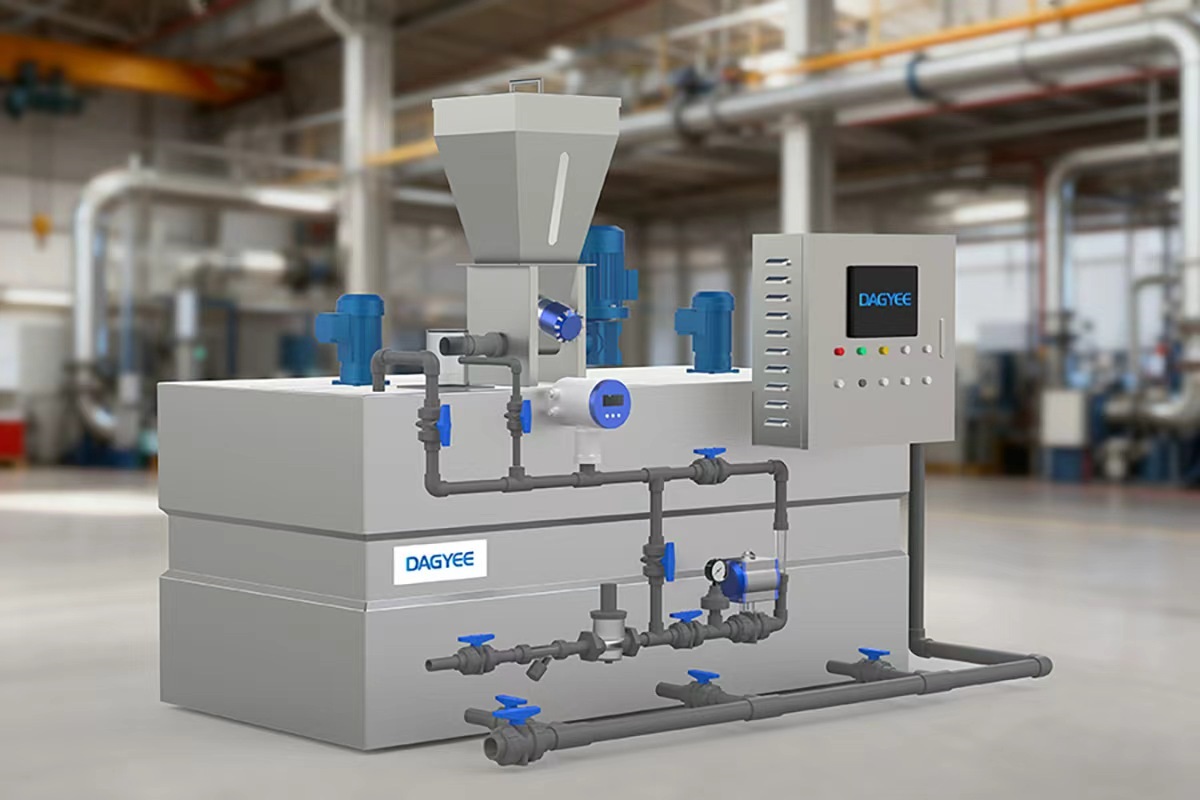
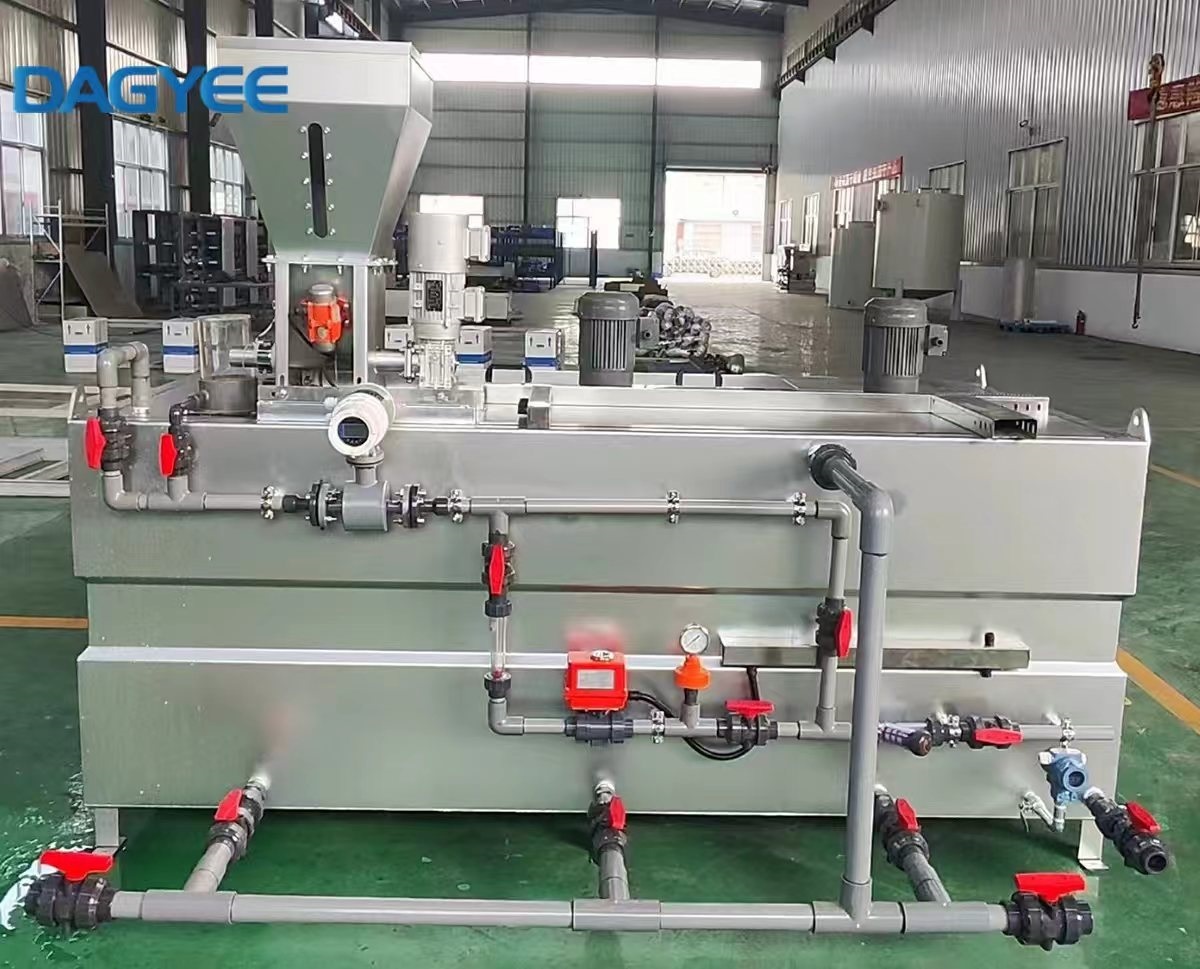
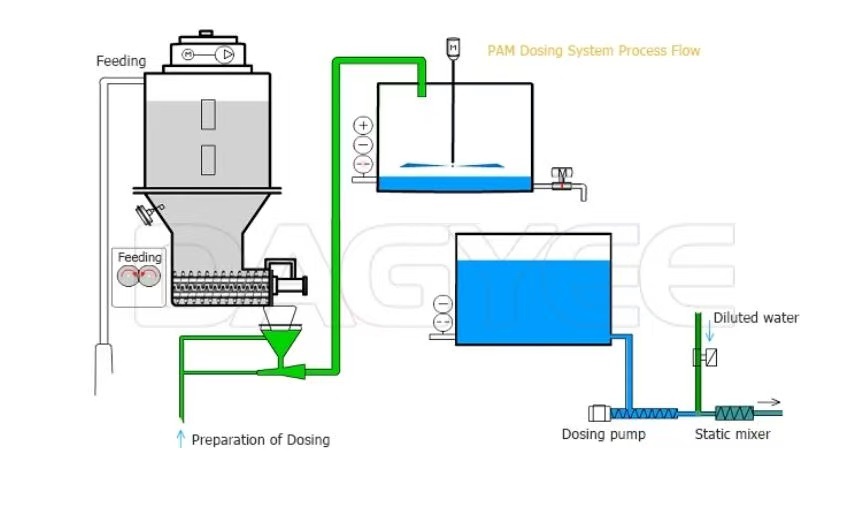
A standard automatic polymer preparation unit adopts a three-chamber integrated structural design, including a wetting and dispersion chamber, a primary dissolution chamber, and a static aging chamber. The entire working process is fully automatic and closed-loop. First, the dry polymer powder stored in the storage hopper is quantitatively conveyed to the wetting cone through a precision screw feeder. Meanwhile, the pressure-stabilized tap water forms a high-speed atomized water flow through the nozzle inside the wetting cone, which fully contacts and wets the dispersed polymer powder to avoid powder agglomeration and dry-core fish eyes.
The preliminarily wetted polymer mixed liquid flows into the dissolution chamber, where the low-speed stirring agitator continuously rotates to promote the full dispersion and dissolution of polymer particles. After primary dissolution, the solution overflows into the aging chamber for static maturation. The aging process enables the polymer molecular chain to fully stretch and activate, ensuring the flocculation activity of the final solution reaches the optimal state. Finally, the matured polymer solution is quantitatively delivered to the dosing point through a transfer pump to complete the entire preparation and dosing process. The whole system is controlled by PLC, with real-time monitoring of water pressure, liquid level, feeding speed, and stirring operation status to realize automatic adjustment and fault alarm.
2. Standard Technical Parameters of Conventional PPU
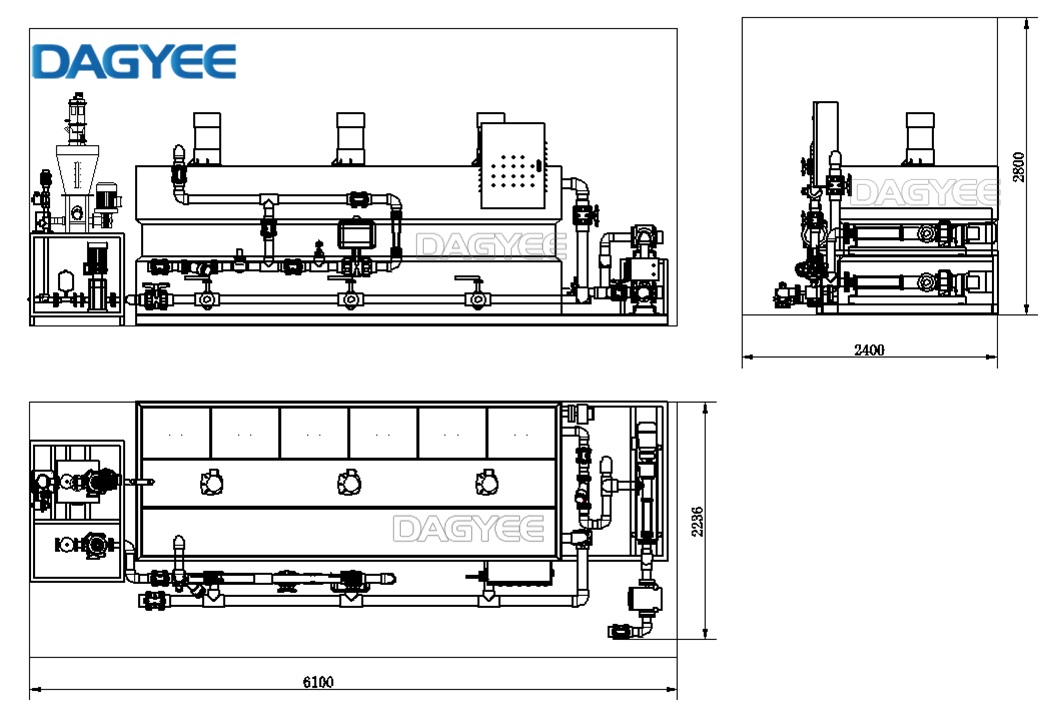
Different specifications of polymer preparation units are matched according to the daily water treatment capacity and sludge treatment volume. The following table lists the mainstream standard technical parameters of industrial and municipal PPUs, covering small, medium and large models, which is convenient for equipment selection, operation parameter calibration and fault judgment.
| DT Model | Capacity (L/h) | Dimension L*W*H (mm) | Weight (kg) | Power (kW) |
|---|---|---|---|---|
| DT200 | 200 | 940*520*1450 | 250 | 0.54 |
| DT500 | 500 | 1370*730*1450 | 350 | 0.92 |
| DT1000 | 1000 | 1800*950*1620 | 480 | 1.3 |
| DT1500 | 1500 | 2130*1120*1620 | 560 | 1.7 |
| DT3000 | 3000 | 2450*1270*2000 | 790 | 2.4 |
| DT4000 | 4000 | 2780*1440*2250 | 1050 | 3.2 |
| DT6000 | 6000 | 3100*1600*2650 | 1200 | 4.8 |
| DT10000 | 10000 | 3970*2040*2650 | 1450 | 6.4 |
III. Statistical Analysis of Common PPU Operation Failures
Based on the long-term operation and maintenance data of 128 sets of polymer preparation units in municipal sewage plants, industrial chemical parks, and printing and dyeing wastewater treatment projects from 2022 to 2025, we have sorted out the failure frequency and proportion of each component of PPU. The data clearly reflects the vulnerable parts and weak links of the equipment in continuous operation, providing a targeted basis for subsequent fault troubleshooting and preventive maintenance.
| Fault Category | Failure Proportion | Core Fault Manifestations | Main Influencing Factors |
|---|---|---|---|
| Dosing & Transfer Pump Faults | 35% | Low discharge flow, pump body blockage, mechanical seal leakage, motor overload noise | Polymer agglomeration deposition, seal aging, long-term overload operation |
| Control & Sensor System Faults | 25% | Liquid level detection deviation, flow data drift, PLC alarm failure, unstable frequency conversion | Workshop humidity, sensor aging, irregular calibration, line aging |
| Agitator Operation Faults | 20% | Abnormal vibration, rotating jitter, bearing noise, paddle wear and deformation | Long-term stirring load, polymer adhesion scaling, bearing lack of lubrication |
| Feeding & Wetting System Faults | 20% | Hopper powder bridging, screw feeding jamming, nozzle blockage, poor powder wetting | Humid powder, unstable water pressure, irregular cleaning and maintenance |
From the statistical data, pump failures are the primary problem affecting the stable operation of PPU, accounting for the highest proportion of all faults. Most pump failures are caused by untimely cleaning of polymer agglomerates and aging of wearing parts, which are completely avoidable through standardized daily maintenance. Control system faults are the second major type of failure. Most on-site personnel ignore regular sensor calibration and electrical cabinet dehumidification, resulting in gradual data deviation and system alarm faults. Agitator and feeding system faults are mostly caused by irregular manual operation and incomplete daily maintenance, which have strong regularity and predictability.
IV. Common PPU Faults, Root Causes and Step-by-Step Repair Solutions
Combined with on-site failure cases and component failure characteristics, this chapter systematically sorts out six types of the most frequent and influential PPU faults, and gives detailed symptom judgment, root cause analysis, standardized repair steps and targeted improvement schemes, which can be directly implemented by on-site maintenance personnel.
1. Polymer Fish Eyes and Undissolved Lumps
Fish eyes and undissolved polymer lumps are the most common faults in PPU operation, which exist in almost all equipment with irregular operation and maintenance. The typical symptom is that the prepared polymer solution is turbid, with visible transparent or white colloidal particles floating in the liquid. These undissolved lumps cannot exert flocculation activity. On the contrary, they will block subsequent pipelines, filter screens and dosing pumps, and seriously reduce the purification effect of wastewater.
The core root cause of fish eyes is asymmetric wetting of polymer powder. When the water pressure of the wetting system is insufficient or the nozzle is blocked, the dry polymer powder cannot be fully dispersed and wetted. The surface of the powder particles hydrates rapidly to form a colloidal film, while the internal powder remains dry, forming dry-core fish eyes. In addition, excessive polymer solution concentration, insufficient aging time, damp raw material powder, and unstable water supply pressure will also aggravate the formation of undissolved lumps.
Standard repair steps are as follows: First, stop the feeding system and close the water inlet valve, drain the turbid solution with fish eyes in the tank completely. Second, disassemble the wetting cone and atomizing nozzle, clean the blocked polymer residues and impurities inside the nozzle with high-pressure water, and ensure the nozzle hole is unobstructed. Third, check the water supply pressure, adjust the pressure stabilizing valve to keep the working water pressure stable at 2.5-3.0 bar, to ensure the atomized water flow can fully disperse the powder. Fourth, inspect the polymer raw materials, replace damp and caked powder, and store the remaining powder in a dry and sealed environment. Fifth, reset the system parameters, adjust the solution concentration to the optimal range of 0.1%-0.3%, and extend the aging time to 45-60 minutes. After the system runs stably, sample and detect the solution until no fish eyes appear.
2. Dosing and Transfer Pump Failure
Pump faults are mainly manifested in three forms: the pump cannot start normally, the outlet flow is insufficient, and the pump body has abnormal noise and liquid leakage. When the pump fails to start, it is mostly caused by motor overload protection, circuit failure or pump cavity blockage by polymer agglomerates. Insufficient outlet flow is usually due to pipeline blockage, filter screen clogging or mechanical seal wear leading to liquid backflow. Abnormal noise and leakage are typical signs of aging and damage of internal bearings and seals.
During maintenance, the power supply must be cut off first to ensure safe operation. First, check the circuit and frequency converter parameters to eliminate voltage instability and line fault problems. Second, disassemble the pump body cavity and inlet filter screen, thoroughly clean the accumulated polymer colloidal agglomerates inside, and remove all blocking impurities. Third, check the mechanical seal and bearing status of the pump body. If the seal is aging and deformed or the bearing is worn and loose, replace the wearing parts in time. Fourth, after cleaning and replacement, inject lubricating oil into the pump body, test the pump rotation flexibility, and avoid jamming and friction. Finally, restart the equipment, observe the pump outlet flow and operating sound, and confirm that the pump runs stably without leakage and abnormal noise.
3. Unstable Polymer Solution Concentration
Solution concentration deviation exceeding ±10% is a typical hidden fault of PPU. This fault has no obvious intuitive symptoms in the early stage, but it will cause continuous waste of polymer chemicals and unstable flocculation effect. Excessively high concentration will lead to excessive polymer dosage, increased sludge viscosity and difficult sludge dewatering; excessively low concentration will lead to insufficient flocculation capacity, unqualified effluent water quality and increased system operating load.
The main causes of unstable concentration include worn screw feeder leading to uneven powder conveying, frequent fluctuation of inlet water pressure, drift of liquid level and flow sensor data, and parameter drift of the frequency conversion speed regulation system. In addition, the blockage of the water inlet filter screen will lead to unstable water inflow, which will also break the material-liquid ratio and cause concentration deviation.
The repair and calibration process is standardized as follows: First, clean the water inlet filter screen to ensure stable and smooth water inflow. Second, disassemble and inspect the screw feeder, replace the worn screw and casing, and calibrate the feeding speed to ensure uniform and quantitative powder conveying. Third, re-calibrate the liquid level sensor and flow sensor to eliminate detection data drift, and ensure the PLC system can accurately collect operating data. Fourth, reset the VFD operating parameters to stabilize the rotating speed of the feeding motor and stirring motor. After the adjustment, conduct multiple sampling tests, fine-tune the material-liquid ratio according to the test results, and fix the optimal operating parameters to ensure the solution concentration is stable within the standard range.
4. Agitator Vibration and Abnormal Noise
The agitator is the core moving part of the dissolution system. Long-term low-speed continuous operation is prone to abnormal faults such as violent vibration, jitter and harsh friction noise. In severe cases, paddle deformation, shaft bending and bearing damage will occur, directly leading to the failure of the dissolution system.
After long-term operation, polymer colloids will adhere to the stirring shaft and paddles to form scaling, which will cause unbalanced stirring load and generate vibration. The lack of lubricating grease in the bearing will cause dry friction between mechanical parts and produce abnormal noise. In addition, the loosening of the fixed base of the agitator and the deformation of the paddles caused by impact will also aggravate the operating vibration.
The troubleshooting steps are as follows: First, stop the equipment and drain the liquid in the tank, and clean the polymer scaling on the stirring shaft and paddles with a high-pressure water gun to restore the balance of the stirring structure. Second, disassemble the bearing assembly, clean the residual old lubricating oil and internal impurities, inject new high-temperature resistant lubricating grease, and replace the severely worn bearings. Third, check the fixation of the agitator base and the deformation of the paddles, tighten the loose bolts, and correct or replace the deformed paddles. Fourth, debug the coaxiality of the stirring shaft to ensure no deviation during rotation. After maintenance, start the equipment for no-load and load test operation to confirm that the agitator runs smoothly without vibration and abnormal noise.
5. Hopper Bridging and Feeding Blockage
Polymer powder is extremely hygroscopic. In a humid workshop environment, the powder stored in the hopper is easy to absorb moisture and agglomerate, forming a hard powder layer on the inner wall of the hopper, which leads to bridging phenomenon. At this time, the upper powder cannot fall normally, and the screw feeder cannot convey materials, resulting in the interruption of the polymer preparation process.
The conventional solution is to thoroughly clean the hardened caked powder on the inner wall of the hopper, remove all residual agglomerated impurities, and keep the hopper dry and clean. For equipment with frequent bridging faults, a vibrator can be installed on the outer wall of the hopper to assist blanking, and a heating and dehumidification device can be matched to reduce the air humidity inside the hopper. Regularly check the operation of the screw feeder, clean the residual powder in the screw gap, and avoid long-term powder accumulation and hardening leading to jamming.
6. PLC Control and Sensor System Faults
The electrical control system is the brain of the PPU automatic operation. The workshop environment of high humidity and more dust will easily cause moisture and dust accumulation in the electrical cabinet, resulting in poor line contact, sensor failure and PLC alarm errors. Common faults include inaccurate liquid level detection, failure of automatic start-stop function, and abnormal alarm of equipment overload.
The maintenance method is to regularly open the electrical cabinet for dehumidification and dust removal, check the aging and looseness of each circuit connector, and replace the aging damaged lines in time. Regularly calibrate the liquid level sensor, flow sensor and pressure sensor to ensure the accuracy of monitoring data. Back up the PLC program regularly to avoid program loss and parameter disorder caused by power failure and equipment failure. For faulty sensors with serious data drift, replace them directly to ensure the stable operation of the automatic control system.
V. Standard Preventive Maintenance Schedule for PPU
| Maintenance Cycle | Detailed Maintenance Items | Maintenance Standards & Requirements |
|---|---|---|
| Daily Maintenance | Check hopper powder storage status, inspect water pressure stability, observe solution turbidity, check pump and agitator operating sound, clean surface dust of equipment | No powder bridging and caking, water pressure stable at standard value, no fish eyes in solution, no abnormal noise of moving parts |
| Weekly Maintenance | Disassemble and clean wetting nozzle and inlet filter screen, check feeding screw operation status, inspect electrical cabinet humidity, test automatic alarm function | No blockage of nozzle and filter screen, flexible screw operation, dry and clean electrical cabinet, sensitive alarm response |
| Monthly Maintenance | Calibrate flow and liquid level sensors, inspect pump mechanical seal for leakage, check agitator bearing lubrication status, tighten all fixed bolts | Sensor data accurate, no liquid leakage of pump body, sufficient bearing lubrication, all parts firmly fixed |
| Quarterly Maintenance | Full tank cleaning and scaling removal, replace aging filter elements and hoses, comprehensively inspect line aging status, test VFD full-load operation | Clean and scale-free tank body, all wearing parts intact, lines free of aging and damage, stable frequency conversion operation |
| Annual Maintenance | Motor and gearbox oil replacement, bearing overall inspection and replacement, PLC program backup and parameter optimization, full equipment performance debugging | Smooth motor operation, good lubrication of transmission parts, complete program backup, optimal overall equipment performance |
VI. On-Site Operation Case Study
A municipal sewage treatment plant with a daily treatment capacity of 20,000 cubic meters is equipped with two sets of 3000L medium-sized polymer preparation units. For a long time after operation, the equipment had frequent faults such as a large number of fish eyes in the solution, pump blockage every 3-5 days, and unstable dosing concentration. These faults led to poor sludge dewatering effect, increased polymer consumption by about 15% every month, and frequent equipment shutdown maintenance, which seriously affected the stable operation of the sewage system.
After on-site inspection and data detection, the root causes were confirmed as follows: the long-term working water pressure was only 1.2 bar, which could not meet the powder wetting standard; the system aging time was set to 20 minutes, which was far lower than the standard aging time; the on-site maintenance personnel lacked professional maintenance awareness, and the wetting nozzle and filter screen were not cleaned regularly, resulting in long-term partial blockage.
We formulated targeted rectification schemes: adjust the water pressure stabilizing valve to stabilize the working water pressure at 2.8 bar; reset the system program to extend the aging time to 50 minutes; formulate a standardized weekly cleaning and monthly calibration maintenance system; replace the aging water inlet filter screen and blocked atomizing nozzle. After one month of rectification and stable operation, the fish eye problem of the polymer solution was completely solved, the pump blockage failure rate dropped by 85%, the polymer chemical consumption was saved by 12%, and the equipment continuous stable operation cycle was greatly prolonged, achieving significant energy-saving and consumption-reducing effects.
VII. Conclusion and Core Operation Suggestions
The stable operation of the polymer preparation unit is the key link to ensure the efficient and economical operation of the entire wastewater treatment system. Most PPU operation failures are not caused by equipment quality problems, but by non-standard operation and inadequate preventive maintenance.
Through the statistical analysis of fault data, standardized troubleshooting steps and complete maintenance schedule summarized in this guide, on-site operation and maintenance personnel can accurately judge fault causes, efficiently complete equipment maintenance, and avoid repeated failures.
In actual daily operation, enterprises should adhere to the principle of "prevention first, maintenance supplemented by repair". Always keep the water pressure, solution concentration and aging time within the standard technical range, do a good job in daily cleaning and regular calibration of sensors and wearing parts, and establish complete equipment operation and maintenance files. Standardized operation and refined maintenance can not only effectively reduce equipment failure rate and maintenance cost, but also maximize the activity of polymer solutions, save chemical consumption for a long time, and create stable economic and operational benefits for water treatment projects.
If you encounter any other problems during the maintenance of the stainless steel static mixer, please feel free to contact us.
Name: Ashely Li
Mobile:+8613961861780
Tel:+8613961861780
Whatsapp:8613961861780
Email:info@dagyee.com
Add:Room 302, Building 11-4, Hongyi Road, Xinan Town, Xinwu District, jiangsu Province, China