English
 Chinese
info@dagyee.com
+8613961861780

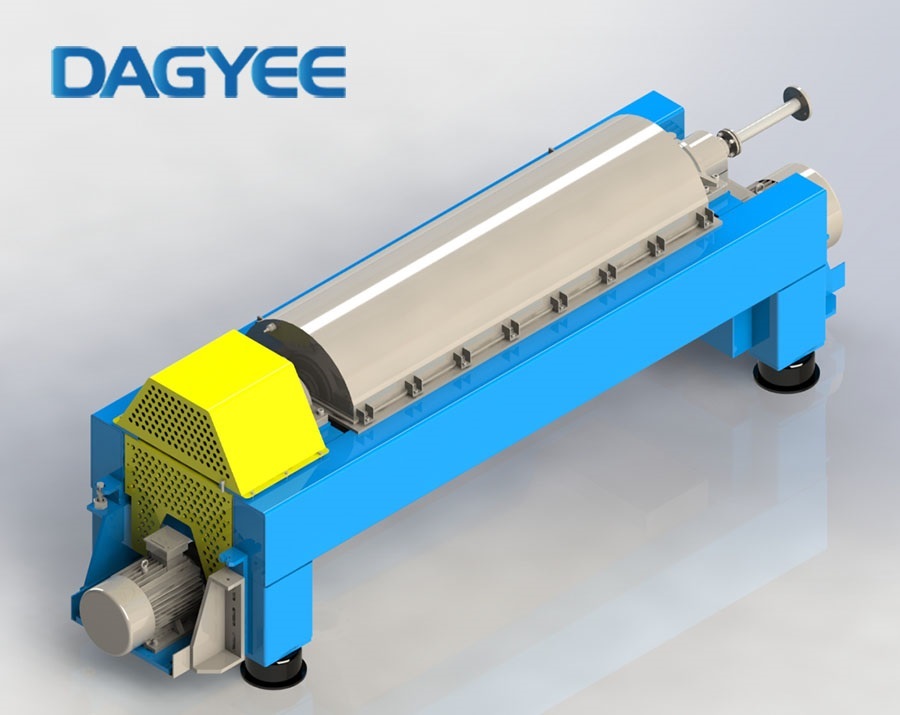
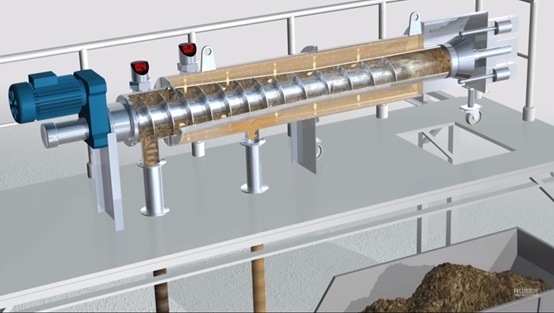
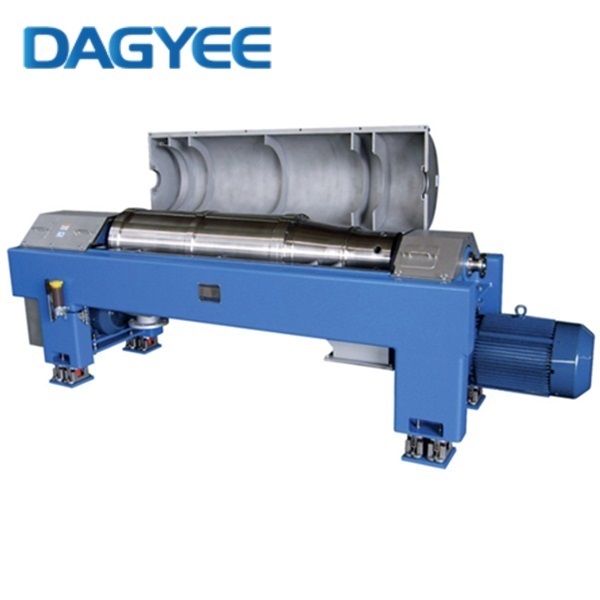
In the field of industrial solid-liquid separation, the horizontal decanter centrifuge (Horizontal Decanter Centrifuge, abbreviated as Horizontal Screw Centrifuge) boasts advantages such as efficient separation, continuous operation, and adaptability to various materials, and is widely used in industries such as sludge dewatering, chemical reactions, food processing, and mining sorting. As a high-speed and high-precision core production equipment, its operational stability directly determines production efficiency, product quality, and maintenance costs. According to industry practical data statistics, over 70% of the non-planned shutdowns of horizontal screw centrifuges are caused by preventable issues such as lubrication failure, seal leakage, bearing wear, and excessive vibration - therefore, establishing a scientific and standardized full-cycle maintenance system is not only the key to extending the equipment's service life (which can be increased to 8-12 years), but also a core measure to reduce production costs and avoid safety hazards.
This article integrates multiple authoritative technical documents and practical operation procedures from the industry, combined with first-line operation experience, from six dimensions including core equipment parameters, daily inspections, regular maintenance, key component maintenance, fault diagnosis, and safety regulations, to provide a practical maintenance guide for horizontal decanter centrifuges for industry practitioners, balancing professionalism and practicality, and helping enterprises achieve efficient, stable, and safe operation of the equipment.
I. Core Technical Parameters of Horizontal Sedimentation Centrifuges (Selection + Maintenance Reference)
| Parameter | Normal Range | Maintenance Related Notes | Applicable Industries |
|---|---|---|---|
| Bowl Diameter (mm) | 350-1250 | The larger the diameter, the faster the bowl wear rate; cleaning and dynamic balancing calibration cycles need to be shortened | Chemical, Mining, Municipal Sludge |
| Bowl Speed (r/min) | 2000-4500 | Higher speed increases bearing load; lubrication frequency must be increased accordingly; stricter vibration monitoring | Food, Fine Chemicals, Pharmaceuticals |
| Differential Speed Range (r/min) | 10-30 | Abnormal differential speed can lead to poor slag discharge; regularly check differential oil quality and transmission components | All Industries (General Purpose) |
| Processing Capacity (m³/h) | 5-100 | Higher capacity increases risk of feed pipe and slag discharge port blockage; daily cleaning requires special attention | Municipal Sludge, Mining, Papermaking |
| Separation Factor | 800-3000 | Higher separation factor increases risk of excessive vibration; regularly calibrate dynamic balance (G2.5 standard) | Fine Chemicals, Pharmaceuticals, Food |
| Bearing Model | SKF 6318/C3, NSK 22220CA | Replace according to original model specifications; do not mix different brands or specifications to avoid load mismatch | All Industries (General Purpose) |
| Seal Type | Mechanical Seal, Dry Gas Seal, Labyrinth Seal | Mechanical seal requires inspection/replacement within 6 months; dry gas seal requires regular gas pressure and leakage checks | Chemical (Corrosive Materials), Pharmaceuticals |
II. Daily Maintenance Specifications (Must be done daily to avoid 80% of basic faults)
The core of the daily maintenance for horizontal sedimentation centrifuges is "cleaning, inspection, and early warning". No complex tools are required, and it can be completed by on-site operators. The focus is on the subtle changes in the operating status of the equipment to prevent small problems from escalating into major faults. The following is the standardized daily maintenance process, which can be directly included in the enterprise equipment inspection ledger.
1. Cleaning Maintenance (Carried out immediately after shutdown)
After the screw centrifuge is running, the materials tend to adhere to the inner wall of the drum, the screw blades, the feed pipe, the discharge port, and the drainage pipe. Long-term accumulation can lead to equipment corrosion, blockage, and increased vibration. Therefore, cleaning is the top priority of daily maintenance.
a) Within 30 minutes after shutdown, rinse the inner wall of the drum, screw blades, feed pipe, discharge port, and drainage pipe with clean water or neutral detergent (avoid corrosive reagents) until the water is clear and there is no residual material;
b) During cleaning, do not use hard tools (such as steel wire brushes, wrenches) to scrape the drum and screw surfaces, as this can damage the surface wear-resistant layer (such as tungsten carbide spray coating), and use soft brushes or high-pressure water guns (pressure ≤ 0.3 MPa) for rinsing;
c) After daily cleaning, check the dust and oil stains on the equipment shell, pipe joints, and motor surface, wipe them clean with a dry cloth to avoid dust entering the bearing chamber and the motor interior.
2. Operation Parameter Inspection (2-3 times per shift)
Monitor the operating parameters through intuitive observation and simple measurement. If any abnormalities are found, stop the machine immediately for troubleshooting to avoid overload operation of the equipment.
a) Bearing temperature: Use an infrared thermometer to detect the temperatures of the main bearing and screw bearing. The normal temperature should be ≤ 75℃. If the temperature increase exceeds 5℃ within a single day, an early warning should be issued and the operation should be suspended for investigation of the cause;
b) Equipment vibration: Use a vibration detector to measure the radial vibration. The normal value should be ≤ 2.8 mm/s. If it exceeds 3.0 mm/s, the machine should be stopped for inspection, focusing on checking for loose bolts, worn bearings, and failed dynamic balance, etc.;
c) Sealing status: Check the shaft seals, flanges, and pipe joints. There should be no oil or material leakage. If leakage occurs, promptly tighten the joints or replace the seals;
d) Transmission system: Check the tension of the transmission belt. When pressed, it should sink 10-15 mm as normal. If the tension is too loose or too tight, it should be adjusted promptly, and at the same time, check that there are no cracks or chips on the surface of the transmission belt. If damaged, replace it immediately;
e) Lubrication status: Check the oil levels of the main bearing, screw bearing, and differential. Ensure they are within the standard scale, with no oil leakage. If the oil level is insufficient, replenish the specified type of lubricating oil/lubricant.
3. Safety Device Inspection (Before starting the machine each day)
Safety devices are the key to ensuring the safety of the equipment and operators. Before starting the machine each day, check them one by one to ensure there are no abnormalities before starting the equipment.
a) Emergency stop button: Press and test to ensure it is sensitive, without sticking, and the button resets normally;
b) Torque limiter, safety lever: Check if they are in the normal working position, without loosening or deformation. Regularly calibrate (once a month);
c) Protective device: The equipment shell, drum protective cover, and motor protective net are intact, without missing, loosening. To avoid safety accidents during operation.
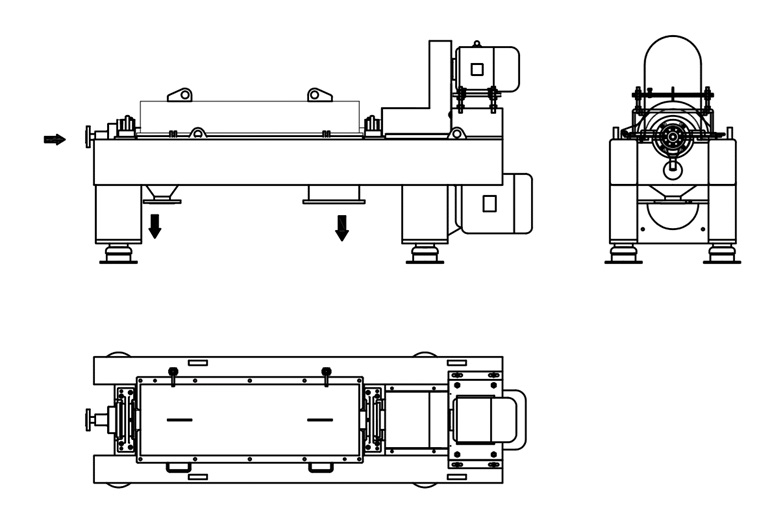
4. Technical drawings and performance parameters of the wood chip processing horizontal screw centrifuge
Our company can provide complete assembly drawings, detailed component drawings, on-site installation construction drawings and other professional technical drawings, clearly marking the overall structure layout of the equipment, the size specifications of core components and on-site installation norms, facilitating customers to efficiently complete equipment installation and commissioning, daily maintenance and equipment upgrading. Customers can contact our business personnel to obtain all technical drawings for free.
| Parameter | Specification | Remarks (CE Certification Compliance) |
|---|---|---|
| Bowl Diameter | 250mm - 1000mm | Customizable based on processing capacity, meets CE mechanical safety standards |
| Bowl Length-Diameter Ratio | 3.5:1, 4:1, 4.5:1, 5:1 | Higher ratio for better separation efficiency, optimized for CE environmental requirements |
| Rotational Speed | 1200 - 3600 rpm | Adjustable according to sludge properties; equipped with CE-certified speed limiter |
| Processing Capacity | 5 - 100 m³/h | Depends on wood chips sludge solid content (5-30%); meets CE efficiency standards |
| Motor Power | 15 - 160 kW | Matching bowl size and processing load; CE-certified energy-saving motor |
| Differential Speed | 5 - 30 rpm | Stepless adjustment for optimal solid discharge; compliant with CE safety control requirements |
| Separation Efficiency | >98% | For wood fiber recovery; meets CE environmental separation standards |
| Moisture Content of Separated Solids | 60% | Wood fiber after separation; reduces waste disposal costs, compliant with EU regulations |
| Material of Key Components | 304 Stainless Steel / Duplex Stainless Steel / Tungsten Carbide Coating | Resistant to wear and corrosion; meets CE material safety standards |
| Control System | Siemens PLC + HMI Touchscreen | Automatic and manual operation modes; CE-certified electrical control system |
| Overall Dimensions (LxWxH) | 2800x1200x1500 mm - 6500x2200x2800 mm | Depends on model; optimized for European factory installation space |
| Weight | 2000 kg - 18000 kg | Depends on model; equipped with CE-certified lifting points for safe installation |
III. Regular Preventive Maintenance (Performed on a regular basis, extending equipment lifespan)
Preventive maintenance is the core for reducing equipment failure rates and extending equipment lifespan. It should be carried out according to a fixed schedule based on the equipment's operating time and the characteristics of the processed materials. The following is a standardized regular maintenance schedule table and detailed process, which is suitable for most industrial scenarios. The cycle can be adjusted according to actual conditions.
| Maintenance Period | Maintenance Content | Maintenance Standard | Precautions |
|---|---|---|---|
| Weekly |
1. Lubricate main bearing, screw bearing, and differential; 2. Tighten bolts on all parts of the equipment; 3. Clean feed filter and drain pipe; 4. Check differential operating sound. |
1. Sufficient lubricant applied, no omissions; 2. Bolt torque meets manual requirements (30-50 N·m); 3. Filter unblocked, smooth drainage; 4. No abnormal noise from differential. |
Do not mix different types or brands of lubricants. |
| Monthly |
1. Test differential oil quality; 2. Measure rotor axial play and radial runout; 3. Verify safety devices; 4. Check seal wear condition. |
1. Oil clear, no turbidity or metal debris, viscosity meets standards; 2. Axial play ≤0.5mm, radial runout ≤0.02mm; 3. Safety devices sensitive and reliable; 4. Seals free from deformation or wear. |
If oil quality is substandard, completely replace oil and filter element. |
| Quarterly |
1. Replace worn seals; 2. Sample and test lubricant impurities and viscosity; 3. Check wear on screw blades and slag discharge port bushing; 4. Clean cooling system. |
1. Seals installed correctly, no leakage; 2. Lubricant free of excessive impurities, normal viscosity; 3. Wear ≤30%, continue using; 4. Cooling system unblocked, normal heat dissipation. |
When installing seals, the lip must face the bearing cavity; apply sealant. |
| Annually / 15,000 Hours |
1. Complete replacement of main bearing, screw bearing, and thrust bearing; 2. Bowl dynamic balance calibration; 3. Clean hydraulic/lubrication system; 4. Check motor insulation and terminals; 5. Comprehensive inspection of worn parts. |
1. Bearings installed correctly, no sticking; 2. Dynamic balance meets G2.5 grade, eccentricity ≤0.03mm; 3. Hydraulic/lubrication system free of impurities, pipes clear; 4. Motor insulation meets standards, no looseness. |
Dynamic balance calibration must be performed by professional personnel using specialized equipment. |
1. Maintenance of the lubrication system (core focus)
Lubrication failure is one of the main causes of bearing wear and equipment downtime. It is necessary to strictly follow the principles of "fixed cycle, fixed oil type, fixed dosage, and fixed record" to ensure the normal operation of the lubrication system.
a) Lubricating oil/grease selection: For main bearings and spiral bearings, lithium-based grease or special anti-wear lubricating oil (NAS 6 grade) should be selected first. For differentials, special gear oil should be used. It is strictly prohibited to mix different types and brands of oil.
b) Addition requirements: Add lubricating grease once a week. The amount added each time should comply with the requirements of the equipment manual (generally 50-100g per part). Avoid overfilling or insufficient filling - overfilling will cause the oil temperature to rise, and insufficient filling will result in poor lubrication.
c) Oil replacement: The differential should be replaced with gear oil every 5,000 hours, and the filter should be replaced simultaneously. The hydraulic system and lubrication system should be completely replaced every year. The oil tank, cooler, and pipelines should be cleaned to remove impurities.
d) Oil quality monitoring: The oil quality of the differential should be tested once a month. Sampling tests for impurities and viscosity of lubricating oil/grease should be conducted quarterly. If turbidity, metal debris, or viscosity reduction occurs, the oil should be replaced immediately, and the cause of equipment wear should be investigated.
2. Maintenance of key components (to extend the core lifespan of the equipment)
The core components of the horizontal sedimentation centrifuge include bearings, differentials, seals, drums, and spirals. The operating status of these components directly determines the performance of the equipment. They need to be maintained with priority.
(1) Bearing maintenance
The bearing is the "heart" of the equipment, bearing all the loads of the drum and spiral. The main reasons for its failure are poor lubrication, contamination, overload, and excessive vibration. The maintenance points are as follows:
a) Daily monitoring: Monitor the temperature and vibration of the bearing every shift. If any abnormalities are found, stop the machine immediately to avoid accelerated bearing wear.
b) Regular replacement: Replace the main bearing, spiral bearing, and thrust bearing every year or after 15,000 hours of operation. When replacing, clean the bearing cavity of impurities, apply special lubricating grease, install it properly, and avoid any jamming.
c) Special conditions: If the equipment processes high-viscosity and high-maintenance materials (such as mining sludge, chemical waste), the lubrication cycle of the bearings should be shortened to 20 days, and the replacement cycle should be shortened to 8-10 months.
(2) Differential maintenance
The core function of the differential is to control the rotational speed difference between the drum and the spiral (10-30 r/min). Abnormal rotational speed difference will cause poor slag discharge and decreased separation efficiency. The maintenance points are as follows:
a) Temperature control: The operating temperature of the differential should be ≤ 80℃. Check the oil temperature daily. If the temperature is too high, check the cooling system or the oil for any abnormalities.
b) Oil quality maintenance: Check the oil level daily, test the oil quality monthly, and replace the oil and filter every 5,000 hours. When replacing, thoroughly clean the internal impurities of the differential.
c) Sound monitoring: Listen for any abnormal noises (such as abnormal sounds, vibration sounds) during operation. If so, stop the machine to investigate problems such as gear wear or bearing damage.
(3) Seal maintenance
The seal's function is to prevent the leakage of materials and oil, avoiding contamination of bearings, motors, and other components. The maintenance points are as follows:
a) Regular replacement: Mechanical seals should be inspected once every 6 months and replaced once every 12 months. Dry gas seals should be inspected for gas pressure quarterly to ensure no leakage. Replace the seal once a year.
b) Installation standards: When replacing the seal, the lip should face the bearing cavity, apply an appropriate amount of sealant, and evenly tighten the end cover bolts (torque 45 N·m). Avoid seal deformation.
c) Leakage handling: If a seal leak is detected, stop the machine immediately, investigate the cause (seal wear, joint loosening, abnormal pressure), and handle it promptly to avoid contamination of the equipment interior.
(4) Drum and spiral maintenance
The drum and spiral are the core components for material separation. They are in contact with materials for a long time and are prone to wear. The maintenance points are as follows: a) Wear inspection: Check the wear condition of the spiral blades and the liner of the discharge port every quarter. If the wear exceeds 30%, it is necessary to repair (by welding or tungsten carbide spraying) or replace the components in time;
b) Dynamic balance calibration: Every year or after 15,000 hours of operation, calibrate the dynamic balance of the drum to ensure it meets the G2.5 standard, with an eccentricity of ≤ 0.03mm, to avoid excessive vibration;
c) Corrosion protection: If handling corrosive materials, regularly apply anti-corrosion treatment (apply anti-corrosion coating) to the drum and the spiral to prevent equipment corrosion.
IV. Common Fault Diagnosis and Emergency Handling (Quick Resolution, Reducing Downtime)
During the operation of the horizontal sedimentation centrifuge, various faults are inevitable. Quickly and accurately diagnosing the causes of faults and taking emergency handling measures can minimize downtime losses to the greatest extent. The following are the 5 most common types of faults. Based on practical experience, the diagnostic methods and handling plans are compiled. No professional personnel are required; on-site operators can initially handle them.
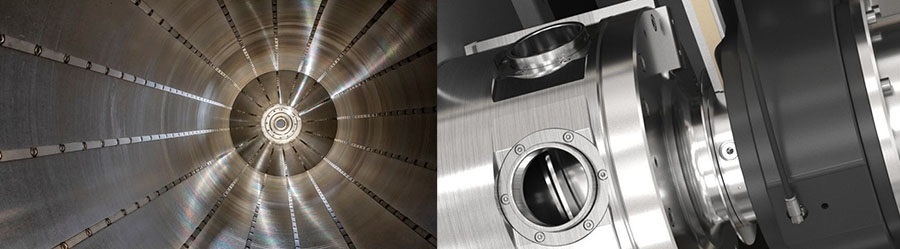
| Fault Symptom | Common Causes | Emergency Treatment | Preventive Measures |
|---|---|---|---|
| Excessive Equipment Vibration |
1. Bearing wear; 2. Bowl dynamic balance failure; 3. Loose bolts; 4. Uneven material distribution; 5. Foreign matter inside bowl. |
1. Stop immediately, check bolts and tighten; 2. Clean foreign matter from bowl, restart for testing; 3. If vibration still exceeds standard, check bearing wear and dynamic balance; replace bearings and calibrate dynamic balance if necessary. |
1. Regularly calibrate dynamic balance; 2. Check bolt tightness daily; 3. Clean bowl to prevent foreign matter residue. |
| Excessive Bearing Temperature |
1. Insufficient lubrication or substandard oil quality; 2. Bearing wear or seizure; 3. Equipment overload; 4. Cooling system blockage. |
1. Stop and add lubricant; if oil quality is substandard, replace immediately; 2. Check cooling system and clear blockages; 3. If bearing is seized, replace bearing; 4. Adjust feed rate to avoid equipment overload. |
1. Regularly replace lubricant; 2. Monitor bearing temperature daily; 3. Regularly clean cooling system. |
| Seal Leakage |
1. Seal wear or deformation; 2. Loose connections; 3. Sealant failure; 4. Abnormal pressure. |
1. Stop and tighten connections; 2. Check seals; if worn or deformed, replace immediately; 3. Reapply sealant; 4. Adjust equipment pressure to standard range. |
1. Regularly replace seals; 2. Check sealant condition monthly; 3. Monitor equipment operating pressure. |
| Reduced Separation Efficiency |
1. Insufficient speed; 2. Improper differential speed; 3. Abnormal feed concentration; 4. Bowl or screw wear; 5. Feed pipe blockage. |
1. Adjust equipment speed to standard range; 2. Calibrate differential, adjust speed difference; 3. Adjust feed concentration to avoid too dilute or too thick; 4. Clear feed pipe blockages; 5. Check bowl and screw wear, repair promptly. |
1. Check speed and differential parameters daily; 2. Control feed concentration; 3. Regularly clean feed pipe; 4. Regularly inspect bowl and screw wear. |
| Poor Slag Discharge |
1. Abnormal differential speed; 2. Slag discharge port blockage; 3. Excessive feed rate; 4. Material viscosity too high. |
1. Stop and clear slag discharge port blockages; 2. Calibrate differential, adjust speed difference; 3. Reduce feed rate, control feeding speed; 4. Dilute material appropriately to reduce viscosity. |
1. Clean slag discharge port daily; 2. Regularly calibrate differential; 3. Control feed rate and material viscosity. |
V. Maintenance Management System and Safety Standards (Long-term Implementation, Risk Avoidance)
A scientific maintenance management system is the key to ensuring the implementation of maintenance work and avoiding safety risks, especially for large-scale production enterprises. Standardized management processes need to be established, responsibilities clarified, and operations standardized.
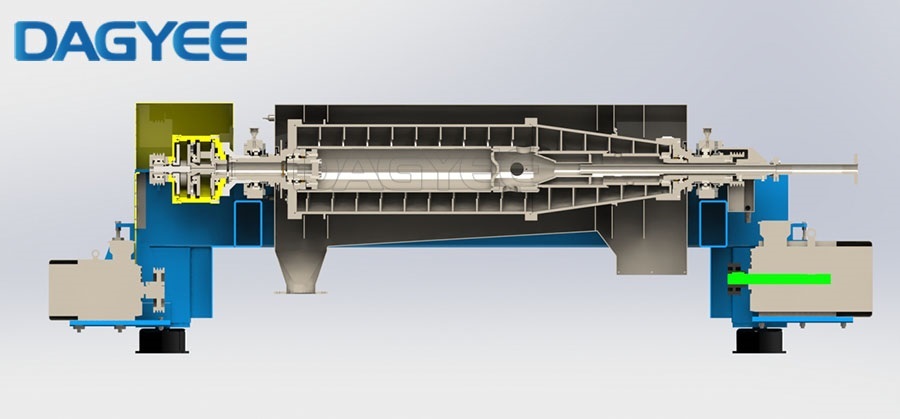
1. Maintenance Management System Construction
a) Equipment Ledger: Establish a dedicated ledger for horizontal sedimentation centrifuges, detailing equipment models, installation time, operating time, maintenance records, fault history, spare parts replacement status, etc., ensuring that each piece of equipment can be traced;
b) Responsibility Division: Clearly define the responsibilities of operators and maintenance personnel. Operators are responsible for daily cleaning and inspection, while maintenance personnel are responsible for regular maintenance and fault repair to ensure that all maintenance work is implemented;
c) Spare Parts Management: Keep a constant supply of bearings, seals, drive belts, filter elements, lubricating oil/grease, etc., and preferentially use original factory spare parts to avoid equipment damage caused by inferior spare parts. At the same time, establish a spare parts inventory ledger and replenish it in a timely manner;
d) Training and Assessment: Regularly train operators and maintenance personnel, explaining equipment structure, maintenance standards, fault diagnosis methods, and safety operation requirements. Only those who pass the assessment can start working, enhancing the professional capabilities of maintenance personnel.
2. Safety Operating Standards
The horizontal sedimentation centrifuge is a high-speed equipment, improper operation can easily lead to safety accidents. The following safety standards must be strictly followed:
a) Before Startup: Check the protective devices, safety devices, lubrication system, and sealing status of the equipment. Only after confirming there are no abnormalities can the equipment be started. It is strictly prohibited to operate without protection or safety devices;
b) During Operation: Do not open the equipment protective cover, touch rotating parts such as the drum and screw, do not operate beyond the load limit, do not arbitrarily adjust the speed, differential speed, etc.;
c) After Shutdown: The equipment must be completely stopped before cleaning, maintenance, or repair work can be carried out. It is strictly prohibited to operate when the equipment is not completely stopped;
d) Special Situations: If the equipment shows abnormal conditions (such as severe vibration, leakage, abnormal noise), immediately press the emergency stop button, cut off the power supply, and troubleshoot the fault. It is strictly prohibited to forcibly operate; when handling corrosive or toxic materials, personal protection (wearing protective clothing, gloves, goggles) must be done.
VI. Summary
The core of the maintenance for horizontal sedimentation centrifuges is "prevention first, combination of prevention and treatment". Through daily cleaning and inspection, regular preventive maintenance, rapid fault diagnosis, and standardized safety operations, the occurrence rate of equipment failures can be effectively reduced, the service life of the equipment can be extended, maintenance costs can be lowered, and the equipment can operate stably and efficiently for a long time.
This article integrates authoritative technical literature from the industry and first-line maintenance experience, and compiles maintenance guidelines, parameter tables, and fault handling plans, which have been verified through practical operation and can be directly applied to industrial production scenarios. It is compatible with most mainstream brands of horizontal sedimentation centrifuges. For special conditions (such as high corrosion, high wear, high load), the maintenance cycle and maintenance plan can be adjusted according to the actual operating conditions of the equipment.
If complex faults occur in the equipment or more precise maintenance plans are needed, the equipment model and processing material characteristics can be further optimized and adjusted to help enterprises maximize production efficiency.

Name: Ashely Li
Mobile:+8613961861780
Tel:+8613961861780
Whatsapp:8613961861780
Email:info@dagyee.com
Add:Room 302, Building 11-4, Hongyi Road, Xinan Town, Xinwu District, jiangsu Province, China