English
 Chinese
info@dagyee.com
+8613961861780

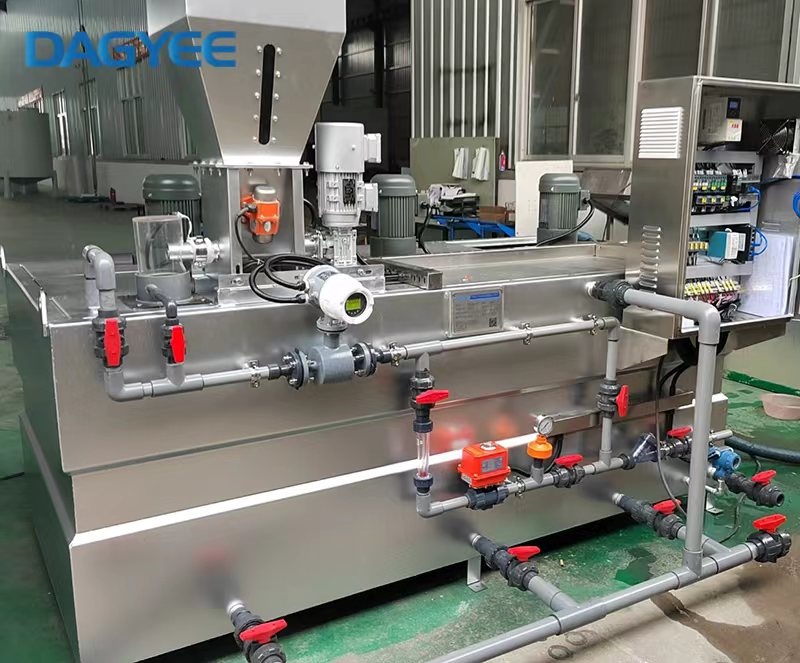
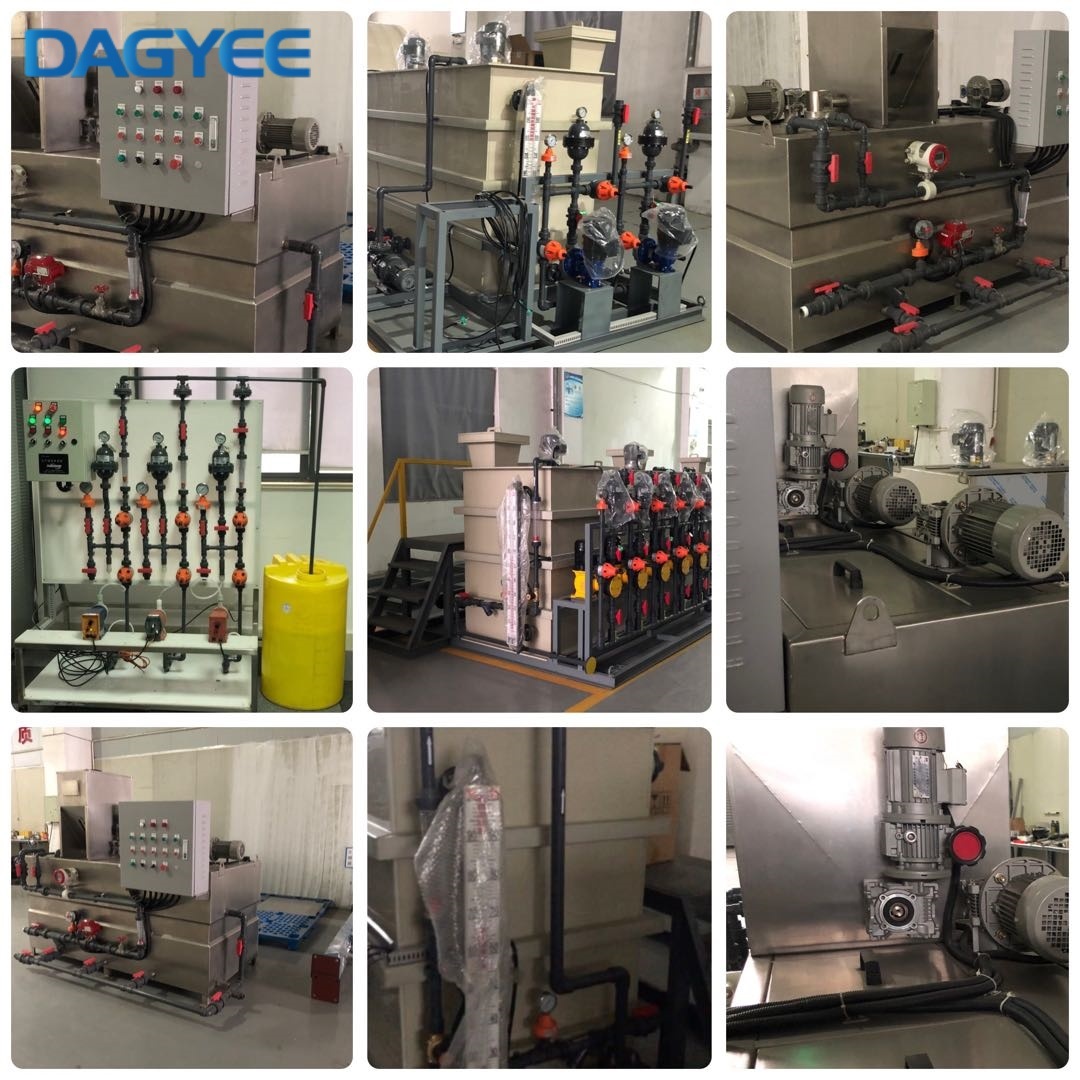
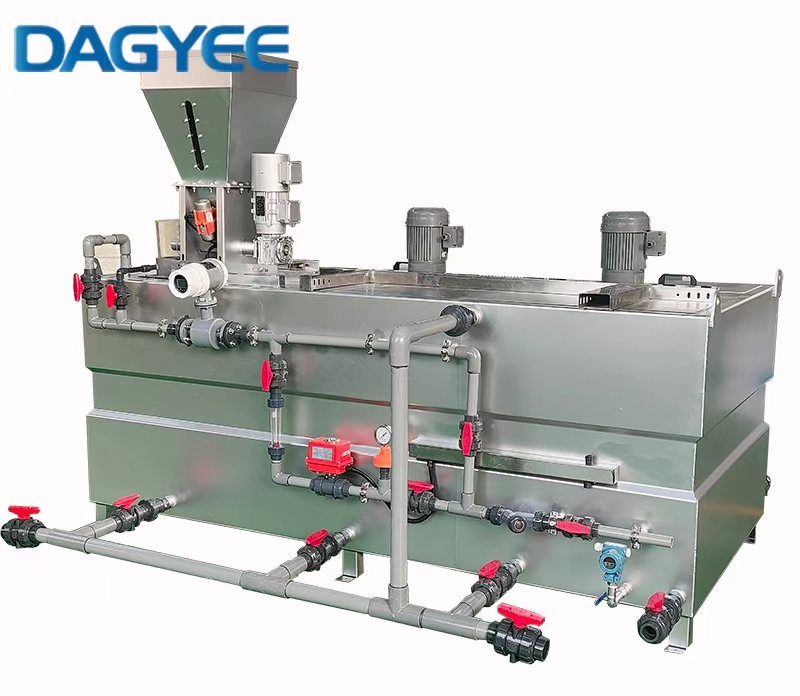
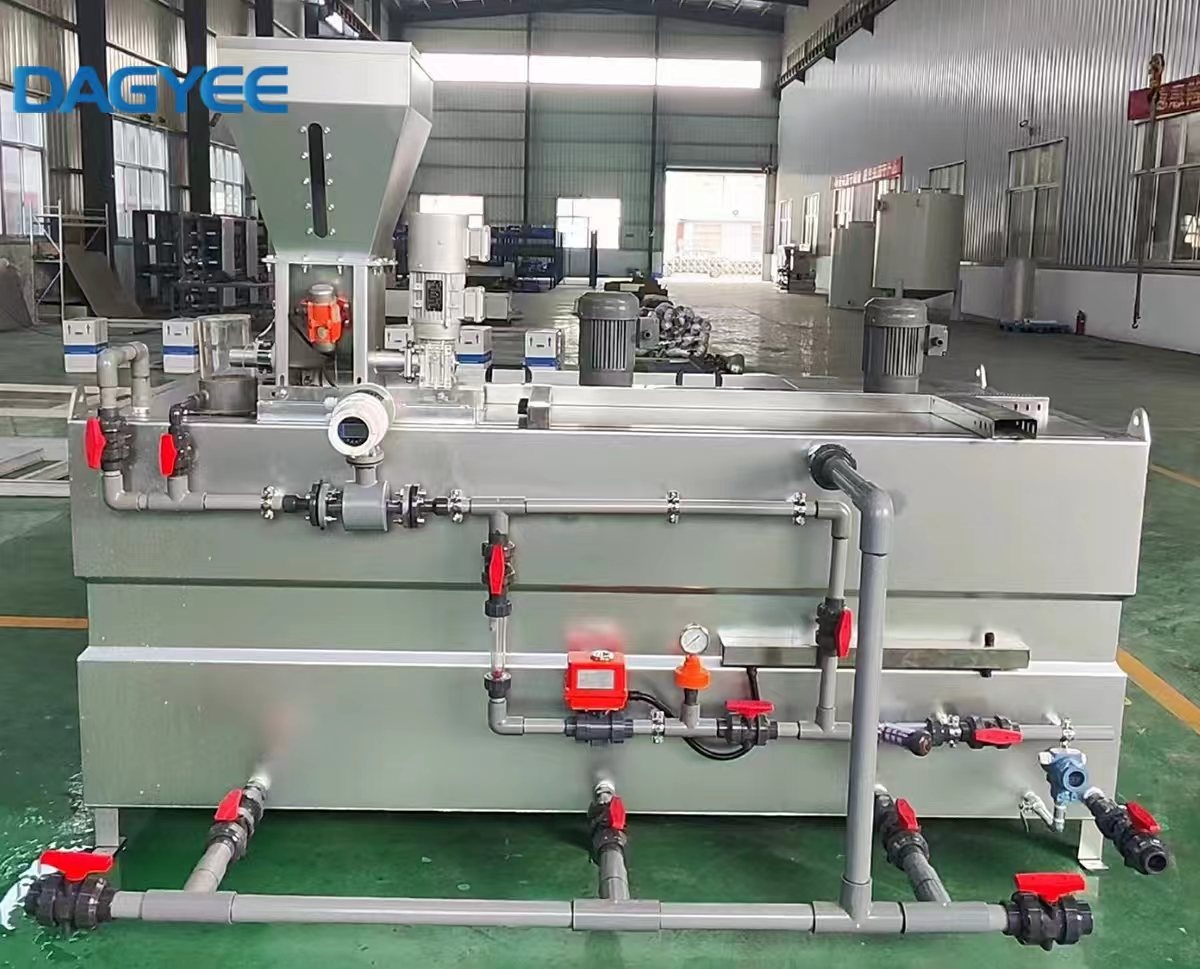
In industrial scenarios such as water treatment, sludge dewatering, coal preparation, and chemical engineering, the polymer preparation unit (also known as the polymer dissolving machine) is a core equipment for efficient dissolution and precise dosing of polymer flocculants (such as PAM).
Its operational stability and dissolution efficiency directly determine the treatment effect of subsequent processes, chemical consumption, and production costs. However, in practical applications, most enterprises face common problems such as insufficient dissolution, concentration fluctuation, frequent equipment failures, and high operation and maintenance costs, which seriously affect production efficiency and treatment quality.
Based on authoritative technical papers, practical cases in the industry in recent years, this blog systematically analyzes the core pain points in the application of Polymer Preparation Units, and provides enterprises with actionable optimization guidelines combined with experimental data and practical solutions to help reduce losses and improve equipment operational efficiency. We also add technical parameter tables and fault troubleshooting tables for quick reference in actual operation.
I. Core Application Pain Points of Polymer Preparation Units & Cause Analysis
1. Low Dissolution Efficiency & Poor Solution Uniformity (Core Pain Point)
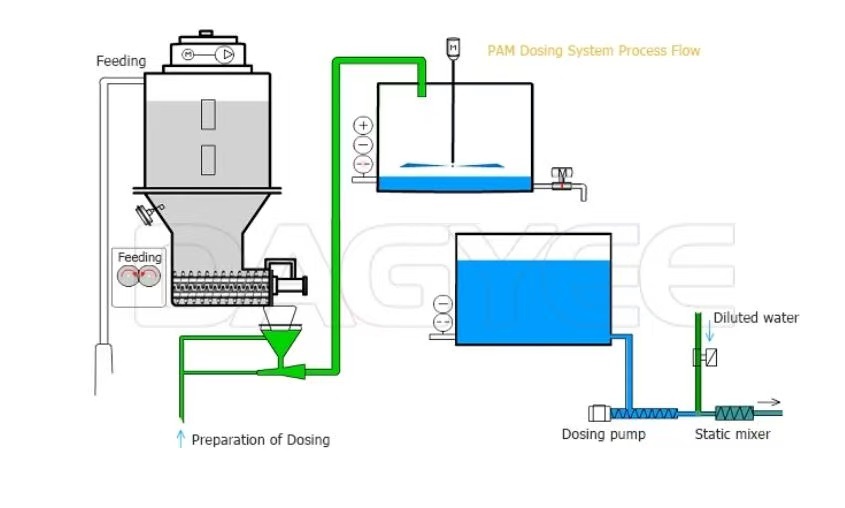
This is the most common problem in the application of Polymer Preparation Units, which is manifested by incomplete dissolution of polymer flocculants, the occurrence of "fish-eye agglomeration", and large fluctuations in solution viscosity, which directly lead to unstable subsequent dosing effects and increased chemical consumption.
According to the experimental data in "Study on Automatic Dosing System of Flocculant Based on APAM Stirring Dissolution Law": In conventional manual Polymer Preparation Units, when the stirring speed is lower than 800r/min and the dissolution time is less than 30 minutes, the PAM dissolution rate is only 65%-75%, and the agglomeration rate in the solution is as high as more than 15%; when the stirring speed is increased to 1200r/min, the dissolution time is extended to 45 minutes, and the molecular weight of the chemical is controlled between 8 million and 12 million, the dissolution rate can be increased to more than 98%, and the agglomeration rate is reduced to less than 2%.
Cause Analysis: First, the stirring parameters are unreasonable. Too low speed leads to insufficient dispersion of chemicals, while too high speed is easy to damage the polymer chain structure; second, the feeding method is improper. Solid chemicals are directly put into water without pre-dispersion treatment; third, the water temperature control is unreasonable. Most enterprises ignore the impact of water temperature on dissolution. Experiments show that when the water temperature is 25℃-35℃, the PAM dissolution speed is the fastest, and when it is lower than 15℃, the dissolution efficiency will decrease by more than 40%.
2. Frequent Equipment Failures & High Operation and Maintenance Costs
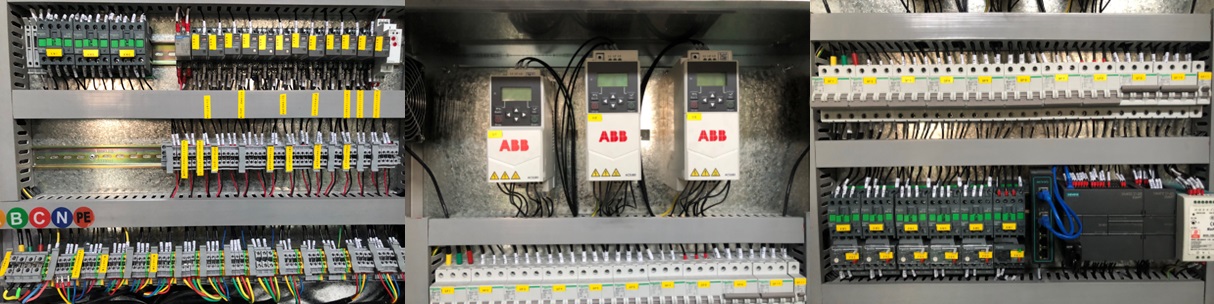
According to the on-site statistics in "Common Faults and Maintenance of AUE Type Three-Tank Continuous Automatic Polymer Preparation Unit" (Sohu, 2024), the failure rate of automatic Polymer Preparation Units is mainly concentrated in 4 components. The specific failure proportion and causes are shown in the following table:
| Equipment Component | Failure Proportion | Common Symptoms | Main Causes |
| Pump | 35% | Failure to start, insufficient flow | Chemical agglomeration blocking the pump body, aging seals, motor overload |
| Control System | 25% | Concentration control deviation | Uncalibrated sensors, electronic component damage due to high humidity |
| Filter Screen | 20% | Clogging, excessive equipment pressure | Accumulation of incompletely dissolved agglomerates and impurities |
| Stirrer | 20% | Abnormal operation, loud noise | Stirring paddle wear, bearing damage, agglomeration jamming |
In addition, most enterprises have 3 major operation and maintenance misunderstandings, which further aggravate equipment failures: first, ignoring equipment cleaning, the residual chemical agglomerates on the inner wall of the dissolution tank are not cleaned in time, leading to equipment corrosion after long-term accumulation; second, arbitrarily adjusting operating parameters without optimizing the speed and dissolution time according to the chemical model and water quality changes, leading to excessive equipment load; third, ignoring regular inspection of components, and failing to replace vulnerable parts such as seals and stirring paddles in time, leading to expanded failures.
3. Unstable Solution Concentration & Fluctuating Dosing Effect
Solution concentration deviation is a key factor affecting the treatment effect of subsequent processes. According to industry experimental data, when the output solution concentration deviation of the Polymer Preparation Unit exceeds ±5%, the flocculation effect of water treatment will decrease by more than 30%, the water content of sludge dewatering will increase by 5%-8%, and the subsequent treatment cost will increase.
The main causes include 3 points: first, inaccurate feeding amount control, and manual feeding is prone to over-dosing or under-dosing; second, fluctuations in water temperature and stirring speed during the dissolution process lead to unstable chemical dissolution rate; third, inaccurate liquid level monitoring leads to unbalanced water-chemical ratio, especially for continuous Polymer Preparation Units, insufficient synchronization between feeding and water intake is prone to cause high and low concentration.
4. Unreasonable Equipment Selection & Poor Adaptability
About 40% of enterprises have the problem of improper selection of Polymer Preparation Units: first, small enterprises choose manual Polymer Preparation Units, which have high labor costs and low dissolution efficiency, and cannot meet the needs of large-scale production; second, large enterprises choose single-tank Polymer Preparation Units, which cannot achieve continuous feeding and output, leading to production interruption; third, they fail to select appropriate materials and specifications of Polymer Preparation Units according to the chemical type (solid, liquid) and treatment capacity. For example, in highly corrosive scenarios, choosing ordinary carbon steel Polymer Preparation Units is easy to cause equipment corrosion and shorten service life.
II. Practical Solutions to Application Problems of Polymer Preparation Units
In response to the above core pain points, combined with the technical solutions in papers such as "Improving Dissolution Efficiency and Quality of FRP Barrel Three-Tank Continuous Polymer Preparation Unit" (Huai'an Environmental Protection Network, 2025) and "Study on Automatic Dosing System of Flocculant Based on APAM Stirring Dissolution Law", as well as industrial practical experience, 4 major solutions are sorted out, which take into account technical feasibility and cost controllability.
1. Optimize Dissolution Process to Improve Dissolution Efficiency and Uniformity
Combined with experimental data and practical experience, the core of optimizing the dissolution process is "controlling parameters and standardizing operations". The specific measures are as follows:
1) Optimize stirring parameters: Adjust the stirring speed according to the molecular weight of the chemical. For PAM with a molecular weight of 8 million-12 million, the stirring speed is controlled at 1000r/min-1200r/min, and the dissolution time is 40-45 minutes, which can not only ensure full dissolution but also avoid damaging the polymer chain structure;
2) Control water temperature and water quality: Stabilize the dissolution water temperature at 25℃-35℃, and add heating devices in winter to avoid low water temperature affecting dissolution efficiency; at the same time, choose clean tap water or softened water to avoid impurities affecting solution purity;
3) Standardize feeding method: Adopt pre-dispersion feeding, crush solid chemicals and put them into water evenly through the feeder to avoid direct one-time feeding and reduce agglomeration; for liquid chemicals, control the feeding speed to ensure synchronous mixing with water intake;
4) Add auxiliary devices: Install deflectors in the dissolution tank and optimize the structure of stirring paddles to promote full mixing of chemicals and water. According to the research in "Improving Dissolution Efficiency and Quality of FRP Barrel Three-Tank Continuous Polymer Preparation Unit", the dissolution efficiency can be increased by 15%-20% after installing deflectors.
2. Standardize Equipment Operation and Maintenance to Reduce Failure Rate
In response to frequent equipment failures, the core is "regular inspection and standardized maintenance". Combined with the fault troubleshooting scheme in the paper, the following quick fault troubleshooting table is sorted out for on-site operation reference:
| Common Faults | Quick Troubleshooting Steps | Preventive Measures |
| Pump fails to start |
|
Clean the pump body regularly; avoid overloading the motor; check power supply daily |
| Concentration deviation |
|
Calibrate sensors quarterly; preset reasonable water-chemical ratio; stabilize stirring parameters |
| Stirring abnormality |
|
Lubricate bearings every six months; clean stirring paddles daily; replace worn parts in time |
| Filter screen clogging |
|
Clean the filter screen daily; optimize feeding and dissolution processes |
In addition, the standard operation and maintenance process should be followed: daily cleaning, regular inspection, avoiding operation and maintenance misunderstandings, and ensuring the stable operation of the equipment.
3. Precisely Control Concentration to Ensure Stable Dosing Effect
The core of achieving stable solution concentration is "precisely controlling the water-chemical ratio and reducing parameter fluctuations". The specific measures are as follows:
1) Select intelligent control system: For large-scale production, choose automatic Polymer Preparation Units equipped with precise feeders, liquid level sensors and temperature controllers to realize full automatic control of feeding, water intake, stirring and output, and control the concentration deviation within ±3%;
2) Establish parameter linkage mechanism: Preset stirring speed, dissolution time, water-chemical ratio and other parameters according to the chemical type and treatment capacity. When the water quality and chemical model change, adjust the parameters in time to avoid concentration fluctuation;
3) Regular concentration detection: Detect the concentration of the output solution regularly every day, use a viscometer or concentration detector, and adjust the feeding amount or water intake in time when deviation is found to ensure stable concentration.
4. Scientific Selection to Improve Equipment Adaptability
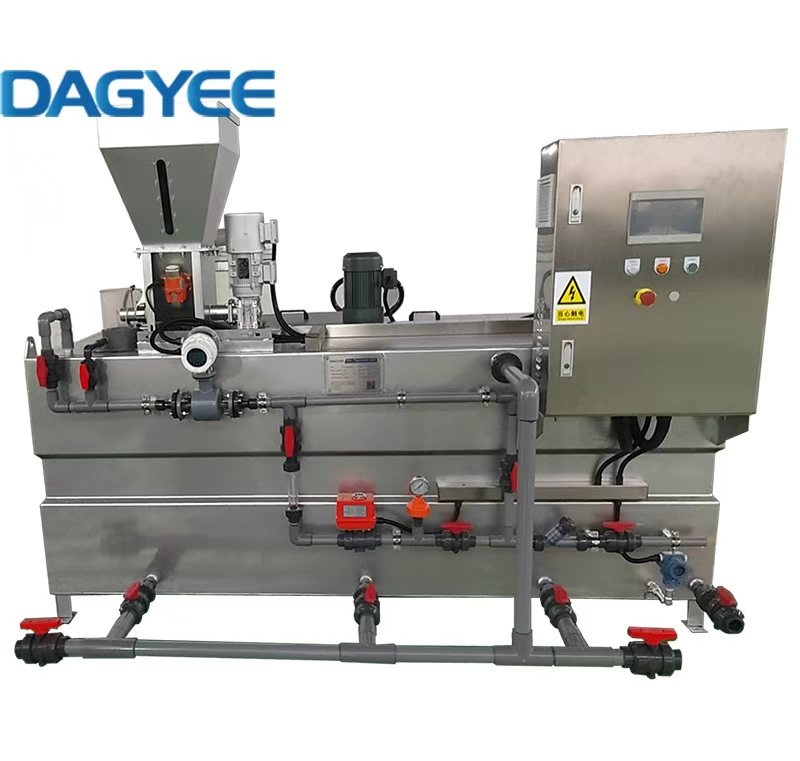
Combined with the selection suggestions in "Design and Application Interpretation of Solid Polymer Flocculant Dissolution Equipment", select Polymer Preparation Units scientifically according to the enterprise's production scale, chemical type and application scenario. The specific selection guidelines are shown in the following table:
| Enterprise Scale (Daily Treatment Capacity) | Recommended Equipment Type | Key Configuration | Applicable Scenarios |
| < 500m³ | Semi-automatic Polymer Preparation Unit | Simple feeder, basic stirring device | Small-scale water treatment, low manual cost demand |
| 500-2000m³ | Three-tank Automatic Polymer Preparation Unit | Continuous feeding/dissolution/output, basic automatic control | Medium-sized water treatment, sludge dewatering, coal preparation |
| > 2000m³ | Multi-tank Continuous Polymer Preparation Unit | Intelligent control system, multi-device linkage | Large-scale chemical engineering, high-volume wastewater treatment |
Material selection: Choose FRP Polymer Preparation Units for corrosive scenarios (such as chemical industry and high-salt wastewater treatment), which are corrosion-resistant and have a long service life; choose PP or carbon steel materials for ordinary scenarios to reduce costs.
III. Application Optimization Effect Verification
Real-World Case Study: Transforming Troubles into Results
To illustrate the practical effectiveness of the solutions outlined above, let’s examine a recent case study of a coal preparation plant in Shanxi, China, which was struggling with severe issues related to their Polymer Preparation Unit. This case provides concrete, data-driven evidence of how operational and technical optimizations can drastically improve efficiency and reduce costs.
1. Project Background
The client, a mid-sized coal preparation plant with a daily throughput of 1,800 m³, was using a legacy semi-automatic single-tank Polymer Preparation Unit made of carbon steel. Despite its moderate capacity, the plant was facing a perfect storm of problems that were crippling their operational efficiency:
1) High Chemical Loss: Due to poor dissolution, they were experiencing significant "fish-eye" clumping, leading to a 20% higher consumption of PAM (Polyacrylamide) than industry standards.
2) Chronic Equipment Failures: As highlighted in the technical data, the pump and control system were the most frequent points of failure. The plant reported a pump breakdown every 10-15 days on average, causing unplanned downtime.
3) Unstable Flocculation: The concentration of the polymer solution was highly inconsistent, leading to poor sludge dewatering. The moisture content of the coal sludge remained stubbornly high at <85%>, which was unacceptable for transport and storage.
4) Material Degradation: The carbon steel unit was suffering from corrosion caused by the chemical additives, leading to frequent leaks and a short projected lifespan.
After conducting an on-site audit, our technical team diagnosed the core issues as a combination of unsuitable equipment selection, incorrect operating parameters, and lack of structured maintenance.
2. Targeted Optimization Plan
Based on our diagnostic, we proposed a three-phase optimization plan, aligning with the solutions detailed in Sections II and IV of this blog:
Phase 1: Process & Parameter Tuning
We adjusted the stirring speed from the original 600 r/min to a precise 1100 r/min, within the optimal range of 1000-1200 r/min identified in the "APAM Stirring Dissolution" study.
The dissolution time was extended from 20 minutes to 45 minutes.
A pre-dispersion feeder was installed to eliminate direct dumping of solid PAM, significantly reducing the formation of agglomerates.
The water temperature was stabilized at 30°C using a small heating unit.
Phase 2: Equipment Upgrade & Maintenance Standardization
The faulty carbon steel pump was replaced with a corrosion-resistant FRP (Fiberglass Reinforced Plastic) pump.
A comprehensive maintenance schedule was established, based on the "Fault Troubleshooting Table":
Daily: Cleaning of the filter screen and tank interior.
Weekly: Inspection of all seals and connections.
Monthly: Calibration of the level and temperature sensors.
Phase 3: Scaling to Automated Operation
Recognizing the plant's growth to 2,200 m³/day shortly after, we recommended upgrading to a three-tank automatic polymer preparation unit (as per the selection guide in Section II.4). This allowed for continuous feeding, dissolution, and storage, eliminating batch-to-batch variation.
3. Remarkable Results & Data-Driven Improvement
After implementing the plan for six months, the results were dramatic and quantifiable, validating the effectiveness of our technical recommendations:
| Key Performance Indicator (KPI) | Before Optimization | After Optimization | % of Improvement |
| PAM Dissolution Rate | 68% | 98.5% | +44.1% |
| PAM Chemical Cost | ¥12,000 / month | ¥9,600 / month | -20.0% |
| Equipment Failure Rate | 2 times / month | 0 times / 6 months | -100% |
| Sludge Moisture Content | 85% | 78% | -8.2% |
| Operator Labor Hours | 4 hrs / day | 1 hr / day | -75% |
IV. Summary & Outlook
The core application problems of Polymer Preparation Units lie in "non-standard processes, inadequate operation and maintenance, and unreasonable selection". By optimizing the dissolution process, standardizing equipment operation and maintenance, precisely controlling concentration, and scientific selection, these pain points can be effectively solved, and the goals of efficient chemical utilization, stable equipment operation and reduced production costs can be achieved.
With the development of industrial intelligence, intelligent Polymer Preparation Units will become the mainstream trend in the future. By integrating the Internet of Things and big data technology, real-time monitoring of equipment operation status, automatic parameter optimization and early fault warning can be realized, further improving the operational efficiency and intelligence level of Polymer Preparation Units.
If you still face specific problems such as low dissolution efficiency and equipment failures in the application of Polymer Preparation Units, you can refer to the solutions and tables in this blog according to your own production scenario, or consult professional and technical personnel to customize adaptive optimization schemes. Contact us today for a free consultation!
Name: Ashely Li
Mobile:+8613961861780
Tel:+8613961861780
Whatsapp:8613961861780
Email:info@dagyee.com
Add:Room 302, Building 11-4, Hongyi Road, Xinan Town, Xinwu District, jiangsu Province, China