English
 Chinese
info@dagyee.com
+8613961861780

I. Core Technical Principles of the Polymer Preparation Unit (Medicine Soaking Machine)
1. Mixing stage: Precise feeding and initial dissolution
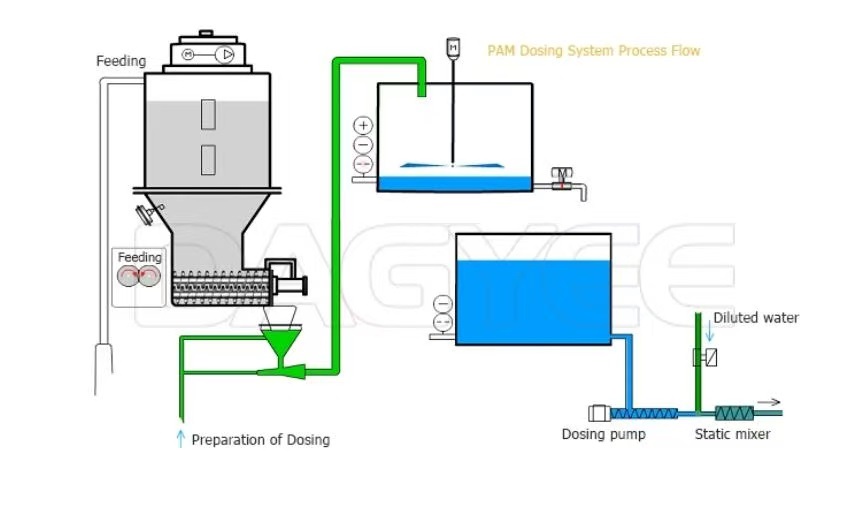
The dissolution difficulty of solid flocculants (such as anionic polyacrylamide APAM) lies in their tendency to form lumps and uneven dissolution. Therefore, the core of the mixing stage is "dispersed feeding + rapid mixing". The dosing machine uses a precise feeding system (screw feeding or vibrating feeding) to evenly feed a certain amount of flocculant powder into the mixing chamber, while simultaneously introducing a set flow rate of clear water. The high-speed stirrer (with a speed typically ranging from 800 to 1200 r/min) generates shear force to disperse the powder into fine particles, preventing lump formation. According to the research in "Preparation, Performance and Application of New Organic and Inorganic Flocculants" (Original Power Document, 2025), the stirring power in this stage is positively correlated with the initial viscosity of the solution. Reasonable control of the stirring power can increase the initial dissolution efficiency by more than 30%.
2. Curing stage: Complete dissolution and performance stabilization
The dissolution of polymer flocculants is not completed instantaneously and requires a certain maturation time (usually 20-60 minutes) to allow the polymer chains to fully extend, so as to achieve the best flocculation effect. The maturation tank of the medicine dissolving machine adopts low-speed stirring (at a speed of 100-300 r/min) to avoid high-speed stirring from destroying the structure of the polymer chains. Meanwhile, through constant temperature control (in some high-end models), the solution temperature is maintained at 20-30℃ to accelerate the extension of the polymer chains. The research in "Preparation and Performance of Ferric Chloride-Starch Composite Flocculant" (China Geological Survey Journal Network, 2022) indicates that optimizing the maturation time and stirring parameters can increase the dissolution rate of the flocculant to over 98%, significantly improving the subsequent treatment effect.
3. Control Phase: Automated Precise Regulation
Modern herbal decoction machines are all equipped with PLC automatic control systems, which can precisely regulate parameters such as the amount of raw materials, the volume of water, the stirring speed, and the maturation time. They also feature functions like liquid level alarms, fault alerts, and automatic cleaning. Some high-end models adopt fuzzy control technology (refer to "Fuzzy Control-based Automation Control System Design for Polymer Preparation Station", 2018), which can automatically adjust the stirring speed and the amount of raw materials based on the real-time changes in solution viscosity, ensuring uniform and stable solution concentration and avoiding errors caused by manual operation.
| Parameter Category | Parameter Name | Range / Value | Description |
| Stirring Parameters | High-speed Stirring Speed | 800-1200 r/min | Used in mixing stage to disperse flocculant powder and prevent caking |
| Low-speed Stirring Speed | 100-300 r/min | Used in curing stage to avoid damaging polymer chains | |
| Curing Parameters | Maturation Time | 20-60 minutes | Time required for polymer chains to fully extend |
| Constant Temperature Range | 20-30°C | Accelerates polymer chain extension (high-end models) | |
| Feeding Parameters | Feeding Speed | 0.1-5 kg/h | Controlled by screw or vibrating feeder, adjustable by PLC |
| Solution Concentration | 0.1%-0.5% | Common concentration range for industrial applications | |
| Equipment Specifications | Storage Tank Volume | 500-5000 liters | Designed based on enterprise’s daily chemical consumption |
| Curing Tank Quantity | 1-3 tanks | Three-tank design for continuous operation (mainstream) |
II. Core Structure Analysis of the Polymer Preparation Unit (Medicine Soaking Machine)
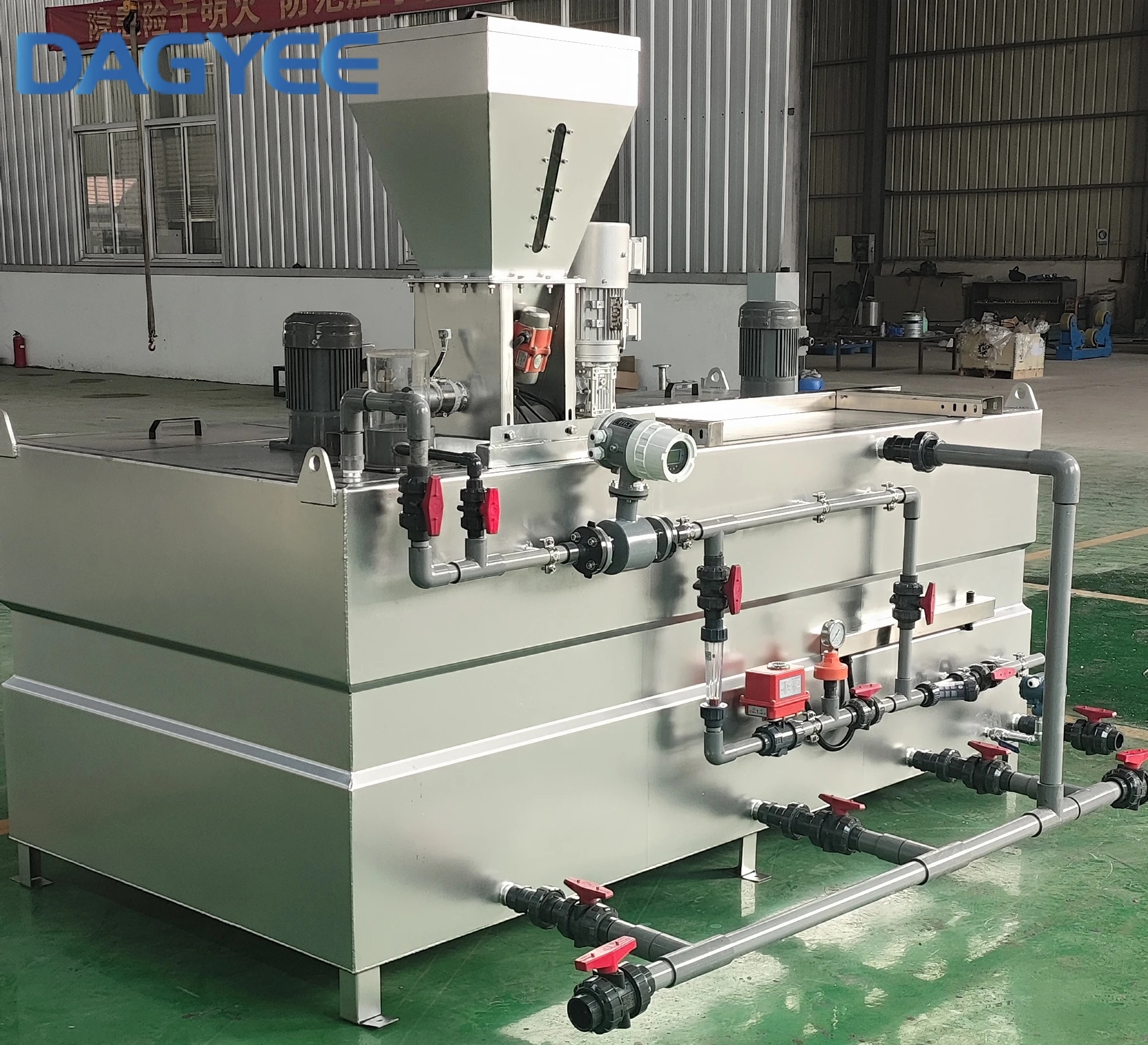
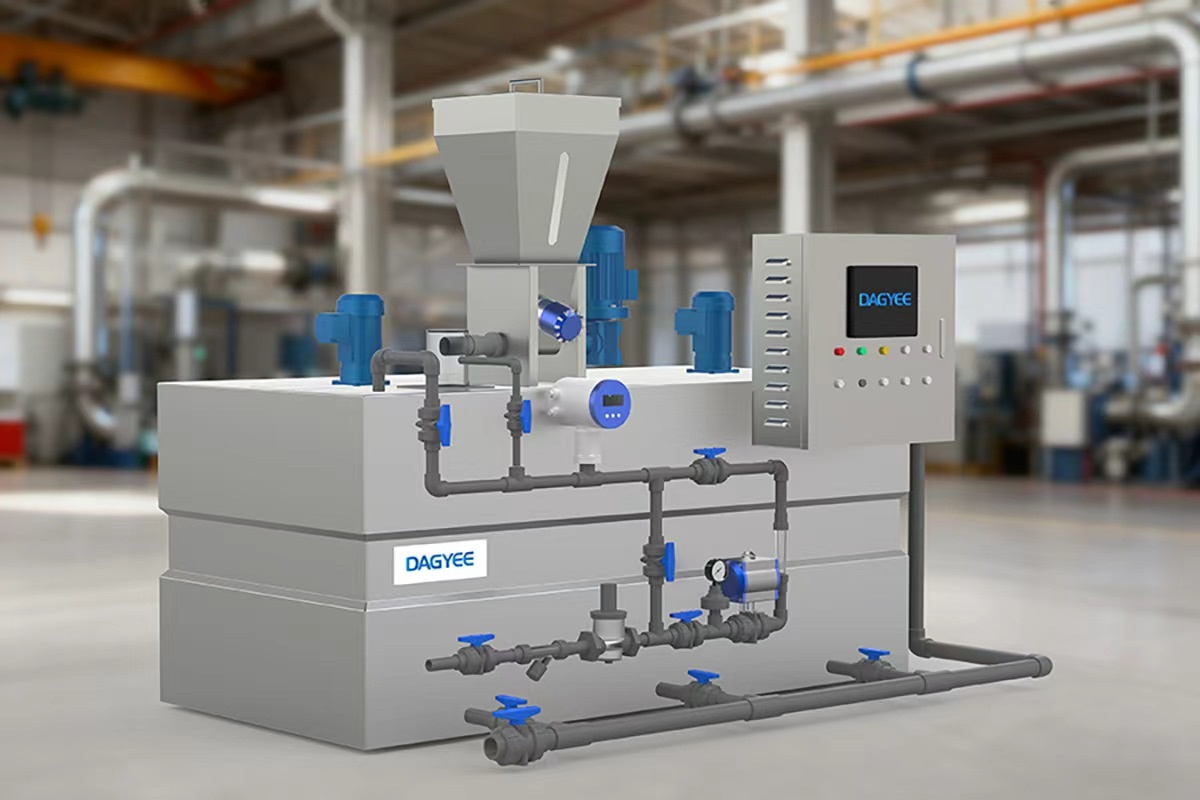
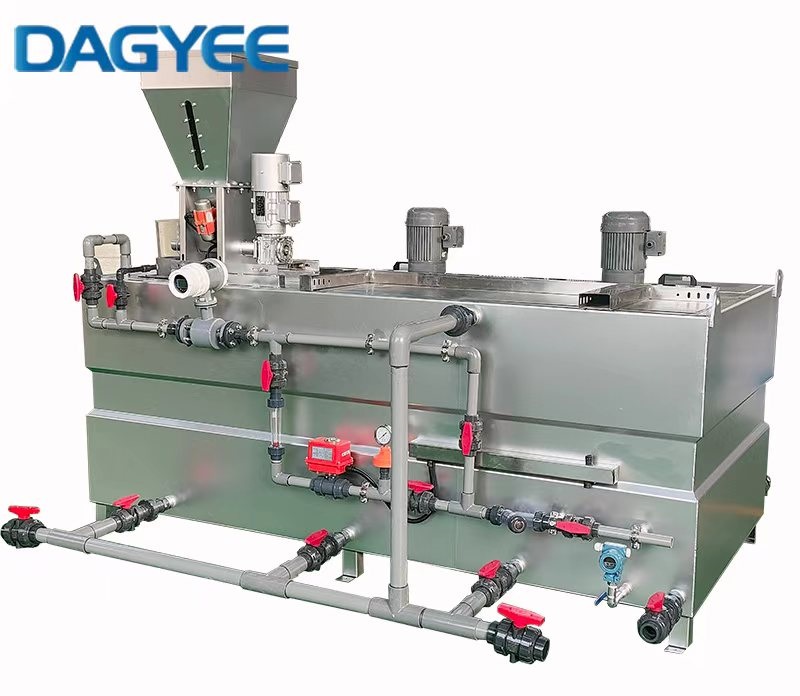
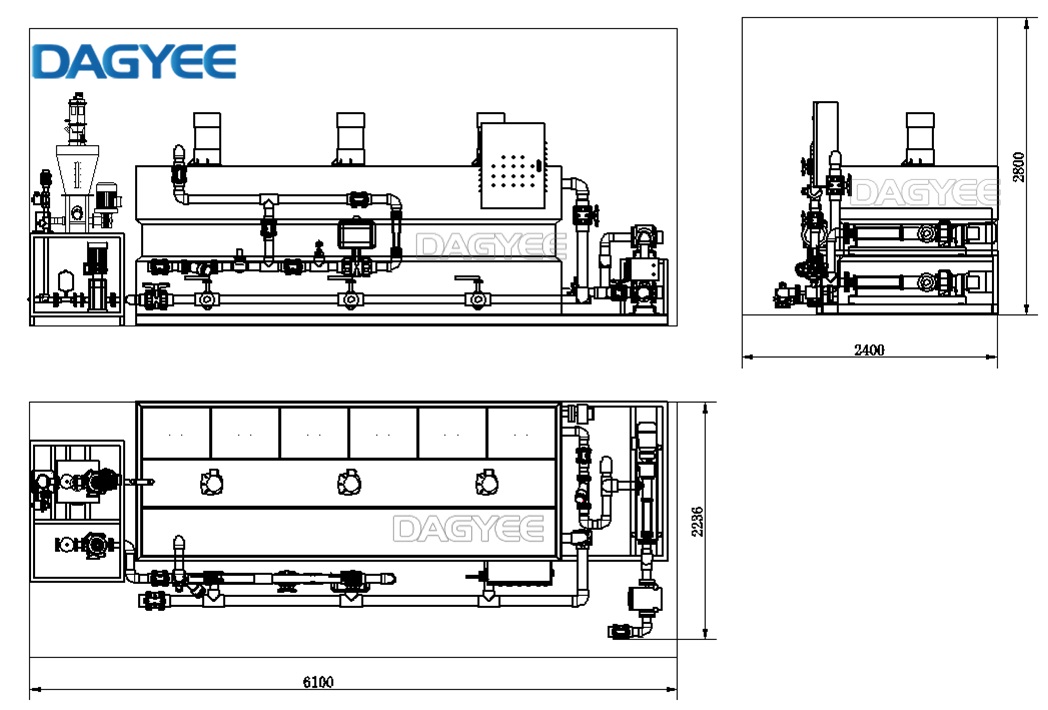
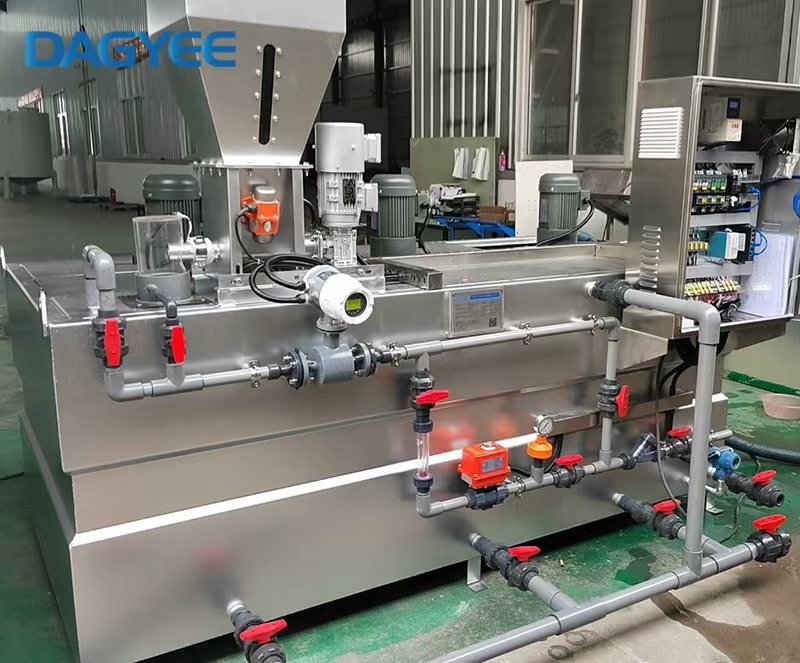
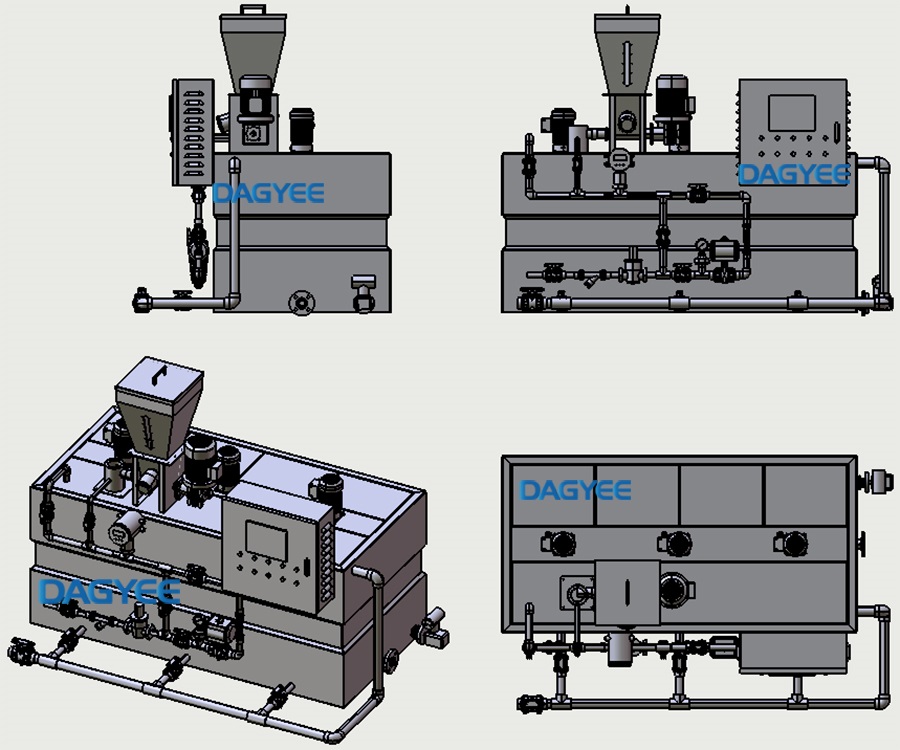
The core structure of mainstream medicine preparation machines (especially three-tank models) is divided into five major modules: feeding system, mixing system, maturation system, storage system, and control system. These modules work in coordination to ensure the efficiency and stability of the preparation process.
1. Feed system
The feeding system is the foundation for ensuring the accuracy of solution concentration. It mainly consists of a storage bin, a feeder, and a metering device. The storage bin is used to store solid flocculants and is typically made of stainless steel to prevent the chemicals from absorbing moisture and clumping. The feeder is designed as a screw type or vibrating type and can precisely control the feeding speed (ranging from 0.1 to 5 kg/h) according to the set concentration. The metering device (such as an electromagnetic flowmeter) continuously monitors the feeding volume and feeds back the information to the PLC control system to achieve closed-loop regulation.
2. Hybrid System
The hybrid system is composed of a mixing chamber, a high-speed agitator and an inlet pipeline. The mixing chamber adopts a cylindrical structure with guide vanes on the inner wall, which can enhance fluid disturbance and improve the mixing effect. The high-speed agitator is equipped with a stainless steel impeller, and the blade angle is optimized to generate a strong shearing force to fully disperse the flocculant powder. The inlet pipeline is equipped with a flow control valve, which can adjust the inlet water volume in real time according to the feed volume to ensure that the solution concentration meets the set requirements.
3. Curing System
The curing system is typically composed of 1 to 3 curing tanks (with a three-tank design being the mainstream), and the tank bodies are made of stainless steel, which is corrosion-resistant and easy to clean. Each curing tank is equipped with a low-speed agitator, and the agitator blades are designed as paddle blades to avoid damaging the polymer chains. The tank is equipped with a liquid level sensor. When the solution reaches the set liquid level, it automatically switches to the next curing tank, achieving continuous curing and enhancing production efficiency. According to the design of "A Manufacturing Method for a Three-Tank PAM Automatic Dosing Device" (X Technology, 2024), the three-tank structure can realize continuous operation of "feeding and mixing - curing - storage", and the curing efficiency is increased by more than 50% compared to the single-tank design.
4. Storage System
Storage tanks are used to hold the fully matured polymer solutions. The tank volume is designed based on the enterprise's usage (typically ranging from 500 to 5,000 liters), and they are equipped with low-speed agitators to prevent the solution from settling and stratifying. At the same time, they are provided with discharge ports, which are connected to the dosing system to ensure a continuous supply of chemicals. Some storage tanks are also equipped with heating devices to maintain the solution temperature in low-temperature environments, ensuring the stability of the flocculant performance.
5. Control System
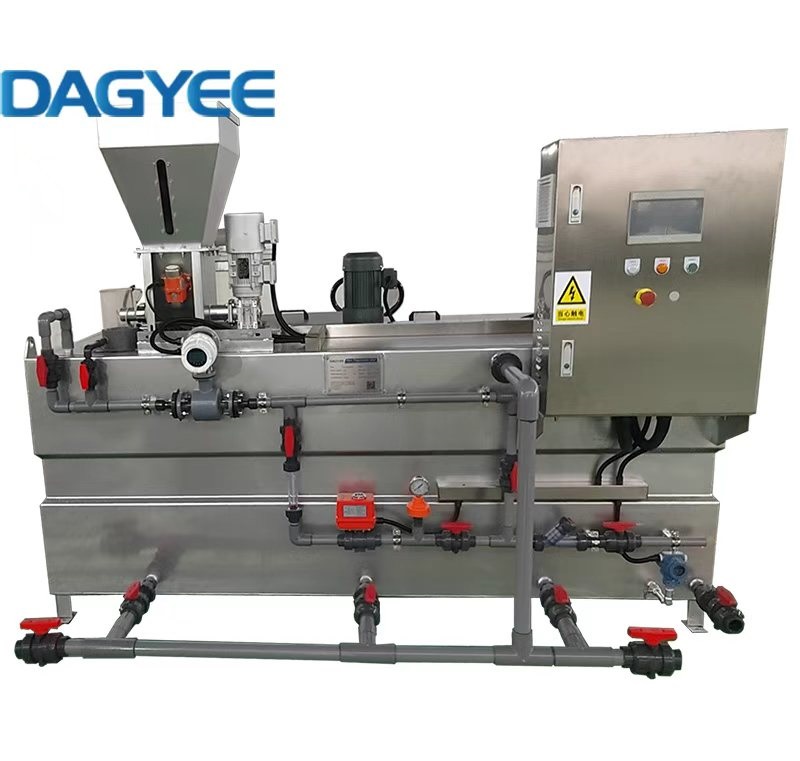
The control system is centered on a PLC and is equipped with a touch screen operation interface, enabling functions such as parameter setting, real-time monitoring, and fault alarm. Operators can set parameters such as solution concentration, feed volume, stirring speed, and curing time through the touch screen. The system displays the real-time operation status of each module (such as liquid level, speed, concentration, etc.). When situations like low liquid level, motor failure, or abnormal concentration occur, the system will automatically alarm and stop the relevant operations to prevent equipment damage or chemical waste.
III. Main Application Scenarios of the Polymer Preparation Unit (PPU)
1. The field of wastewater treatment (mainstream application scenarios)
In municipal sewage treatment and industrial wastewater treatment (such as dyeing wastewater, chemical wastewater, and electroplating wastewater), the medicine dissolving machine is used to prepare PAM, PAC and other flocculant solutions, facilitating the sedimentation of suspended solids and colloidal particles in the wastewater, and reducing the turbidity and COD content of the wastewater. For instance, in the treatment of dyeing wastewater, the anionic PAM solution prepared by the medicine dissolving machine can quickly adsorb dye particles in the wastewater, increasing the sedimentation efficiency by more than 40%, while reducing the dosage of flocculant and lowering the treatment cost.
2. Coal Preparation Field
In the coal preparation process, the treatment of coal slime water is a crucial step. The APAM solution prepared by the medicine-foaming mechanism can be used for the sedimentation and separation of coal slime water, achieving the recovery of coal slime and the recycling of water. According to the experimental results of the research "Research on the Automatic Dosing System of Flocculant Based on the Dissolution Law of APAM Stirring", the sedimentation speed of coal slime water prepared by the medicine-foaming mechanism increases by 35%, and the recovery rate of coal slime increases by 10% to 15%, significantly improving the efficiency of coal preparation.
3. The field of mining and ore extraction
In mining operations such as coal and metal mining, the medicine foaming machine is used to prepare flocculant solutions, treat mine wastewater and tailings slurry, achieve wastewater reuse and tailings sedimentation, and reduce environmental pollution. Meanwhile, in mine dust removal, the high-molecular solution prepared by the medicine foaming machine can be used for spray dust removal, lower the dust concentration, and ensure the health of the workers.
4. Papermaking and Textile Industry
In the papermaking industry, the flocculant solution prepared by the medicine dissolving machine can be used for the retention and drainage assistance of pulp, enhancing the strength and whiteness of paper, and reducing fiber loss. In the textile industry, it can be used for the decolorization treatment of printing and dyeing wastewater, removing dyes and impurities from the wastewater to achieve the standard discharge of wastewater.
| Application Field | Common Flocculants | Key Effect Indicators | PPU Configuration Requirements |
| Wastewater Treatment | PAM, PAC | Sedimentation efficiency ≥40%, COD reduction, turbidity reduction | Continuous type (three-tank), corrosion-resistant material, automatic concentration control |
| Coal Preparation | APAM | Coal slime sedimentation speed +35%, coal slime recovery rate 10%-15% | High-speed dispersion, low-speed curing, large storage tank |
| Mining & Ore Extraction | PAM, Composite Flocculants | Wastewater reuse, tailings sedimentation, dust reduction | Adjustable stirring intensity, heating device (low-temperature areas) |
| Papermaking & Textile | PAM, Cationic PAM | Pulp retention enhancement, fiber loss reduction, decolorization | Pre-dispersing device, smooth inner wall (easy cleaning) |
IV. Selection Guide for Polymer Preparation Unit (PPU)
When enterprises choose a medicine dissolving machine, they need to take into account their own production demands, types of chemicals, processing capacity and other factors to avoid blind selection. The following are the key points for selection based on industry practice and the core content of "The Role of Fully Automatic Medicine Dissolving Equipment in Wastewater Treatment and How to Select It?" (Toutiao, 2026):
1. Clearly define the processing volume and concentration requirements.
First, it is necessary to determine the daily average dosage of the chemical agent and the required solution concentration (usually 0.1% - 0.5%), based on which the specification of the chemical dissolving machine can be selected. For instance, if the daily average dosage of the chemical agent is 100kg and the solution concentration is 0.2%, then a chemical dissolving machine capable of preparing 500L of solution per hour should be chosen. If the production is continuous, a continuous type chemical dissolving machine (such as a three-tank type) should be selected; if it is intermittent, a single-tank or double-tank type chemical dissolving machine can be chosen.
2. Select equipment in combination with the type of reagent.
Different types of polymer flocculants have different dissolution characteristics, and the dosing machine should be selected accordingly. For instance, anionic PAM (powder form) dissolves easily, and a conventional high-speed stirring dosing machine can be chosen. Cationic PAM (granular form) dissolves at a slower rate, so a dosing machine equipped with a pre-dispersing device should be selected to enhance the dissolution efficiency. For composite flocculants (such as ferric chloride-starch composite flocculants), a dosing machine with adjustable stirring intensity is required to prevent the decomposition of the reagent.
3. Pay attention to the material of the equipment and its anti-corrosion performance.
The tank body, agitator and other components of the medicine soaking machine need to come into contact with high-molecular solutions, so materials that are corrosion-resistant and not prone to scaling should be selected. The mainstream materials are 304 or 316 stainless steel, among which 316 stainless steel is suitable for highly corrosive agents (such as acidic or alkaline flocculants); if the treated agents contain impurities, equipment with a smooth inner wall and easy to clean should be chosen to avoid impurity accumulation.
4. Give priority to models with a high degree of automation.
Highly automated medicine-dissolving machines (equipped with PLC control systems, touch screen operation, automatic alarm, automatic cleaning and other functions) can reduce manual operation, lower errors and enhance preparation efficiency. For instance, models with automatic cleaning functions can prevent residue and caking of the medicine, prolonging the service life of the equipment; those with automatic concentration regulation functions can ensure stable solution concentration and improve the effect of subsequent processing.
5. Consider the energy consumption and maintenance costs of the equipment.
Selecting a medicine-mixing machine with low energy consumption, simple structure and easy maintenance can reduce long-term operating costs. For instance, a medicine-mixing machine with a variable frequency motor can adjust its rotational speed according to the load, achieving remarkable energy-saving effects; a machine with a simple structure is easier to maintain, which can reduce maintenance costs and downtime.
| Selection Factor | Recommended Configuration for Small-Scale Enterprises | Recommended Configuration for Large-Scale Enterprises | Key Notes |
| Processing Volume | Single-tank, 500-1000L storage tank | Three-tank, 2000-5000L storage tank | Determine based on daily chemical dosage and production continuity |
| Reagent Type | Conventional high-speed stirring (for powder APAM) | Pre-dispersing device + adjustable stirring (for composite flocculants) | Cationic PAM requires pre-dispersing to avoid caking |
| Material | 304 stainless steel | 316 stainless steel (corrosive reagents) | Smooth inner wall for easy cleaning if reagents contain impurities |
| Automation Level | Basic PLC control + manual cleaning | Full-automatic PLC + touch screen + automatic cleaning/alarm | High automation reduces manual errors and labor costs |
V. Maintenance and Care Tips for the Polymer Preparation Unit (PPU)
Proper maintenance and care can extend the service life of the medicine-soaking machine and ensure its stable operation. Based on industry practical experience, the key points of core maintenance and care are as follows:
1. Daily maintenance (every day)
Before starting the machine every day, check if the power supply, pipelines, and valves of the equipment are normal and if there is any leakage. Check if the chemicals in the storage bin are sufficient to avoid idling. After starting the machine, observe the operating status of the equipment (such as stirring speed, liquid level, concentration, etc.) and stop the machine in time if any abnormality is found. After shutting down, clean the mixing chamber, maturation tank and stirrer to prevent the chemicals from remaining and solidifying. At the same time, turn off the power supply and the water inlet valve.
2. Regular Maintenance (Monthly)
Every month, inspect the agitator, feeder, bearings and other components of the equipment, add lubricating oil to ensure smooth operation of the components; check the accuracy of the liquid level sensor and flow metering device, and calibrate them in time; inspect the corrosion of pipelines and valves, and replace them in time if any damage is found; clean the material bin, remove the agglomerated agents inside to avoid clogging the feeder.
3. Annual maintenance (once a year)
Every year, the medicine-soaking machine should be fully disassembled for inspection, and severely worn parts (such as stirring blades, seals, etc.) should be replaced; the operational stability of the PLC control system should be checked, and the control program updated if necessary; the anti-corrosion coating of the equipment should be inspected and repaired to extend its service life; and the entire equipment should be thoroughly cleaned and disinfected to ensure the hygiene of the medicine preparation.
VI. Industry Development Trends of Polymer Preparation Units (Polymer Preparation Unit)
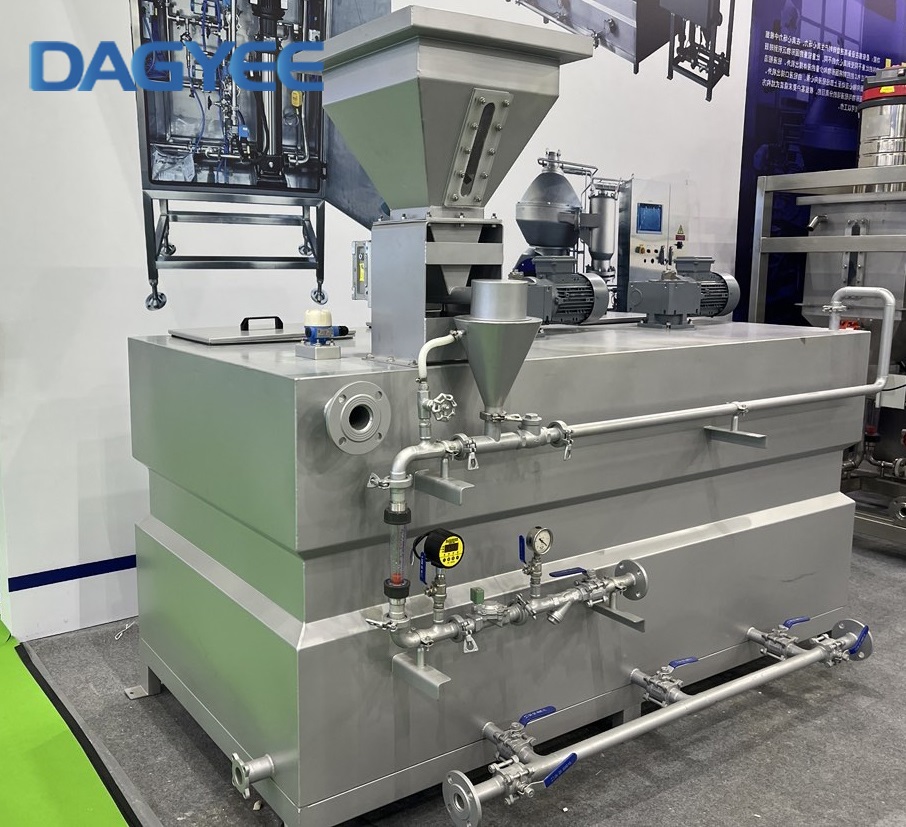
With the improvement of industrial automation levels and the increasingly strict environmental protection requirements, the powder dissolving machine industry is showing three major development trends: First, the automation and intelligence levels are constantly improving. In the future, powder dissolving machines will integrate Internet of Things technology to achieve functions such as remote monitoring, fault early warning, and automatic parameter optimization, further reducing human intervention. Second, energy-saving design has become mainstream. By optimizing the stirring structure and adopting variable frequency technology, etc., equipment energy consumption is reduced, in line with the concept of green production. Third, multi-functional development is taking place. Powder dissolving machines will integrate functions such as reagent preparation, dosing, and metering to achieve "integrated" operations and improve production efficiency.
In addition, according to the "2026 China Three-Tank Fully-Automatic Continuous Medicine Dissolving Machine Market Research Report", it is predicted that in the coming years, three-tank fully-automatic medicine dissolving machines will become the mainstream in the market, especially in large-scale production enterprises such as sewage treatment plants and coal preparation plants, where the application ratio will continue to increase. Meanwhile, specialized medicine dissolving machines for special chemicals (such as composite flocculants and biological flocculants) will become a new growth point in the industry.
VII. Contact Us for a Consultation
If you are interested in learning more about our polymer pareperation unit or need a customized solution for your water treatment project, please contact our sales team. Our experts will work with you to assess your requirements and recommend the perfect equipment to meet your goals.

Name: Ashely Li
Mobile:+8613961861780
Tel:+8613961861780
Whatsapp:8613961861780
Email:info@dagyee.com
Add:Room 302, Building 11-4, Hongyi Road, Xinan Town, Xinwu District, jiangsu Province, China