How to Select a High Efficiency Lamella Clarifier
DAGYEE LAMELLA CLARIFIER Technology
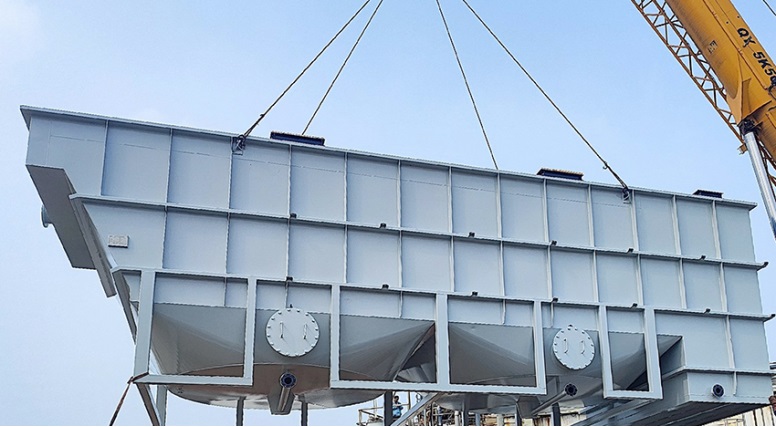
The Lamella Clarifier, also known as an Inclined Plate Settler, represents a modern, highly efficient technology for separating suspended solids from liquids. By utilizing a series of inclined plates, the Lamella Clarifier significantly reduces the required settling footprint compared to conventional clarifiers. This space efficiency is the primary advantage of the LAMELLA CLARIFIER, making it an ideal choice for facilities constrained by area or seeking to upgrade existing plants without extensive civil works. The fundamental principle of the Lamella Plate Settler is to increase the effective settling area within a compact volume, allowing particles to settle onto the inclined plates, slide down by gravity, and collect in a sludge hopper. Choosing the correct LAMELLA CLARIFIER requires meticulous consideration of influent characteristics, hydraulic loading, and mechanical design.
I. Core Selection Dimension 1: Wastewater/Water Characterization
Selecting the optimal LAMELLA CLARIFIER begins with a thorough understanding of the liquid stream to be treated. The nature and concentration of the solids dictate the design criteria for the Lamella Clarifier.
A. Comprehensive Influent Analysis
1. Total Suspended Solids (TSS) and Particle Size:
The LAMELLA CLARIFIER is highly effective for discrete and flocculent settling particles, typically those greater than 50 μm. The TSS concentration dictates the required settling area and the sludge handling capacity of the Lamella Clarifier system. High TSS loads (e.g., >5,000 mg/L) may necessitate a larger unit or a different design of Inclined Plate Settler.
-
Keyword Integration: Understanding the TSS is key to correctly sizing the LAMELLA CLARIFIER. The performance of any LAMELLA CLARIFIER depends heavily on particle characteristics. A robust LAMELLA CLARIFIER can handle high solids.
-
Solids Settling Velocity: This is the single most critical parameter derived from laboratory settling tests (Column Settling Test). The V s determines the minimum surface area required for effective clarification. The design of the LAMELLA CLARIFIER is based on the concept of surface overflow rate (SOR), which should be less than the settling velocity of the targeted particle.
-
Keyword Integration: Determining the settling velocity is mandatory before designing a Lamella Clarifier. The velocity dictates the required plate area of the Lamella Clarifier. A highly efficient LAMELLA CLARIFIER minimizes the influence of turbulence.
2. Coagulation and Flocculation Requirements:
The LAMELLA CLARIFIER often operates downstream of chemical pre-treatment (coagulation/flocculation) to agglomerate fine or colloidal particles into larger, faster-settling flocs. The selection process must involve Jar Testing to determine the optimal type, dose, and mixing sequence for chemicals (e.g., Alum, Ferric Chloride, Polymers) necessary to condition the solids for the Inclined Plate Settler.
Keyword Integration (4): Chemical conditioning enhances the performance of the LAMELLA CLARIFIER. Without proper flocculation, the Lamella Plate Settler may fail to meet effluent targets. Chemical optimization is integral to the overall LAMELLA CLARIFIER process. Effective flocculation ensures high removal efficiency in the LAMELLA CLARIFIER.
3. Flow Rate and Variability
The LAMELLA CLARIFIER must be sized for the peak instantaneous flow rate (Q peak), not just the average flow. Flow variability requires either a dedicated equalization basin upstream or oversizing the LAMELLA CLARIFIER to accommodate surges without risking solids carry-over.
Keyword Integration: The hydraulic design of the LAMELLA CLARIFIER must account for peak flows. Oversizing a LAMELLA CLARIFIER slightly offers hydraulic stability. Flow equalization improves the consistent performance of the Lamella Clarifier.
II. Core Selection Dimension
1. Hydraulic and Mechanical Design Parameters
The physical and operational design of the LAMELLA CLARIFIER is determined by several interlocking parameters that maximize the effective settling area within the compact footprint.
A. Surface Overflow Rate (SOR) and Effective Settling Area
The SOR is the theoretical settling velocity of the slowest particle that can be completely removed. In a LAMELLA CLARIFIER, the effective settling area (A effective) is a function of the total area of the plates, the plate angle, and the plate efficiency factor.
-
Where: L is plate length, W is plate width, n is the number of plates, and θ is the plate inclination angle.
-
Selection Criterion: The SOR must be significantly lower than the actual settling velocity of the flocculated particles. Typical SORs for LAMELLA CLARIFIER units range from 1.5 to 12.0 m/h, depending on the application (e.g., metal finishing is lower; municipal tertiary treatment is higher). For high efficiency, select a LAMELLA CLARIFIER designed for a conservative (lower) SOR.
-
Keyword Integration: The SOR is the most important sizing metric for the LAMELLA CLARIFIER. A lower SOR guarantees higher efficiency from the Lamella Plate Settler. Proper plate sizing determines the effective area of the LAMELLA CLARIFIER. Choosing a suitable Lamella Clarifier relies heavily on this calculation.
B. Plate Geometry (Angle and Spacing)
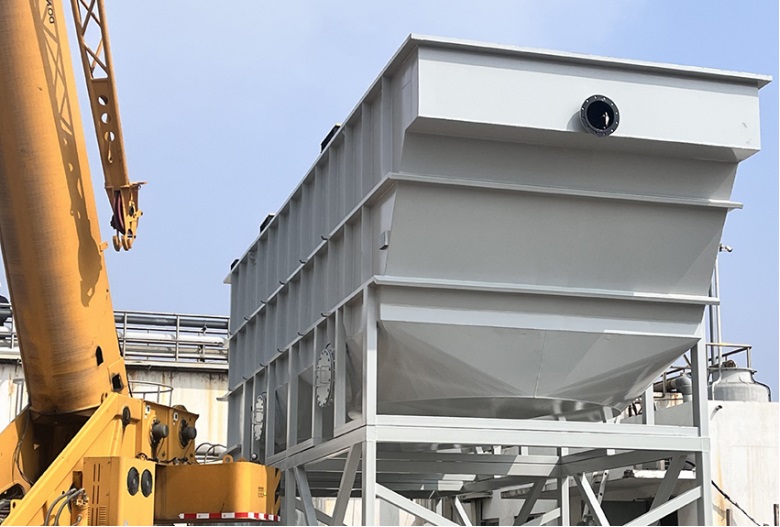
Plate Inclination Angle (θ): Most LAMELLA CLARIFIER plates are inclined between 45∘ and 60∘
-
Keyword Integration: The angle is key to sludge self-removal within the LAMELLA CLARIFIER. A 60 ∘. Inclined Plate Settler minimizes manual cleaning. The design of the LAMELLA CLARIFIER favors gravity-assisted sludge removal.
-
Plate Spacing (S): Spacing typically ranges from 50 mm to 100 mm (2 in to 4 in). Smaller spacing increases the effective settling area per volume but increases the risk of bridging and clogging, especially with sticky or high-concentration solids. For highly concentrated or fibrous sludge, a wider spacing is preferred to maintain the self-cleaning capability of the Lamella Clarifier.
-
Keyword Integration: Plate spacing is a compromise between efficiency and clogging risk in the LAMELLA CLARIFIER. Wider spacing is recommended for challenging streams in the Lamella Clarifier. The geometry of the LAMELLA CLARIFIER optimizes the settling path. Plate spacing impacts the total size of the LAMELLA CLARIFIER.
C. Flow Distribution and Hydraulics
Effective inlet and outlet distribution is paramount for a high-efficiency LAMELLA CLARIFIER.
-
Inlet Zone: The feed must be introduced and distributed uniformly across the entire plate assembly to ensure even flow velocity and minimize turbulence that could resuspend settled solids. Proper baffling or a dedicated flocculation/feed chamber is essential.
-
Weir Design: The effluent weir system must be level and designed to ensure uniform withdrawal of the clarified liquid, preventing short-circuiting and localized high-velocity zones within the LAMELLA CLARIFIER.
-
Keyword Integration (4): Poor flow distribution drastically reduces LAMELLA CLARIFIER efficiency. The hydraulic design must prevent short-circuiting in the LAMELLA CLARIFIER. Uniform flow is the hallmark of a well-engineered Lamella Plate Settler. The inlet must be optimized for any installed LAMELLA CLARIFIER.
D. Sludge Handling System
The capacity and design of the sludge hopper are integral to the reliability of the LAMELLA CLARIFIER.
-
Hopper Volume: The hopper must have sufficient volume to store accumulated solids between automated sludge withdrawal events.
-
Sludge Removal: Solids removal can be intermittent or continuous. Use of a slow-moving rake or agitator within the hopper is often necessary to prevent bridging and consolidation of the sludge, ensuring reliable removal via gravity or pump.
-
Keyword Integration: The sludge hopper is a vital part of the LAMELLA CLARIFIER. Reliable sludge removal guarantees consistent LAMELLA CLARIFIER operation. The manufacturer of the LAMELLA CLARIFIER must provide a robust sludge removal mechanism.
III. Core Selection Dimension 3: Material, Construction, and Maintenance (TCO)
The Total Cost of Ownership (TCO) for a LAMELLA CLARIFIER includes initial capital expenditure, energy consumption, chemical usage, and maintenance costs.
A. Material of Construction (MOC)
The MOC must be suitable for the pH, temperature, and chemical aggressiveness of the water.
-
Plates: PVC or FRP (Fiber-Reinforced Plastic) are common for their low cost, smooth surface (aiding solids release), and corrosion resistance. Stainless steel (SS304 or SS316) may be required for high-temperature or aggressive industrial applications.
-
Tank/Frame: Coated carbon steel or stainless steel. For LAMELLA CLARIFIER applications with high chlorides or low pH, SS316 is highly recommended for longevity.
-
Keyword Integration (3): MOC affects the lifespan of the LAMELLA CLARIFIER. High-quality materials reduce maintenance on the LAMELLA CLARIFIER. The plates of a good LAMELLA CLARIFIER are made from durable, smooth material.
B. Access and Maintenance
Ease of access for cleaning and maintenance is crucial. While the LAMELLA CLARIFIER is designed for low maintenance, periodic cleaning is required.
-
Removable Modules: A high-quality LAMELLA CLARIFIER features easily removable plate modules or hinged designs, allowing for quick inspection and jet washing, minimizing downtime.
-
Safety: Safe access platforms and railing systems must be integral to the LAMELLA CLARIFIER design.
-
Keyword Integration: Maintenance accessibility is a measure of a practical LAMELLA CLARIFIER. The modular design of the LAMELLA CLARIFIER simplifies cleaning. Choose a LAMELLA CLARIFIER that prioritizes operator safety. Regular cleaning is necessary for any Lamella Clarifier.
C. Operational Simplicity and Energy
The LAMELLA CLARIFIER is a low-energy solution, primarily relying on gravity. However, energy consumption from feed pumps and sludge pumps must be considered.
-
Automation: Simple PLC control for the sludge withdrawal cycle is usually sufficient. Monitoring the effluent turbidity can trigger alarms for potential plate fouling or process upsets.
-
Keyword Integration: The LAMELLA CLARIFIER offers significant energy savings over conventional settlers. Operational simplicity is a key benefit of the LAMELLA CLARIFIER. Automation improves the reliability of the Lamella Plate Settler.
IV. Core Selection Dimension 4: Customization and Vendor Expertise
The final selection rests on the vendor's ability to customize the LAMELLA CLARIFIER to the specific needs of the application.
A. Customization Needs
No two industrial wastewaters are identical. A reputable vendor will offer a customized LAMELLA CLARIFIER design, adjusting:
-
Plate size and spacing.
-
Inlet/outlet arrangements.
-
Sludge hopper geometry.
-
Inclusion of flocculation chambers (known as a Flocculation LAMELLA CLARIFIER).
-
Keyword Integration: Customization ensures the optimal performance of the LAMELLA CLARIFIER. Off-the-shelf units may not match the required efficiency of a specialized LAMELLA CLARIFIER. Tailoring the LAMELLA CLARIFIER design is our specialty.
B. Pilot Testing and Guarantees
-
Pilot Testing: For large-scale or complex applications, a mobile pilot LAMELLA CLARIFIER unit should be used to confirm the SOR, chemical dose, and expected effluent quality on-site. This de-risks the final investment in the full-scale LAMELLA CLARIFIER.
-
Performance Guarantee: The supplier must provide a written, legally binding guarantee on the minimum effluent quality (e.g., maximum TSS) achieved by the installed LAMELLA CLARIFIER system under specified operating conditions.
-
Keyword Integration: Pilot testing validates the performance of the full-scale LAMELLA CLARIFIER. We guarantee the efficiency of our LAMELLA CLARIFIER. Testing a pilot LAMELLA CLARIFIER minimizes risk. A high-quality Lamella Clarifier vendor stands by their results. Trust us for your Inclined Plate Settler needs. We are dedicated to delivering the best LAMELLA CLARIFIER technology.
Selection Dimension
|
Core Parameter
|
Key Criteria for Optimal LAMELLA CLARIFIER Selection
|
|
Water
Characterization
|
Solids Settling Velocity
|
Confirmed by Jar/Column Tests; Dictates minimum settling area.
|
Hydraulic/Mechanical
|
Surface Overflow Rate(SOR)
|
Conservative design (low SOR) forrobustness.
|
Hydraulic/Mechanical
|
Plate Angle (θ)/Spacing(S)
|
60° angle for self-sloughing; Wider spacing forhigh/sticky solids.
|
Construction/TCO
|
Material of Construction(MOC)
|
SS316 for aggressive environments; FRP platesfor smooth sliding.
|
Vendor Expertise
|
Performance Guarantee
|
Vendor must guarantee effluent quality based onpilot data.
|
Supplier Information
We are a professional manufacturer and supplier specializing in custom-engineered LAMELLA CLARIFIER systems. Our expertise spans municipal and complex industrial wastewater applications, ensuring that the final Lamella Clarifier solution is perfectly tailored to your project's unique challenges and regulatory requirements. We provide comprehensive design, manufacturing, and installation services, backed by rigorous performance guarantees.
If you require a bespoke, high-efficiency LAMELLA CLARIFIER solution, please contact our expert engineering team.
-
Company: Wuxi Dajiang Environmental Technology Co., Ltd. DAGYEE
-
Phone/WhatsApp:+8613961861780
-
Email: info@dagyee.com
-
Website: www.dagyee.com

 English
 Chinese
