 English
 Chinese
info@dagyee.com
+8613961861780

Introduction
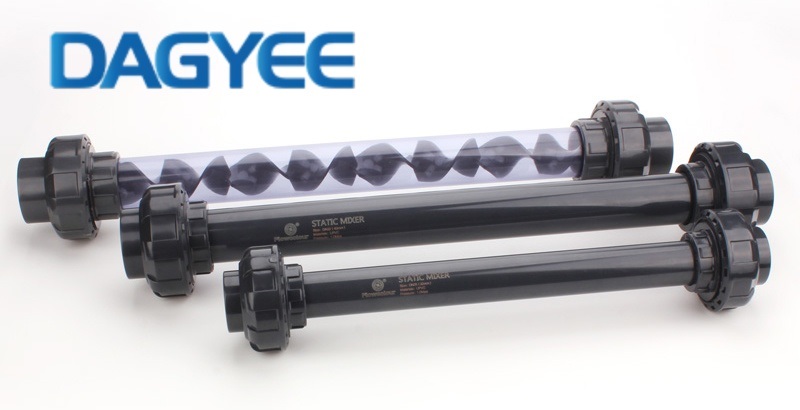
Inline static mixing equipment manufactured from unplasticized polyvinyl chloride (UPVC) has become standard infrastructure across municipal water treatment plants, industrial chemical dosing stations, wastewater conditioning lines and light-duty chemical processing facilities. Unlike motor-driven mixing machinery, UPVC static mixers rely on fixed internal helical baffles to continuously split, twist and recombine fluid streams. Without rotating components, they cut operational energy costs and eliminate regular bearing or seal replacement work.
The material advantages of virgin UPVC are widely recognised: competitive upfront cost, lightweight structure, reliable resistance against diluted acids and alkalis, plus straightforward on-site assembly with standard plastic pipe fittings. Even so, plant operators and system designers frequently overlook the operational boundaries of rigid UPVC polymer. Improper specification, careless installation, fluctuating process conditions and neglected routine checks gradually trigger equipment defects. Minor abnormal signals often evolve into complete mixer failure, bringing unstable water quality, unexpected pipeline leaks, unscheduled production shutdowns and potential safety hazards.
This practical industry guide sorts observable early warning symptoms of UPVC static mixer breakdowns, digs deep into underlying failure mechanisms, delivers implementable troubleshooting procedures, and establishes structured maintenance routines. The content targets process engineers, wastewater contractors, on-site maintenance teams and equipment procurement specialists to minimise unplanned downtime and extend mixer service cycles.
1. Fundamental Material Constraints That Trigger UPVC Static Mixer Failures
Before analysing on-site malfunctions, it is critical to understand the physical and chemical properties of UPVC that differentiate its failure modes from stainless steel, CPVC or PVDF static mixers. Every documented field fault is closely linked to these inherent limitations.
Virgin UPVC is a rigid amorphous thermoplastic with moderate tensile strength but poor toughness under continuous stress. The maximum continuous working temperature generally falls between 45 °C and 50 °C. Once medium temperature exceeds 60 °C over prolonged periods, polymer chains degrade rapidly, leading to surface yellowing, hardening and embrittlement. Under low ambient temperatures, UPVC becomes even more brittle; light mechanical impact or uneven assembly torque can create invisible microcracks on joint sections.
Chemically speaking, UPVC withstands most low-concentration inorganic corrosive media, yet it cannot resist aromatic solvents, ketones, esters and highly concentrated oxidising agents. Long-term contact with incompatible chemicals induces environmental stress cracking and material swelling. Exposed surfaces suffer accelerated ageing under direct ultraviolet radiation. Additionally, the plastic pipe structure tolerates limited nominal pressure, and repeated water hammer shocks create fatigue damage on threaded connections and union shoulders.
System designers must factor these limitations into initial project layout. Many avoidable equipment failures stem from ignoring UPVC operating thresholds during the specification phase.
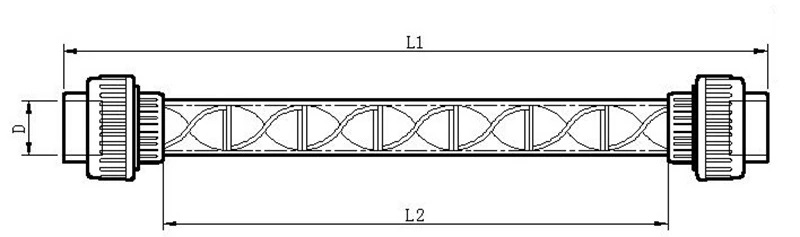
1.1 Technical Specification Reference Table for Standard Union-Type UPVC Static Mixers
Table 1: Key Technical Parameters of Union Connection UPVC Static Mixers
| Parameter Item | Standard Specification | Notes for Operation Limits |
|---|---|---|
| Main Material | Virgin Grade UPVC | Recycled UPVC reduces anti-ageing performance significantly |
| Internal Element Material | UPVC Integrated Helical Elements | Split assembled structures carry higher risk of component detachment |
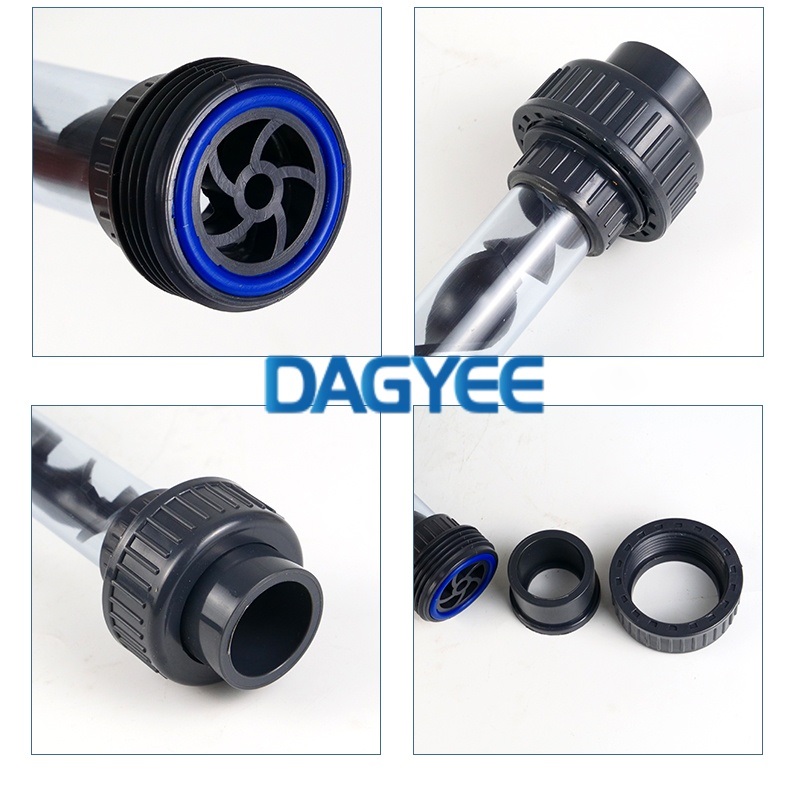
| Connection Type | UPVC Union Socket / Thread End | Threaded ends are more prone to crack under excessive tightening torque |
| Nominal Pressure | PN10 | Pressure surges over 1.5 times rated pressure cause fatigue fractures |
| Continuous Working Temperature | 0 ~ 45°C | Short peak temperature shall not surpass 50°C |
| Allowable Medium | Dilute acid, dilute alkali, neutral water, coagulant, disinfectant dosing solution | Not suitable for solvent-containing fluid |
| Available Sizes | DN15 ~ DN200 | Large-diameter models require extra pipeline support brackets |
| Recommended Installation Position | Straight pipe section | ≥5D straight pipe upstream, ≥3D straight pipe downstream required |
| Matching Sealing Gasket | EPDM | Replace with FPM if medium contains strong oxidising substances |
2.Typical UPVC Static Mixer Faults, Warning Signals, Root Causes & Practical Remedies
Field malfunctions rarely emerge suddenly. Most failures release continuous early warning signals that maintenance crews can capture during routine patrols. The following classification covers the most common issues encountered in water treatment dosing pipelines.
2.1 Uneven Mixing Performance
Observable Warning Signs Downstream online monitoring data shows unstable pH value, inconsistent residual chlorine concentration or fluctuating flocculation results, even when pump flow output remains stable. Operators may observe visible fluid stratification, long strip-shaped unmixed flow channels and trapped air bubbles flowing out from the mixer outlet. In multi-component dosing pipelines, chemical agents fail to disperse uniformly into the main water stream.
Root Causes Sediment, water scale, crystallised chemicals and accumulated polymer flocculants stick to the surface of internal helical components and narrow effective flow channels. In severe cases, solid deposits block gaps between mixing baffles. Improper model selection represents another major contributor: if the number of mixing elements fails to match fluid viscosity or flow velocity drifts far beyond the designed range, channeling flow occurs inside the mixing tube. Improper layout, such as installing the mixer immediately after elbows, tees or regulating valves, creates turbulent interference and weakens mixing efficiency. Partially deformed or detached internal baffles also disrupt the preset fluid splitting route.
Troubleshooting Solutions Shut down relevant pipeline branches, fully release internal pressure and disassemble union joints for complete inspection. Clean accumulated fouling using mild descaling agents; avoid rigid metal brushes that scratch UPVC surfaces and form stress concentration points. Check every helical component for deformation and displacement. Damaged elements require direct replacement. Recalculate process flow parameters and upgrade to a mixer with extra mixing units for high-viscosity dosing media. Adjust piping layout to reserve adequate straight pipe sections and stay away from flow-disturbing fittings. Projects handling high-suspended-solids wastewater can select open-gap helical structures to lower fouling risks.
2.2 Gradual Rise of Pipeline Pressure Drop
Observable Warning Signs Under fixed operating flow, pump running load slowly rises, and backpressure along the pipeline keeps climbing. Over weeks or months, the system’s maximum transport flow gradually declines without pump mechanical faults.
Root Causes Internal partial blockage reduces the effective cross-section of the mixing channel. Construction debris entering pipelines during commissioning often lodges at the front end of helical baffles. Yearly thickening scale also raises fluid resistance. Some projects select over-sized mixers, leading to unnecessary energy loss under low actual working flow.
Troubleshooting Solutions Record inlet and outlet pressure differential data during regular inspections. Set an alert threshold: arrange disassembly and cleaning once pressure drop increases by 30% compared with initial commissioning records. Install Y-type strainers upstream of the UPVC static mixer for raw water with abundant suspended solids to intercept large particles. If equipment specifications do not match practical operating conditions, replace the mixer with properly sized units to cut long-term energy consumption.
2.3 Leakage at Union and Threaded Joints
Observable Warning Signs Slow water dripping appears around union nuts, and damp traces spread along sealing surfaces. Leakage severity worsens during pressure fluctuation cycles or temperature shifts. After pipeline maintenance, leakage frequently recurs shortly after restarting the system.
Root Causes Excessive tightening torque during assembly creates invisible microcracks on UPVC joint surfaces. Many field technicians apply force according to experience without recognising the low tensile capacity of rigid plastic. Aged, misplaced or extruded sealing gaskets break the sealing interface. Insufficient pipeline supports leave the mixer suspended; pipeline weight and continuous flow vibration generate persistent pulling force on connection sections. Forced alignment during pipe installation introduces long-term shear stress on mixer housings. Incompatible chemical media also causes gasket swelling and sealing failure.
Troubleshooting Solutions Standardise assembly operations: tighten union nuts by hand first, then rotate one quarter to one half turn using spanners. Strictly prohibit brute force tightening. Replace ageing gaskets and verify chemical compatibility between sealing materials and process fluid. Add fixed support brackets within 0.5 metres on both sides of the mixer to eliminate suspension tension. Adjust misaligned pipe segments; never drag pipelines to match mixer interfaces.
2.4 Housing Yellowing, Microcracks and Rupture Risk
Observable Warning Signs The outer wall of the UPVC mixing tube gradually turns yellow or brown. Fine spider-web-shaped microcracks become visible under light irradiation. Hairline fractures initially emerge on thread roots and union shoulders and expand gradually. Minor external impact may trigger sudden rupture once cracks propagate.
Root Causes Long-term operation above rated temperature accelerates polymer ageing. Outdoor installed mixers without protective casings receive continuous ultraviolet radiation. Environmental stress cracking happens when UPVC contacts incompatible organic substances. Frequent water hammer and pressure shocks accumulate material fatigue. Low-grade recycled UPVC raw material lacks effective anti-ageing additives.
Troubleshooting Solutions Stop operation immediately once microcracks are detected. Cracked UPVC structures cannot be reliably repaired with adhesives; complete mixer replacement becomes necessary. Wrap outdoor equipment with UV-resistant protective sleeves to block direct sunlight. Reassess medium chemical compatibility; switch to CPVC or PVDF mixing equipment if solvents exist in process fluid. Install surge relief devices to suppress water hammer impacts. Prioritise products made from virgin UPVC during equipment procurement.
2.5 Detachment and Breakage of Internal Mixing Elements
Observable Warning Signs Mixing consistency suddenly worsens, and pressure differential fluctuates irregularly without obvious blockage signals. Disassembly inspection finds helical baffles loose, fractured or sliding along the mixing tube. Broken plastic fragments may flow downstream and block valves or sensors.
Root Causes Insufficient welding or clamping strength between mixing elements and positioning rings. Fluid carrying abrasive solid particles creates continuous scouring impact on baffles. Instant pressure surges repeatedly strike the front end of internal components.
Troubleshooting Solutions Broken internal parts cannot be restored; operators must arrange component replacement. Install pre-filtration facilities for fluid containing abrasive particles. Consult equipment suppliers and select integrally moulded mixing elements instead of loosely assembled structures for harsh working environments.
2.6 Internal Blockage and Medium Crystallisation
Observable Warning Signs Effective flow reduces steadily, and backpressure surges periodically. Restarting the pipeline after long shutdowns becomes difficult, as solidified deposits occupy partial mixing channels.
Root Causes Lime slurry, flocculant solution and mineral-containing raw water generate crystal deposits inside gaps between helical baffles. Static shutdown without routine flushing lets residual fluid react and solidify inside the mixer. Oversized solid particles enter the mixing tube and become trapped.
Troubleshooting Solutions Formulate regular online flushing procedures for chemical dosing pipelines. Carry out full cleaning before long-term system shutdown. Install upstream filters to intercept large solid impurities. Choose open-structure helical mixers for media prone to scaling and crystallisation.
3. Standardised Step-by-Step UPVC Static Mixer Fault Diagnosis Workflow
Random disassembly wastes maintenance labour and increases secondary damage risks to UPVC components.
Maintenance teams should follow this ordered inspection checklist to locate root causes efficiently.
Table 2: UPVC Static Mixer Systematic Fault Diagnosis Checklist
| Inspection Sequence | Inspection Content | Judgment Standard & Action Guidance |
|---|---|---|
| 1 | Verify real process parameters | Compare actual flow, temperature, pressure and medium composition against mixer design datasheet. Stop operation if working conditions exceed rated limits |
| 2 | Inspect auxiliary pipeline equipment | Check pump operating status, valve opening degree and upstream filter blockage; eliminate external system faults first |
| 3 | Record pressure differential data | Compare current pressure drop with commissioning benchmark value to judge internal blockage possibility |
| 4 | Safety isolation & pressure relief | Close isolation valves, release pipeline pressure; strictly forbid disassembly under pressurised status |
| 5 | Visual disassembly inspection | Check housing cracks, gasket integrity, fouling thickness and internal mixing element completeness |
| 6 | Carry out maintenance work | Complete cleaning, gasket replacement or mixer replacement according to inspection results |
| 7 | Recommissioning & monitoring | Restore pipeline operation and continuously track mixing effect and pressure drop for 2–4 hours to confirm fault elimination |
Safety reminder must be embedded into daily operating rules. Pressurised disassembly may eject broken UPVC fragments and cause bodily injury. Maintenance staff shall wear protective gloves and safety goggles throughout inspection work.
4. Cyclic Preventive Maintenance Schedule
Regular planned inspections effectively lower sudden failure probability and extend equipment service life.
Maintenance frequency can be adjusted according to medium fouling characteristics and operating load.
Table 3: Planned Maintenance Cycle for UPVC Static Mixers
| Maintenance Frequency | Inspection & Maintenance Items | Applicable Working Scenarios |
|---|---|---|
| Monthly Routine Patrol | Check joint leakage, pipeline vibration; record inlet and outlet pressure differential | General water dosing, low-fouling municipal water pipelines |
| Quarterly Medium Inspection | Disassemble and clean internal mixing elements; check UPVC surface for microcracks; assess gasket ageing status | Wastewater treatment, dosing lines with slight scaling risk |
| Annual Comprehensive Overhaul | Complete visual overall inspection; proactively replace ageing sealing gaskets; evaluate pipeline support stability | All installation environments, especially outdoor exposed pipelines |
For heavily fouling projects handling lime slurry or high-hardness water, shorten the quarterly inspection cycle to every two months. Maintain complete maintenance logs to track equipment ageing trends year on year.
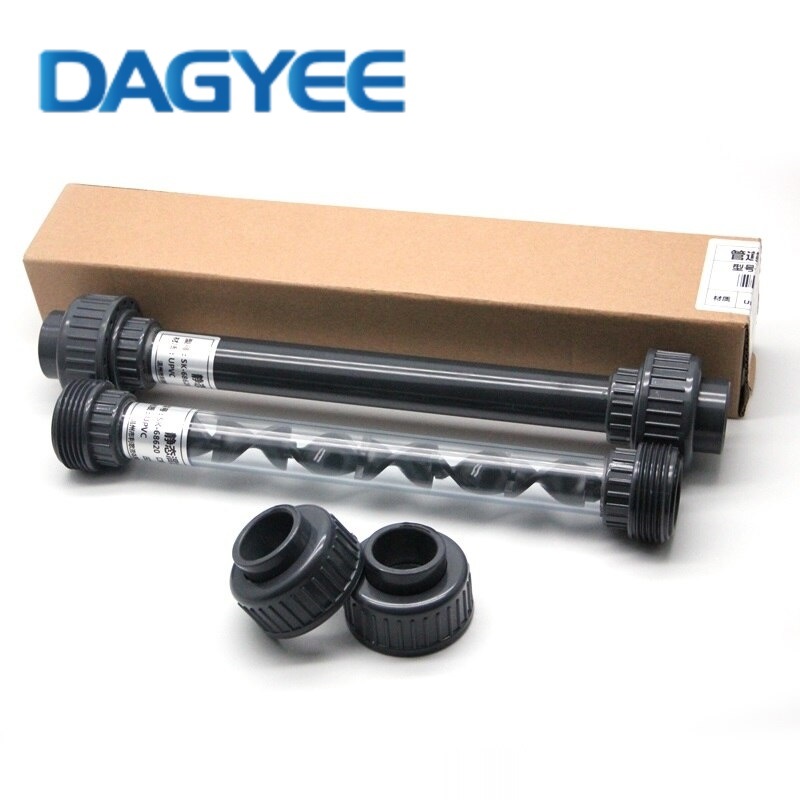
5. Critical Specification and Installation Mistakes to Avoid
6. Conclusion
UPVC inline static mixers deliver remarkable cost-performance for low-to-medium corrosive fluid mixing tasks in water treatment and industrial chemical dosing. Almost all common failures produce identifiable early warning indicators, covering unstable mixing efficiency, abnormal pressure fluctuation, joint dripping and plastic surface cracking.
When handling equipment malfunctions, maintenance teams need to classify root causes clearly: confirm whether faults arise from mismatched process parameters, improper installation, medium incompatibility, fouling accumulation or material ageing. Timely troubleshooting combined with cyclic preventive maintenance maximises service life. When process conditions surpass UPVC material limits, project stakeholders should consider upgrading to CPVC, PVDF or stainless steel static mixing equipment to prevent unexpected pipeline accidents.
Our engineering team offers customised UPVC static mixer solutions including variable element structures, special size adjustment and technical parameter verification. Contact us to obtain process-matched static mixing equipment drawing and on-site installation suggestions for your water treatment and chemical dosing projects.

Name: Ashely Li
Mobile:+8613961861780
Tel:+8613961861780
Whatsapp:8613961861780
Email:info@dagyee.com
Add:Room 302, Building 11-4, Hongyi Road, Xinan Town, Xinwu District, jiangsu Province, China