Welcome: Wuxi Dajiang Environmental Technology Co., Ltd.
info@dagyee.com +8613961861780
Home      Blog       The Real Cost of a Belt Filter Press: Wh…

Blog

The Real Cost of a Belt Filter Press: Why the Cheapest Quote Increases Your Operating Costs

A belt filter press is also known for its high capacity throughput, as it is designed to handle excess capacity. It has low initial costs and low energy running costs. So the belt filters are used both municipally and industrially in a range of areas including urban sewage and wastewater treatment, metallurgy and mining, steel plants, coal plants, breweries, dyeing, tanneries, as well as chemical and paper factories.
However, a common phenomenon has emerged nowadays: Many factories, when purchasing belt filter presses, only consider the capital expenditure (CAPEX) but neglect the operating expenditure (OPEX). Little do you know that a cheap machine will increase your operating costs.
Why does this phenomenon occur? Because of the cheap belt filter press, the cost-saving in mechanical aspects will lead to an increase in the consumption of PAM in the factory, as well as an increase in the resource consumption of water and electricity; and even because of its frequent downtime for maintenance, the factory may end up spending much more money.

This article will dissect how the cheap belt filter press secretly raises operating costs in the background, and provide a practical guide to avoid such pitfalls.
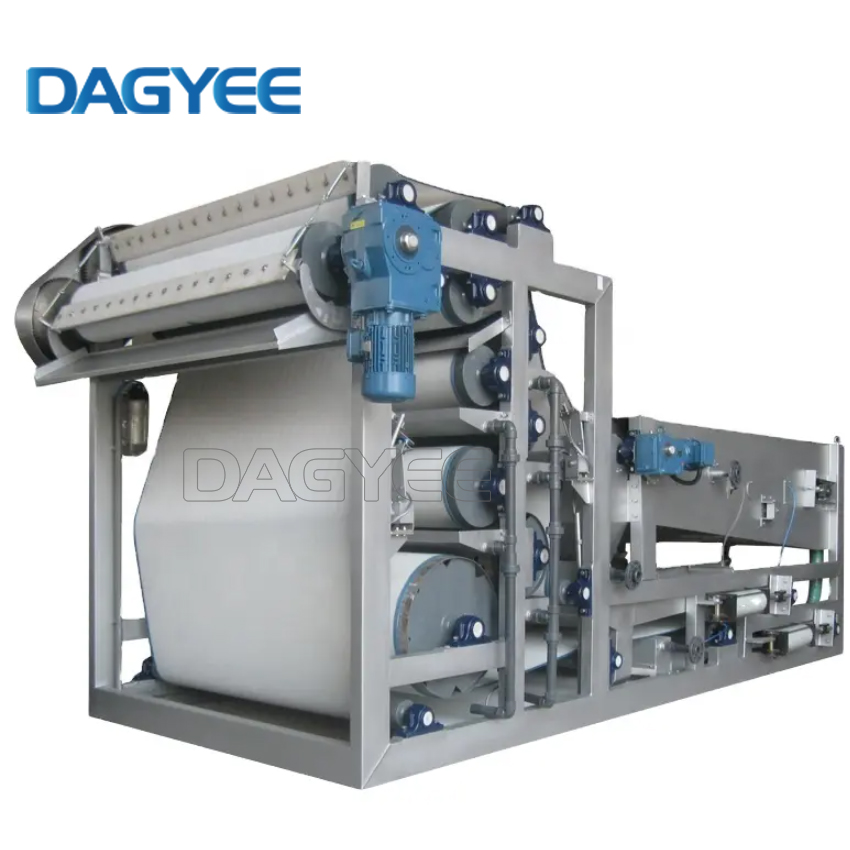
DB Belt filter press

I.The Anatomy of a "Cheap" Machine: Where Did the Manufacturer Cut Corners?

belt filter press


The table below summarizes where cheap manufacturers cut corners and the direct operational consequences you will face:

Cut Corner
Cost Saving Method
Consequence
Gravity zone
Shorten length, remove distribution baffles
Floc breakage, high PAM demand
Press rollers
Fewer rollers, thin wall, thin rubber
Unstable cake moisture
Belt control
Manual correction, low-grade cylinders
Frequent belt deviation & tearing
Consumables
Low-cost filter belt & nozzles
Fast blinding, sludge leakage
Frame & welding
Thinner steel, simplified coating
Heavy vibration, rust & leakage
Control system
No alarm & interlock
Unexpected severe failure
1.Shortened Gravity Drainage Zone & Simplified Sludge Distribution
Cut Corner: The low-cost belt filter press manufacturers, in an effort to save steel, made the gravity dehydration zone very short. They also omitted the slurry distribution baffles and directly used a pipe to pour the slurry onto the filter belt.
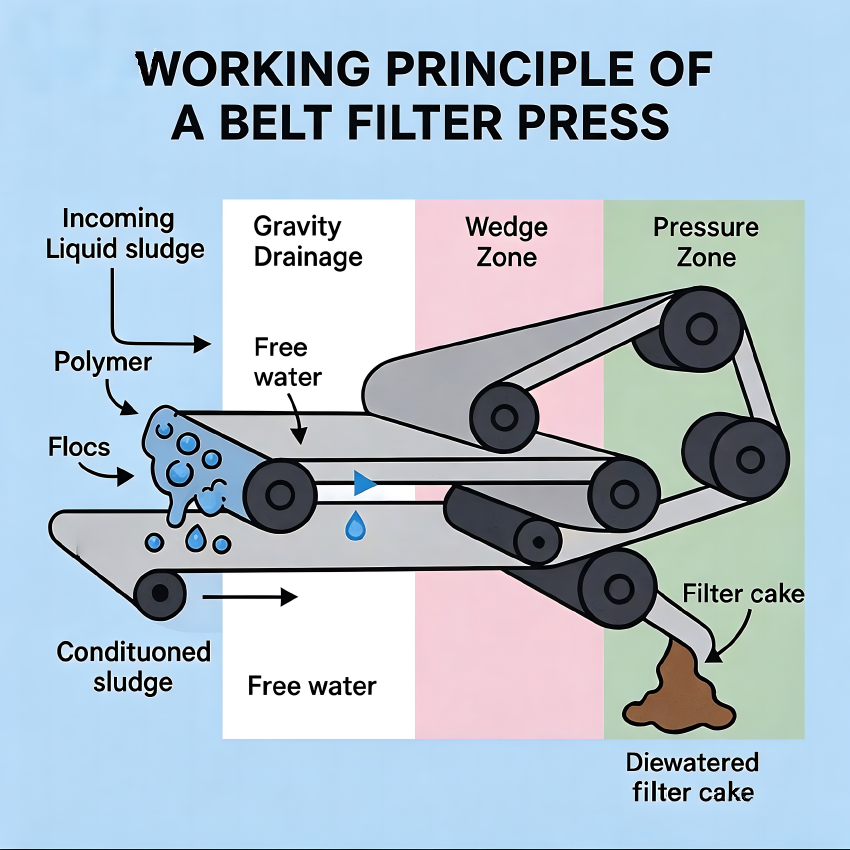
Engineering Consequences: Due to the short Gravity zone, as soon as the slurry was laid down, before it could rely on gravity to drain the free water, it entered the pressing zone. The uneven distribution of slurry led to higher sludge moisture content and unstable state; the simple slurry distribution structure would cause uneven sludge thickness on the filter belt, and water would overflow from both sides of the filter belt (sludge leakage), and the flocs were prone to break.

The Truth of High Operating Costs: The gravity section is the key area for sludge entering the pressing process and free water removal. Without water in the gravity zone, to forcibly dry the sludge, the operators had to be forced to increase the dosage of PAM.


2.Undersized, Under-engineered Pressing Roller Assembly
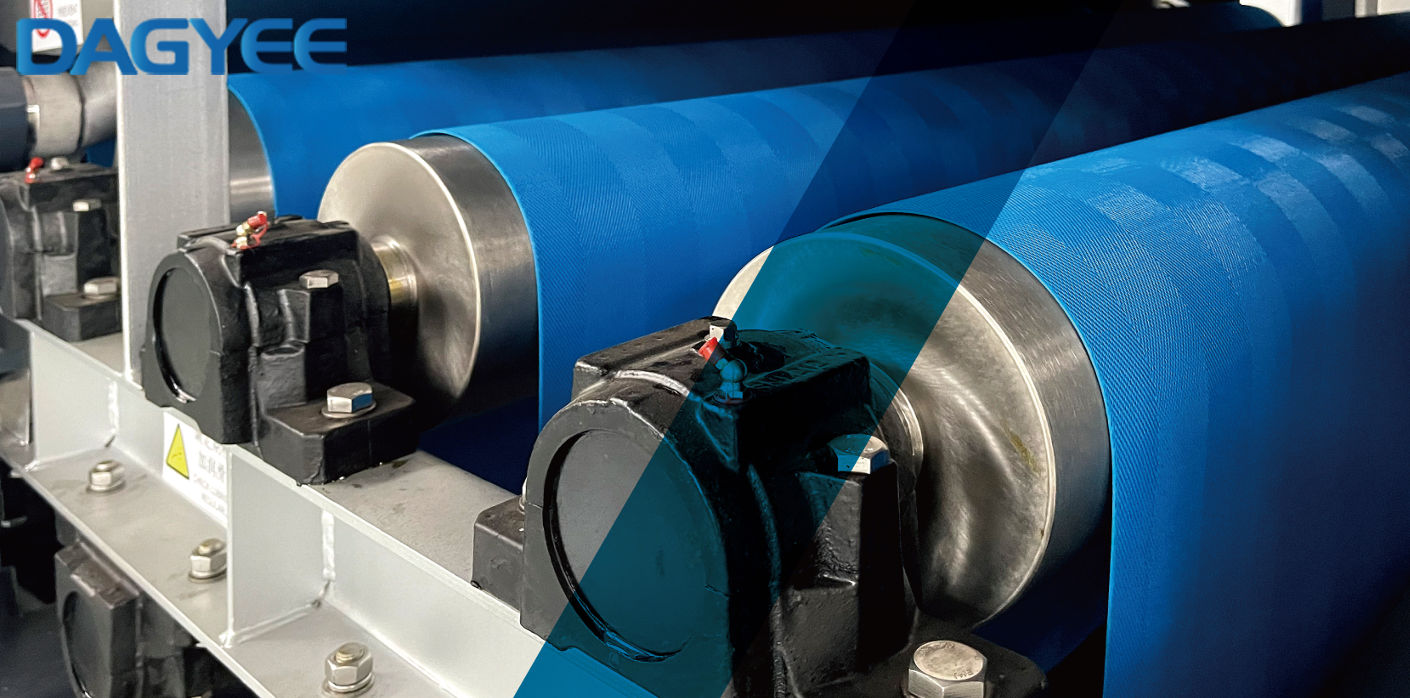
rollers of belt filter press

Cut Corner: Manufacturers of cheap belt filter presses usually aim to reduce costs by reducing the total number of pressing rollers, replacing seamless tubes with thin-walled welded pipes, using extremely thin rubber layers or even no rubber at all. They also do not pay attention to arranging the rollers in a reasonable gradient "from large to small" in diameter.
Engineering Consequences: If the number of rollers is too small, the pressure gradient will not be smooth. Instant strong shear force (Shearing) will directly tear the fragile PAM molecular chains apart and crush the already aggregated flocs. Thin-walled rollers are prone to deformation under pressure, resulting in uneven force distribution on the filter belt.

The Truth of High Operating Costs: The moisture content of the sludge cake fluctuates greatly and is extremely unstable. Because the flocs are broken, the water is trapped in the sludge and cannot escape. You can only add more chemicals to make up for it. At the same time, frequently substandard sludge cakes will expose you to higher transportation costs or environmental fines.


3.Simplified Belt Tension & Belt Correction Systems
Cut Corner: Manufacturers of cheap belt filter presses often use cheap manual screws instead of sensitive pneumatic/hydraulic tensioning and deviation correction systems. The inferior sensing switches or sluggish cylinders are used for deviation correction.
Engineering Consequences: Uneven tensioning causes the filter belt to slip. The poor deviation correction response makes the filter belt prone to frequent deviation, edge rubbing, and tearing during operation.

The Truth of High Operating Costs: Labor costs increase. Moreover, if the filter belt is frequently torn, replacing it will cause downtime, significantly increasing the cost of the buyer's factory.


4.Low-grade Filter Belts, Nozzles and Wear Parts
Cut Corner: Low-cost belt filter press manufacturers may choose polyester filter belts with low weight, poor weaving process, and uneven pore size; cheap plastic-made nozzles with rough processing, and 201 stainless steel is used to imitate 304 stainless steel.
Engineering Consequences: Poor-quality filter belts are prone to clogging, nozzles are prone to getting blocked and water pressure is uneven, making it impossible to clean the filter belts. 204 stainless steel is very prone to rust.

The Truth of High Operating Costs: To clean the filter belts, the water flow must be turned up to the maximum, but this will cause a sharp increase in water costs. Frequent replacement of spare parts will also lead to a sharp increase in spare part costs. The filter belts' inability to withstand water causes poor dehydration results, and additional PAM needs to be added, leading to an even further increase in operating costs.


5.Thinned Frame Plate, Weak Welding and Poor Surface Protection
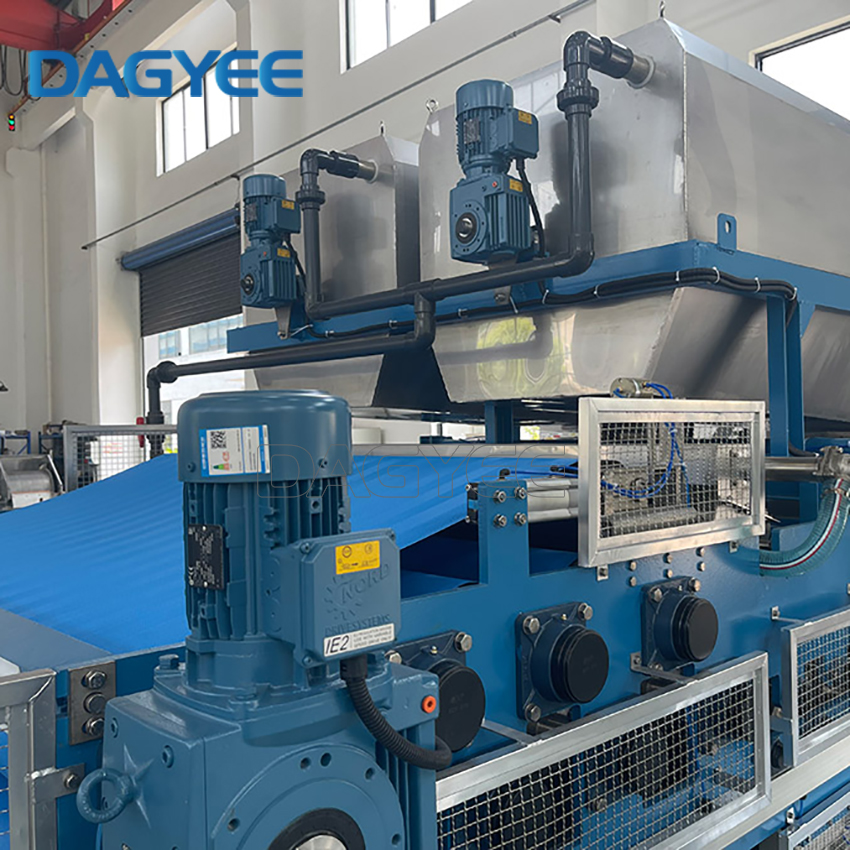
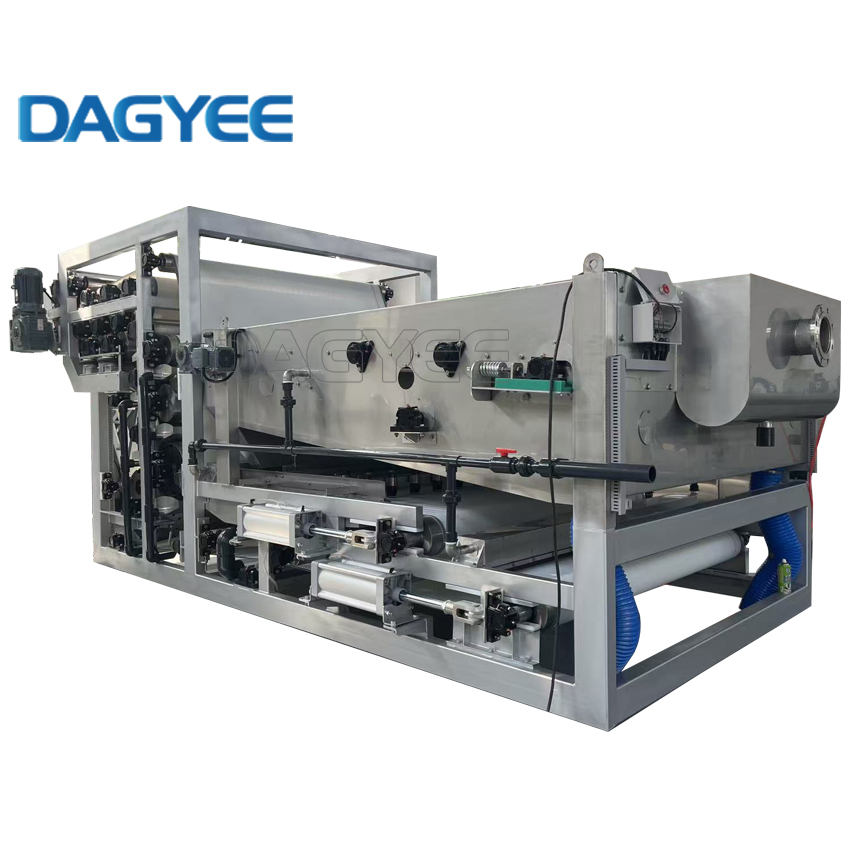
DAGYEE heavy-duty belt filter press frame with premium drive motor and safety guard

Cut Corner: The main frame of the cheap belt filter press is made of thin steel plates without reinforcement bars. The key stressed areas are not properly welded, and the pickling & passivation process is omitted or the anti-corrosion coating is shoddy.
Engineering Consequences: It is prone to structural deformation under continuous vibration. Tiny pores at the welds are highly susceptible to stress corrosion cracking in corrosive sludge, leading to leakage of sludge and water.

The Truth of High Operating Costs: Compared with the normal-priced belt filter press, the lifespan of the cheap one is significantly shortened. Moreover, if its main beam or tank leaks, the repair cost is high and there are safety hazards.


6.Cut-back Drive, Control and Safety Interlock Systems
Cut Corner: The cheap belt filter press uses poor-quality reducers and omits the frequency converter. There is no alarm output in its PLC control cabinet, and it lacks automatic shutdown protection for filter belt deviation/breakage/overload (Interlocks).
Engineering Consequences: The machine can only run at a fixed speed mechanically. Once the sludge concentration changes, the equipment may not be able to respond. Even more terrifying is that once the filter belt tears or the bearing gets stuck, due to the lack of sensor interlocks, the motor is still pulling forcefully, until the main shaft is broken or the motor is burned out.

The Truth of High Operating Costs: The main shaft breaks or the reducer explodes, resulting in high repair costs. At the same time, the loss caused by the factory's shutdown is also a large sum of money.


II.The Silent Budget Killer: How Cheap Design Inflates Polymer Costs
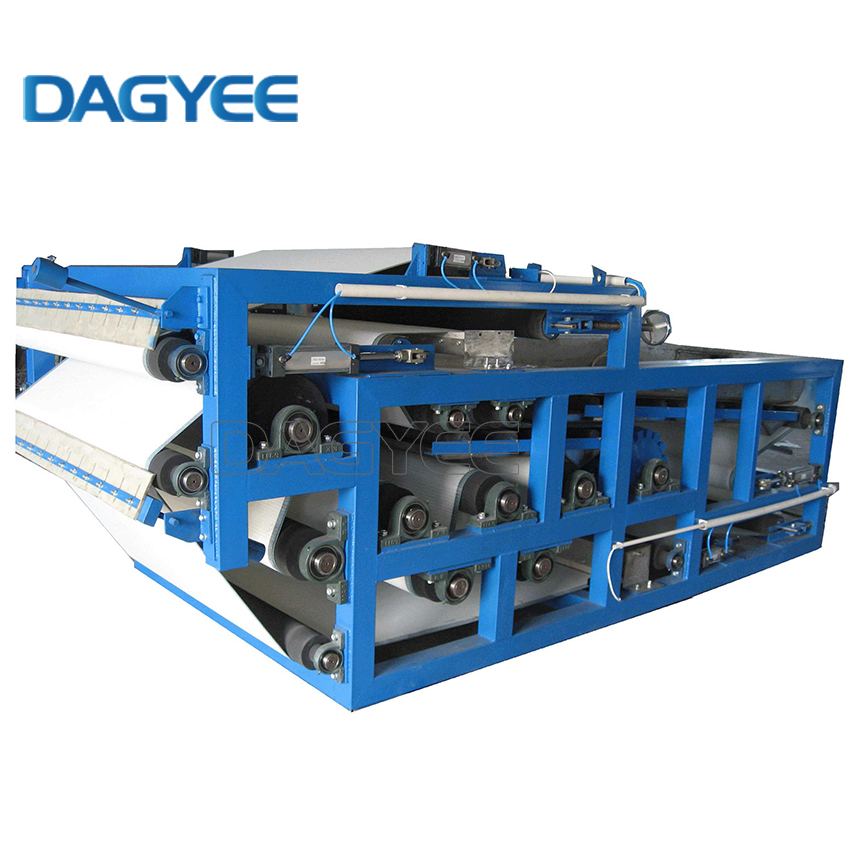

Belt filter presses


When buyers compare quotes, they look at the initial CAPEX. But they often overlook the OPEX giant: Polymer (PAM) consumption, which accounts for 30% to 50% of total dewatering costs. A cheaply built machine will silently drain your budget by forcing you to over-dose PAM every day.

Component / Design Flaw
What the Cheap Machine Does
The Real Consequence (Cost Impact)
Gravity & Roller Geometry
Shortens the gravity zone; uses fewer rollers with abrupt diameter changes.
Over-shearing. The sharp pressure shreds the delicate PAM flocs back into tiny particles. Result: Wet cake, forcing operators to double the chemical dosage.
Wash Water & Filter Belts
Installs low-grade belts and undersized nozzles with low water pressure (< 0.4 MPa).
The Blinding Effect. Fine sludge blocks the fabric pores. Water cannot drain by gravity. Operators dump more PAM into the feed to compensate.
polymer preparation unit (The Hidden Link)
Uses a simple tank with a high-speed mixer; no dedicated maturation time.
Dead Chemicals. PAM chains are broken by high shear and never fully uncoil (needs 45–60 mins). You are pumping useless chemicals and tripling the dosage.
How DAGYEE Solves This:
DAGYEE engineers treat dewatering as a complete system. Our three-chamber Polymer Preparation Units guarantee a precise 45–60 minute maturation time with low-speed agitators, ensuring 100% chemical activation. Combined with our optimized pressing roller geometry, DAGYEE clients cut their PAM consumption by up to 25%.


III.Beyond Chemicals: The Hidden Utilities and Downtime Costs


1.Replacement and repair of spare parts

Cheap and low-quality belt filter presses are prone to problems such as frequent blockage of the filter belt and rapid decline in the filter belt's water permeability. This results in a significant increase in the frequency of filter belt replacements and an increase in spare parts costs.
2.Unstable Cake Moisture Raises Sludge Disposal & Haulage Fees
Poor squeezing effect will result in a higher moisture content in the sludge cake. The higher the moisture content, the greater the weight of the sludge during transportation; the costs for landfilling and incineration are calculated based on weight, and the disposal cost keeps increasing.
3.Water and Power Waste
To effectively clean the filter belt and prevent blockage, the cleaning water system must maintain a stable pressure of 0.4 to 0.5 megapascals. The small-sized pipes and low-quality nozzles used in the cheap belt pressurization machines cannot maintain this pressure. Therefore, the operators can only increase the flow rate of the cleaning water, which will result in thousands of dollars of water resource waste each year.
In addition, the poor-quality gearboxes and inefficient drive motors consume a large amount of electricity. Compared with the well-designed belt pressurization machines, the cheap equipment may consume up to 30% more electricity when driving the same load, resulting in higher electricity costs.
4.The High Cost of Downtime

The filter belt frequently deviates, tears, and gets clogged, resulting in unplanned downtime. The maintenance personnel need to spend a lot of time on monitoring, troubleshooting, and repair, which involves both labor costs and significant financial losses due to the downtime.

IV.How to Avoid Pitfalls When Making a Purchase


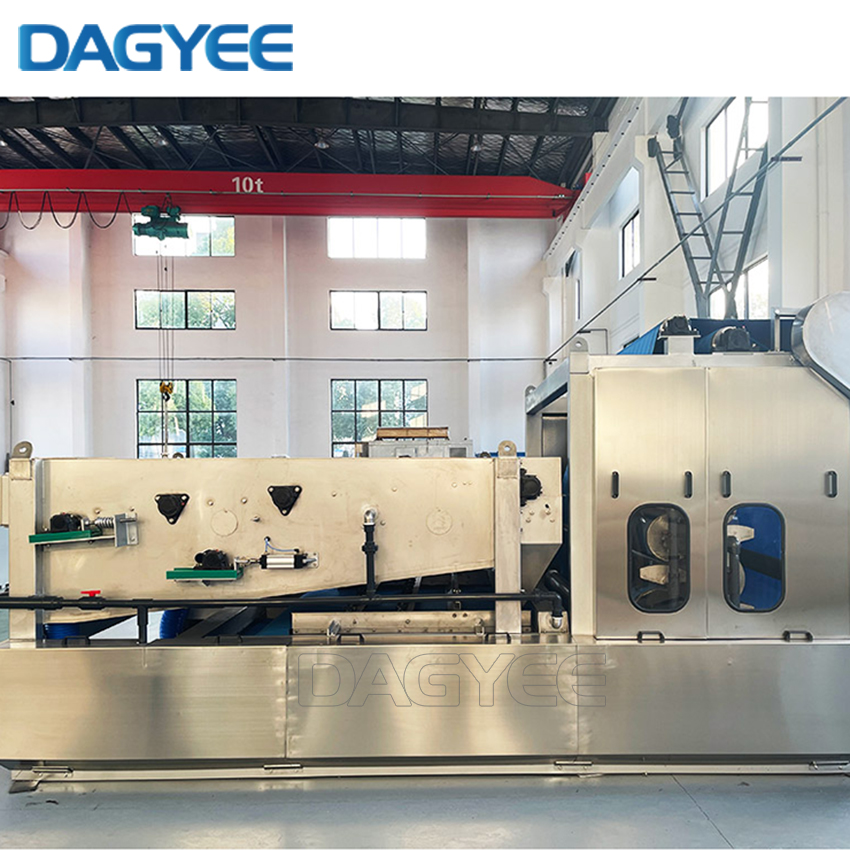
Dagyee belt presses
1.Review the Gravity Drainage Length and Roller Layout
If you are interested in a belt press filter product, please first obtain the product drawings from the supplier, including the side view of the roller layout. Then, the effective length of the gravity section needs to be checked; the number, diameter and slope of the rollers should also be verified. Check the "wrap angle" (that is, the area where the belt comes into contact with each pulley). Avoid short gravity sections, too few rollers, non-compliant pressure curves, and overly steep wrap angles.
2.Check the Wash Water Pressure Specs
Before making the purchase,ask the supplier: "What is the guaranteed water pressure for continuous rinsing at the nozzle?" If the pressure is lower than 0.4 megapascals, do not proceed.
3.Check Belt Correction & Tension Hardware Specs
Belt deviation is the most likely cause of damage to the belt of a belt press filter. A qualified belt press filter must be equipped with a sensitive pneumatic or hydraulic tracking system and have automatic sensors. Before purchase, it is necessary to check the brand and specifications of the cylinders, solenoid valves, and tensioning components.
Pre-Purchase Hardware Checklist: What to Demand from Your Supplier

Hardware Feature
What Cheap Suppliers Offer
What You Should Demand (DAGYEE Standard)
Why It Matters
Gravity Zone Length
Shortened (saves steel)
Extended & Optimized
Longer gravity drainage = lower PAM consumption.
Press Rollers
Fewer rollers, thin walls
Progressive diameter gradient, thick walls
Prevents over-shearing and ensures dry cake.
Roller Coating
Thin rubber or uncoated
8mm thick rubber with spiral grooves
Extends wear life and improves water drainage.
Belt Tracking System
Manual adjustment
Pneumatic auto-tracking (with sensors)
Stops belt deviation, edge tearing, and downtime.
Wash Water Pressure
< 0.4 MPa (low pressure)
Guaranteed > 0.4 MPa
Prevents belt blinding and high fresh-water usage.
Control System
Fixed speed, no alarms
PLC with VFD and safety interlocks
Prevents catastrophic failure (burned motors).


V.Frequently Asked Questions (FAQ)


Q1: Why does my belt filter press consume excessive polymer?

A:There are three common culprits. First, over-shearing: cheaply built presses with poorly arranged rollers subject the flocs to abrupt, high shear forces, tearing the PAM chains apart before they can do their job. Second, belt blinding: if wash water pressure is insufficient or nozzles are clogged, fine sludge blocks the fabric pores, gravity drainage fails, and operators compensate by overdosing chemicals. Third, inadequate polymer preparation: The PAM solution has not been given sufficient maturation time.If it is the third reason, it can be used in conjunction with our Polymer Preparation unit.

Q2Why is my cake still too wet?

A: Check three things: (1) Is the polymer fully matured and the flocculation strong?(2) Is the wash water pressure high enough (>0.4 MPa) to prevent belt blinding? (3) Is the belt speed too fast? Wet cake is usually a chemical or belt-cleaning issue, not a mechanical pressure issue.


Q3How do you prevent the filter belts from wandering off track?

A: Our machines are equipped with a pneumatic automatic belt tracking system. It uses sensors and cylinders to instantly correct the belt position, preventing edge tearing and reducing manual adjustments.


Q4: How long should a quality filter belt last in normal service?

A:A quality filter belt under normal municipal sludge duty typically delivers 2,000 to 4,000 hours of run time. For light-duty applications with well-selected fabrics, life can extend to 4,000–5,000 hours or more. In abrasive industrial applications (such as mining tailings and highly corrosive chemical sludges), the lifespan of the filter belt is relatively short, typically ranging from 1,000 to 3,000 hours. Therefore, more frequent replacements are required. If a belt fails in less than 2,000 hours, the cause is usually poor tracking, uneven tension, or a low-grade fabric—not normal wear.


Q5: What pre-treatment equipment works best with a belt filter press?
A:The single most important pre-treatment component is a polymer preparation unit. The Polymer Preparation Unit also known as the polymer preparation system or the automatic polymer preparation unit, is a fully automatic continuous flocculant preparation system. It can perform operations such as dry powder addition, pre-wetting, dissolution, maturation, and storage. It can convert dry powder into an active solution with precise concentration and fully extended molecular chains. Some plants also benefit from a sludge thickener ahead of the press, which reduces hydraulic load and improves cake consistency.


VI.Summary and Recommendations


The seemingly cheapest offer may seem to be the most cost-effective, but in reality, it secretly raises your total cost. The belt press filter is a long-term operating asset. The difference between cheap equipment and high-quality equipment will ultimately be reflected in your polymer usage, water consumption, electricity consumption, and daily downtime.
If you are looking for a high-quality belt press filter, you can choose DAGYEE.


Belt Thickeners
High-quality structure: The main body is made of thickened and reinforced panels, ensuring absolute stability and structural integrity under heavy loads.
Advanced roller geometric design: The number of rollers is reasonable. The press rollers are arranged in a nearly vertical plane.
Spiral groove rubber roller: The rubber-coated roller with spiral grooves can compensate for the roller deflection under load, enabling free drainage across the entire width.
High-quality filter cloth: Equipped with high-quality filter cloth, providing optimal filtration performance and extending service life.
Precise belt tracking: Integrated air chamber-type automatic offset correction device ensures stable operation of the filter cloth.
Intelligent safety and control: Comprehensive safety system monitors the entire working environment and is equipped with an automatic shutdown device to ensure operational safety.
High efficiency and low noise: Specifically designed for high efficiency, low energy consumption, and low rotational speed, with a noise level of ≤ 75 decibels (A).
Adjustable feed system: Regardless of the sludge viscosity, it can uniformly distribute the sludge across the working width, ensuring stable and consistent performance.
Modular upgrade design: Adopting a modular structure, it is convenient for future upgrades - as production capacity increases, more rollers can be easily added in the pressure zone or the gravity zone can be extended.
Don't let the high initial investment (CAPEX) eat up your operating costs (OPEX). Let us create a dehydration system that can generate profits on its own.
Contact DAGYEE and you can send an email to [info@dagyee.com] or visit [www.dagyee.com] to inform us of your type of sludge, volume and target moisture content. Our engineers will recommend an appropriate configuration for the belt filter press for you and precisely show you how much polymer waste can be reduced.

contact DAGYEE