 English
 Chinese

info@dagyee.com
+8613961861780

This blog article discusses seven aspects to clarify the above confusion: what the polymer preparation unit is; the difference between automatic preparation and manual brewing of medicine; the focus of polymer preparation units in different fields; the factors influencing the price of the polymer preparation unit; how to choose the most suitable polymer preparation unit; the maintenance guidelines for polymer preparation units; and why our product DAGYEE's polymer preparation unit is worth adding to your purchase list. This will help you clarify the above confusion and enable you to better select the products you need.
I. what the polymer preparation unit is
1.something about polymer preparation unit
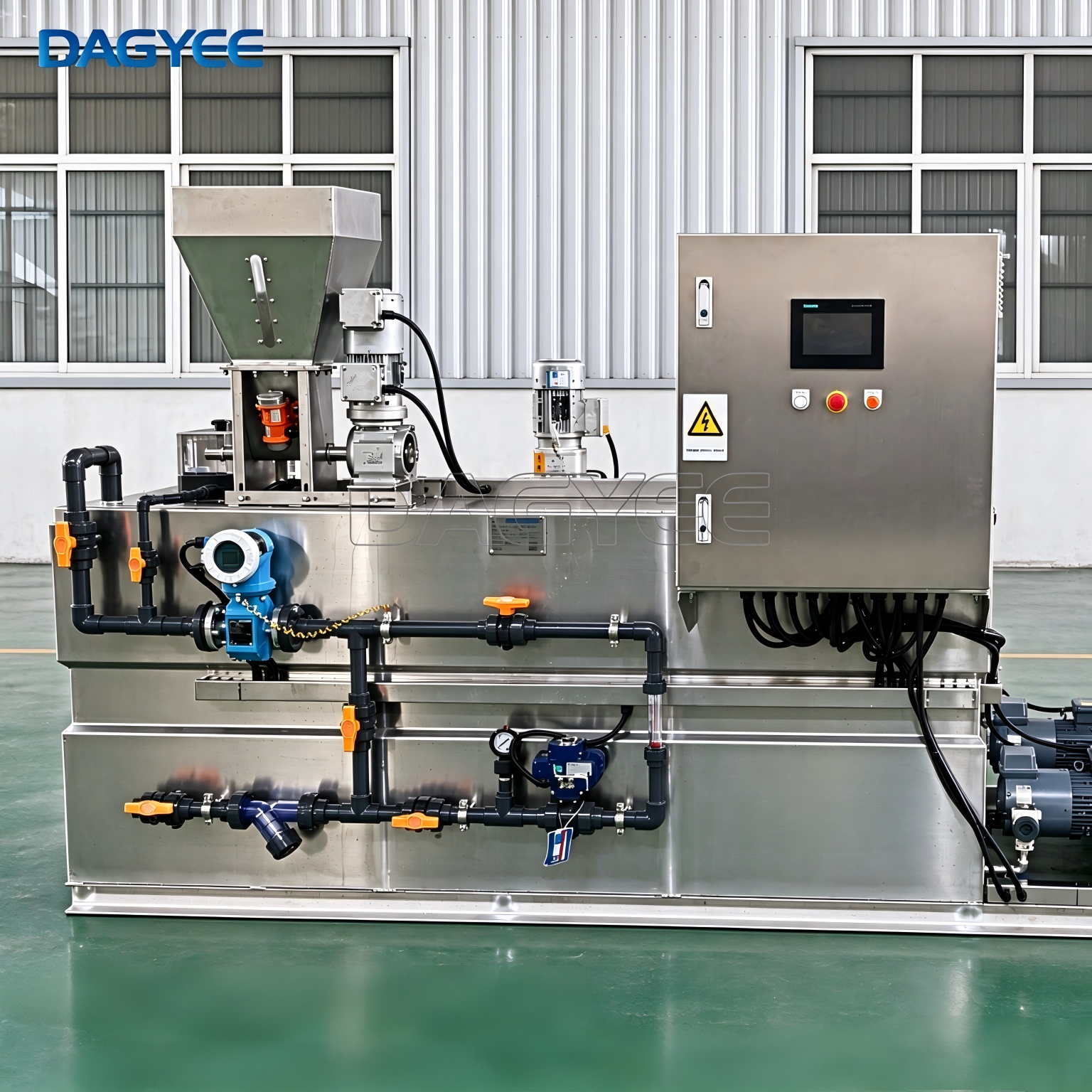
The "Polymer Preparation Unit" (PPU), also known as the polymer preparation system or the automatic polymer preparation unit, is a fully automatic continuous flocculant preparation system. It can perform operations such as dry powder addition, pre-wetting, dissolution, maturation, and storage. It can convert dry powder into an active solution with precise concentration and fully extended molecular chains. It can solve the problems of PAM's difficulty in dissolving, tendency to clog, and the need for maturation treatment. It is an important piece of equipment in wastewater pretreatment.
2.DAGYEE’s polymer preparation unit
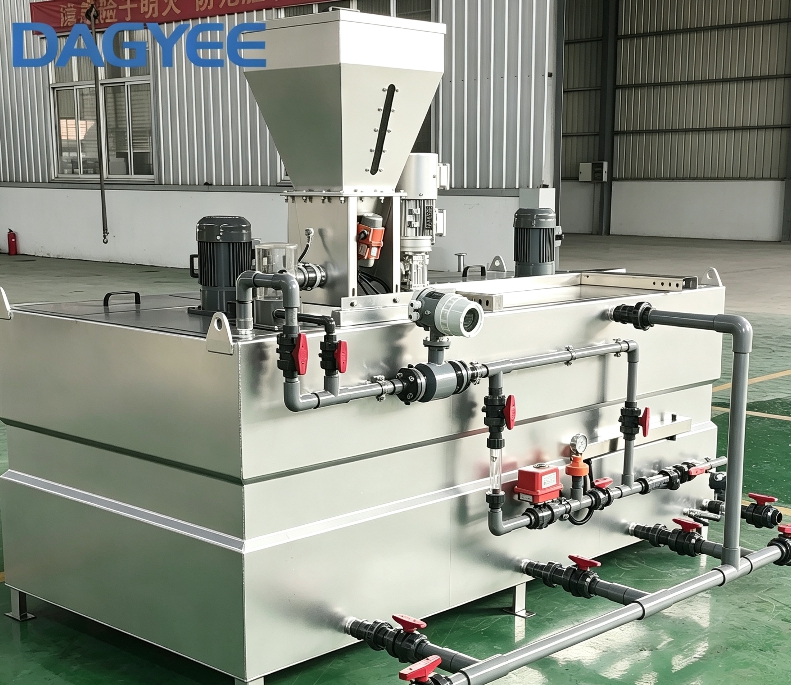
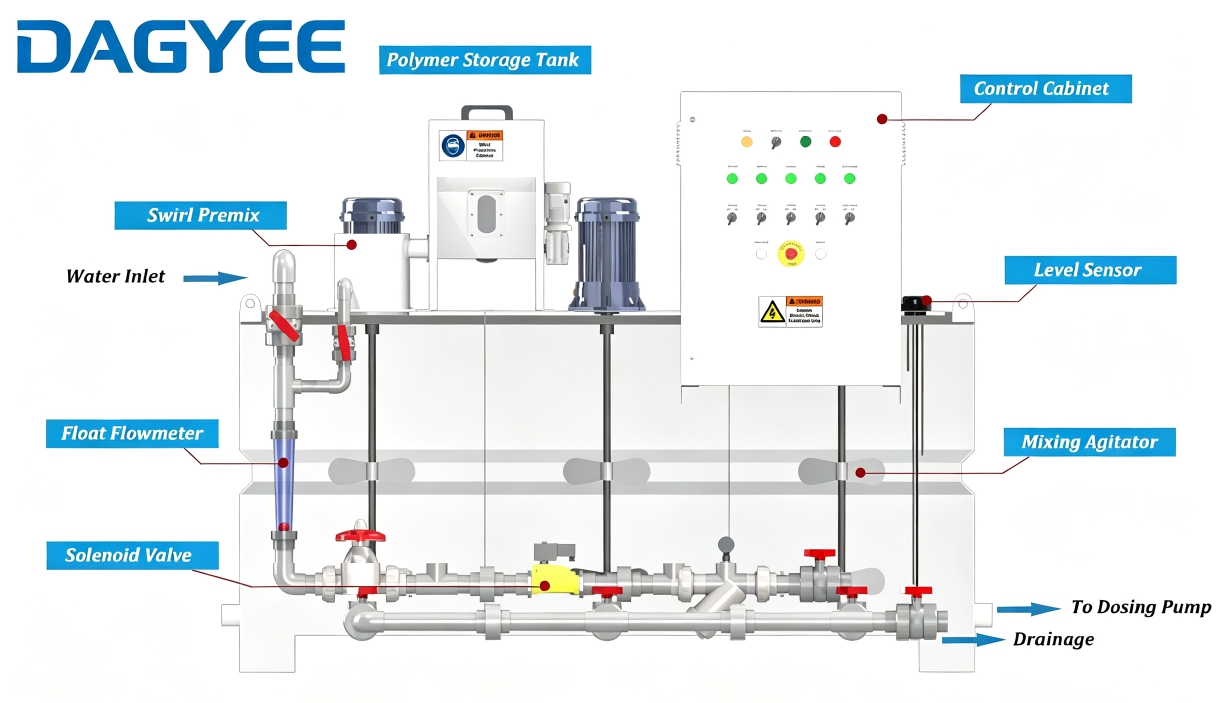
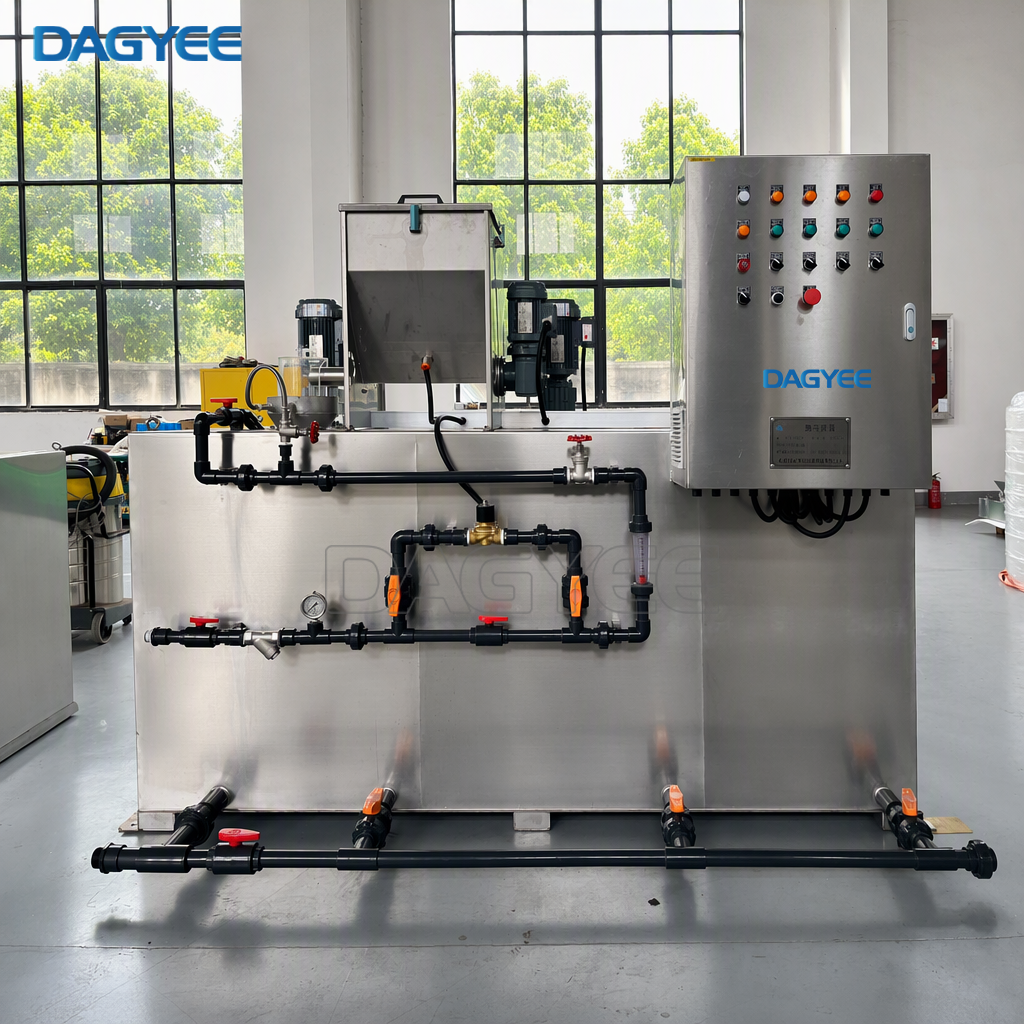
DT series automatic dosing device is mainly composed of automatic quantitative, feeding, adding dry powder feeding unit, dry powder pre-infiltration device, inlet and outlet pipelines, box and liquid level measurement mixing equipment and automatic control unit. DT series automatic dosing device is an integral system unit integrating dry powder storage, feeding, infiltration, dissolving, aging and other processes. It is a fully automatic equipment that can continuously prepare polymer solutions in batches. The device can efficiently and conveniently promote the full maturity and dissolution of the polymer, preventing the green polymer from being fed and added to the processing system. PAM powder can be dosed into the polymer dissolution tank by means of a screw feeder. The powder is mixed with water and stirred well to dissolve into a PAM solution with a concentration of 0.1-0.4%, and then the solution enters the polymer storage tank for further use in the aging process.
II.The difference between automatic preparation and manual brewing of medicine
In summary: Manual chemical preparation can save equipment costs, while using the automatic polymer preparation unit can reduce the consumption of chemicals, labor expenses, and the hidden costs associated with unstable solution performance. For wastewater treatment plants or industrial wastewater treatment plants that operate continuously every day and use PAM in large quantities, the economic benefits of the automatic polymer preparation unit become obvious only after a few months of operation.
Not using the automatic polymer preparation unit
Using the automatic polymer preparation unit
Chemical wastage
Manual preparation; prone to excessive usage.
Can reduce chemical waste by 30% to 40%
Regarding curing assurance
Often skip or shorten the curing steps, resulting in reduced curing effect.
Equipped with dedicated curing chambers and overflow retention time, it enables the polymer chains to fully expand.
Regarding "fish-eye" phenomenon and blockage problems
The dosage concentration is prone to be too high and insufficient wetting, thus causing "fish-eye" phenomena and blockages in the pump and pipeline frequently.
By using pre-wetting and water jet technology, ensure that the powder and water fully contact before entering the tank, and at the same time, the end of the drying powder hopper is heated to prevent water absorption and caking.
Regarding human resource requirements
Requires multiple shifts, and each shift requires dedicated personnel for preparation, inspection, and adjustment.
Because of the automatic start-stop function with liquid level control, water supply and powder feeding start when the liquid level is low and stop when the liquid level is high, no special personnel operation is required.
Concentration stability
There are significant differences between different batches, affecting the stability of dehydration performance.
Because the feeding rate is synchronized with the dry powder addition amount, the concentration remains constant.
Long-term operating cost
High chemical consumption and high labor costs.
The initial investment is high, but the chemical and labor costs saved in the long term usually can make up for the initial cost difference.
III. The focus of polymer preparation units in different fields
1. Municipal & Industrial Wastewater Treatment (STPs / ETPs)
Primary Purpose: Sludge thickening, belt filter press/centrifuge dewatering, and Dissolved Air Flotation (DAF).
Unit Type: Usually standard 3-chamber continuous or batch systems (mixing, aging/maturation, and storage).
Polymer Form: Frequently uses dry powder (for large plants to save chemical costs) or liquid emulsions (for compact/automated setups).
Key Features: Requires a 30-to-60-minute aging time to uncoil long polymer chains completely, and integrated hopper heaters to prevent dry powder from clumping in humid room environments.
2. Pulp and Paper Industry
Primary Purpose: Retention aid dosing, fiber recovery, and clarification of high-volume process or white water.
Unit Type: High-capacity, rapid-response inline continuous units or multi-stream batch units.
Polymer Form: High-molecular-weight cationic or anionic polyacrylamides (often liquid emulsion or dispersion polymers for fast activation).
Key Features: High-shear or specialized gentle-shear inline mixing is critical because paper machine speeds are fast, and over-shearing can destroy sensitive polymer structures needed to bind microscopic wood fibers and fillers.
3. Drinking Water Treatment Plants
Primary Purpose: Coagulation and flocculation aid alongside metal salts (like alum or ferric chloride) to settle fine turbidity and natural organic matter.
Unit Type: Precision-controlled, clean-design stainless steel (AISI 316/316L) multi-chamber or compact automatic units.
Polymer Form: Food-grade or high-purity certified anionic/non-ionic polymers.
Key Features: Strict hygiene standards, corrosion-resistant wetted parts, and tighter dosing accuracy to prevent residual monomer or off-taste/odor issues in potable water.
4. Oil & Gas / Petrochemical & Mineral Processing
Primary Purpose: Produced water treatment, oil-water separation, heavy-duty tailings thickeners, and enhanced oil recovery (EOR) support.
Unit Type: Heavy-duty, explosion-proof (ATEX-rated) or skid-mounted automated units.
Polymer Form: Liquid emulsion or specialized high-concentration dispersion polymers designed for harsh saline or high-temperature environments.
IV.The factors influencing the price of the polymer preparation unit
The quotations for the polymer preparation units vary significantly. Is this due to brand premium or is it that the suppliers are setting prices arbitrarily? In fact, neither is the case. The price differences mainly stem from the following five factors:
1. Automation level: Manual chemical storage tanks or simple batch systems only require a stirrer and storage tanks, with the lowest initial investment; while the automatic polymer preparation uses PLC control, ultrasonic level sensors, solenoid valves, variable frequency dry powder supply, and interlock interfaces, so the cost is higher.
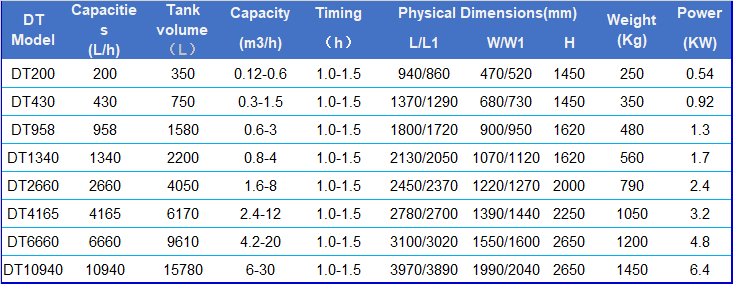
2. Processing capacity and tank volume: The higher the processing volume, the greater the required tank volume, stirrer power, and dry powder conveying capacity. DAGYEE's DT series has a flow range from 300 liters per hour to 10,000 liters per hour; the smaller models and larger models have significant differences in steel consumption, motor power, and structural strength due to different costs.
3. Materials: Equipment with very low prices will reduce costs in material selection. Since PAM (polyacrylamide) degrades when in contact with iron ions, storage tanks and flow-through components must not be made of ordinary carbon steel. However, cheap equipment may use 201 stainless steel to pretend to be 304 stainless steel.
4. Precision of dry powder feeding and anti-clogging configuration: The precision of the variable frequency screw feeder is much higher than simple gravity feeding. Additional features such as anti-clogging, hopper heating to prevent moisture, and low liquid level alarms also increase costs, but they directly determine the stability of the concentration and the occurrence rate of "fish-eye" phenomena.
5. Brand and certification: Manufacturers holding certifications such as CE, ISO 9001, and SGS usually make their equipment prices higher due to their investment in quality control, document systems, and export compliance. The production capacity and configuration of the equipment are the key factors determining the pricing.
V.How to choose the most suitable polymer preparation unit
Four-step selection method
When the budget is limited, the worst approach is to randomly pick a model from the list without considering the specifications, or to sacrifice key parameters to lower the price. A more reasonable approach is to gradually confirm the equipment you need in the following order.
Step 1: Calculate the production capacity. By dividing the hourly PAM powder consumption by the target formulation concentration, you can work backward to determine the required solution flow rate. For example, if the PAM dosing rate is 3 kilograms per hour and the target concentration is 0.2%, then the required formulation capacity = 3 ÷ 0.002 = 1,500 liters per hour. At this point, you can choose a model within this range. After accurately calculating the formulation capacity, the tank volume and maturation time become meaningful considerations.
Step 3: Do not make unreasonable compromises in material selection. Polypropylene/ fiberglass reinforced plastic (PP/FRP) can reduce the cost of the storage tank and is suitable for scenarios with controllable corrosion; however, if the water quality or chemicals are sensitive to metals, then the minimum standard should also use stainless steel 304 (SS304). We are not saying to choose the most expensive material, but to choose the safest and most reliable one. Additionally, ensure that all components in contact with the chemical solution are made of the same grade of material to avoid situations where the tank is made of 304 material but the pipes use ordinary carbon steel.
Step 4: Configure control methods and interlock functions based on needs. Automatic start-stop based on liquid level is a basic requirement. Interlocks with upstream flow, downstream dosing pumps, and remote alarm interfaces should be selected based on the on-site automation level. If the factory is equipped with PLC/SCADA systems, these interfaces are necessary. For small independent sites, local automatic control can be retained initially and gradually expanded later.
VI.The maintenance guidelines for polymer preparation units
PAM (polyacrylamide) is a key raw material for the polymer preparation unit. It has viscoelastic properties. Once there is residual solution on the pipeline or tank wall that dries, it will solidify into a gel-like substance. This can cause nozzle blockage, reduce mixing efficiency, and even lead to system shutdown. Our maintenance focus is not "repairing after the failure", but preventing the residue from having the opportunity to solidify.
Daily: Check if the dry powder hopper is damp or has clumps, and ensure that the discharge port and pre-wetting device are free of attachments; Observe if the liquid level in the chemical storage tank is consistent with the operation of the metering pump; Record if the appearance of the chemical solution is normal.
Weekly: Check if the spray cleaning nozzles are blocked, and remove the impurities; Check if the pipe joints and O-rings have any leaks; Lubricate the bearings of the dry powder feed screw and the mixer according to the instructions.
Monthly: If there are deposited undissolved gel masses and impurities at the bottom of the chemical storage tank, clean them up; Check if the drainage pipe is unobstructed, and use the automatic drainage program of the equipment or manually open the drainage valve for flushing; Calibrate the level gauge and the dry powder feeding metering device.
Seasonal focus: In winter, insulate exposed pipelines to prevent freezing; In hot summer, pay attention to the storage conditions of PAM dry powder to avoid moisture absorption and deterioration. Before long-term shutdown, thoroughly clean the chemical storage tank and pipelines, and conduct a comprehensive inspection before resuming operation.
Suggestion: Develop good habits: Establish a maintenance log to record each cleaning, drainage, and abnormal situation.
VII.Why our product DAGYEE's polymer preparation unit is worth adding to your purchase list
1. The outstanding hardware craftsmanship and sturdy mechanical structure ensure long-term durability
We use steel plates with a thickness of over 10 millimeters and are equipped with external reinforcement structures, which can effectively suppress the vibration caused by mixed operations and the deformation of the equipment after long-term operation. All structural components, flanges, and precision parts are manufactured by fully automatic CNC machines, with a processing accuracy of ±0.005 millimeters, a micron-level precision. This effectively reduces human errors and can reduce the wear of sealing parts and bearings to ensure the stable performance of each piece of equipment. The equipment adopts a skid-mounted integrated design, integrating dissolution, maturation, and storage functions, and only requires connecting pipes and power supply to complete on-site installation and commissioning. We offer a variety of material options including SS304, SS316, PP, and FRP, which can adapt to various corrosive working environments.
2. Adopting high-quality core components and optimized three-chamber process, maximizing the polymer activity
(1) German engineering drive system: We equip high-end NORD/SEW Eurodrive gear reducers, with an average trouble-free operating time (MTBF) of over 100,000 hours, a transmission efficiency of 94% to 98%, and almost zero backlash. This effectively reduces energy and labor costs during long-term operation.
(2) Three-chamber overflow process design: Physically isolated dissolution, maturation, and storage chambers, ensuring the polymer achieves stable maturation within 45 to 60 minutes. This design prevents fresh powder from mixing with unfully matured solutions, fully activates the polymer flocculation performance, and avoids caking and "fish-eye" phenomena. It also supports the feeding of dry powder and emulsion-like polymers, reducing chemical consumption by 20% to 30% under the same working conditions.
3. Intelligent control and high-precision sensing system, achieving stable automatic operation
(1) World-class control hardware: Schneider or Siemens PLC and HMI control systems, with an average trouble-free operating time (MTBF) of over 100,000 hours. Support for hot standby redundancy, frequency converter frequency conversion linkage, manual and automatic dual-mode switching. SCADA/MES system, enabling remote monitoring and encrypted data transmission. This system can maintain the stability of polymer preparation concentration, adapting to harsh industrial environments such as vibration and electromagnetic interference.
(2) High-precision differential pressure liquid level transducer: Different from ordinary point-type liquid level probes, the differential pressure transducer can provide continuous real-time liquid level data, with a measurement accuracy of ±0.075%. Its excellent anti-fouling, anti-foaming, anti-steam, and anti-turbulent performance. The PLC dynamically adjusts the water inlet flow and feeding rate based on real-time data, achieving closed-loop automatic production, reducing chemical waste.
4. Significantly improving operational efficiency and comprehensively enhancing production efficiency
The fully automatic full-process operation significantly reduces the need for manual labor and eliminates errors caused by human factors. The overall output efficiency can be increased by up to 30%. Precise chemical dosage can minimize chemical waste, meeting sustainable development requirements. Modular component layout facilitates inspection and maintenance. Various reliability-oriented designs effectively reduce the risk of unplanned downtime, ensuring continuous production of water treatment facilities.
5. Customer-centered full life cycle service
We are committed to ensuring that your equipment can achieve optimal performance throughout its entire life cycle.
(1) Pre-sales technical consultation: We will analyze your unique application requirements, configure the optimal equipment, and provide a detailed feasibility study report and flowchart to ensure a perfect match between the equipment and on-site conditions.
(2) Seamless installation and commissioning: Our experts will supervise on-site to ensure the safe installation of the equipment, optimize parameters to achieve the best efficiency, and provide comprehensive training for your operators to enhance their working capabilities.
(3) Proactive after-sales service: We offer guaranteed rapid response support, remote diagnosis services, prompt delivery of original factory spare parts, and preventive maintenance plans to help you avoid costly unplanned downtime.
If you need professional pre-treatment solutions for wastewater treatment, please feel free to contact us at any time.
Name: Ashely Li
Mobile:+8613961861780
Tel:+8613961861780
Whatsapp:8613961861780
Email:info@dagyee.com
Add:Room 302, Building 11-4, Hongyi Road, Xinan Town, Xinwu District, jiangsu Province, China