English
 Chinese
info@dagyee.com
+8613961861780

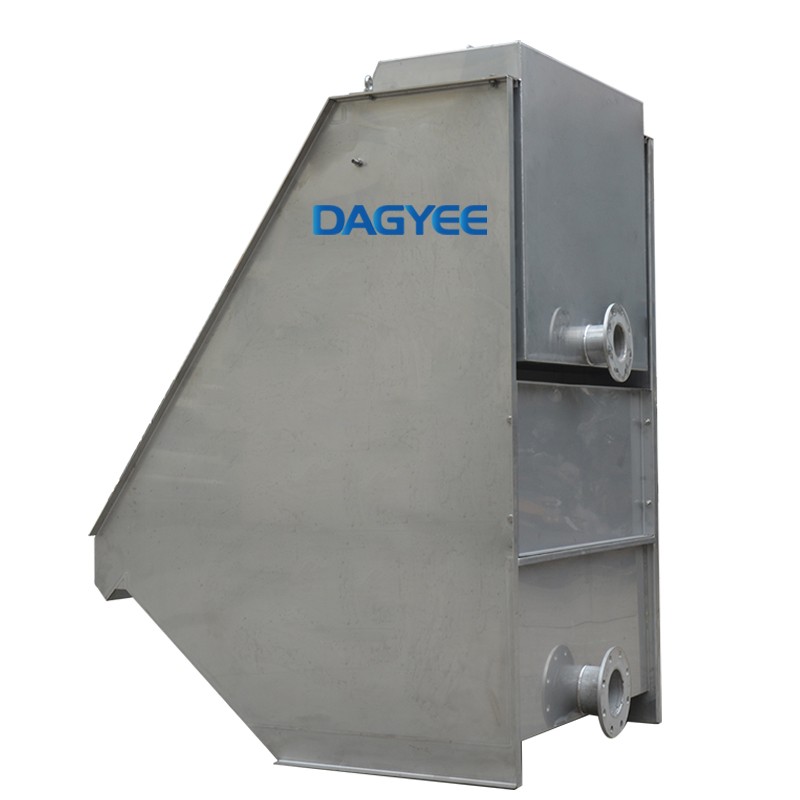
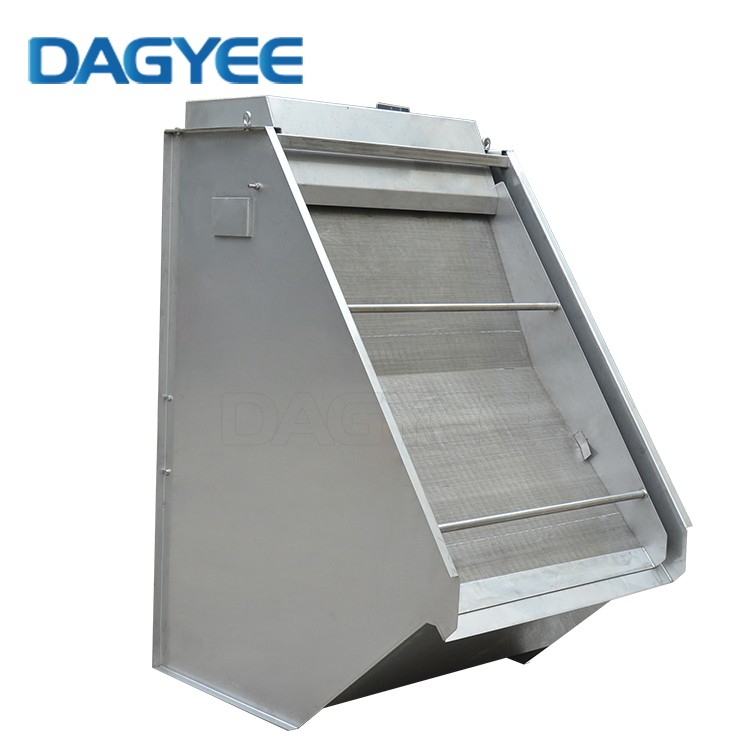
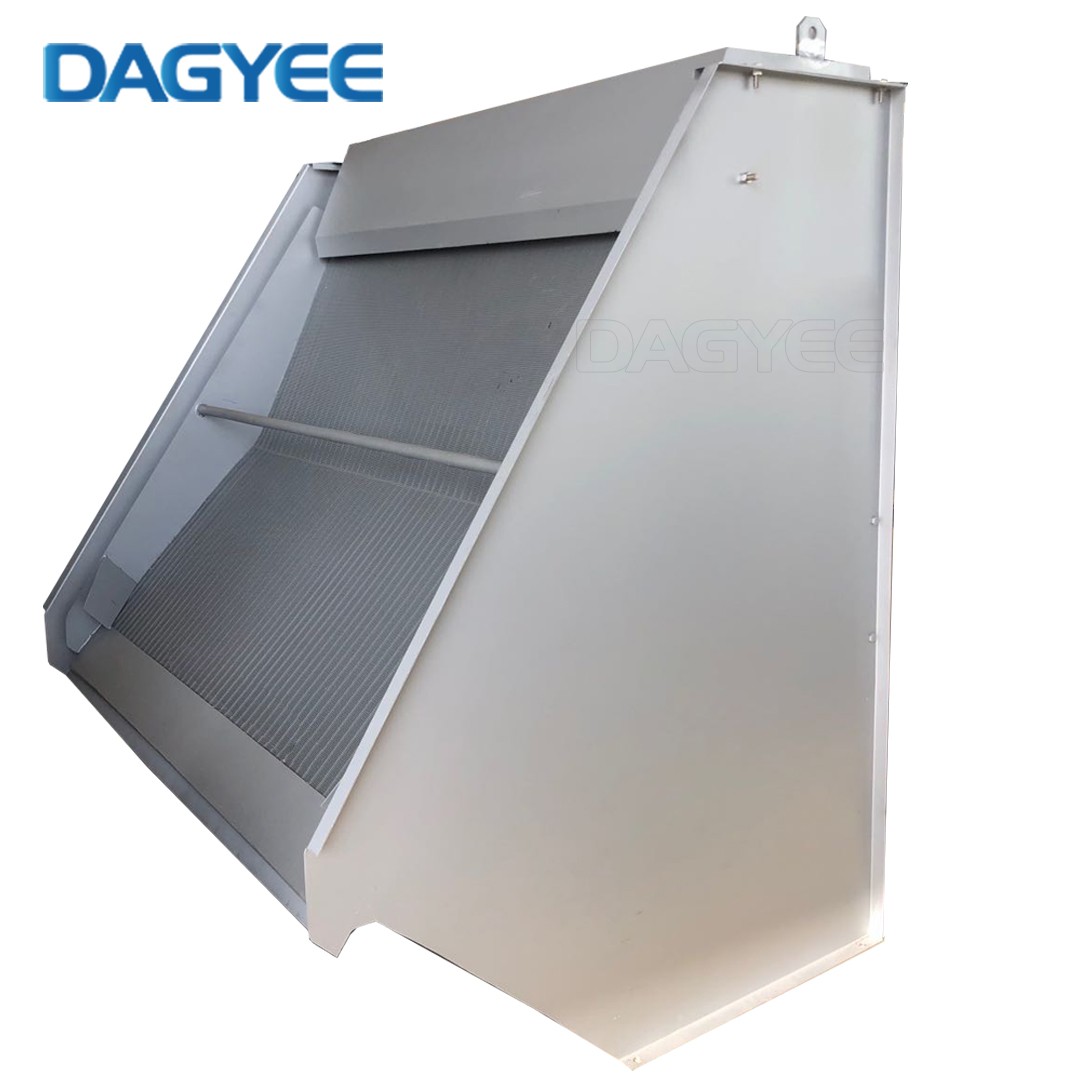
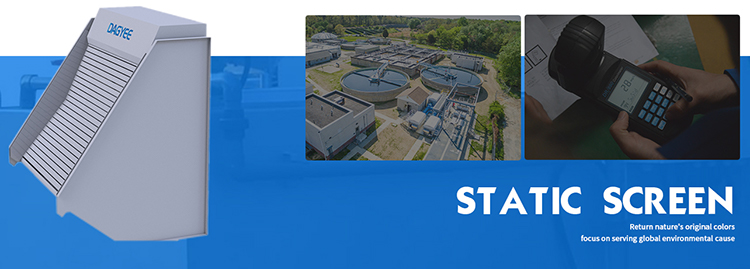
Static screen wastewater description
When wastewater flows into a treatment plant, a static screen sits in front of the remaining wastewater equipment.
Wastewater enters the system, passing through a stationary static screen first to remove as many solids as possible.
Think of it like a mesh screen that keeps bugs from entering your window at home.
In this case, it’s a durable screen that catches particles like plastics, feminine products, foods that weren’t digested, hardened particles of grease, and paper products.
Items that get captured are composted or removed and taken to a landfill.
Many plants compost them over time, and that compost can be used in forests.
This makes it easier for the next stages of wastewater treatment, such as grit removal.
In addition to a municipal wastewater treatment system, static screens benefit businesses that are under orders to pre-treat industrial wastewater or who want to do their part.
It includes companies like chemical processing plants, paper mills, breweries, food processing plants, and plastic and metal processing plants.
If you have a stormwater system, they are fantastic for removing plastics, trash, and fallen sticks and branches after a storm.
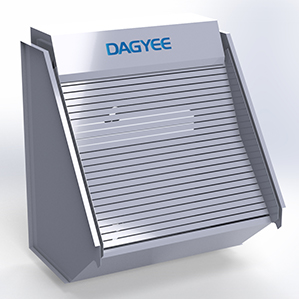
Static screen wastewater works
During dry weather conditions the flow to the treatment works will pass underneath the screens in the dry weather flow channel.
In a storm event the inflow rate to the chamber will exceed the outflow rate causing water levels to rise within the chamber and spill through the screens.
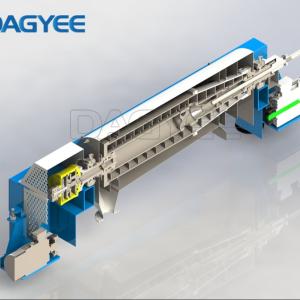
The Hydro-Static Screen is mounted over the dry weather flow channel so that the flow passes up and through the screen during a storm event.
Solids and floatables are trapped below the screen and returned to the sanitary continuation flow.
Screened effluent is discharged to a receiving waterway.
An emergency overflow weir is incorporated into the screen should the peak design flow be exceeded.
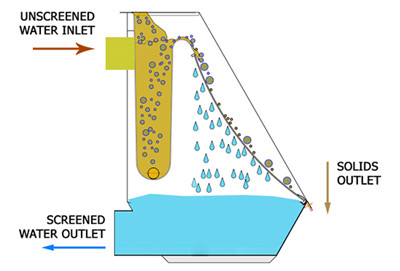
Static screen wastewater model
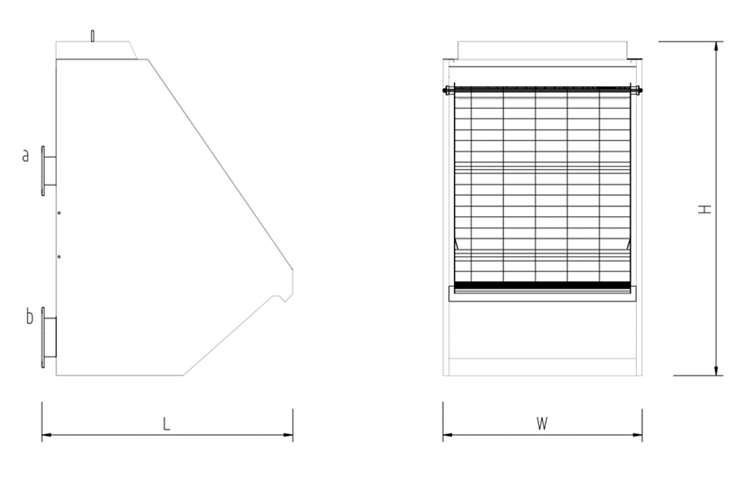
| HS Model |
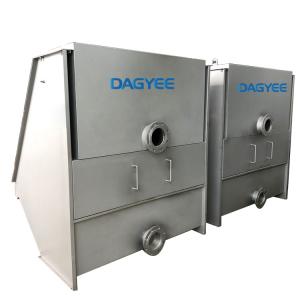
Piping Connections Inlet(a) | Effluent(b) |
Physical Dimensions(m) L | W | H |
Weight (Kg) |
Capacities(m³/h) 0.5mm | 1mm | 1.5mm |
|---|---|---|---|---|
| HS-300 | 80 | 80 | 1.43 | 0.43 | 2 | 150 | 6 | 13 | 16 |
| HS-500 | 100 | 100 | 1.43 | 0.63 | 2 | 180 | 10 | 22 | 35 |
| HS-700 | 100 | 100 | 1.43 | 0.83 | 2 | 200 | 15 | 30 | 50 |
| HS-800 | 100 | 125 | 1.43 | 0.93 | 2 | 250 | 16 | 35 | 55 |
| HS-1000 | 150 | 150 | 1.43 | 1.13 | 2 | 280 | 20 | 45 | 70 |
| HS-1500 | 150 | 150 | 1.43 | 1.63 | 2 | 300 | 30 | 65 | 100 |
| HS-2000 | 200 | 200 | 1.43 | 2.13 | 2 | 400 | 40 | 75 | 120 |
Static screen wastewater advantage
1. Stainless steel construction: increases life span.
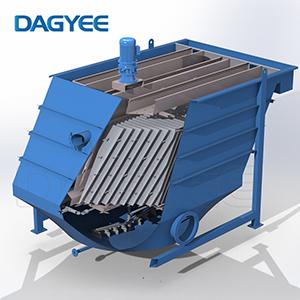
2. Bi-wave wedgewire: improves high capacity and keeps screen cleaner.
3. Drip lip: promotes drier solids.
4. Pivoting screen panel on larger units: provides easy access to rear of panel.
5. No moving parts: create a simple operation and reduce costs.
6. Optional covers and doors: reduce odors and provide customization options .
7. 5 models: provide flexible design offerings.
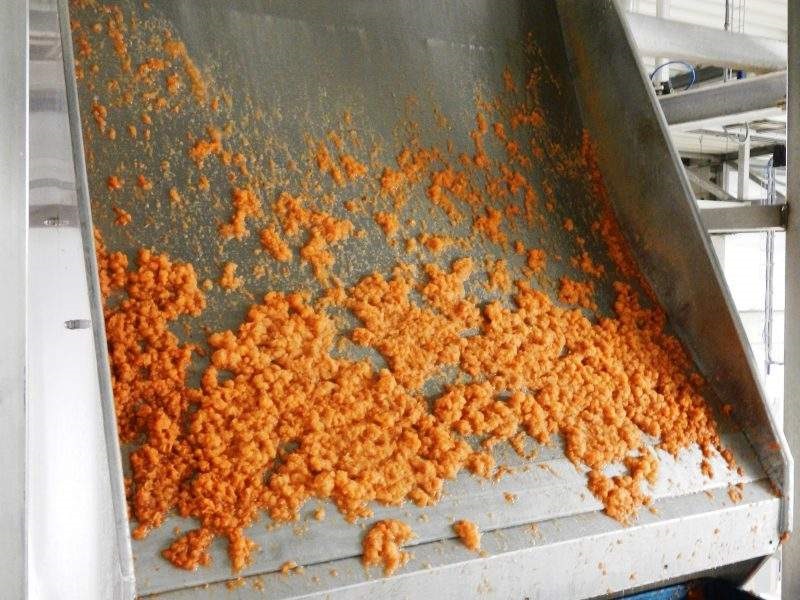
Static screen wastewater feature
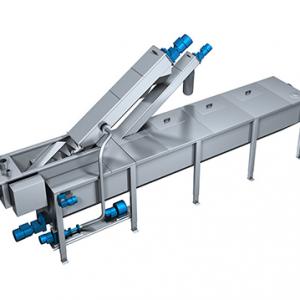
1. Cleaning of the static screen filter can be accomplished by reverse scanning/cleaning mechanism which is specially designed to clean the front and back of the screen or with high pressure wash.
2. Cleaning of the screen can be accomplished automatically using differential water level sensors or time.
3. The ultra-low power consumption of the unit means operation and cleaning can be powered using solar panels.
4. Through the use of an elevated structure, this equipment can be positioned at the forefront of the plant, enabling the subsequent treatment phase to proceed without the need for additional pumping.
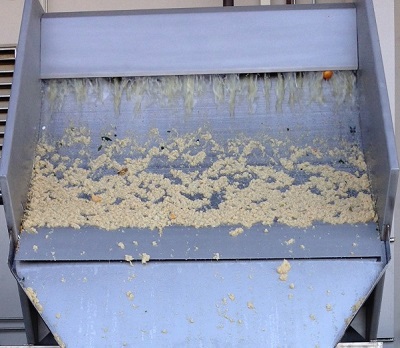
Static screen wastewater application
aquaculture, and food processing facilities among others.
The static screen offers a cost-effective solution for the continuous solid-liquid separation process, requiring minimal maintenance and consuming zero energy.
Its composition primarily comprises a body and the mesh frame crafted from food and drinking grade non corrosive Polypropylene and Polyethylene.


Name: Ashely Li
Mobile:+8613961861780
Tel:+8613961861780
Whatsapp:8613961861780
Email:info@dagyee.com
Add:Room 302, Building 11-4, Hongyi Road, Xinan Town, Xinwu District, jiangsu Province, China