English
 Chinese
info@dagyee.com
+8613961861780

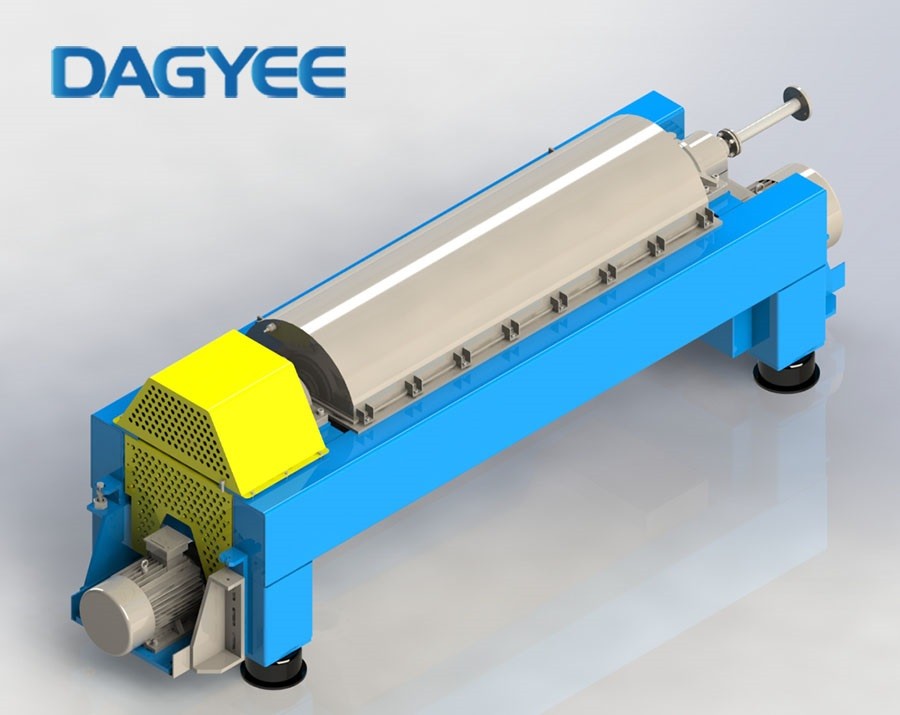
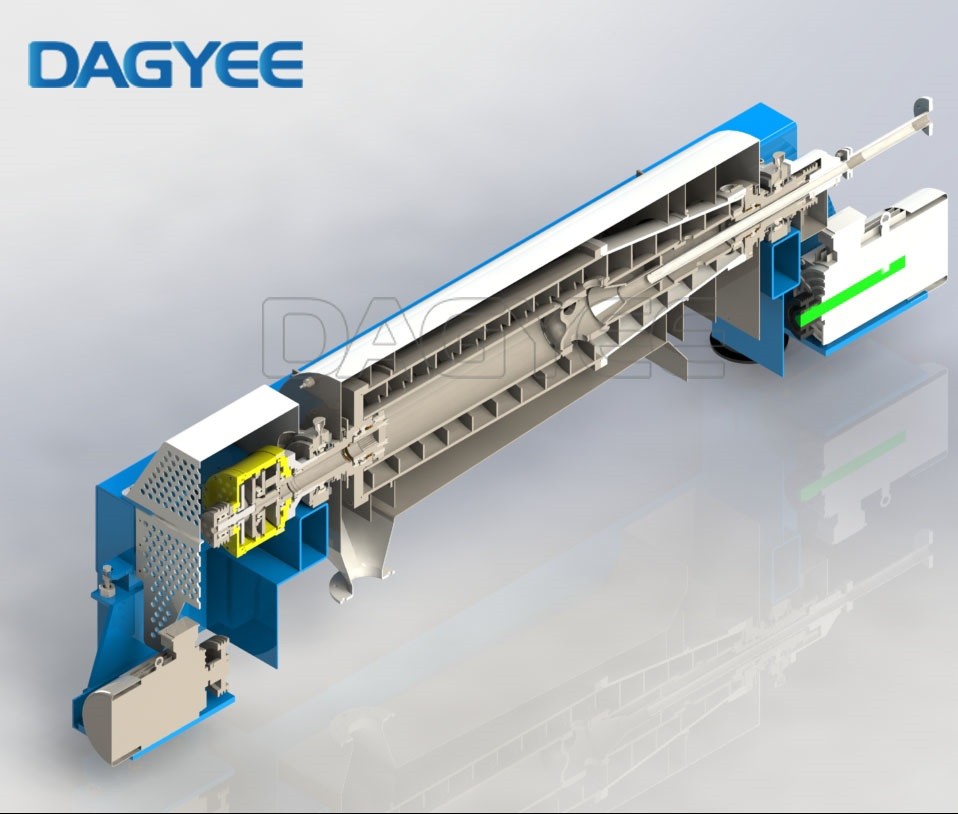
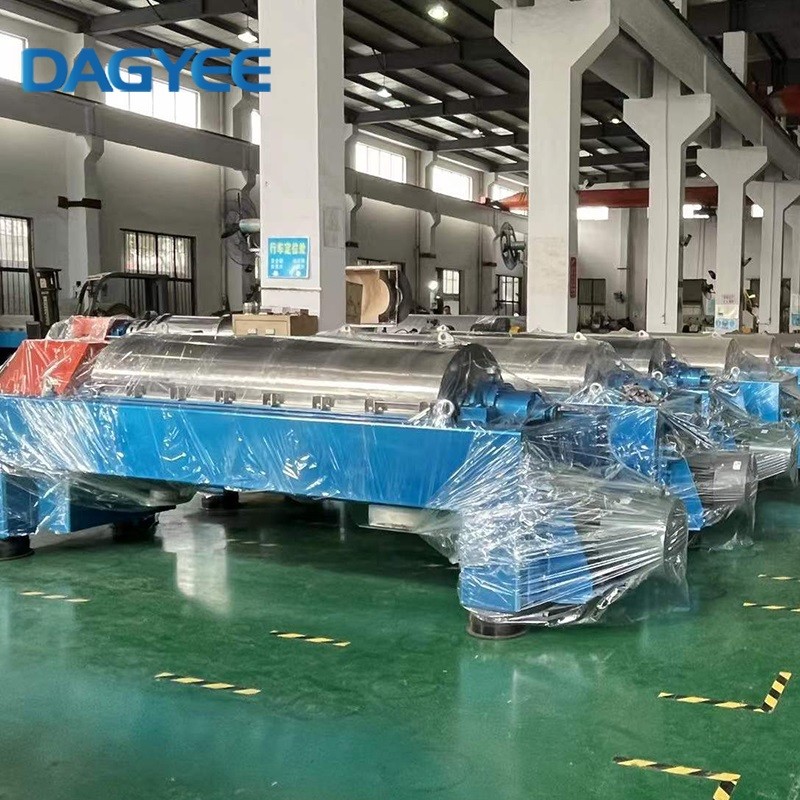
Decanter centrifuge descriptions
Decanter Centrifuges are used to separate solids from liquid in a slurry in a wide variety of applications, including food processing, oil refining, waste recycling, chemical extraction, mineral processing, aggregate processing and more.
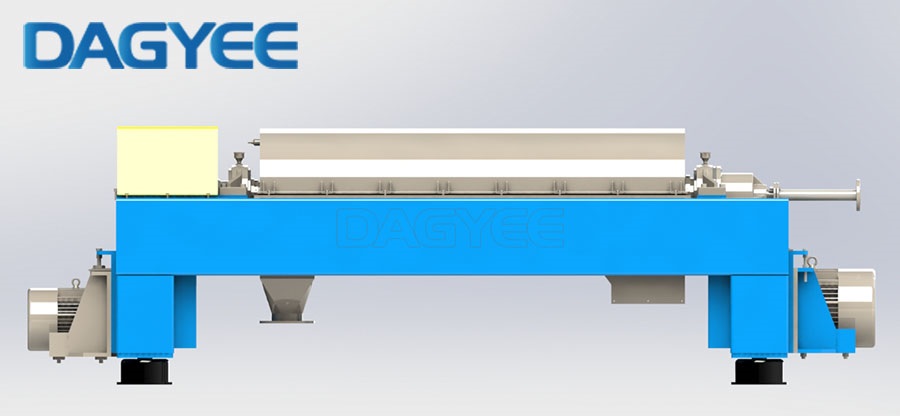
How does a decanter centrifuge work?
Inlet sludge, through feed pipe, will be conducted inside the bowl of the decanter and here separation of liquid phase from solid one will happen thanks to the action of centrifugal force. Liquid phase will be expelled from bowl front part thanks to specific level plates than can be adjusted on outlet diameter, while solid phase will be convoyed from the screw to exit openings on bowl rear part, where it will be then expelled. The feed slurry is introduced through an inlet feed tube into the scroll feed zone where it is accelerated and directed into the spinning bowl of the decanter centrifuge. The solids which have a higher specific gravity than the liquid phase will rapidly settle out on the inner wall of the centrifuge bowl due to the intense acceleration of centrifugal force over 3,000 x “gravity” leaving a clear inner ring liquid phase. The liquid phase flows in a helical channel between the scroll flights moving toward the large diameter end of the centrifuge bowl where the clarified liquid is expelled at a depth controlled by the adjustable liquid level discharge plates on the outlet diameter of the liquid end head-wall. The liquid phase or “centrate” then overflows into the liquid discharge cover and gravity drain from the machine. The compacted solid phase is discharged from the decanter centrifuge bowl by scroll which rotates at slightly different speed (differential speed) as controlled by the back-drive conveying the solids up the conical bowl section to the discharge ports. The dry solids are discharged into the solids discharge cover where a solids scrapper keeps the cover clear of solids cake build-up.
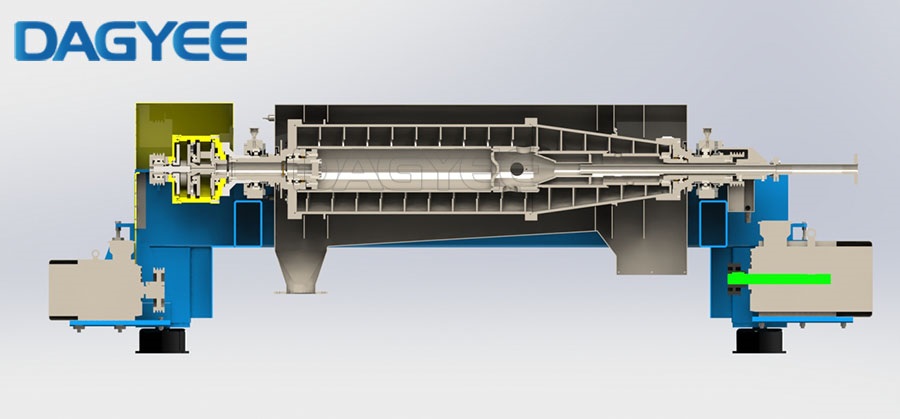
Decanter centrifuge advanced operation capabilities
Clarification
Clarification removes suspended solids from a liquid of lower density across a particle size range from 1 to 10,000 microns. By increasing centrifugal force, even submicron particles can be separated, making this process ideal for high-purity applications in chemicals, mining, and waste management.
Classifying
Through controlled reduction of residence time, the decanter achieves sharp separation cuts for particle-size classification down to the submicron range. This capability is essential for processes requiring precise particle distribution and custom engineering solutions.
Liquid/liquid separation
The efficiently separates immiscible liquid phases of different densities, with or without solids present. This is critical for oil recovery and industrial wastewater treatment, where mechanical dewatering and centrifugal separation reduce reprocessing and disposal costs.
Thickening
Fine solids separated from the liquid can be thickened in a hindered settling mode, utilizing the cylindrical section of the bowl for maximum compression. This improves solids handling and reduces downstream load, contributing to operational efficiency.
Compression and dewatering
Compactive dewatering combines drainage and compression to achieve a higher degree of dryness, even with compressible solids. The degree of dewatering depends on solids characteristics, machine settings, and required dryness levels. Optimized conveyor and cone geometry, along with differential speed control, ensure stable discharge of pasty or shear-sensitive solids—key for waste management and cost reduction.
Counter-current washing
Integrated washing systems allow efficient, cost-effective removal of contaminants by separate discharge of wash liquor over multiple sections. This reduces chemical and water consumption, aligning with sustainability and process optimization goals.
Mixing and re-suspension
Special discharge geometries enable solids to be mixed with liquid directly at the outlet, eliminating the need for additional mixing vessels. This feature simplifies plant design and enhances operational efficiency.
Automation and innovation
Control systems for smart operation
Control systems stabilize separation quality, automate setpoints, and provide diagnostics that support predictive service strategies. As the “brain” behind the process, strengthens industrial automation and helps maintain equipment reliability through better visibility, alarms, and optimization tools.
Engineered for tough conditions
A broad choice of materials of construction, wear protection, and sealing options extends service life in abrasive or corrosive duties. Features like CIP, optimized bearings and seals, and gas-tight/pressurized casings are designed to lower maintenance effort while keeping performance high.
Options that boost performance
Depending on application, It can be equipped with energy-recovery weir plates, specialized feed systems to reduce particle breakage, and multiple drive/gearbox configurations—each selected to match duty conditions and performance targets.
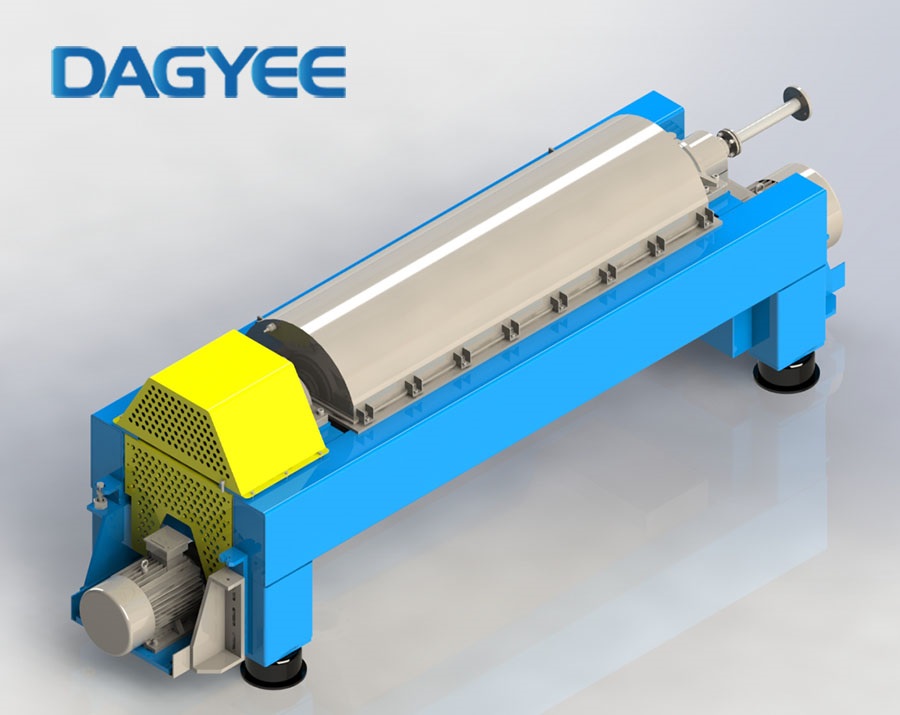
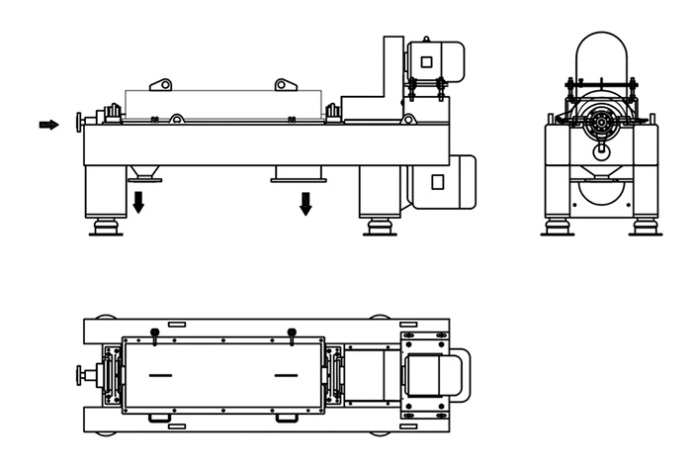
Decanter centrifuge specifications
| Model |
Drum diameter mm |
Length mm |
Maximum speed rpm |
Highest separation factor g |
Mixture capacity m³/h |
|---|---|---|---|---|---|
| LW250-900 | 250 | 900 | 5000 | 3500 | 0.5-3 |
| LW350-1500 | 350 | 1500 | 3800 | 2850 | 1-5 |
| LW400-1200 | 400 | 1200 | 3400 | 2581 | 1-8 |
| LW400-1600 | 400 | 1600 | 3400 | 2581 | 2-10 |
| LW400-1800 | 400 | 1800 | 3400 | 2581 | 2-12 |
| LW450-1800 | 450 | 1800 | 3200 | 2572 | 5-20 |
| LW450-2000 | 450 | 2000 | 3200 | 2572 | 5-25 |
| LW530-2280 | 530 | 2280 | 2800 | 2350 | 10-50 |
| LW600-2400 | 600 | 2400 | 2600 | 2265 | 15-65 |
| LW650-2600 | 650 | 2600 | 2400 | 2100 | 20-80 |
| LW720-2500 | 720 | 2500 | 2200 | 1950 | 25-90 |
| LW800-2560 | 800 | 2560 | 2000 | 1800 | 30-100 |
| LW800-3200 | 800 | 3200 | 2000 | 1800 | 30-110 |
| LW900-3200 | 800 | 3200 | 1800 | 1650 | 30-150 |
Why choose the DAGYEE decanter centrifuge?/Decanter centrifuge advantages
1. This liquid clarifying device adopts horizontal design which balances the layout of electric motor and bowl. Asa result, outstanding operation stability generates minimized vibration.
2. Dual electric motor control enables stepless speed adjustment on bowl and spiral components.
3. Scroll conveyor flight inside this continuous centrifuge is painted by abrasion resistant alloy or welded byhard alloy. Moreover, main components on our horizontal decanter centrifuge, such as rotating bowl and spiralparts, are made from corrosion resistant stainless steel or dual-phase steel, whereby offering exceptionalspeed limits and separation ratio.
4. Our mud dewatering equipment comes with three options including cycloidal gear, planetary gear andhydraulic diferential, resulting in large range of differential adjustment. Therefore, this industrial centrifuge canbe applied to diverse solids.
5. Multiple protections are available on our horizontal decanter centrifuge to ensure operatives safety, includingover-vibration protection, bearing temperature detection, screw conveyor torque protection rotating anddiferential speed detection, as well as nitrogen-filled explosion-proof protection, motor overload and over heatprotection.
6. JG type rubber shock absorber requires no anchor bolts.
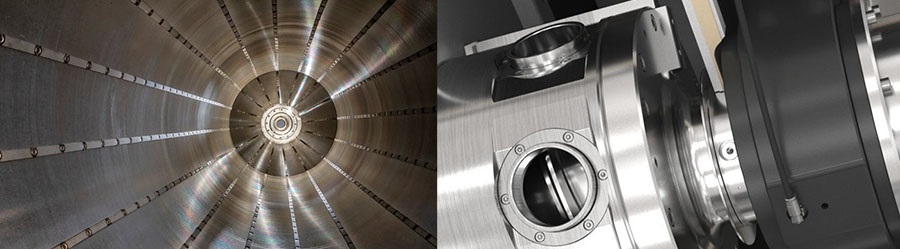
Decanter centrifuge key features

Decanter centrifuge applications
Used in a wide range of industries, decanter centrifuges are ideal for high material-volume processes, including:
Food and beverage industries
Oil and gas industries
Mining and minerals
Chemical processing
Agricultural field
Animal rendering and byproducts
Horizontal directional drilling or HDD

Contact us:
Company: Wuxi Dajiang Environmental Technology Co., Ltd. DAGYEE
Phone/WhatsApp:+8613961861780
Email: info@dagyee.com
Website: www.dagyee.com

Name: Ashely Li
Mobile:+8613961861780
Tel:+8613961861780
Whatsapp:8613961861780
Email:info@dagyee.com
Add:Room 302, Building 11-4, Hongyi Road, Xinan Town, Xinwu District, jiangsu Province, China