English
 Chinese
info@dagyee.com
+8613961861780

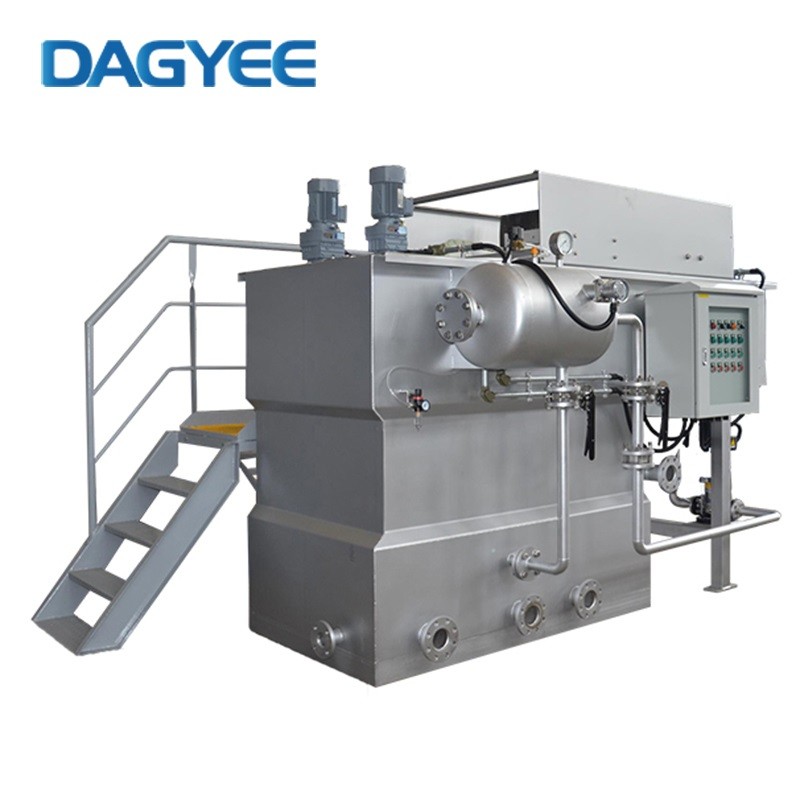
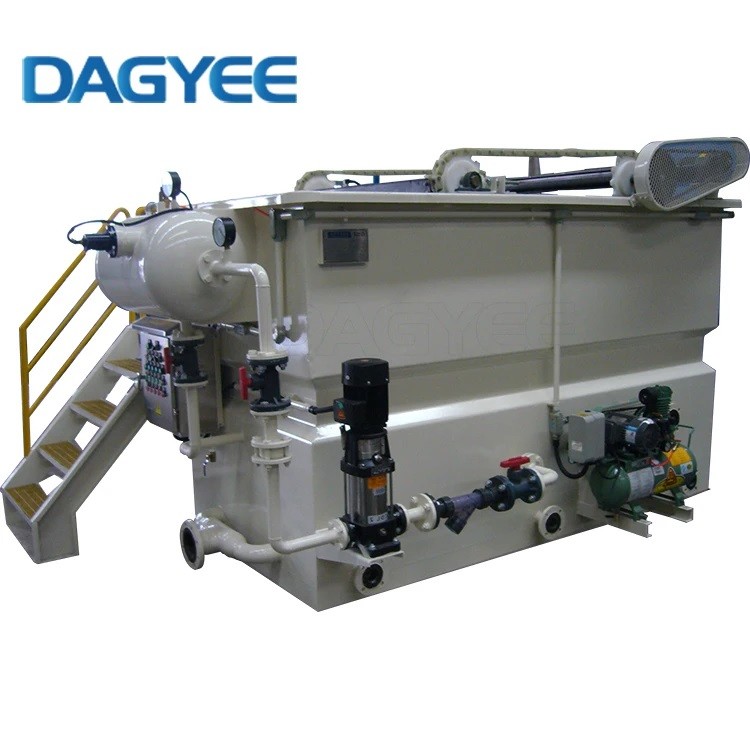
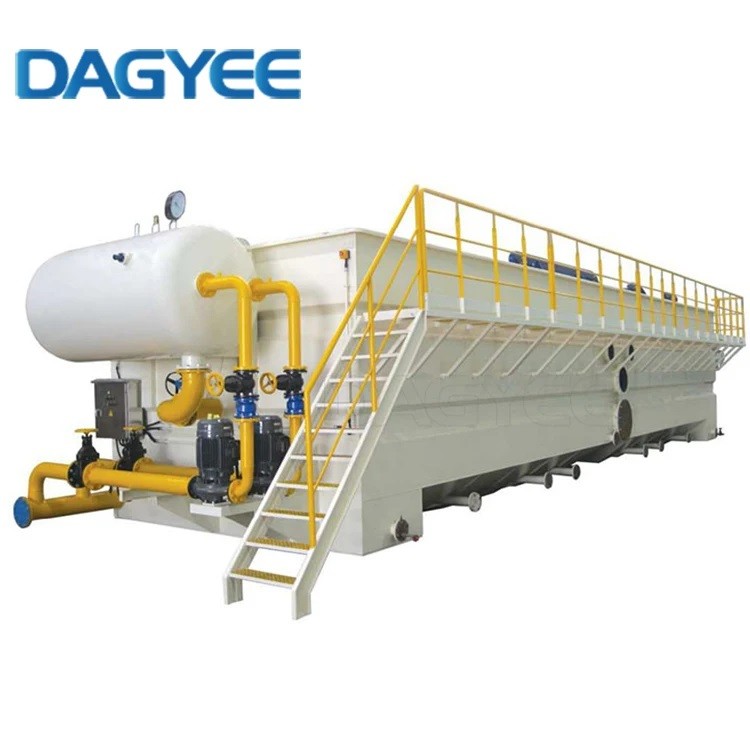
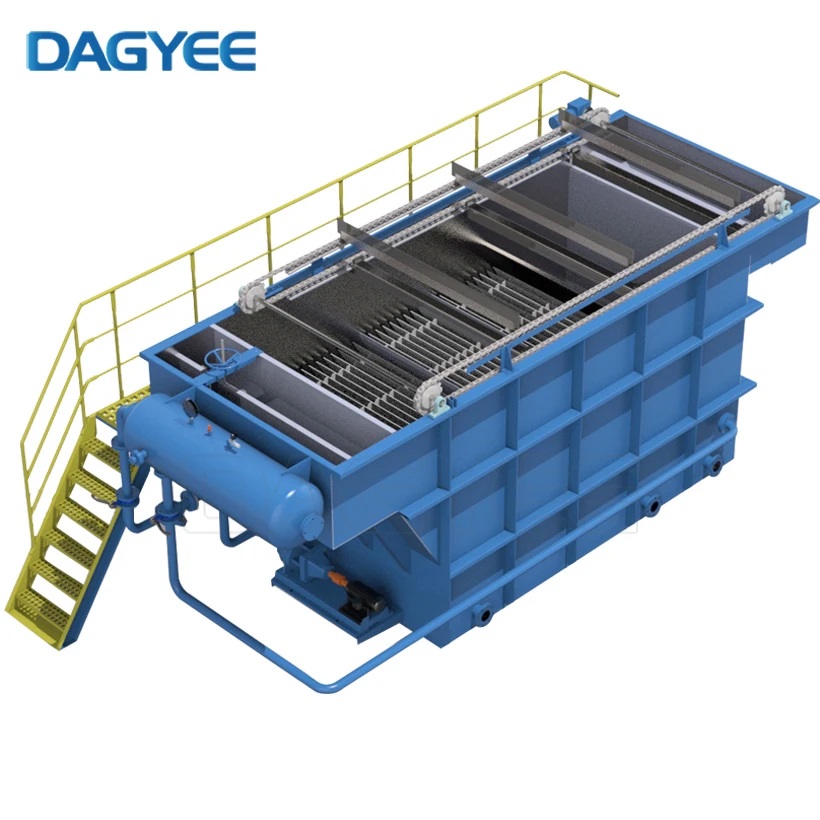
Dissolved air flotation description
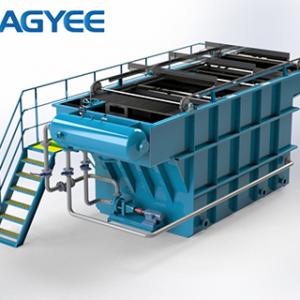
Dissolved-air flotation processes are designed to enhance the efficiency of solid-liquid separation in wastewater treatment. The core principle revolves around saturating the influent stream with air under high pressure, allowing a significant amount of air to dissolve in the water. Once this water is released into the flotation chamber, the pressure drops, causing the dissolved air to form microbubbles. These microbubbles exhibit a unique ability to attach to suspended particles, leading to effective removal of contaminants.
DAF systems are widely recognized for their ability to mitigate issues related to sedimentation and gravity thickening methods. Unlike traditional methods, which often rely heavily on the weight of solids to facilitate separation, dissolved-air flotation relies on the buoyancy provided by air bubbles. This shift in mechanism results in enhanced removal efficiencies, especially in low-density or finely suspended particles. Consequently, DAF has emerged as a preferred choice across various industries, particularly where space is limited or where rapid treatment times are necessary.
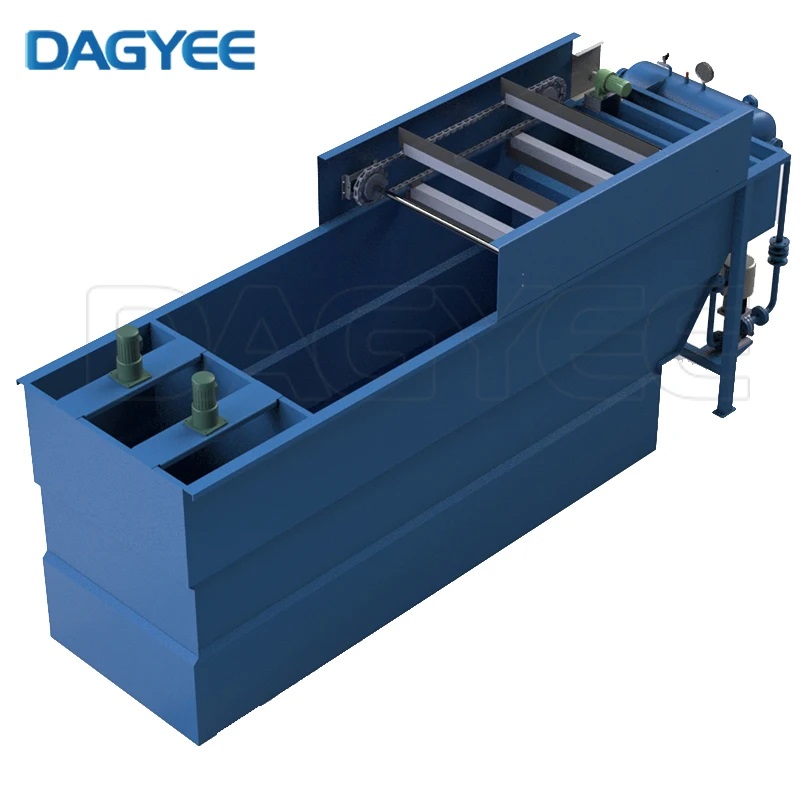
Dissolved air flotation principle
Aeration
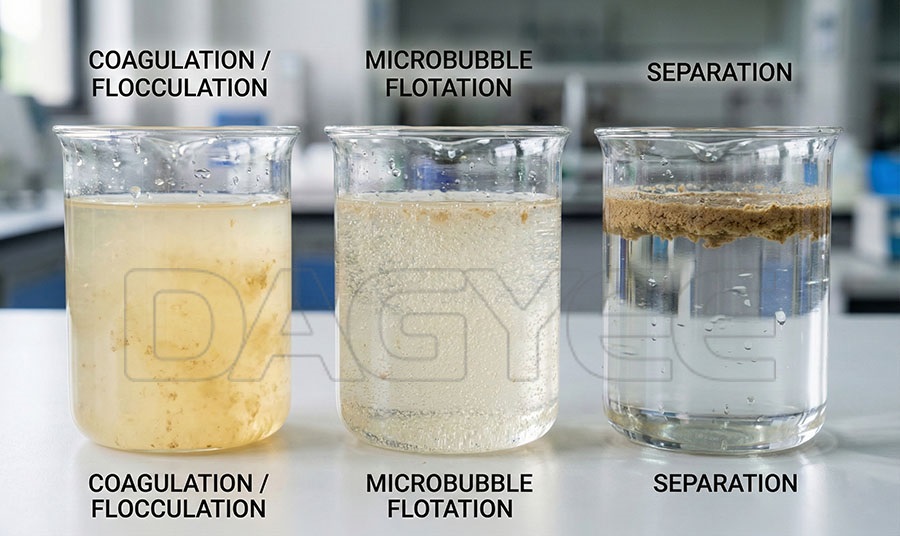
The DAF process begins with aeration, where air is dissolved into the wastewater under high pressure—typically between 3 to 5 bar. This pressurized air forms the foundation for the subsequent steps in the treatment process.
Mixing
Once the air is dissolved, the wastewater may be mixed with chemicals if needed. These chemicals aid in flocculation (the process of clumping particles together) and enhance sedimentation, making the separation of contaminants more effective.
Flotation
The air-rich wastewater then flows into a flotation tank where the pressure is suddenly reduced. This drop in pressure causes the dissolved air to form tiny bubbles within the wastewater.
Attachment
These microscopic bubbles attach to suspended solids, oils, and greases. The buoyant force of the bubbles causes these contaminants to rise to the surface of the tank.
Separation
At the surface, the accumulated contaminants are skimmed off by a skimmer. This effectively removes the impurities from the wastewater. The clarified water, which is now cleaner, is discharged from the bottom of the tank.
Clarification
The final step involves further clarification and, if necessary, disinfection of the treated water to ensure it meets regulatory standards for discharge or reuse.
The DAF water treatment system separates oils, solids, and other contaminants by dissolving air in the wastewater under pressure. Then, the air at atmospheric pressure in a flotation tank. DAF wastewater treatment is effective in releasing even low-density particles. These systems are widely used for water purification in various industrial applications.
Dissolved air flotation technical sheet
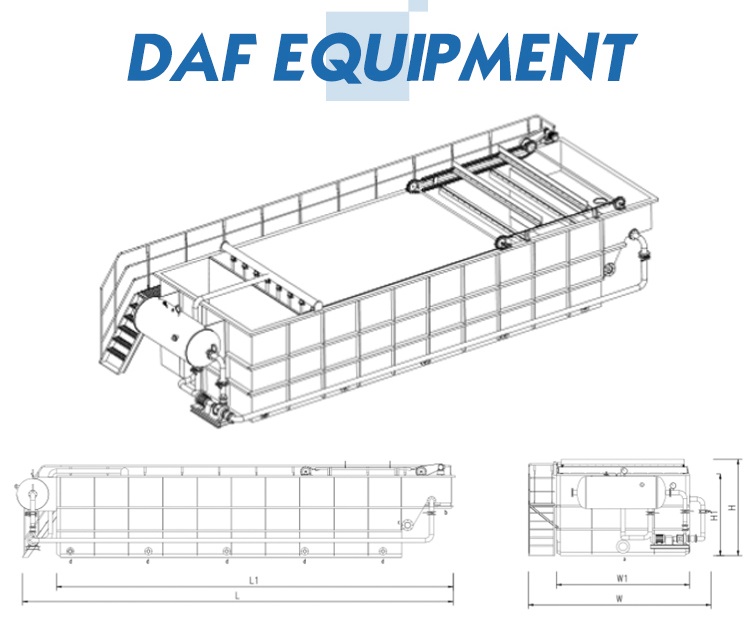
| DAF Model | Qm3/h | Piping Connections | Physical Dimensions(m) | Weight (Kg) | Operating Weight (Kg) |
|---|---|---|---|---|---|
| DAF-003 | 3 |
Inlet: DN50 Outlet: DN50 Sludge: DN100 Vent: DN100 |
L/L1: 3.7/2.8 W/W1: 2.4/1.16 H/H1: 2.2/1.7 |
1500 | 5000 |
| DAF-005 | 5 |
Inlet: DN80 Outlet: DN80 Sludge: DN100 Vent: DN80 |
L/L1: 4/3 W/W1: 2.4/1.16 H/H1: 2.2/1.7 |
1600 | 7000 |
| DAF-010 | 10 |
Inlet: DN100 Outlet: DN100 Sludge: DN100 Vent: DN100 |
L/L1: 4.65/3.8 W/W1: 2.7/1.36 H/H1: 2.4/1.9 |
2000 | 12000 |
| DAF-015 | 15 |
Inlet: DN125 Outlet: DN100 Sludge: DN150 Vent: DN100 |
L/L1: 5.6/4.5 W/W1: 2.9/1.66 H/H1: 2.5/2 |
2200 | 18000 |
| DAF-020 | 20 |
Inlet: DN150 Outlet: DN150 Sludge: DN150 Vent: DN100 |
L/L1: 5.9/4.8 W/W1: 3.2/1.96 H/H1: 2.5/2 |
3000 | 22000 |
| DAF-030 | 30 |
Inlet: DN150 Outlet: DN150 Sludge: DN150 Vent: DN100 |
L/L1: 6.8/5.5 W/W1: 3.2/2.16 H/H1: 2.7/2.2 |
3800 | 32000 |
| DAF-040 | 40 |
Inlet: DN200 Outlet: DN150 Sludge: DN150 Vent: DN100 |
L/L1: 8/6.7 W/W1: 3.6/2.6 H/H1: 2.7/2.2 |
5000 | 45000 |
| DAF-050 | 50 |
Inlet: DN200 Outlet: DN150 Sludge: DN150 Vent: DN100 |
L/L1: 8.4/7 W/W1: 3.6/2.6 H/H1: 2.7/2.2 |
5500 | 55000 |
| DAF-060 | 60 |
Inlet: DN250 Outlet: DN200 Sludge: DN150 Vent: DN100 |
L/L1: 9.9/8.4 W/W1: 3.8/2.8 H/H1: 2.9/2.4 |
6000 | 66000 |
| DAF-070 | 70 |
Inlet: DN250 Outlet: DN200 Sludge: DN150 Vent: DN100 |
L/L1: 10.4/9 W/W1: 3.8/2.8 H/H1: 2.9/2.4 |
6500 | 75000 |
| DAF-080 | 80 |
Inlet: DN250 Outlet: DN250 Sludge: DN150 Vent: DN100 |
L/L1: 10.8/9.4 W/W1: 4/3 H/H1: 2.9/2.4 |
7500 | 100000 |
| DAF-100 | 100 |
Inlet: DN300 Outlet: DN250 Sludge: DN150 Vent: DN100 |
L/L1: 12.1/10.6 W/W1: 4.2/3.2 H/H1: 2.9/2.4 |
9000 | 110000 |
| DAF-120 | 120 |
Inlet: DN300 Outlet: DN250 Sludge: DN150 Vent: DN100 |
L/L1: 12.5/11.4 W/W1: 4.4/3.4 H/H1: 2.9/2.4 |
10000 | 130000 |
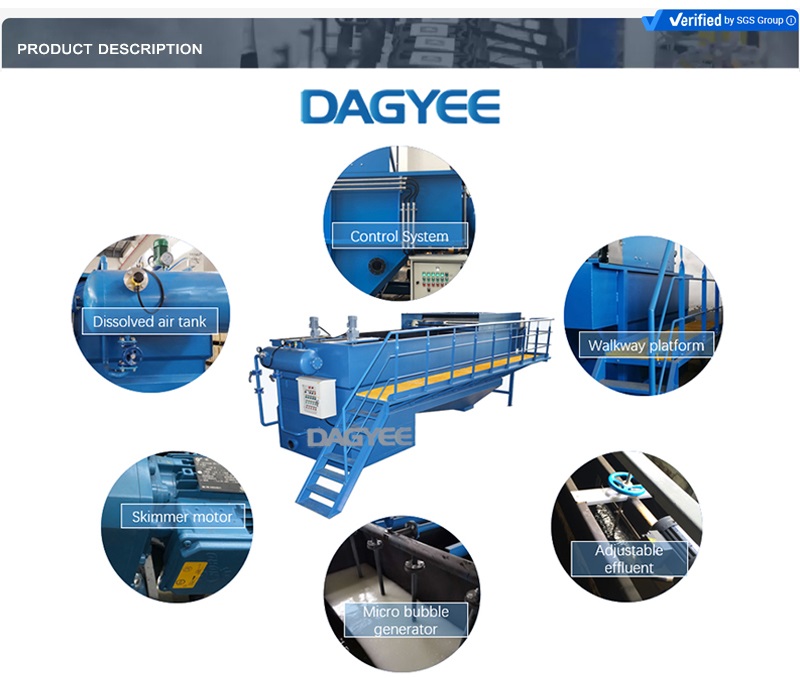
Dissolved air flotation process flow
Dissolved air flotation advantage
The effectiveness of DAF units lies in their ability to handle a variety of wastewater streams, making them indispensable across multiple industries.
Whether in industrial settings dealing with complex contaminants or municipal systems facing large volumes of urban runoff, DAF units prove their versatility and efficiency.
They are particularly renowned in industries such as food and beverage production, where they handle organic matter and fats with ease, and in the oil and gas sector, where the separation of hydrocarbons is critical.
Furthermore, the technology is adaptable, with configurations allowing for the introduction of various chemicals to optimize performance based on specific treatment needs.
Beyond their application flexibility, DAF units offer significant advantages including high removal efficiency, low operating costs, flexibility in operation, and a compact footprint.
This makes them a viable solution even for facilities with space constraints or those looking to upgrade their existing wastewater treatment infrastructure.
However, it’s important to note that the complexity of these systems often necessitates skilled operators to manage and maintain optimal performance.
Proper pre-treatment steps such as Coarse Screening, homogenization, sand removal, and coagulation-flocculation are also essential to ensure maximum efficiency and longevity of the DAF units.
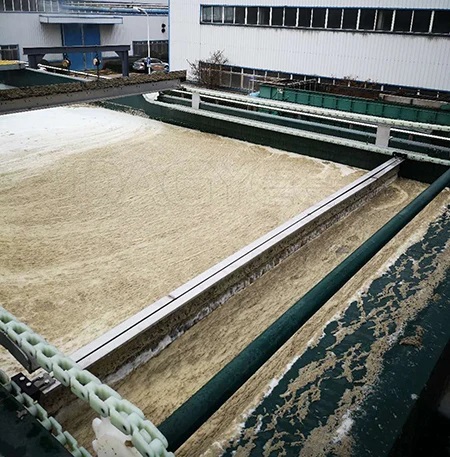
Dissolved air flotation feature
Typically, DAF is used to clarify wastewater from food processing plants, industrial laundries, oil refineries, paper mills, metal finishing, and many other niche industries so water is suitable for reuse or discharge to sewer.
Reduced Footprint
Lower Compliance Costs
High Efficiency
High Quality Treated Water
Increase Reuse Rates
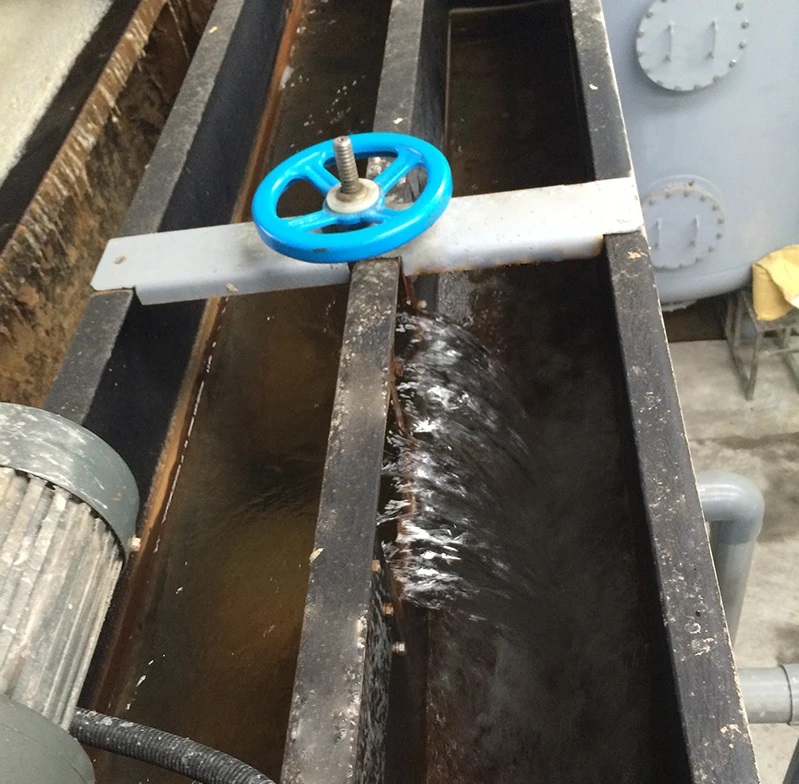
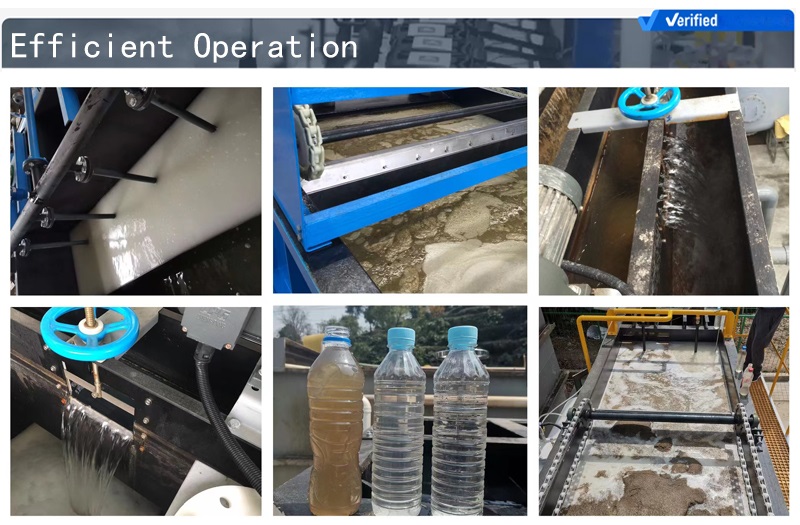
Dissolved air flotation application
Dissolved air flotation design is instrumental in effective water treatment. This process is also widely used in several industries and sectors, including but not limited to:
Removing particles and treating industrial wastewater effluents at oil refineries.
Water treatment processing for petrochemical and chemical plants.
Water filtration for fuel gas conditioning plants and paper mills.
Industrial facilities requiring wastewater treatment for daily protocols or project-related processes.
Name: Ashely Li
Mobile:+8613961861780
Tel:+8613961861780
Whatsapp:8613961861780
Email:info@dagyee.com
Add:Room 302, Building 11-4, Hongyi Road, Xinan Town, Xinwu District, jiangsu Province, China