English
 Chinese
info@dagyee.com
+8613961861780

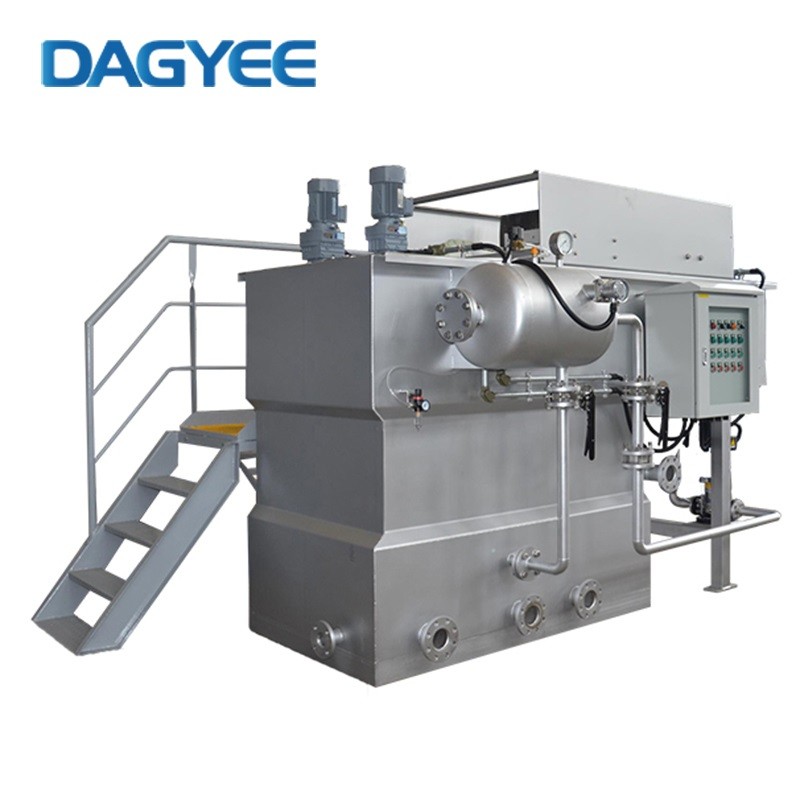
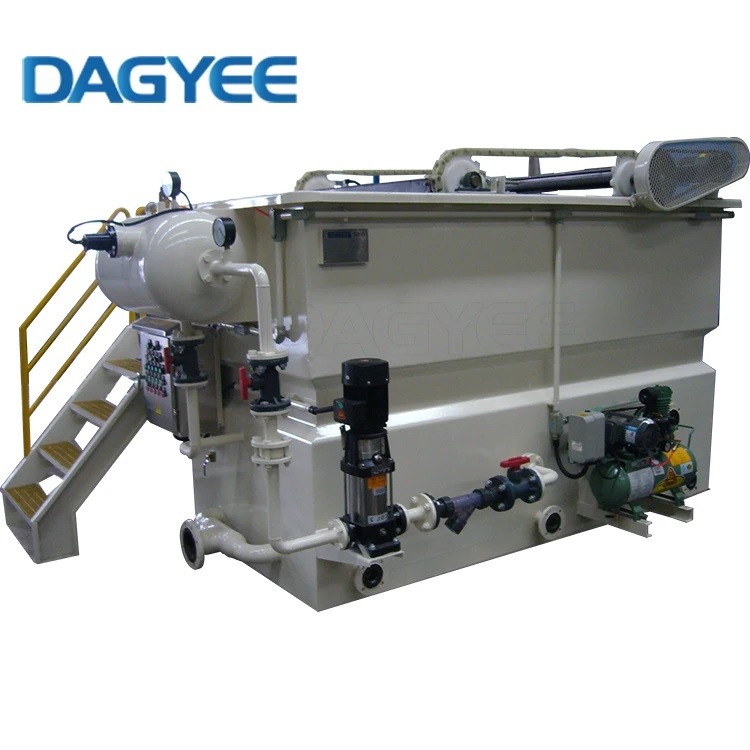
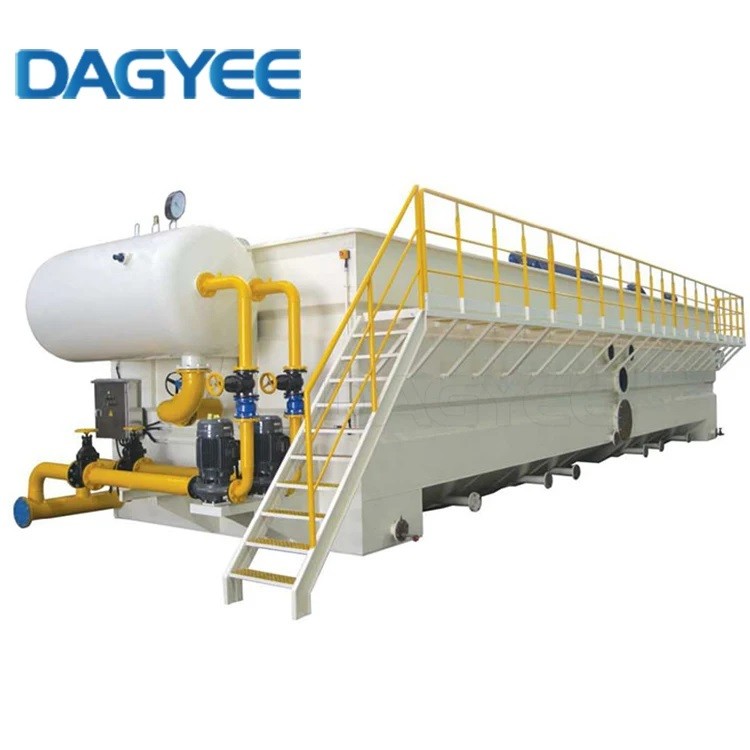
Dissolved air flotation description
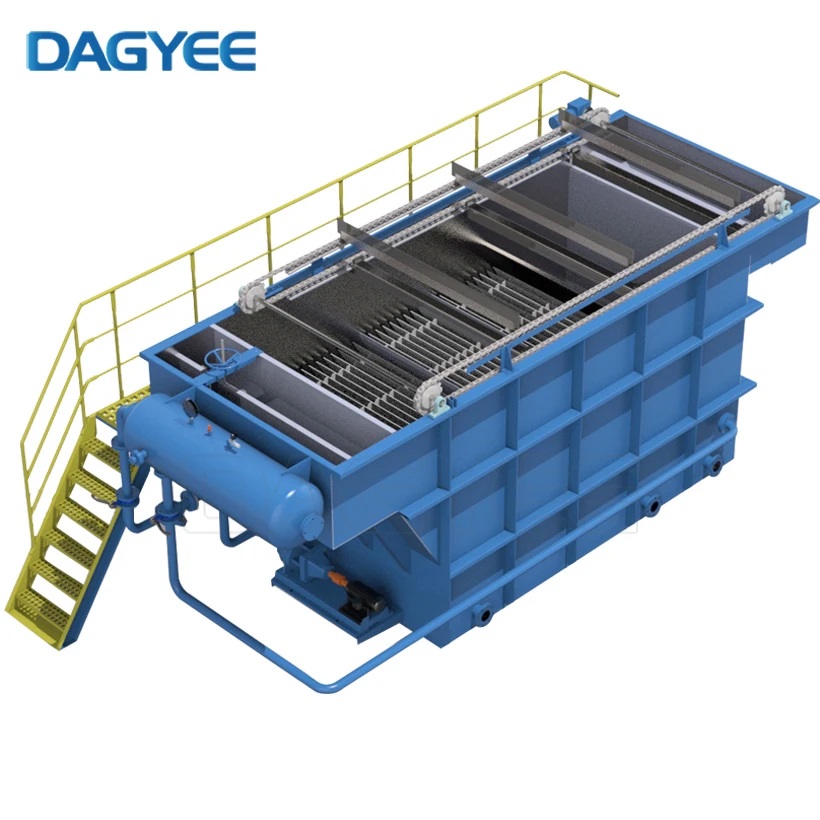
Dissolved-air flotation (DAF) is a specialized air flotation technique used predominantly in the treatment of wastewater and industrial effluents.
By utilizing the principle of buoyancy, DAF processes effectively separate solids from liquids, making the treatment process optimal for various applications.
The method operates on the fundamental concept of introducing fine air bubbles into the wastewater, which attach to suspended solids.
This attachment enables the solids to rise to the surface, resulting in the formation of a concentrated sludge layer, thus allowing for efficient water clarification.
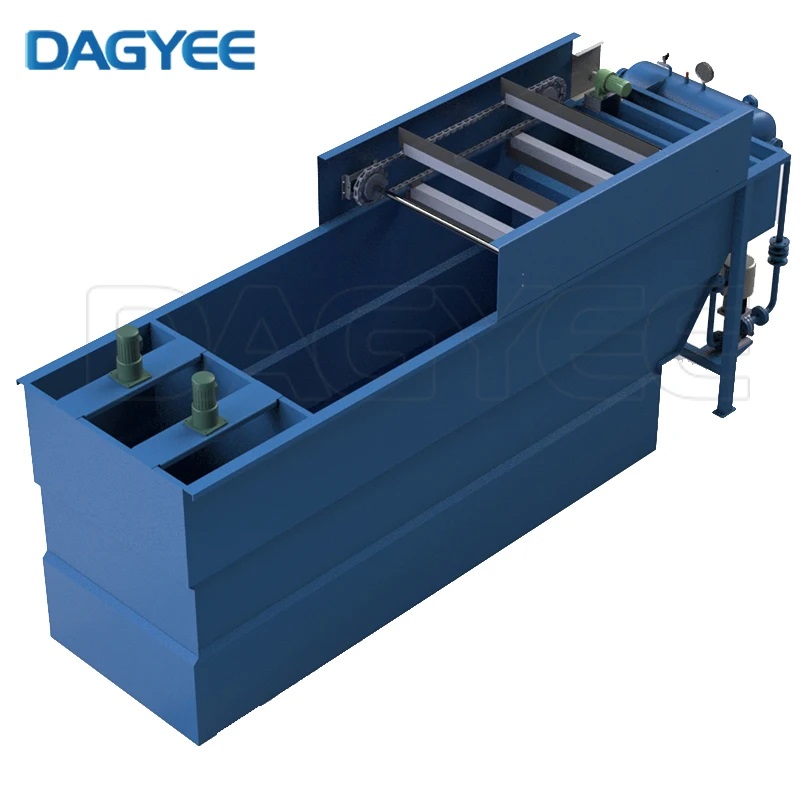
Dissolved air flotation principle
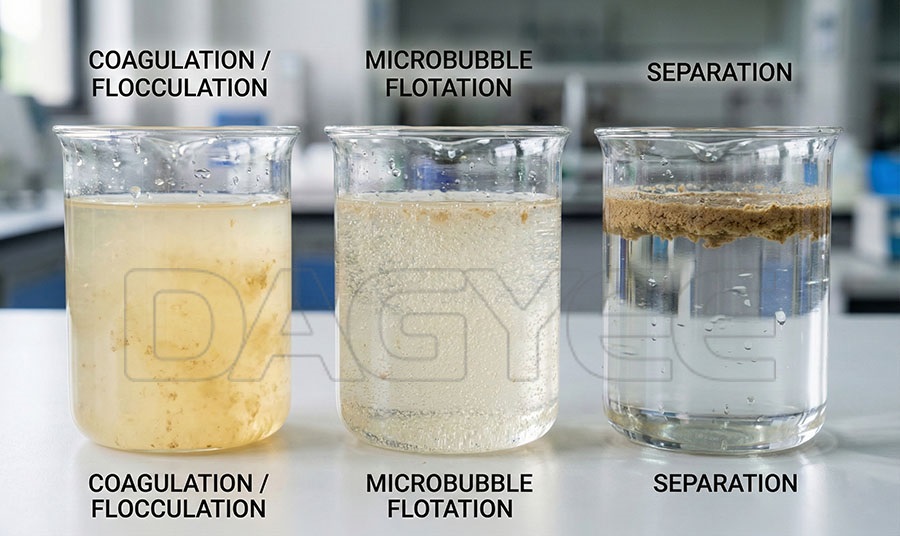
Dissolved air flotation (DAF) is a solids separation process, similar to plain sedimentation. The force that drives DAF is gravity, and the force that retards the process is hydrodynamic drag. Dissolved air flotation involves the use of pressure to dissolve more air into wastewater than can be dissolved under normal atmospheric pressure and then releasing the pressure. The “dissolved” air, now in a supersaturated state, will come out of solution, or “precipitate,” in the form of tiny bubbles. As these tiny bubbles form, they become attached to solid particles within the wastewater, driven by their hydrophobic nature. When sufficient air bubbles attach to a particle to make the conglomerate (particle plus air bubbles) lighter than water (specific gravity less than 1.0), the particle will be carried to the water surface.
Dissolved air flotation technical sheet
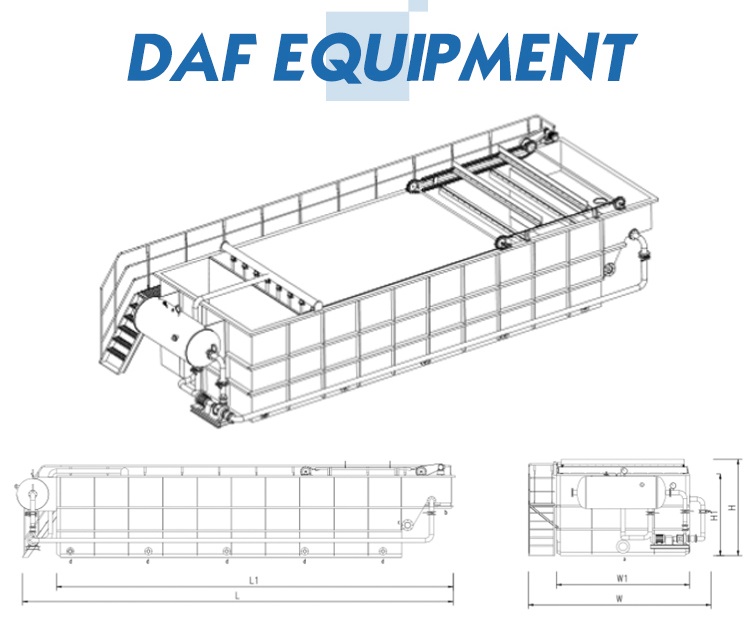
| DAF Model | Qm3/h | Piping Connections | Physical Dimensions(m) | Weight (Kg) | Operating Weight (Kg) |
|---|---|---|---|---|---|
| DAF-003 | 3 |
Inlet: DN50 Outlet: DN50 Sludge: DN100 Vent: DN100 |
L/L1: 3.7/2.8 W/W1: 2.4/1.16 H/H1: 2.2/1.7 |
1500 | 5000 |
| DAF-005 | 5 |
Inlet: DN80 Outlet: DN80 Sludge: DN100 Vent: DN80 |
L/L1: 4/3 W/W1: 2.4/1.16 H/H1: 2.2/1.7 |
1600 | 7000 |
| DAF-010 | 10 |
Inlet: DN100 Outlet: DN100 Sludge: DN100 Vent: DN100 |
L/L1: 4.65/3.8 W/W1: 2.7/1.36 H/H1: 2.4/1.9 |
2000 | 12000 |
| DAF-015 | 15 |
Inlet: DN125 Outlet: DN100 Sludge: DN150 Vent: DN100 |
L/L1: 5.6/4.5 W/W1: 2.9/1.66 H/H1: 2.5/2 |
2200 | 18000 |
| DAF-020 | 20 |
Inlet: DN150 Outlet: DN150 Sludge: DN150 Vent: DN100 |
L/L1: 5.9/4.8 W/W1: 3.2/1.96 H/H1: 2.5/2 |
3000 | 22000 |
| DAF-030 | 30 |
Inlet: DN150 Outlet: DN150 Sludge: DN150 Vent: DN100 |
L/L1: 6.8/5.5 W/W1: 3.2/2.16 H/H1: 2.7/2.2 |
3800 | 32000 |
| DAF-040 | 40 |
Inlet: DN200 Outlet: DN150 Sludge: DN150 Vent: DN100 |
L/L1: 8/6.7 W/W1: 3.6/2.6 H/H1: 2.7/2.2 |
5000 | 45000 |
| DAF-050 | 50 |
Inlet: DN200 Outlet: DN150 Sludge: DN150 Vent: DN100 |
L/L1: 8.4/7 W/W1: 3.6/2.6 H/H1: 2.7/2.2 |
5500 | 55000 |
| DAF-060 | 60 |
Inlet: DN250 Outlet: DN200 Sludge: DN150 Vent: DN100 |
L/L1: 9.9/8.4 W/W1: 3.8/2.8 H/H1: 2.9/2.4 |
6000 | 66000 |
| DAF-070 | 70 |
Inlet: DN250 Outlet: DN200 Sludge: DN150 Vent: DN100 |
L/L1: 10.4/9 W/W1: 3.8/2.8 H/H1: 2.9/2.4 |
6500 | 75000 |
| DAF-080 | 80 |
Inlet: DN250 Outlet: DN250 Sludge: DN150 Vent: DN100 |
L/L1: 10.8/9.4 W/W1: 4/3 H/H1: 2.9/2.4 |
7500 | 100000 |
| DAF-100 | 100 |
Inlet: DN300 Outlet: DN250 Sludge: DN150 Vent: DN100 |
L/L1: 12.1/10.6 W/W1: 4.2/3.2 H/H1: 2.9/2.4 |
9000 | 110000 |
| DAF-120 | 120 |
Inlet: DN300 Outlet: DN250 Sludge: DN150 Vent: DN100 |
L/L1: 12.5/11.4 W/W1: 4.4/3.4 H/H1: 2.9/2.4 |
10000 | 130000 |
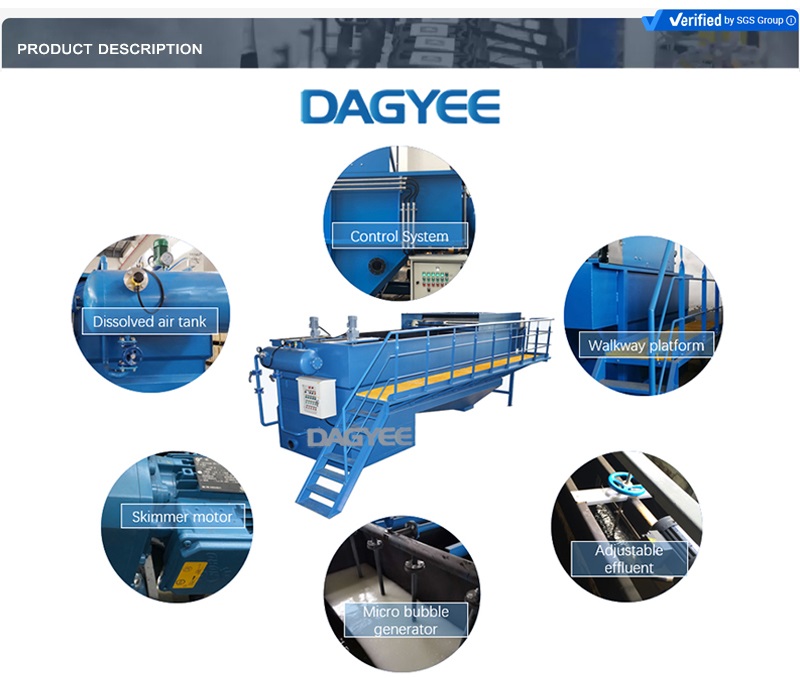
Dissolved air flotation process flow
Dissolved air flotation advantage
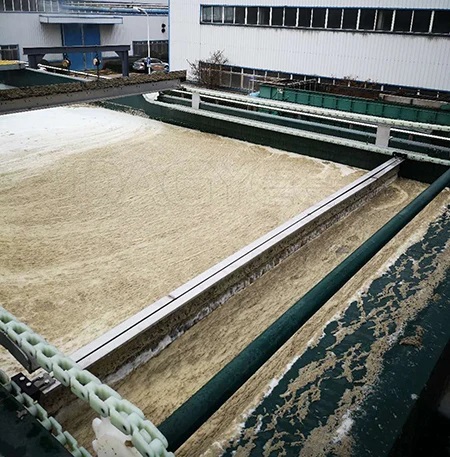
DAF technology boasts an impressive removal efficiency, often exceeding 90% for suspended solids. This makes it a robust choice for industrial and municipal applications where high cleanliness standards are required. Additionally, its ability to adapt to varying wastewater characteristics ensures reliable performance across different scenarios.
The compact design of DAF units is another significant advantage. Compared to traditional gravity clarification, DAF systems take up less space, making them suitable for facilities with limited footprints. The ability to handle bulking solids and produce higher sludge solids content further distinguishes DAF technology in wastewater treatment.
Moreover, the multitude of applications, ranging from oil and grease removal to biosolids thickening, underlines the flexibility of DAF units. They prove effective in various treatment goals such as product recovery, pretreatment for sewer discharge limits, and polishing of biological treatment effluent.
Dissolved air flotation feature
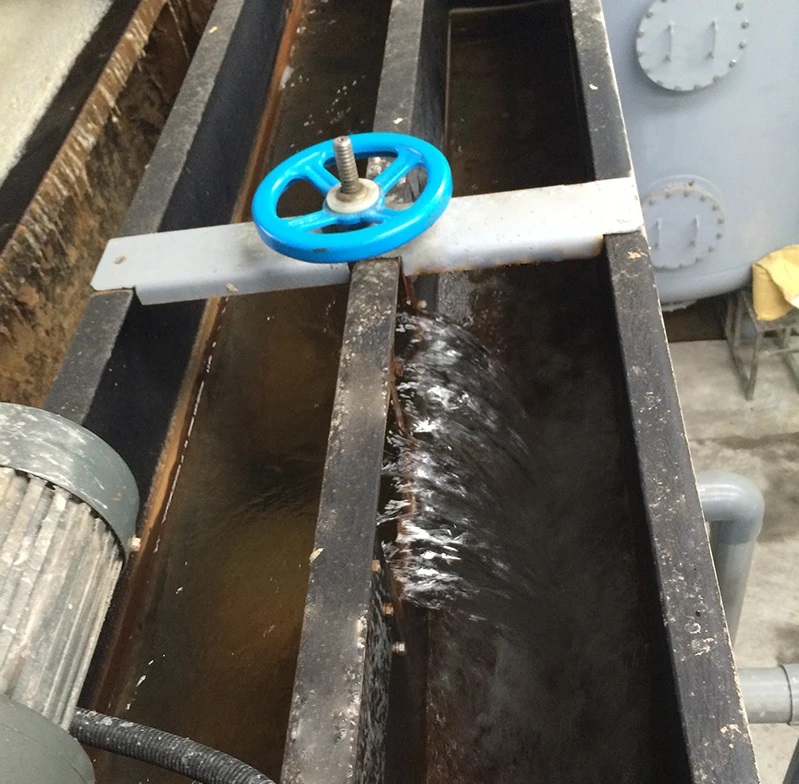
The environmental impact of DAF systems is generally positive, particularly in minimizing water pollution.
By enabling the removal of over 90% of harmful components from industrial effluents, DAF systems contribute to cleaner water bodies and reduced environmental pollution.
Moreover, reduced chemical usage and advancements in energy-efficient designs further enhance the sustainability of DAF technology.
Dissolved Air Flotation systems have solidified their place as an indispensable tool in modern water treatment processes.
Their ability to efficiently remove suspended solids from diverse wastewater streams makes them particularly valuable across industries with stringent water quality requirements.
As technological innovations continue to evolve, DAF systems are poised to become even more cost-effective and environmentally sustainable, bolstering their role in the global effort to safeguard water resources.
Dissolved air flotation application
Industrial Wastewater Treatment
In an industrial setting, the main challenge often revolves around the presence of suspended solids, oils, and greases in the wastewater.
Imagine a large-scale manufacturing plant dealing with significant amounts of these pollutants.
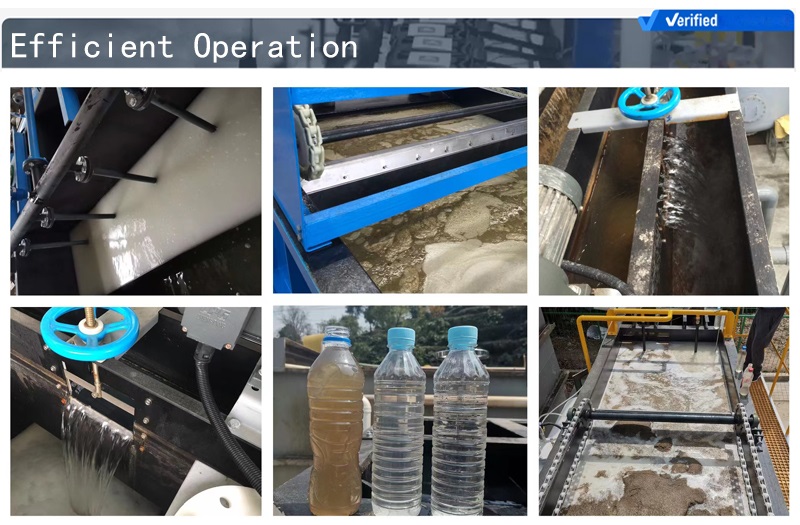
By implementing a Dissolved Air Flotation (DAF) system, the plant was able to achieve an impressive reduction in Total Suspended Solids (TSS) and Chemical Oxygen Demand (COD), leading to a cleaner effluent, which met regulatory standards and reduced environmental impact.
Municipal Wastewater Application
Municipalities face the mammoth task of treating vast volumes of wastewater from households and businesses.
In one city, DAF units were employed as a pre-treatment step before biological treatment.
This approach allowed the city to handle variations in influent quality more effectively.
The result? Enhanced performance of secondary treatment processes, reduced sludge volumes, and improved overall plant efficiency.
Residents benefited from cleaner water and reduced operational costs for the municipality.
Sludge Thickening in a Food Processing Plant
Food processing plants generate high levels of organic waste and sludge.
In one such facility, a DAF system was installed specifically for sludge thickening.
By removing excess biological sludge efficiently, the plant managed to significantly reduce the volume of sludge that required further treatment.
This not only lowered disposal costs but also enabled the recovery of water for reuse within the plant, promoting sustainability.
Name: Ashely Li
Mobile:+8613961861780
Tel:+8613961861780
Whatsapp:8613961861780
Email:info@dagyee.com
Add:Room 302, Building 11-4, Hongyi Road, Xinan Town, Xinwu District, jiangsu Province, China