English
 Chinese

info@dagyee.com
+8613961861780

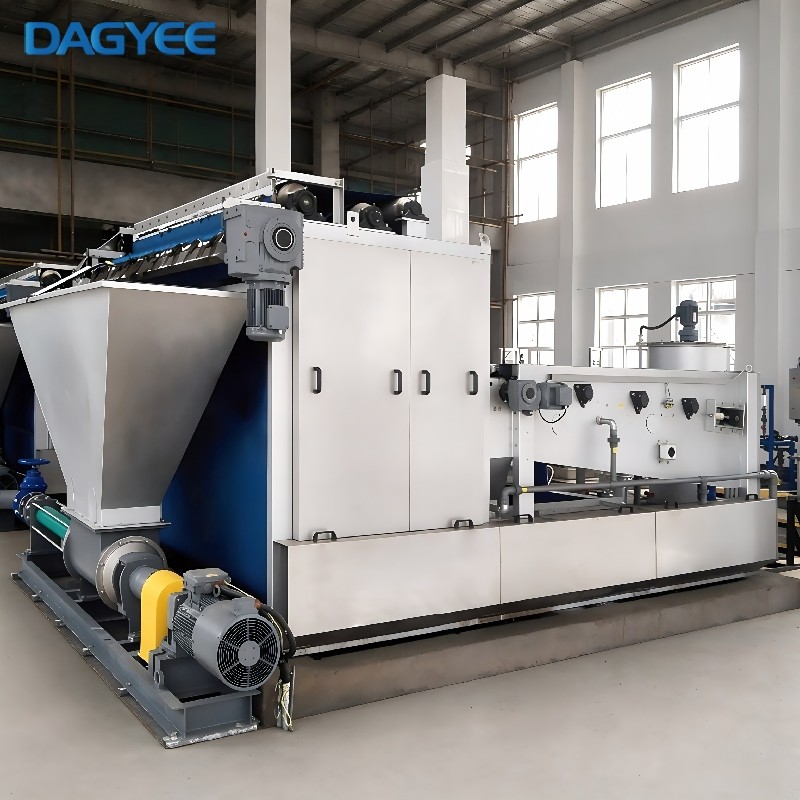
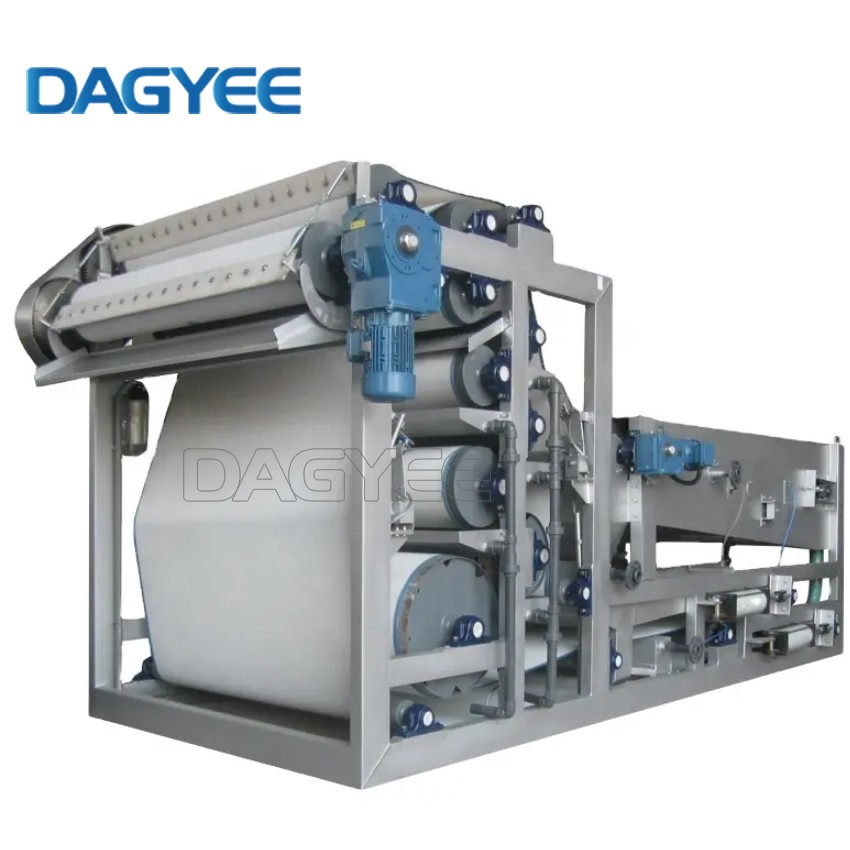
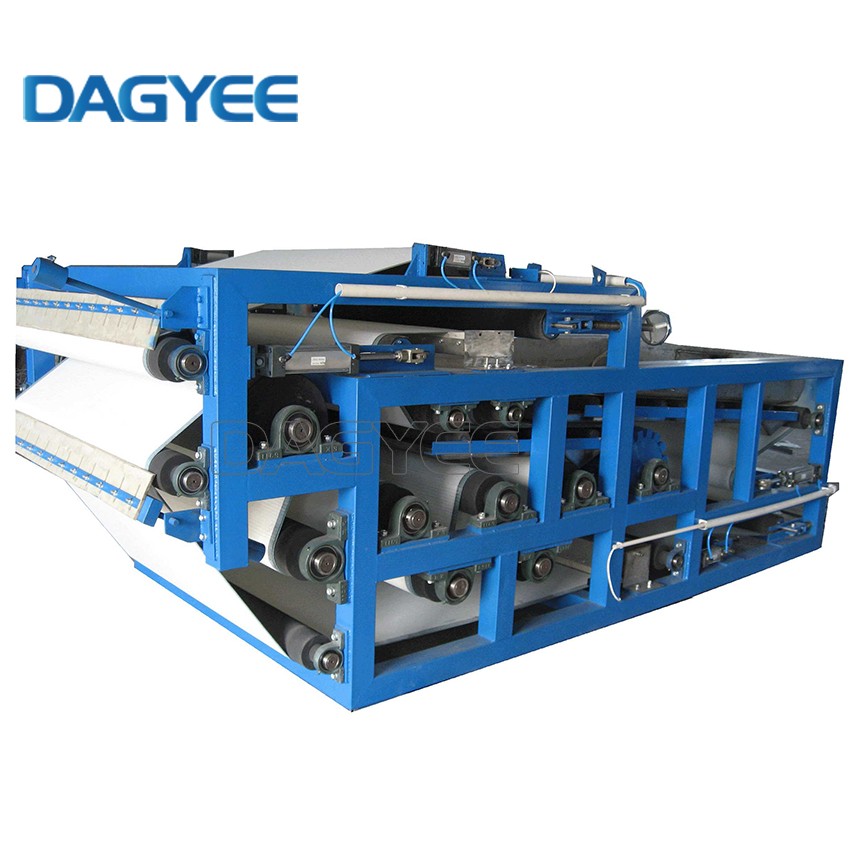
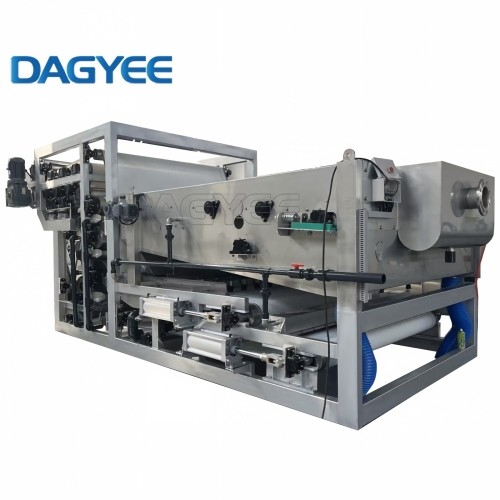
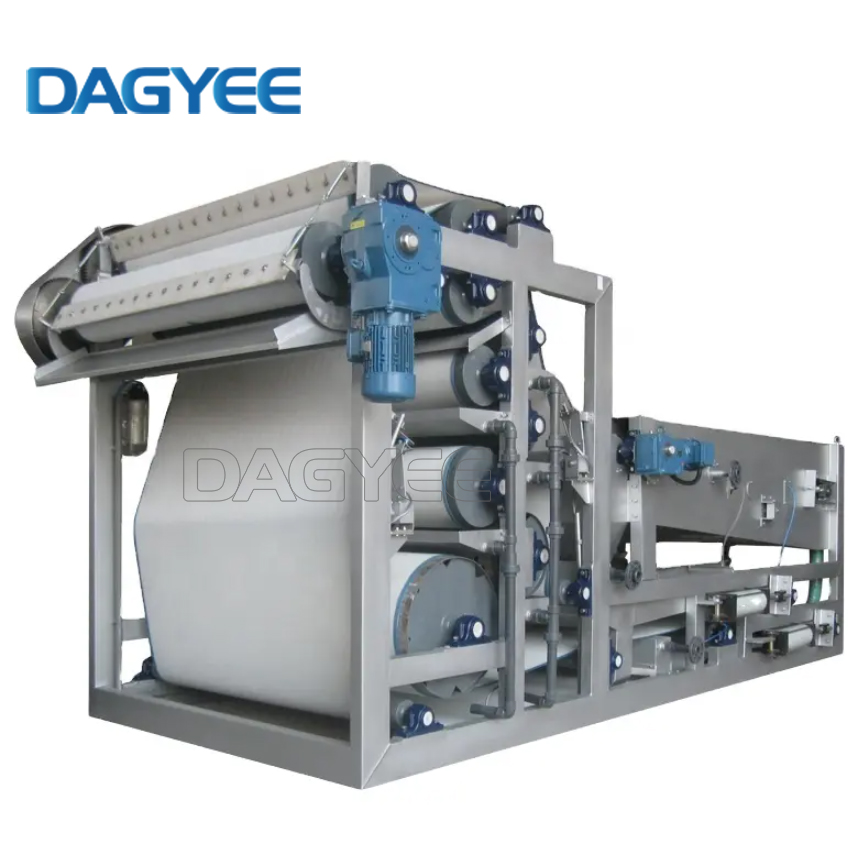
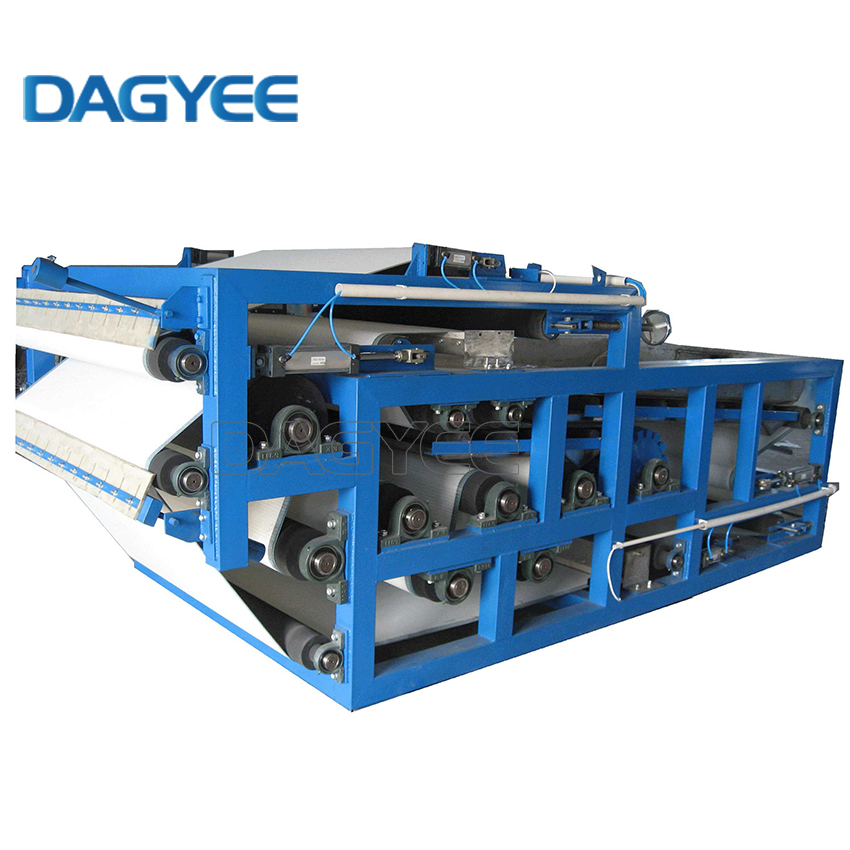
A belt filter press (BFP) provides sludge dewatering by pressing the sludge to force the water through a permeable medium. The process produces a cake (the dewatered product) having a dry solids (DS) content of 30% or more in the case of primary sludge. This is to be distinguished from the lower-energy gravity belt thickener process which achieves a maximum DS content of ~10%.
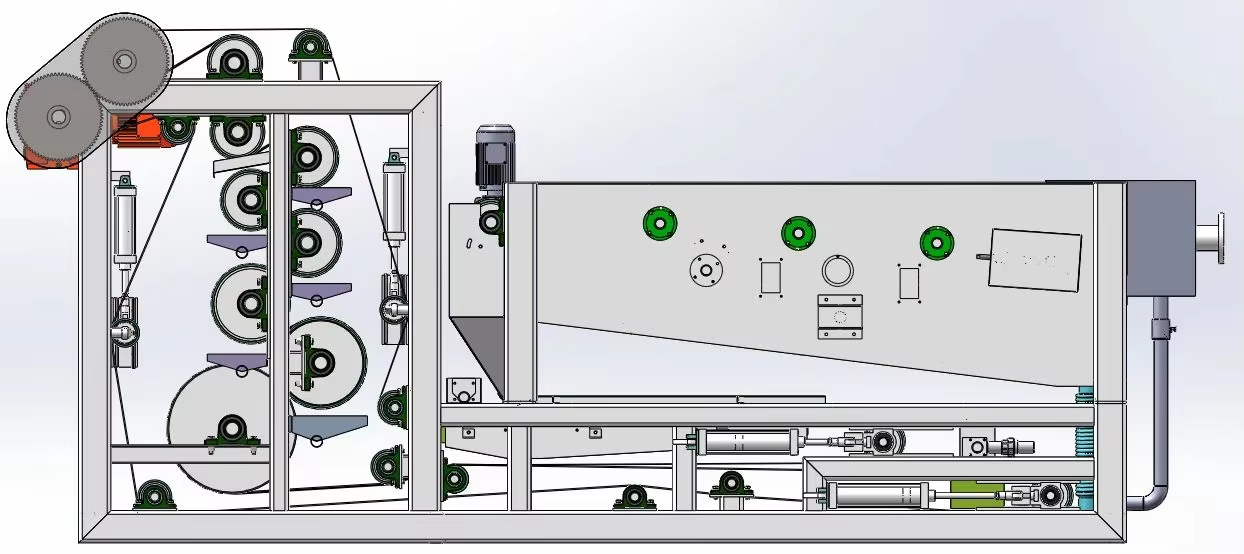
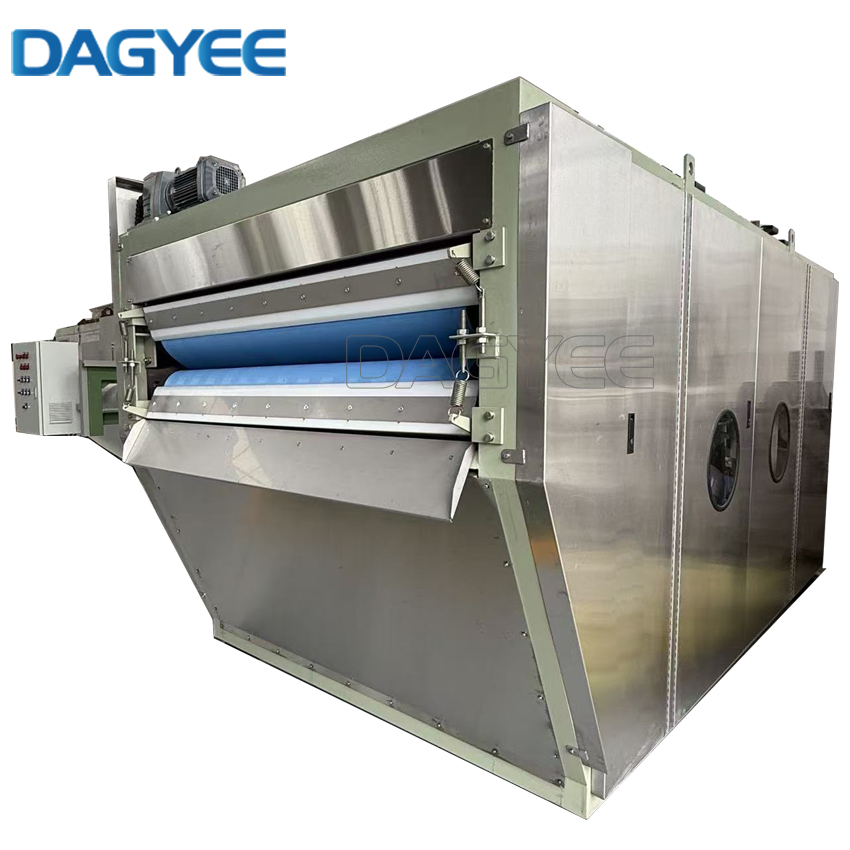
A BFP combines drainage and mechanical pressure sequentially to remove water. The equipment normally comprises 2−3 recirculating belts, with two belts combining at some point to compress the sludge and squeeze water from it.
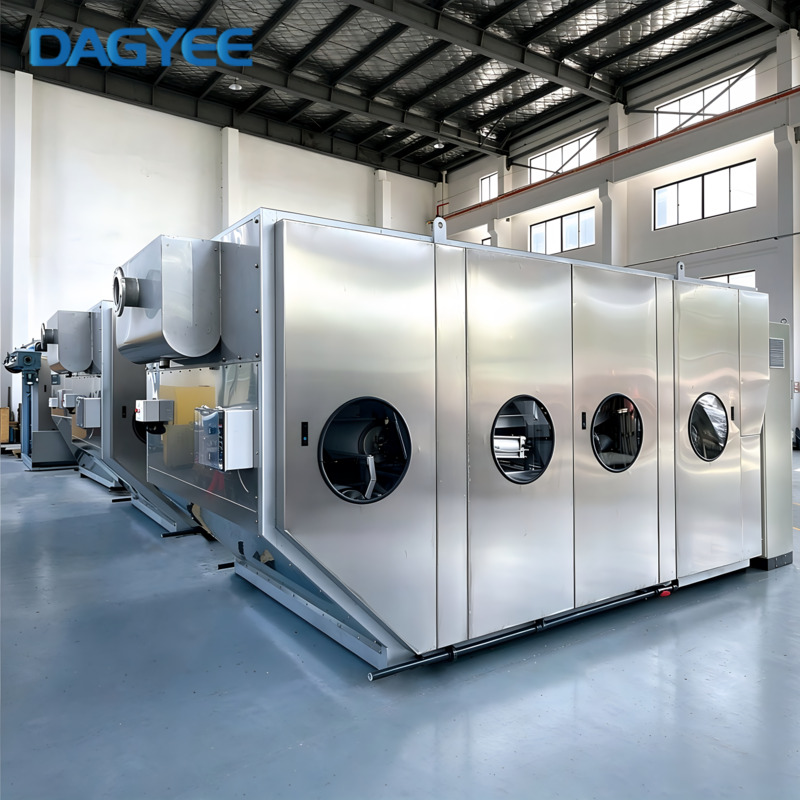
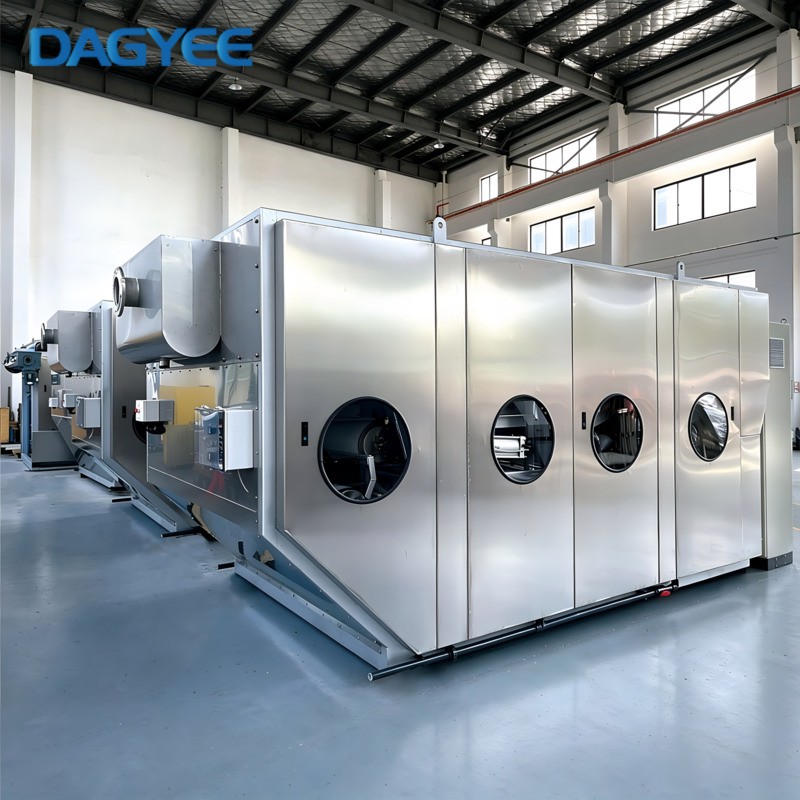
For projects with dewatering-room environment requirements and reduced odour load; economical for small plants.
Good adaptability to unconcentrated biological activated sludge; tolerant of concentration and hydraulic load fluctuations; compact structure.
Fully enclosed external doors with windows; the top cover simplifies odour extraction ducting and piping layout and reduces odorous air volume.
Smaller models are more economical and flexible for small wastewater treatment plants.
7–11 effective press rollers, configurable.
Belt filter technical sheet
| Sludge Kinds | Input Concentration % | Capacity m³/h | DS Capacity kg/h | Moisture of Cake % | PAM Consumption %(DP/DS) |
| Unconcentrated Aerobic Sludge | 0.5~1.5 | 15~30 | 150~300 | ~80 (+2) | 2~5 |
| Concentrated Aerobic Sludge | 2~4 | 6~12 | 200~300 | ~80 (+2) | 2~5 |
| Digested Sludge | 3~6 | 7~15 | 300~400 | <80 | 2~5 |
| Unconcentrated Primary Sludge | 0.8~2.0 | 18~35 | 300~400 | <80 | 2~5 |
| Concentrated Primary Sludge | 3~5 | 6~12 | 300~400 | <80 | 2~5 |
| Paper-making Activated Sludge | 0.5~2.5 | 15~35 | 200~400 | <78 | 3~7 |
| Printing and Dyeing Mixed Sludge | 1~3 | 10~25 | 180~350 | 75~78 | 3~10 |
|
Model
|
DYF1000 |
DYF1500 |
DYF2000 |
DYF2500 |
|
Belt width (mm) |
1000 |
1500 |
2000 |
2500 |
|
Belt speed (m/min) |
Thickener 4~20; Press 1.3~6.5 |
Thickener 4~20; Press 1.3~6.5 |
Thickener 4~20; Press 1.3~6.5 |
Thickener 4~20; Press 1.3~6.5 |
|
Driving power (kW) |
0.75+1.1 |
0.75+1.5 |
0.75+2.2 |
1.1+2.2 |
|
Washing water quantity (m³/h) |
8~12 |
12~18 |
16~24 |
20~30 |
|
Washing pressure (MPa) |
~0.6 |
~0.6 |
~0.6 |
~0.6 |
|
Net weight (kg) |
4000 |
4500 |
6500 |
7800 |
|
Operating weight (kg) |
4300 |
5000 |
7000 |
8500 |
|
Overall dimension (L×B×H) |
3890×2020×2085 |
3890×2020×2085 |
4780×2575×2590 |
4780×3575×2590 |
Belt filter press applications
The belt filter is mainly used for dewatering of sludge and slurry and juice extraction from apples, pears and other fruits, as well as grapes for winemaking, etc. Belt filters are used both municipally and industrially in a range of areas including urban sewage and wastewater treatment, metallurgy and mining, steel plants, coal plants, breweries, dyeing, tanneries, as well as chemical and paper factories.
Contact Us for a Consultation

Name: Ashely Li
Mobile:+8613961861780
Tel:+8613961861780
Whatsapp:8613961861780
Email:info@dagyee.com
Add:Room 302, Building 11-4, Hongyi Road, Xinan Town, Xinwu District, jiangsu Province, China