English
 Chinese
info@dagyee.com
+8613961861780



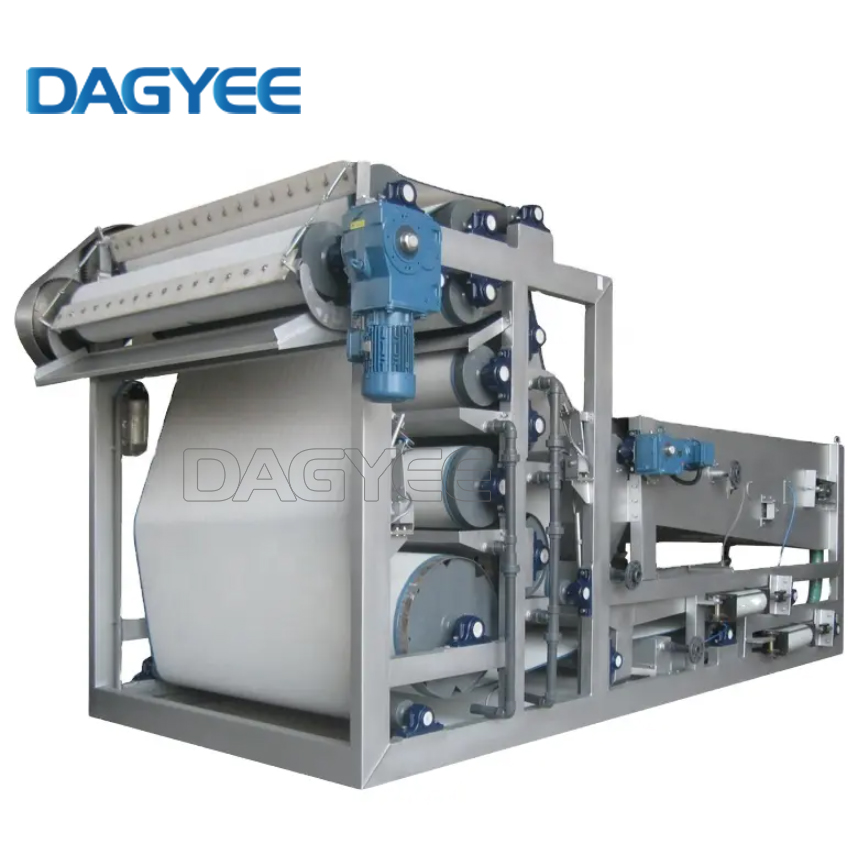
A belt filter press (BFP) provides sludge dewatering by pressing the sludge to force the water through a permeable medium. The process produces a cake (the dewatered product) having a dry solids (DS) content of 30% or more in the case of primary sludge. This is to be distinguished from the lower-energy gravity belt thickener process which achieves a maximum DS content of ~10%.
A BFP combines drainage and mechanical pressure sequentially to remove water. The equipment normally comprises 2−3 recirculating belts, with two belts combining at some point to compress the sludge and squeeze water from it.
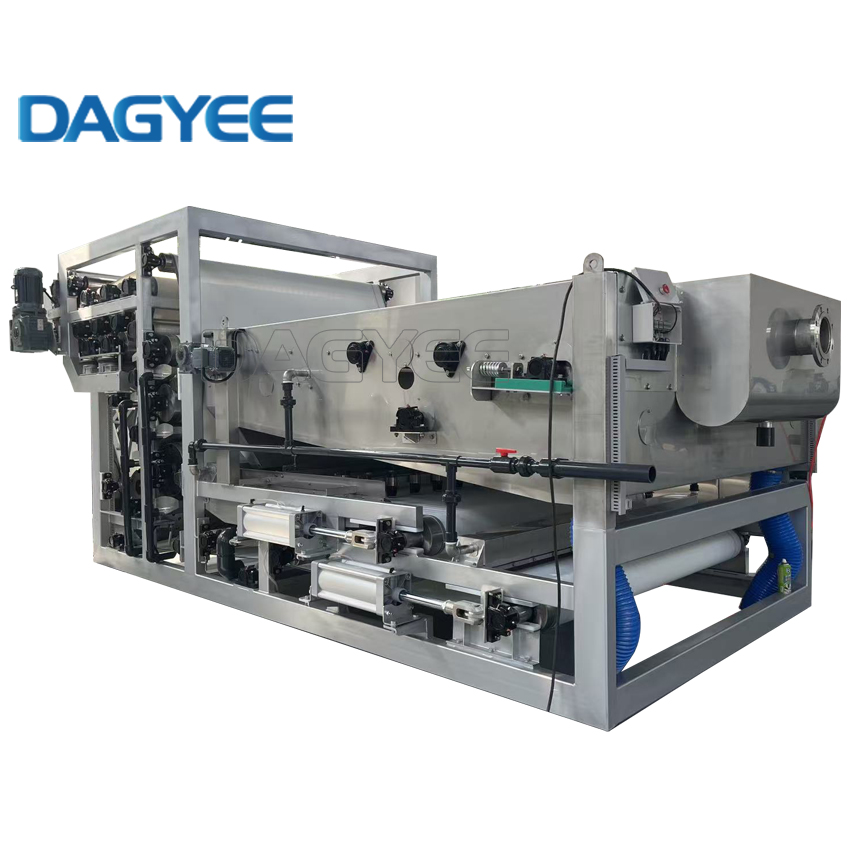
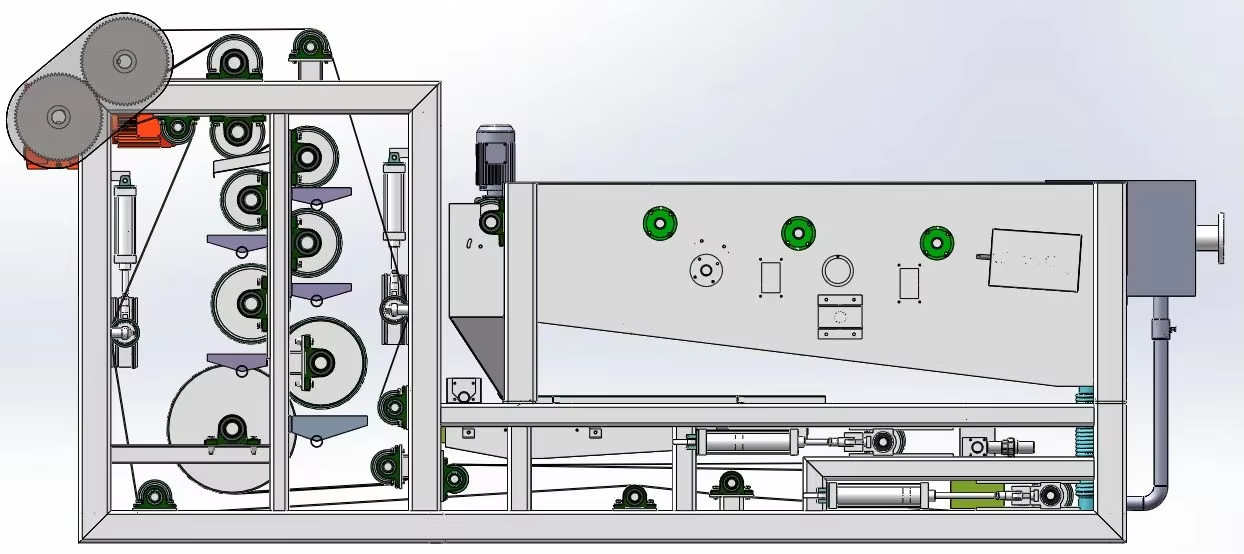
Many belt filter press technologies contain a second pressure zone comprising a series of rollers through which the two belts pass with the sludge solids retained between them. The rollers in this high pressure zone apply tensioning (i.e. stretching) to the belts, exerting both shearing and compressive forces on the sludge which further release more water.
Some BFP technologies are based on a three-belt system, where the gravity belt is independent of the two pressurising belts. This allows the recirculation rate for the thickening operation to be separately adjusted from the dewatering operation.
In common with the gravity belt thickener, the belts are subject to cleaning with water spray to limit the plugging of the filter belt pores. The waste washwater is combined with the filtrate.
The overall performance of the BFP is dependent on the feed sludge source and characteristics and the dosing conditions. As with all other thickening and dewatering technologies, primary sludges – both raw and anaerobically digested – are more readily filtered than waste activated sludge (WAS).
Belt filter technical sheet
| Sludge Kinds | Input Concentration % | Capacity m³/h | DS Capacity kg/h | Moisture of Cake % | PAM Consumption %(DP/DS) |
| Unconcentrated Aerobic Sludge | 0.5~1.5 | 15~30 | 150~300 | ~80 (+2) | 2~5 |
| Concentrated Aerobic Sludge | 2~4 | 6~12 | 200~300 | ~80 (+2) | 2~5 |
| Digested Sludge | 3~6 | 7~15 | 300~400 | <80 | 2~5 |
| Unconcentrated Primary Sludge | 0.8~2.0 | 18~35 | 300~400 | <80 | 2~5 |
| Concentrated Primary Sludge | 3~5 | 6~12 | 300~400 | <80 | 2~5 |
| Paper-making Activated Sludge | 0.5~2.5 | 15~35 | 200~400 | <78 | 3~7 |
| Printing and Dyeing Mixed Sludge | 1~3 | 10~25 | 180~350 | 75~78 | 3~10 |
| Model | Belt Width | Sludge Concentration | Outlet Concentration | Capacity | Power |
| DNT-1000 | 1000mm | 2-4% | 15-25% | 6-12 | 1.49kW |
| DNT-1500 | 1500mm | 2-4% | 15-25% | 12-15 | 2.05kW |
| DNT-2000 | 2000mm | 2-4% | 15-25% | 15-25 | 2.6kW |
| DNT-2500 | 2500mm | 2-4% | 15-25% | 35-50 |
4.1kW |
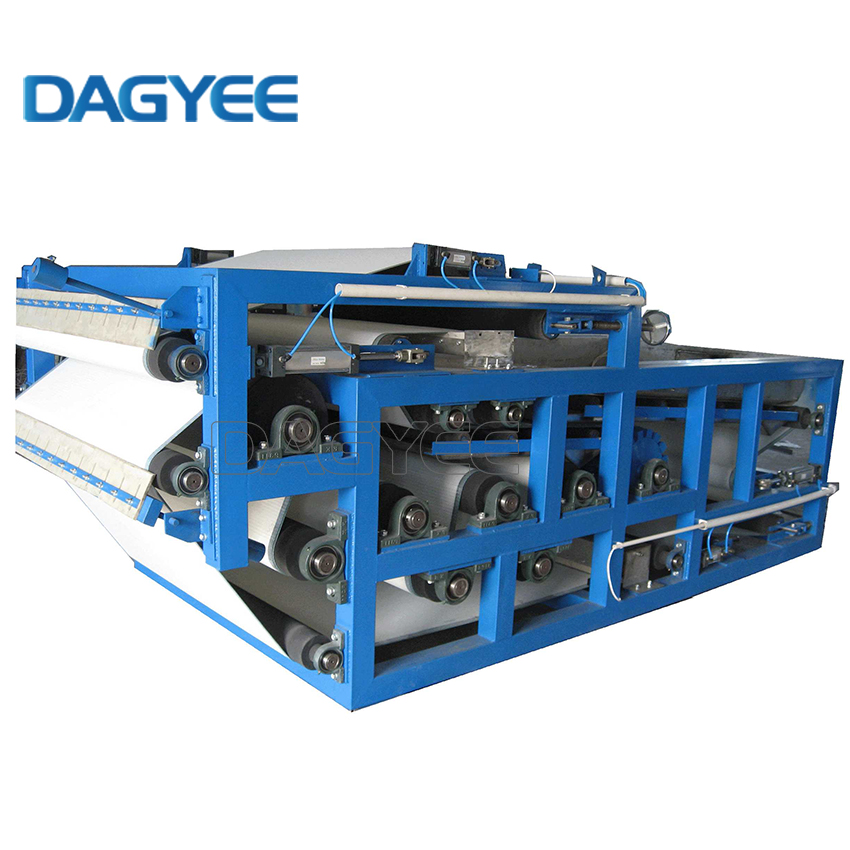
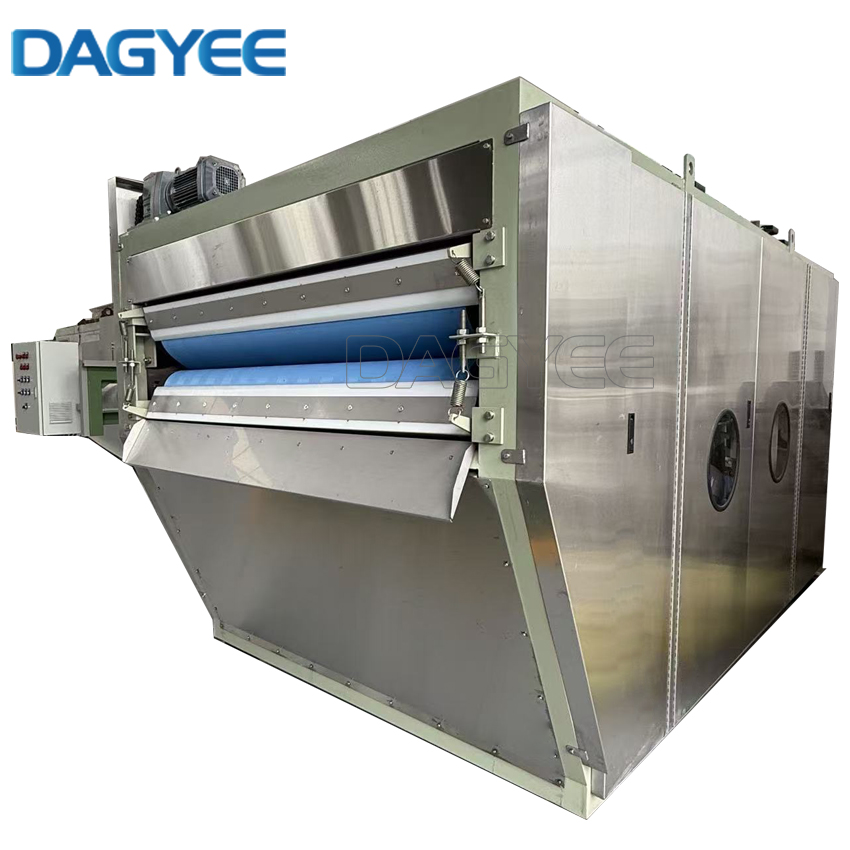
Belt filter press applications
The belt filter is mainly used for dewatering of sludge and slurry and juice extraction from apples, pears and other fruits, as well as grapes for winemaking, etc. Belt filters are used both municipally and industrially in a range of areas including urban sewage and wastewater treatment, metallurgy and mining, steel plants, coal plants, breweries, dyeing, tanneries, as well as chemical and paper factories.
Contact Us for a Consultation

Name: Ashely Li
Mobile:+8613961861780
Tel:+8613961861780
Whatsapp:8613961861780
Email:info@dagyee.com
Add:Room 302, Building 11-4, Hongyi Road, Xinan Town, Xinwu District, jiangsu Province, China