English
 Chinese
info@dagyee.com
+8613961861780

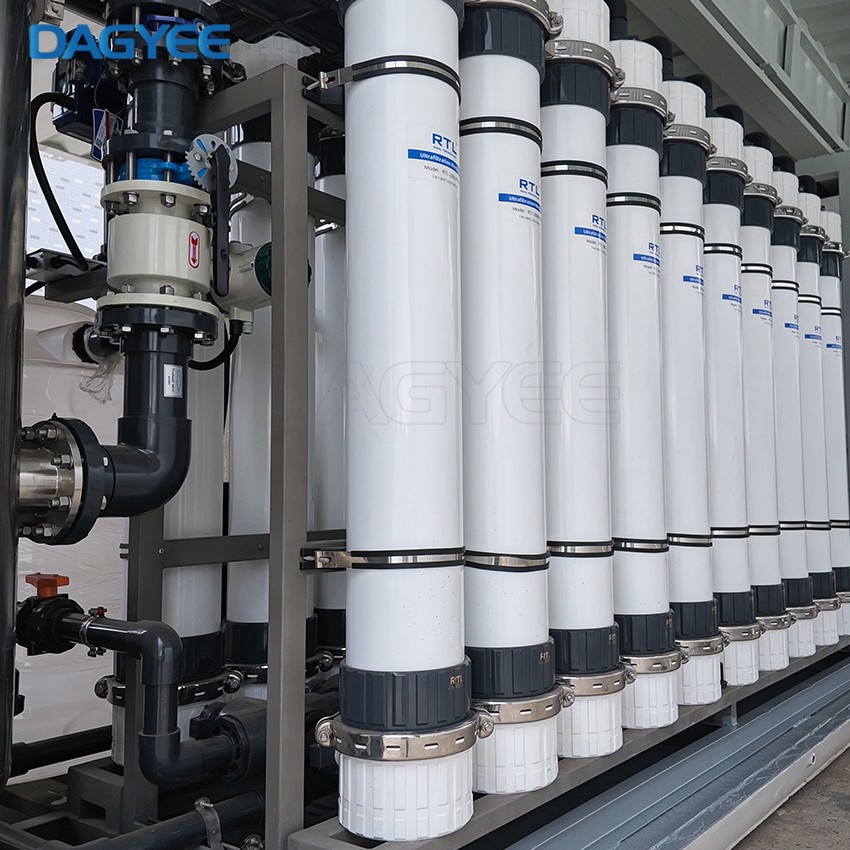
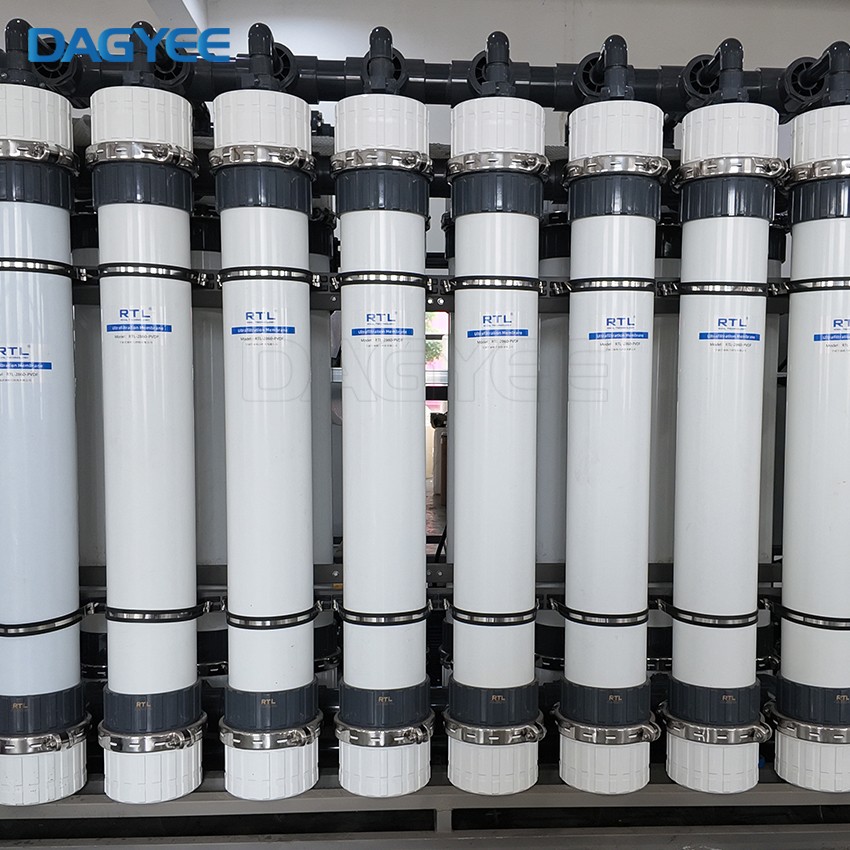
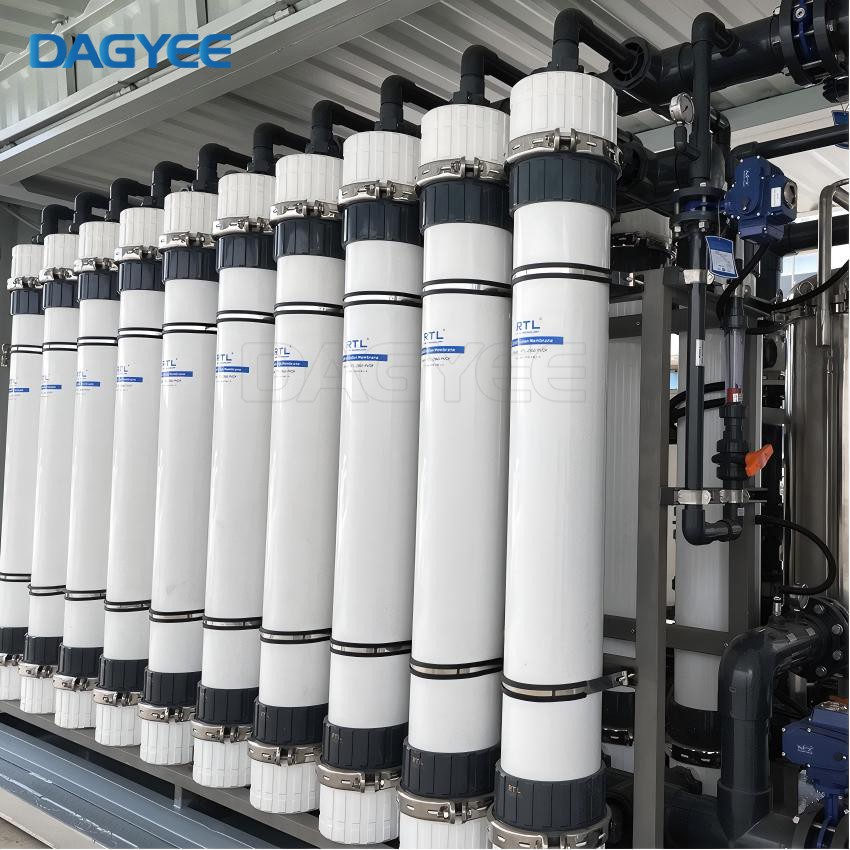
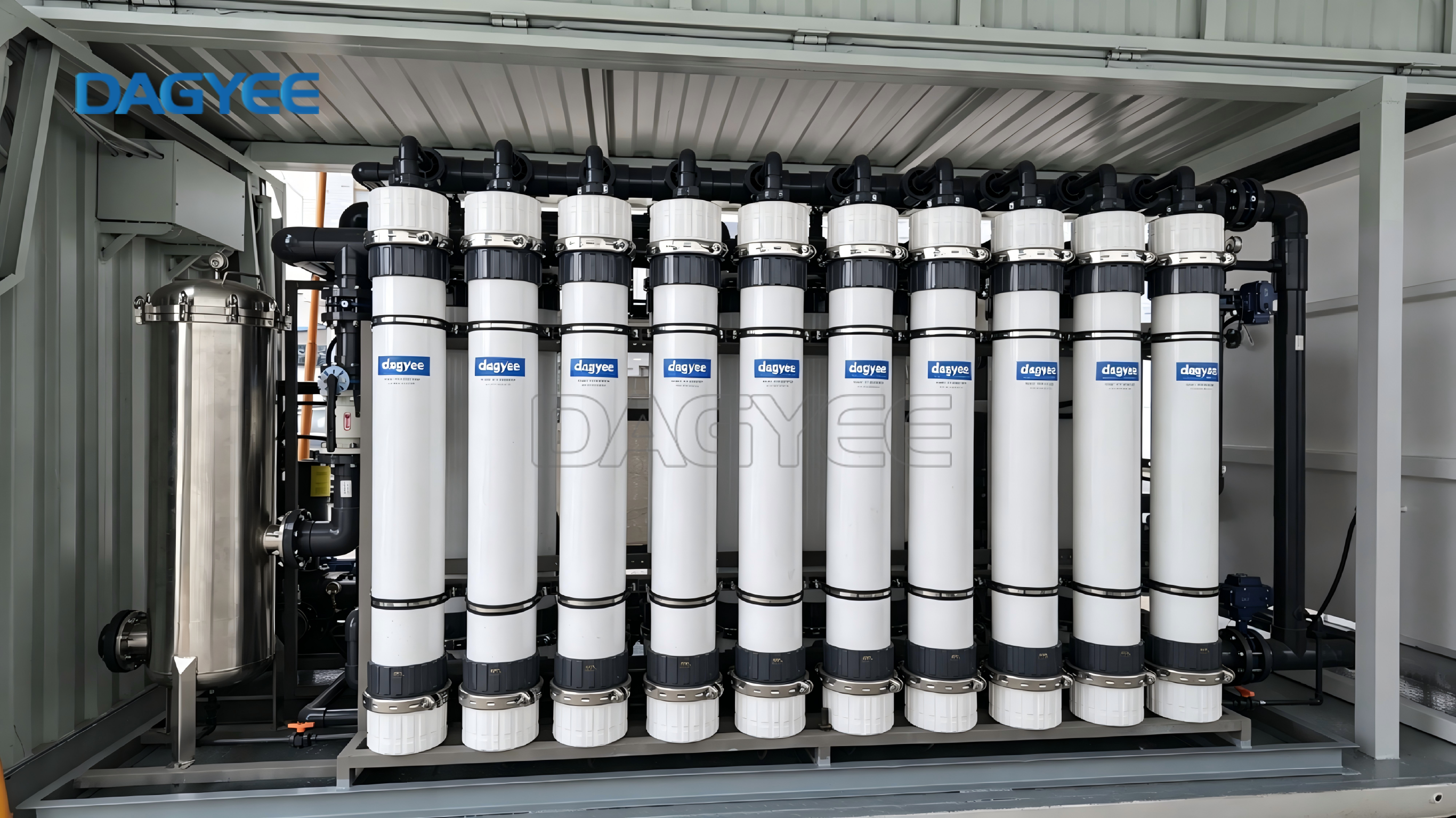
Professional Ultrafiltration (UF) Systems Manufacturer
High-Purity Water Solutions for Municipal & Industrial Applications
Our ultrafiltration (UF) systems remove particles as small as 0.01–0.1 microns, delivering consistent, high-quality water for drinking, industrial processing, and RO pretreatment. With over 20 years of experience, we provide turnkey solutions engineered for reliability, low maintenance, and long service life.
Key Capabilities:
a. Filtration Precision: 0.01–0.1 µm pore size
b. Contaminant Removal: 99.99% bacteria & virus removal
c. Flow Rates: Customized from 100 LPH to 500+ m³/hr
d. Membrane Types: Hollow fiber (inside-out/outside-in), spiral wound, tubular
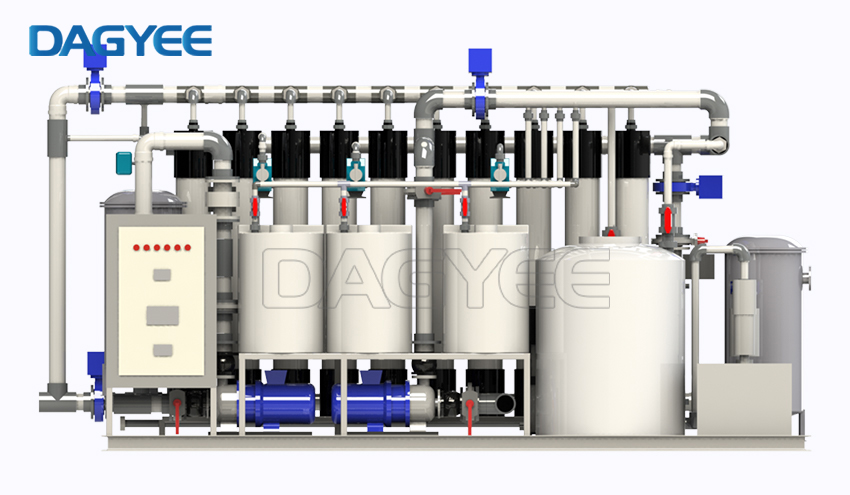
What Is Ultrafiltration (UF)?
1. What Is an Ultrafiltration (UF) System?
Ultrafiltration, along with microfiltration (MF), nanofiltration (NF), and reverse osmosis (RO)processes, operates as a separation method using a porous membrane driven by pressuredifferentials. This technique facilitates the separation of suspended solids and high molecular weightsolutes through smaller diameter perforated membranes.
Ultrafiltration membranes typically feature perforations, often measuring between 0.1-0.01 microns,preventing larger molecules from passing to the permeate side. Consequently, rejected constituents,such as suspended solids, remain on the retentate side, while treated water and low molecular weightelements like minerals pass through to the permeate side.
2. Is There A Difference Between Filtration and Ultrafiltration?
While both filtration and ultrafiltration aim to purify water, there are significant differences between the two processes. Traditional filtration typically relies on physical barriers, such as sand or activated carbon, to trap larger particles and some dissolved substances.
In contrast, ultrafiltration employs advanced membrane technology with much smaller pore sizes, allowing for the removal of not only suspended solids but also bacteria, viruses, and other microscopic contaminants. Reverse osmosis nanofiltration systems can filter out particles as small as 0.01 microns, providing a higher level of water purity compared to conventional filtration methods. This makes ultrafiltration particularly effective for producing high-quality drinking water and treating industrial process water. Additionally, ultrafiltration systems often require less frequent backwashing and maintenance than traditional filtration systems, resulting in improved operational efficiency and cost-effectiveness.
Pore size: Traditional filtration methods typically use larger pore sizes, ranging from 1 to 1000 microns. Ultrafiltration membranes have much smaller pores, and can filter out particles between 0.01 and 0.1 microns.
Contaminant removal: Standard filtration is effective at removing larger particles and some microorganisms. Ultrafiltration can remove not only these contaminants but also smaller particles, bacteria, and even some viruses.
Water quality: Ultrafiltration produces higher quality water than traditional filtration methods due to its ability to remove smaller contaminants of molecular size
Applications: While both methods are used in water treatment, ultrafiltration is often employed in more demanding applications where higher water purity is required.
3. What Contaminants Can UF Remove?
| Contaminant Category | Removal Efficiency |
|---|---|
| Suspended Solids (TSS) | >99% |
| Turbidity | >99% |
| Bacteria (E. coli, etc.) | 99.99% |
| Viruses | 90-99.99% (depending on size) |
| Protozoa (Giardia, Cryptosporidium) | >99.9% |
| Colloids | >99% |
| Algae | >99% |
| High Molecular Weight Organics | Up to 100% |
Note: UF does NOT remove dissolved salts (TDS), small ions, or low-molecular-weight organicsFor desalination, UF is typically used as pretreatment before RO.
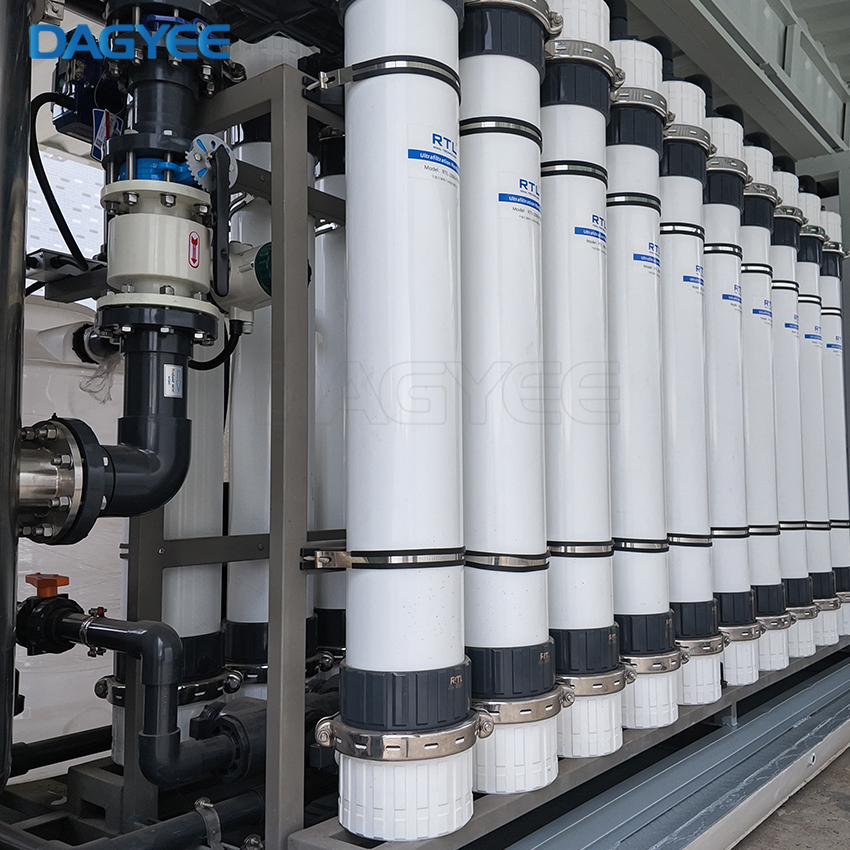
How Ultrafiltration (UF) System Works?
Understanding how ultrafiltration works is key to appreciating its effectiveness in water treatment. Ultrafiltration is a pressure-driven membrane filtration process that effectively removes contaminants from water. The heart of an ultrafiltration system is the semi-permeable membrane with pores typically ranging from 0.01 to 0.1 microns in size. As water is forced through these tiny pores under pressure, particles larger than the pore size are trapped, while water molecules and smaller dissolved substances pass through.
This process effectively removes suspended solids, bacteria, viruses, and other microorganisms from the water.
Ultrafiltration water filters can be implemented in two main types of systems: at the point-of-use (POU) systems, which treat water where it is used, and point-of-entry (POE) systems, which treat all the water entering a building.
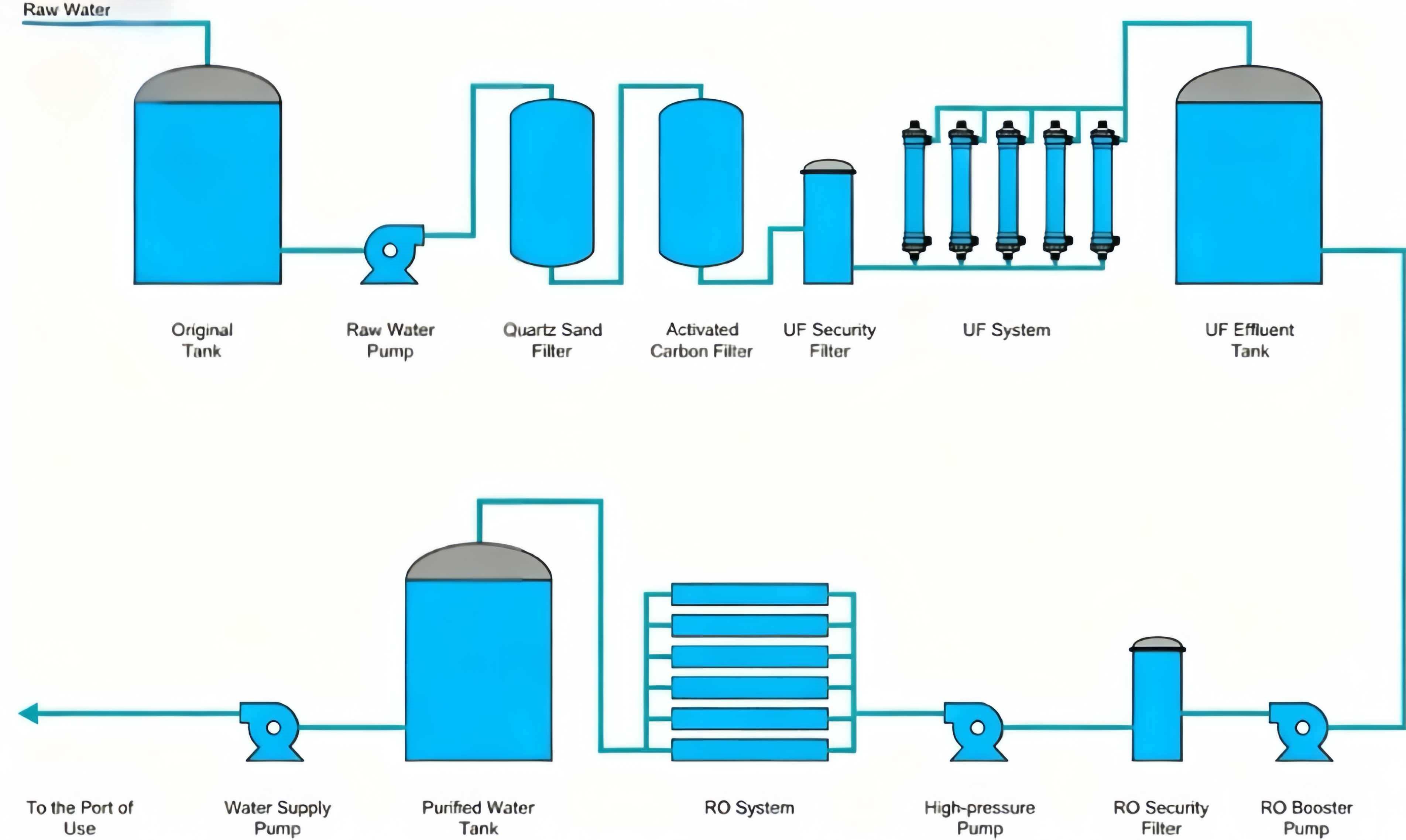
The ultrafiltration process typically involves several stages:
Prefiltration: Before water enters the ultrafiltration system, it typically passes through a prefilter to remove larger particles that could potentially damage the UF membrane.
Pressure application: Depending on the type of ultrafiltration membrane, a vaccum is applied to suck the water through the membrane our the water is pressurized and forced through the ultrafiltration membrane.
Membrane separation: As water passes through the UF membrane, contaminants larger than the membrane's pore size are trapped on the surface or within the membrane structure.
Permeate collection: The filtered water, known as permeate, passes through the membrane and is collected for use or further treatment.
Concentrate removal: Contaminants that are too large to pass through the membrane accumulate on the feed side, forming a concentrate that is periodically flushed from the system.
Backwashing: To maintain efficiency, ultrafiltration systems periodically reverse the flow of water to clean the membrane surface, a process known as backwashing.
Ultrafiltration (UF) System Technical Specifications
Our UF systems are engineered for performance. Below are the standard specifications. We offer full customization to meet your specific capacity and water quality requirements.
1. Technical Specification
| Parameter | Specification |
|---|---|
| Membrane Type | Hollow fiber (PVDF, PES, PAN), Spiral wound, Tubular |
| Membrane Configuration | Outside-in or Inside-out |
| Pore Size | 0.01 – 0.1 microns (nominal) |
| MWCO (Molecular Weight Cut-Off) | 1,000 – 500,000 Daltons |
| Operating Pressure | 4 – 100 psig (0.3 – 6.9 bar) |
| Operating Temperature | 5°C – 45°C (41°F – 113°F) |
| pH Range | 2 – 13 (for PVDF membranes) |
| Recovery Rate | 80% – 95% |
| Permeate Turbidity | <0.1 NTU |
| SDI (Silt Density Index) | <3.0 (ideal for RO pretreatment) |
| Flow Capacity | 100 LPH – 500+ m³/hr (customizable) |
| Control System | PLC with HMI (auto/manual) |
| Materials | FRP, Stainless Steel (304/316L), UPVC |
| Power Supply | 220V/380V/415V, 50/60Hz, Three-phase |
| Warranty | 1 year (membrane lifespan: 3–5 years) |
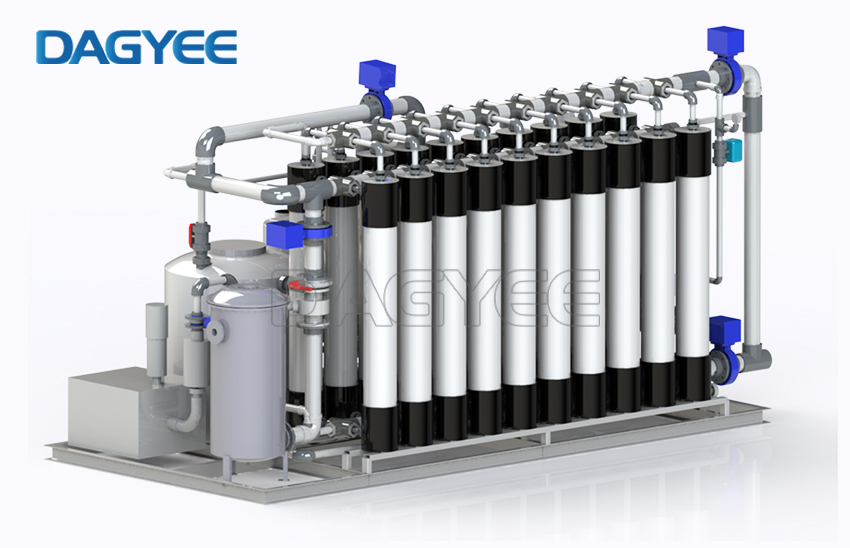
2. System Components
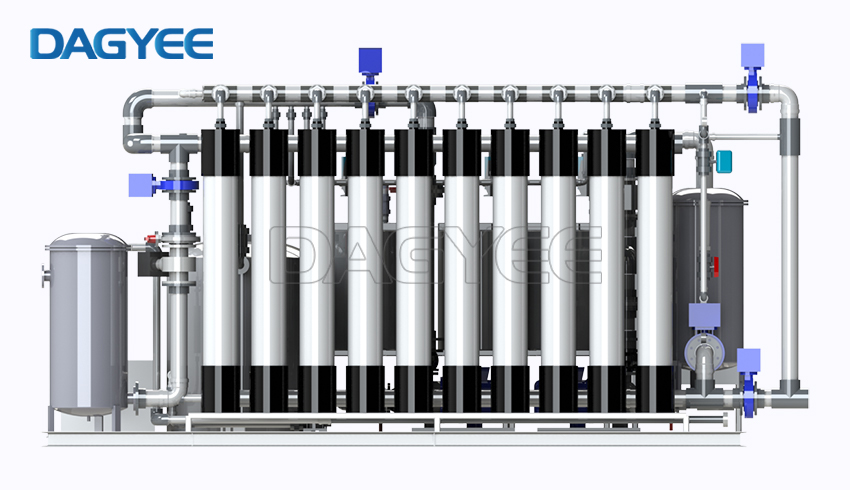
A complete ultrafiltration system consists of the following core components, all customizable to match your needs:
Pretreatment System: Quartz sand filter tank, activated carbon filter tank, precision filter, and scale inhibitor dosing system
Booster Pump: High-efficiency water pump to feed water into the membrane module
Ultrafiltration Membrane Modules: Hollow fiber / spiral wound UF membranes, available in different models (90/160/2860/2880)
Membrane Housings: UPVC, stainless steel, or FRP housings to protect the membrane elements
Backwash System: Backwash pump, air scour system, and chemical cleaning system
Electric Control Cabinet: Manual or fully automatic PLC + touch screen control system, with real-time monitoring of operating parameters
Pipe & Valve System: UPVC or stainless steel pipes and valves, compatible with different water qualities
Ultrafiltration (UF) System Advantages
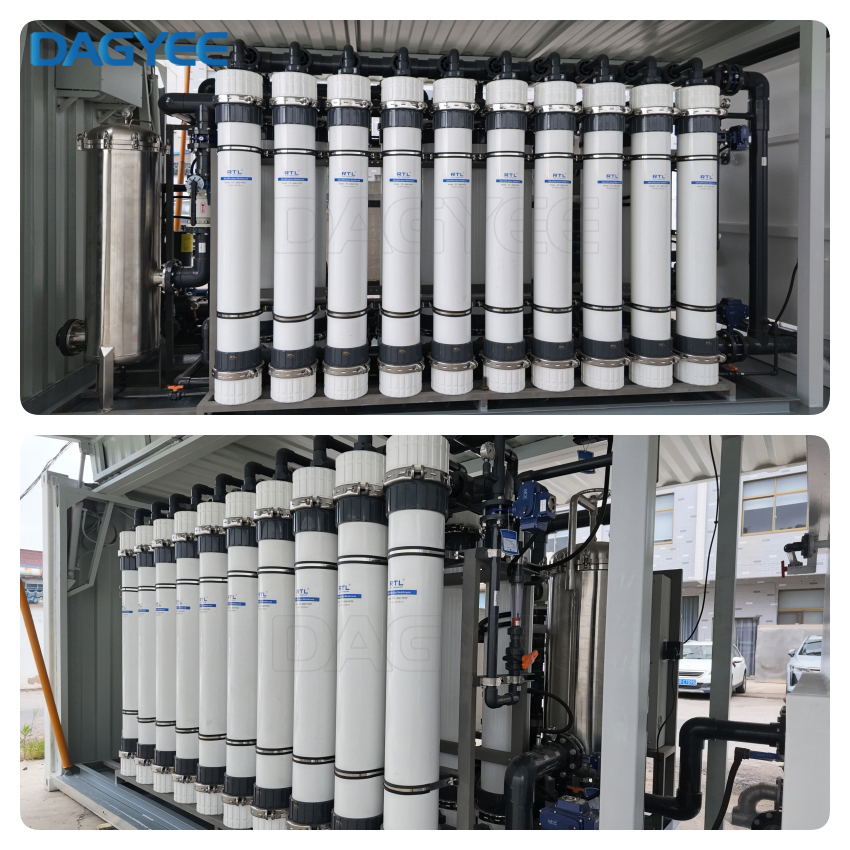
Ultrafiltration systems have gained prominence in diverse sectors thanks to their high impurityrejection rates, cost-efficiency, and versatility.
Below we discuss the chief advantages of utilizingultrafiltration water treatment systems.
1. Consistently high-quality potable water
The deployment of an ultrafiltration system is chiefly intended to remove suspended solids andmicrobes. Irrespective of the feed water concentration and composition, ultrafiltration systemsguarantee a high-grade fltrate devoid of suspended molecules with a molecular weight surpassing20nm.
Consequently, ultrafiltration is utilized in wastewater treatment, salt-water desalination, andgroundwater filtration. UF systems are ideal upgrades to microfiltration systems owing to their smallsized pores. With a competent ultrafltration skid, you are guaranteed impurity removal rates rangingfrom (90-99%).
2. Does not necessitate the use of chemicals
Ultrafiltration systems only necessitate the use of chemicals when cleaning the UF membranes andother components. The operation of ultrafiltration processes without the addition of chemicalsensures that there is no alteration to the water's taste or odor. Additionally, it lessens the operationalcosts of ultrafiltration systems. The process of ultrafiltration is strictly a physical process reliant onpressure and semi-permeable membranes.
3. Diverse capacity ranges
Different entities demand specialized ultrafiltration systems with unique capacities. Thankfully,NEWater manufactures numerous UF systems characterized by varying capacity ranges. This ensurethat large-scale and small-scale enterprises have unlimited access to unique UF systems perfect fortheir respective applications.
Typical capacity ranges on standard UF systems vary from 10,000 GPD to over 1M GPD. For smalleror enormous capacities, our engineers provide customized solutions. NEWater's comprehensiveultrafiltration systems cater to household, commercial, and industrial applications.
4. Low energy consumption
Compared to other water filtration systems like Nanofiltration and reverse osmosis, the energyconsumption of ultrafiltration systems is relatively low. This is primarily because of their lowoperating pressure requirements. For household UF systems, the normal inlet pressure can be
sufficient to initiate the ultrafiltration process.
Bigger UF systems such as industrial and commercial plants necessitate high-pressure pumps togenerate adequate pressure. In addition to energy efficiency, NEWater's ultrafiltration skids supportvarying power voltage and frequency options, 220V-480V, 50-60Hz.
5. Additional benefits of using ultrafiltration systems include:
a) Compact designs
b) Low operating pressure.
c) Proficiency in removing bacteria and viruses.
d) Low operational costs.
Ultrafiltration (UF) System Features
Key features of hollow fiber ultrafiltration include:
1. Pore sizes typically ranging from 0.01 to 0.1 microns
2. Ability to remove particles, bacteria, and some viruses
3. Low energy consumption compared to other membrane technologies
4. Minimal use of chemicals in the treatment process
5. Consistent water quality output regardless of influent variations
Ultrafiltration water treatment has become increasingly popular due to its efficiency, reliability, and ability to produce high-quality water regardless of source water fluctuations.
UF vs. RO – Which System Do You Need?
Choosing the right technology depends on your water quality goals. Here's a quick comparison between Ultrafiltration (UF) and Reverse Osmosis (RO) to help you decide.
| Comparison Dimension | Ultrafiltration (UF) System | Reverse Osmosis (RO) System |
|---|---|---|
| Filtration Precision | 0.01-0.1 microns | 0.0001 microns |
| Core Function | Retain large molecular impurities, microorganisms, colloids | Remove ions, heavy metals, salts, and all dissolved contaminants |
| Contaminant Removal | Bacteria, viruses, suspended solids, colloids, large organic molecules | TDS, heavy metals, nitrates, salts, bacteria, viruses, almost all contaminants |
| Water Quality Output | High-quality mineral water with beneficial minerals retained | Pure demineralized water (no minerals) |
| Energy Consumption | Low (no high-pressure required) | High (requires high-pressure operation) |
| Pressure Requirement | Low operating pressure | High operating pressure |
| Chemical Usage | Minimal (only for occasional cleaning) | Regular use of antiscalants, cleaning chemicals |
| Mineral Retention | Retains all beneficial minerals | Removes almost all minerals |
| TDS Reduction | No TDS reduction | Reduces TDS by 95-99% |
| Typical Applications | Municipal water purification, river/lake water treatment, wastewater reuse, pre-treatment for RO, food & beverage production | Drinking water purification, industrial pure water production, desalination, boiler feed water treatment, pharmaceutical water production |
| Maintenance | Simple backwashing, low maintenance frequency | Regular membrane cleaning, higher maintenance requirements |
| Service Life | 3-5 years (membrane) | 2-3 years (membrane) |
| System Cost | Lower initial and operational cost | Higher initial and operational cost |
System Configurations & Applications
5 types of UF system configurations with clear use cases:
| Configuration Type | Core Features | Typical Applications | Recommended Industries |
|---|---|---|---|
| Immersed Hollow Fiber UF System | High solids tolerance, large membrane surface area, compact design | Municipal water treatment, large-scale wastewater treatment, river water purification | Municipal utilities, environmental engineering, industrial parks |
| Pressurized Hollow Fiber UF System | High filtration efficiency, easy backwashing, stable performance | Industrial process water treatment, food & beverage production, pharmaceutical pre-treatment | Food & beverage, pharmaceutical, fine chemical industries |
| Automatic UF System | Fully automatic operation, PLC control, real-time monitoring, self-cleaning | Commercial water purification, residential communities, hotel water supply | Commercial real estate, hospitality, residential communities |
| Manual UF System | Simple operation, low cost, easy maintenance | Small-scale industrial use, rural water supply, emergency water treatment | Agriculture, small businesses, remote areas |
| Skid-Mounted UF System | Integrated design, easy transportation, plug-and-play installation | Mobile water treatment, temporary construction sites, disaster relief | Construction, mining, emergency response organizations |
FAQ Section
A: It is suitable for municipal tap water, surface water (river water, lake water), groundwater, etc., especially for situations where the raw water has high turbidity and a high risk of microbial contamination, but no desalination is required.
Q: Can the water produced by ultrafiltration equipment be drunk directly?
A: If the source water meets municipal tap water standards, the water produced by ultrafiltration can be drunk directly (as bacteria, viruses, and other harmful microorganisms have been removed). However, if the source water has excessive levels of heavy metals, nitrates, or other contaminants, it needs to be paired with reverse osmosis or other advanced treatment processes.
Q: What is the lifespan of an ultrafiltration membrane?
A: Under normal use and maintenance, the lifespan of an ultrafiltration membrane is 3-5 years, depending on the quality of the raw water, cleaning frequency, and operating pressure. If contamination is severe and not addressed promptly, it may be shortened to 1-2 years.
Q: Is it necessary to add chemicals when operating ultrafiltration equipment?
A: Under normal operation, adding chemicals is not required. Chemicals such as sodium hypochlorite can be added in appropriate amounts only when the raw water is heavily contaminated by microorganisms. During chemical cleaning, special membrane cleaning agents must be used.
Final CTA Section
Ready to get a customized ultrafiltration system for your project?
Our team of water treatment experts will provide you with a professional solution tailored to your raw water quality, capacity requirements, and budget.
✅ Free water quality analysis & solution design
✅ Factory direct sales with competitive price
✅ 1-year warranty for the complete system
✅ Lifelong technical support & after-sales service
✅ Global shipping & on-site installation guidance available
Contact Information:
Name: Ashely Li
Mobile:+8613961861780
Tel:+8613961861780
Whatsapp:8613961861780
Email:info@dagyee.com
Add:Room 302, Building 11-4, Hongyi Road, Xinan Town, Xinwu District, jiangsu Province, China