English
 Chinese
info@dagyee.com
+8613961861780

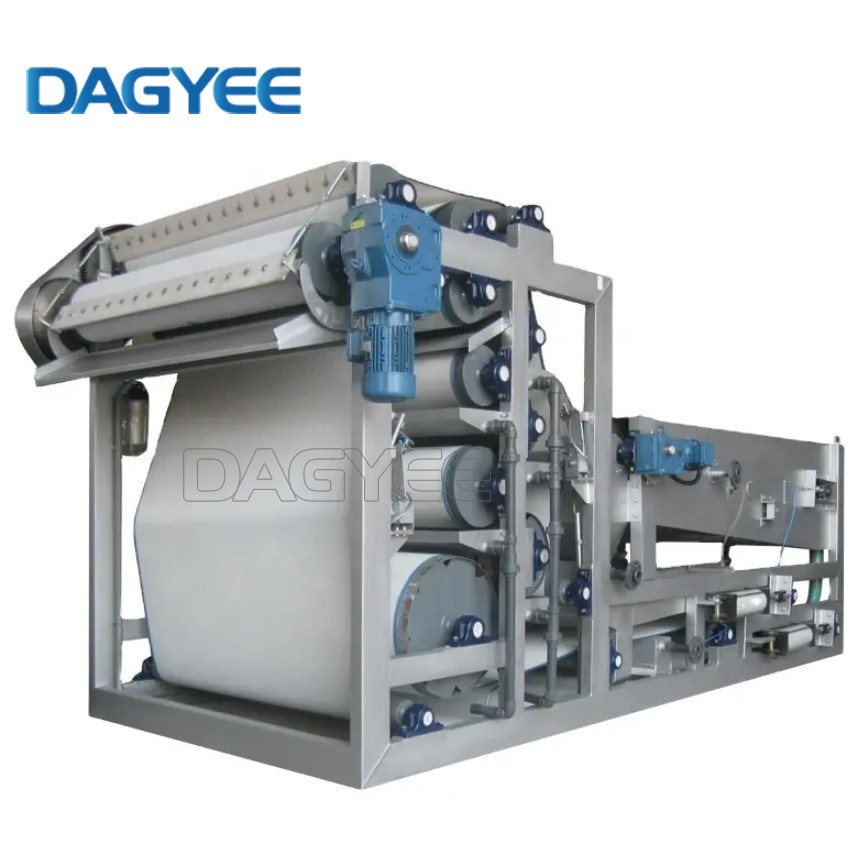
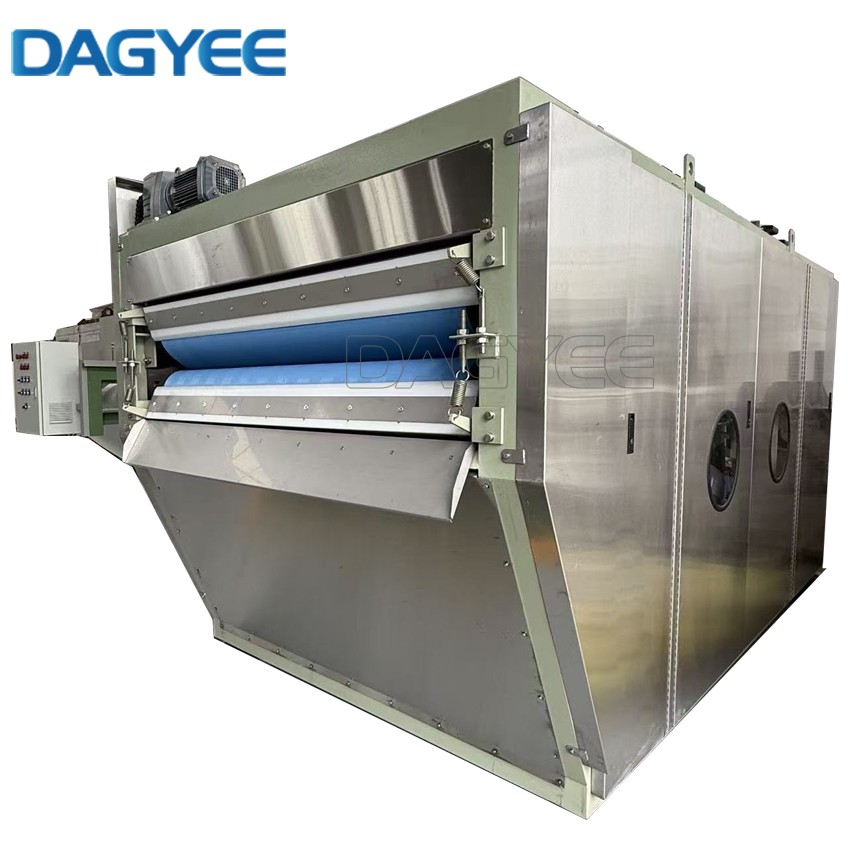
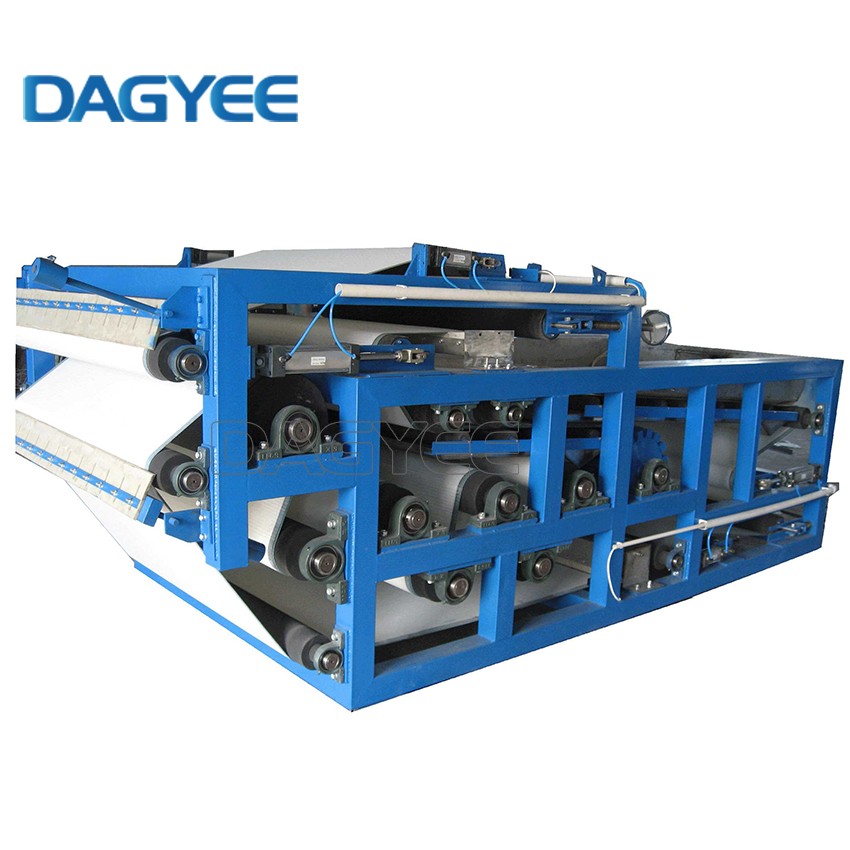
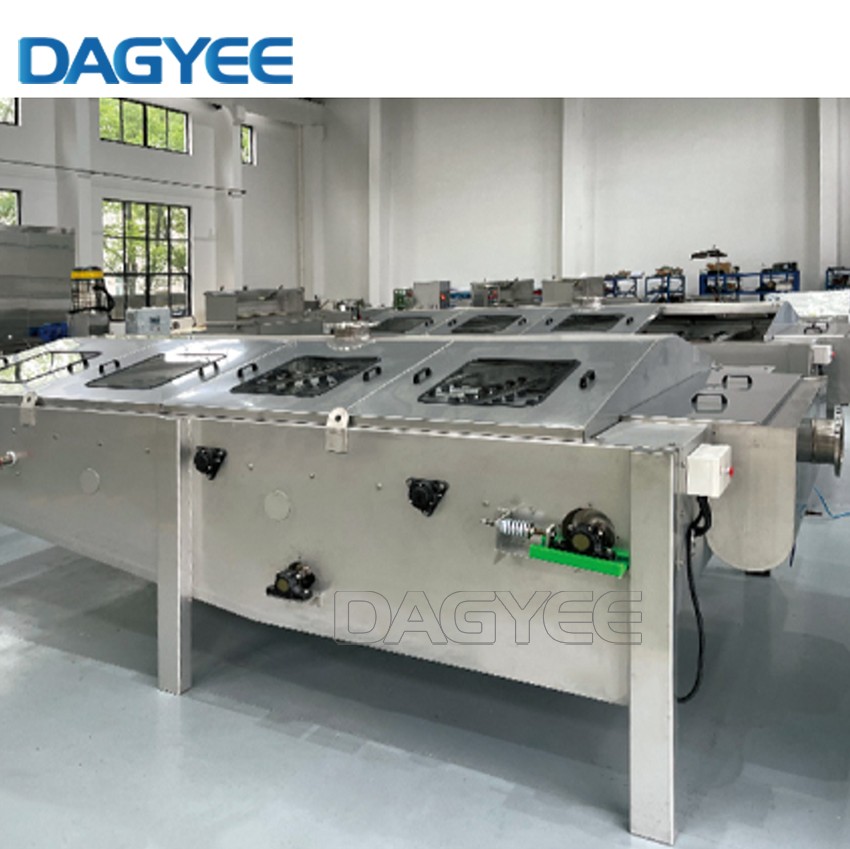
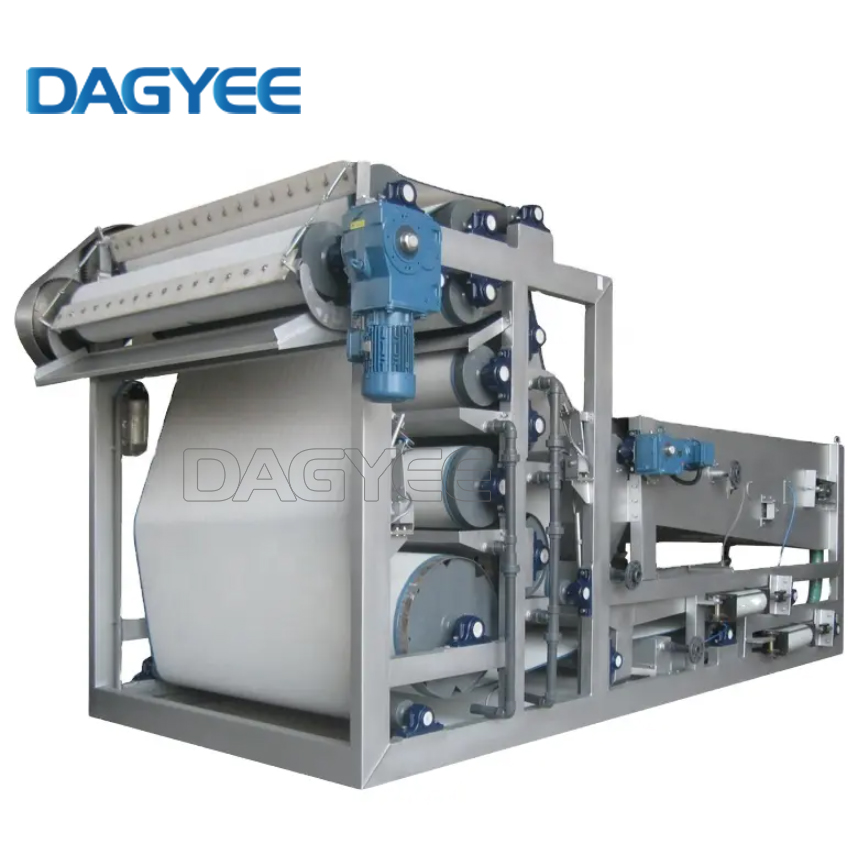
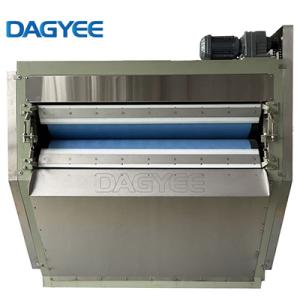
The DAGYEE Belt Press is the next generation dewatering belt filter press designed to allow for high solids loading while maintaining a high hydraulic throughput.
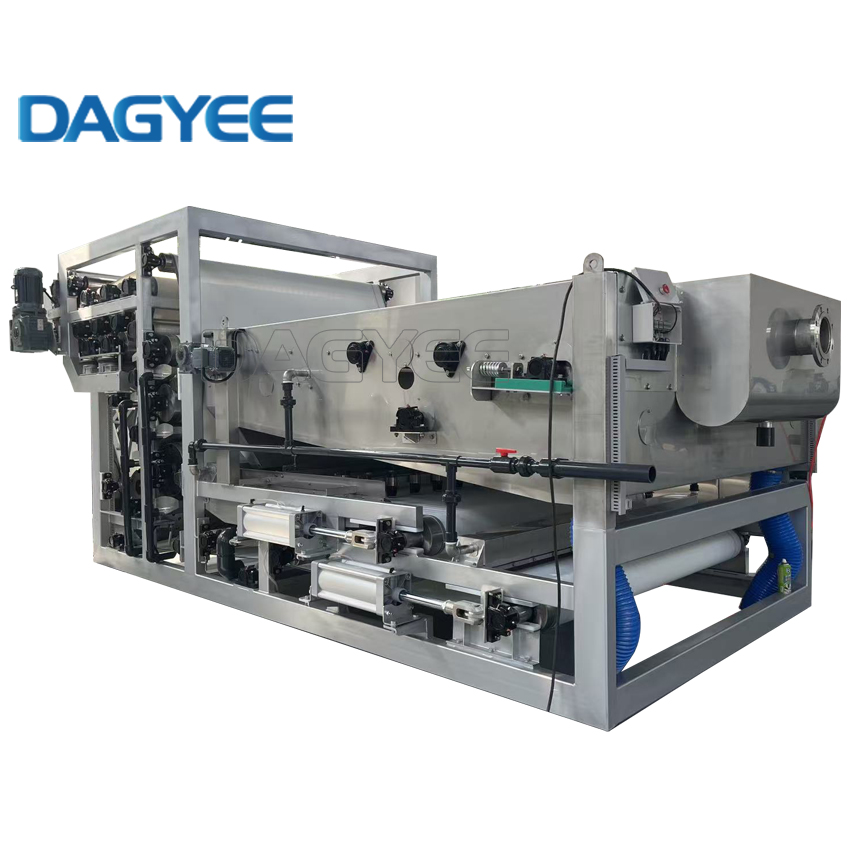
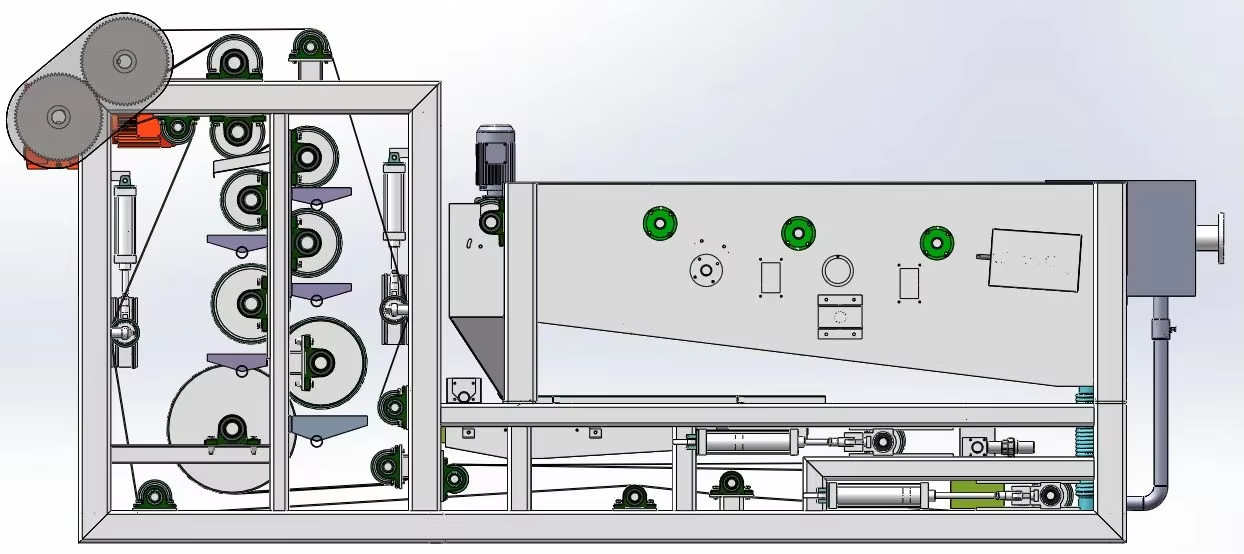
Belt filter press principle
Belt filter technical sheet
| Sludge Kinds | Input Concentration % | Capacity m³/h | DS Capacity kg/h | Moisture of Cake % | PAM Consumption %(DP/DS) |
| Unconcentrated Aerobic Sludge | 0.5~1.5 | 15~30 | 150~300 | ~80 (+2) | 2~5 |
| Concentrated Aerobic Sludge | 2~4 | 6~12 | 200~300 | ~80 (+2) | 2~5 |
| Digested Sludge | 3~6 | 7~15 | 300~400 | <80 | 2~5 |
| Unconcentrated Primary Sludge | 0.8~2.0 | 18~35 | 300~400 | <80 | 2~5 |
| Concentrated Primary Sludge | 3~5 | 6~12 | 300~400 | <80 | 2~5 |
| Paper-making Activated Sludge | 0.5~2.5 | 15~35 | 200~400 | <78 | 3~7 |
| Printing and Dyeing Mixed Sludge | 1~3 | 10~25 | 180~350 | 75~78 | 3~10 |
| Model | Belt Width | Sludge Concentration | Outlet Concentration | Capacity | Power |
| DNT-1000 | 1000mm | 2-4% | 15-25% | 6-12 | 1.49kW |
| DNT-1500 | 1500mm | 2-4% | 15-25% | 12-15 | 2.05kW |
| DNT-2000 | 2000mm | 2-4% | 15-25% | 15-25 | 2.6kW |
| DNT-2500 | 2500mm | 2-4% | 15-25% | 35-50 |
4.1kW |
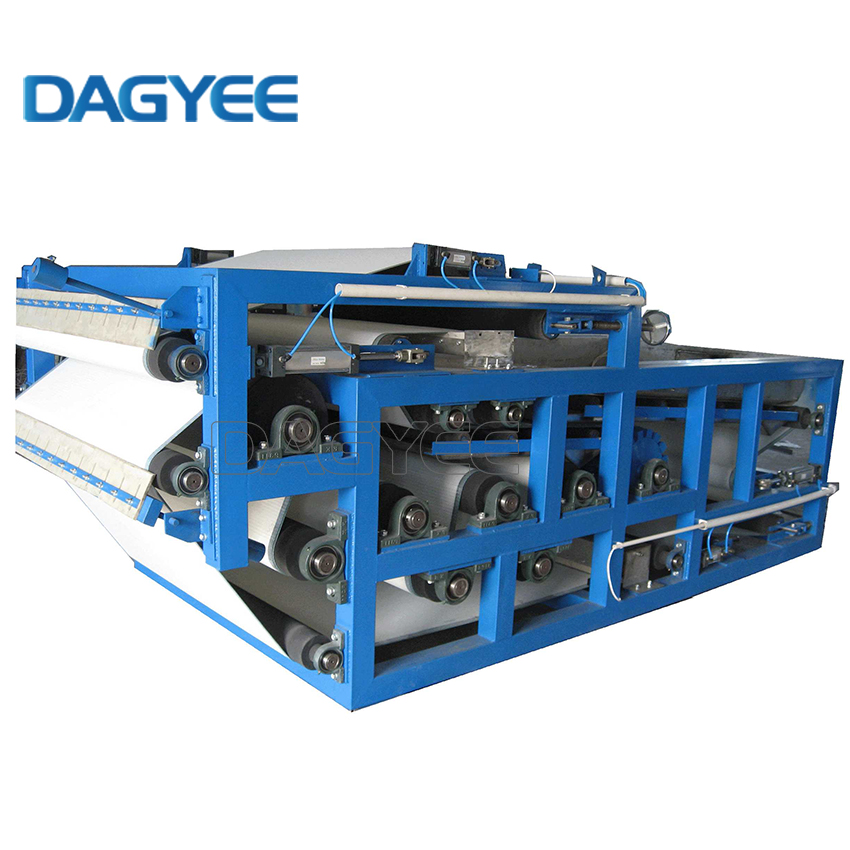
Belt Filter Press Advantage
Cost-effective installation: Economical to install, providing a budget-friendly dewatering solution.
Efficient energy use and automatic operation: Designed for minimal power requirements, it ensures low energy consumption and can operate automatically, reducing the need for continuous supervision.
Low operating costs: With its efficient design and operation, the BFP keeps operating costs to a minimum.
High capacity in a small footprint: Provides high dewatering capacity with minimal space requirements, making it ideal for facilities with limited space.
Good dewatering results: Delivers good dewatering performance, ensuring effective sludge management.
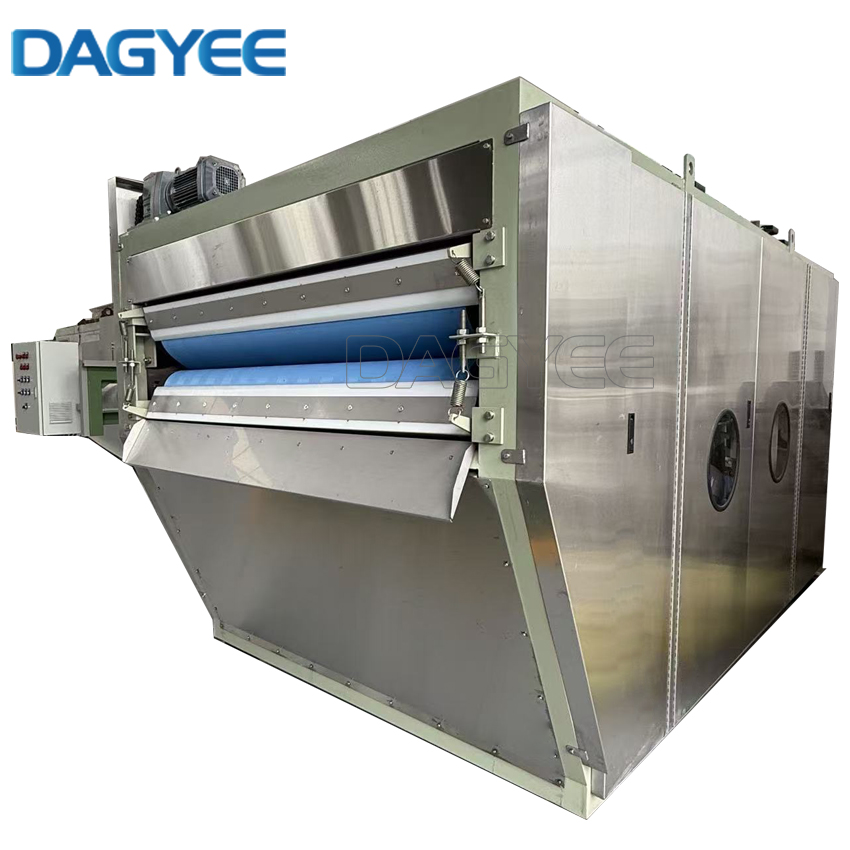
Belt filter press features
Belt press filters are designed for solids capacity, by weight or volume, rather than wastewater flow. Solids concentration must be determined based on the concentration of primary solids in the feed and further solids that may precipitate during treatment. Solids concentration for a process will vary, thus the design must have the capacity to deal with varying feed solids concentration.
The feed to a belt press filter depends on the type of solids, desired product and filter design. For most sludge types the feed dry solids concentration is typically in the range of 1-10%. The resulting dewatered sludge (or cake) dry solids concentration typically falls in the range of 12-50%. Dilute feed solids concentration results in a cake of higher moisture content whilst a higher feed solids concentration yields an improved solids filtration rate and drier end product.
A choice of 2 or 3 belt dewatering systems with standard, extended, or independent gravity zones for consistently high cake solids in varying sludge conditions. When higher hydraulic sludge capacities need to be treated, the drainage zone is extended by installing a thickening stage before the actual dewatering process.
Increase of the effective filtration areas.
Innovative low pressure zone concept consisting of a big diameter perforated roll substitution in the traditional wedge area.
Effective high pressure zone (increase of pressure intensity and time).
The possibility to install 5-7-9-11 rolls in final high pressure zone allows the machine to be configured per the application characteristics and required performance.
Belt filter press applications
The belt filter is mainly used for dewatering of sludge and slurry and juice extraction from apples, pears and other fruits, as well as grapes for winemaking, etc. Belt filters are used both municipally and industrially in a range of areas including urban sewage and wastewater treatment, metallurgy and mining, steel plants, coal plants, breweries, dyeing, tanneries, as well as chemical and paper factories.
Wastewater Treatment: Belt presses process sludge by extracting moisture, which in turn reduces the volume. Consequently, this helps lessen waste transport and disposal costs.
Food and Beverage Industry: The process uses belt presses to produce juice from fruits such as apples and grapes. These presses allow for easy extraction of the press cake from the pulp.
Mining industry: In order to minimize the amount of waste material, it needs dewatering of mineral slurries. This process includes separation, recovery, and discharge of valuable minerals.
Agriculture: Farmers need to manage animal manures or other agricultural byproducts. Consequently, they do this to reduce their water content and decrease the volume of waste.
Contact Us for a Consultation

Name: Ashely Li
Mobile:+8613961861780
Tel:+8613961861780
Whatsapp:8613961861780
Email:info@dagyee.com
Add:Room 302, Building 11-4, Hongyi Road, Xinan Town, Xinwu District, jiangsu Province, China