English
 Chinese
info@dagyee.com
+8613961861780

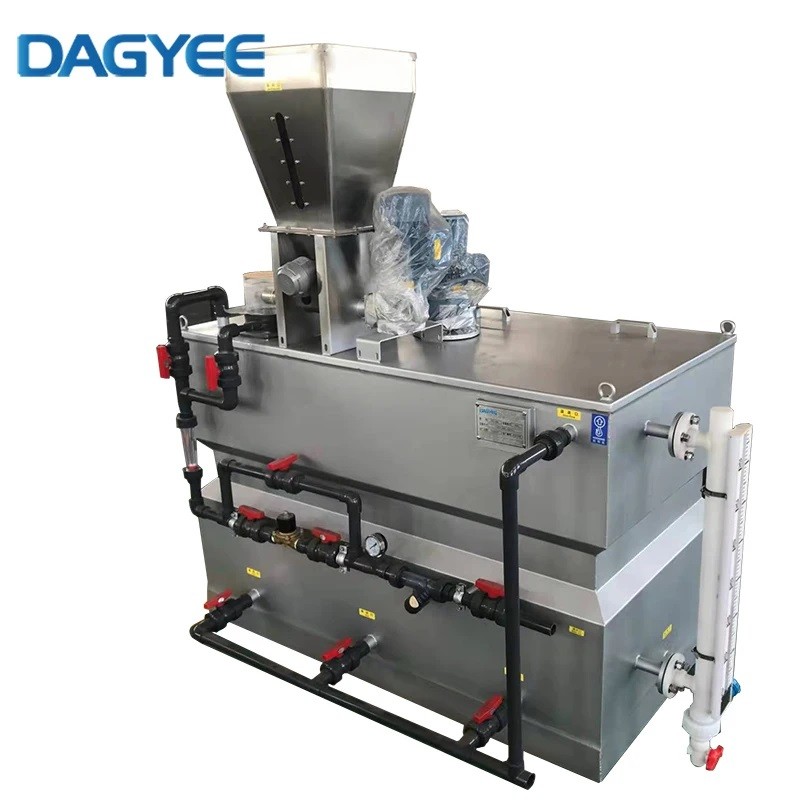
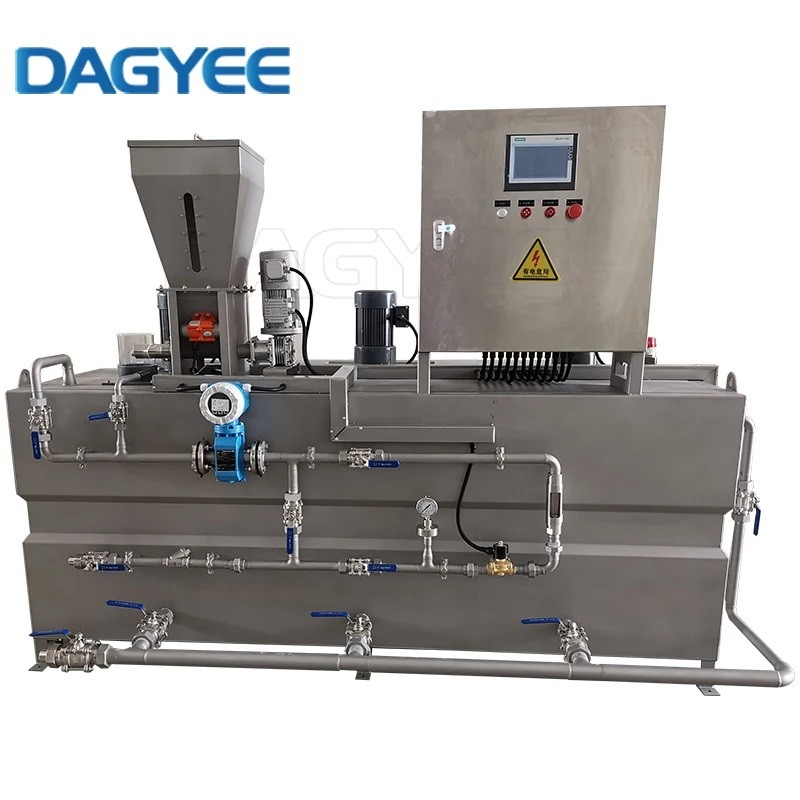
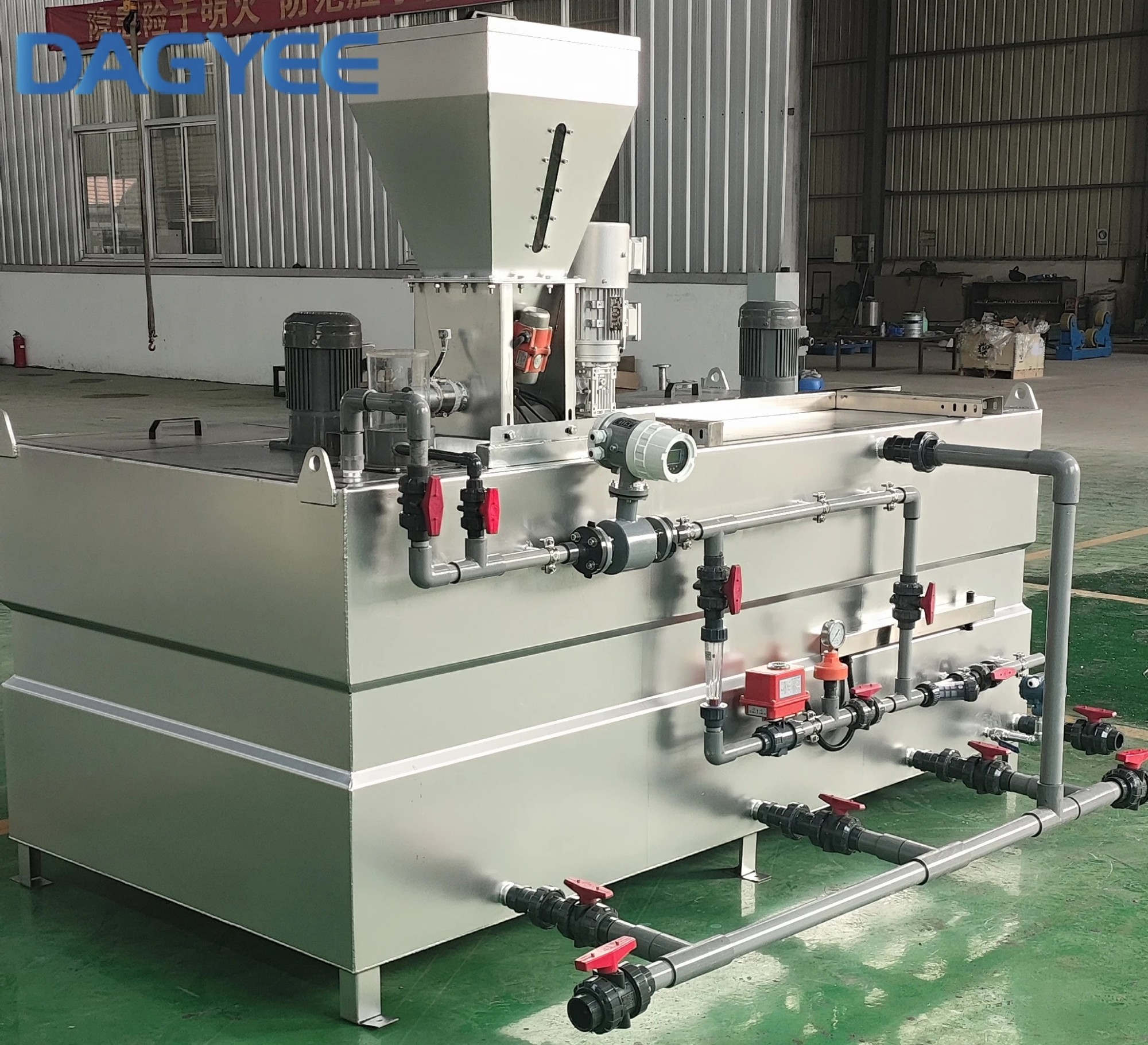
polymer preparation unit description
Polyelectrolvtes, which can be found in powder, granular or iquid-dissolved form, are used to condition waste sludge, Suspended solids in thewaste sludge to which polyelectrolyte is added stick together, fomming focs and precipitating easil. flocculation is of vital importance in watetreatment.
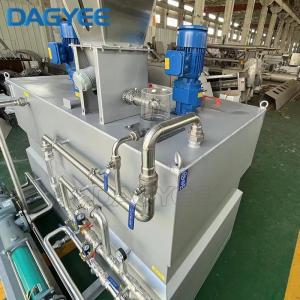
Manual or automatic for conditioning of waste sludgepolymer preparation and dosage unitsis used. These units have 3 tanks: dissolution,
mixing and storage. The solutions in these tanks are mixed homogeneously and evenly with the mixerTank materials are stainless steel orpolypropylenelt is manufactured as. By dosing the sludge line with pressure, the waste sludge isflocculated. Thus, the efficiency of sludge dewatering processes; increases and operating costs decrease. it is usually supplied with sludgedewatering equipment.
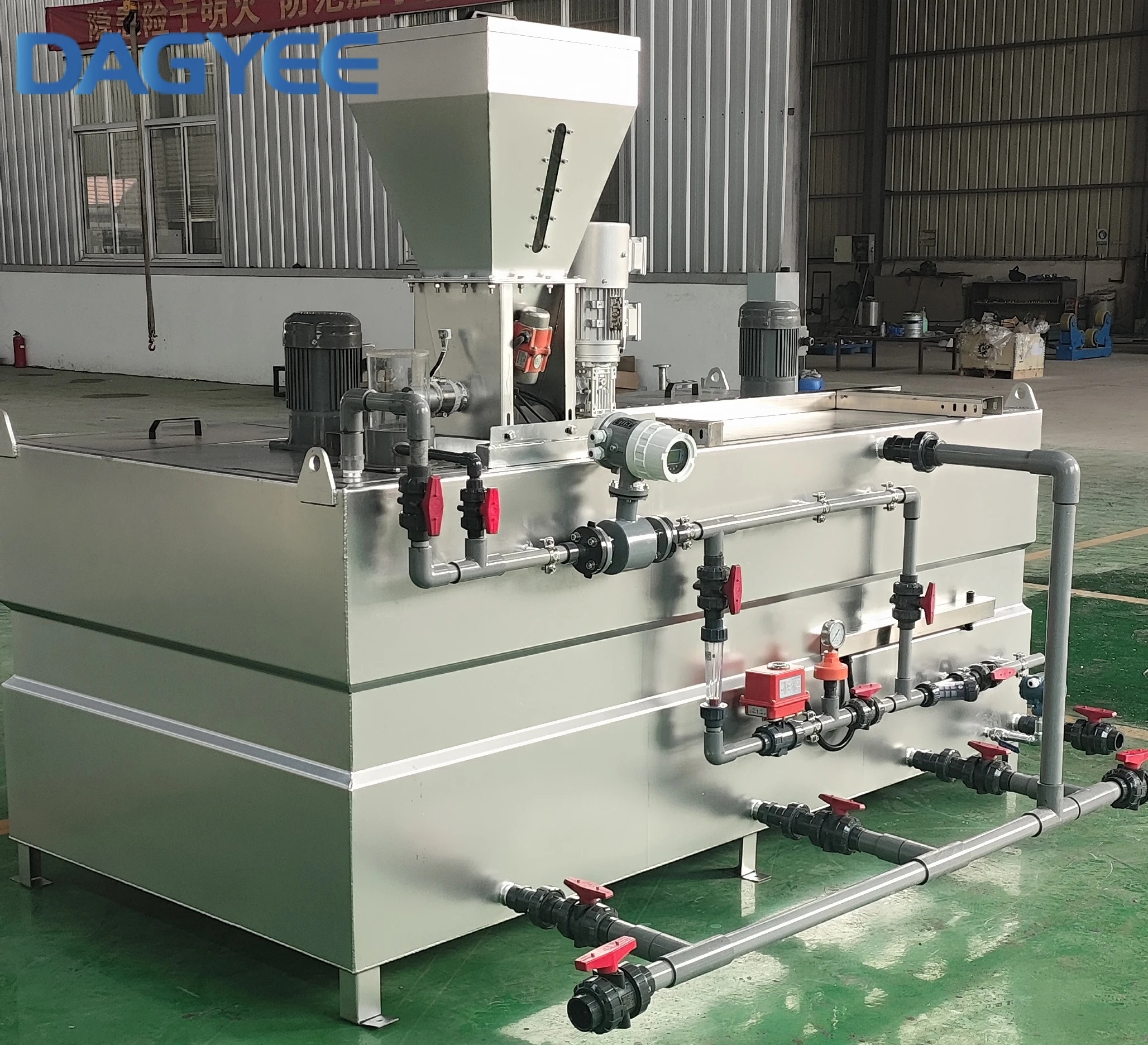
Polymer preparation unit principle
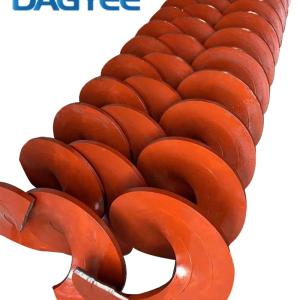
The powdered polyelectrolyte stored in a hopper is transported by a screw conveyor, and dosed in a first sector of the dilution tank, where it is appropriately diluted with water thanks to the action of an electromechanical agitator which favors its dissolution. At the end of this first phase the solution passes into a second sector to complete the preparation, to then conclude the process in a third sector of maturation, and be ready for use.
Same process for the preparation of the polyelectrolyte from a liquid concentrate takes place, instead of the powder doser a dosing pump is installed. Combined system liquid / powder systems allow maximum flexibility of use, also on the same equipment.
The passage between the various internal sectors of the tank is managed and controlled by a system of communicating vessels that automatically interrupt or resume its function once the desired level is reached by sector, this process is controlled and automated by an automated PLC electrical control panel.
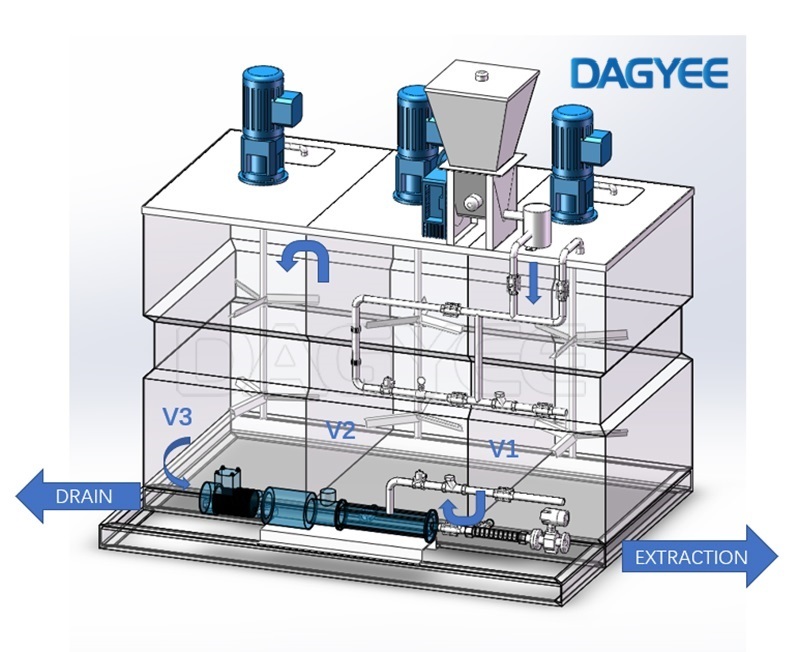
Polymer preparation unit model
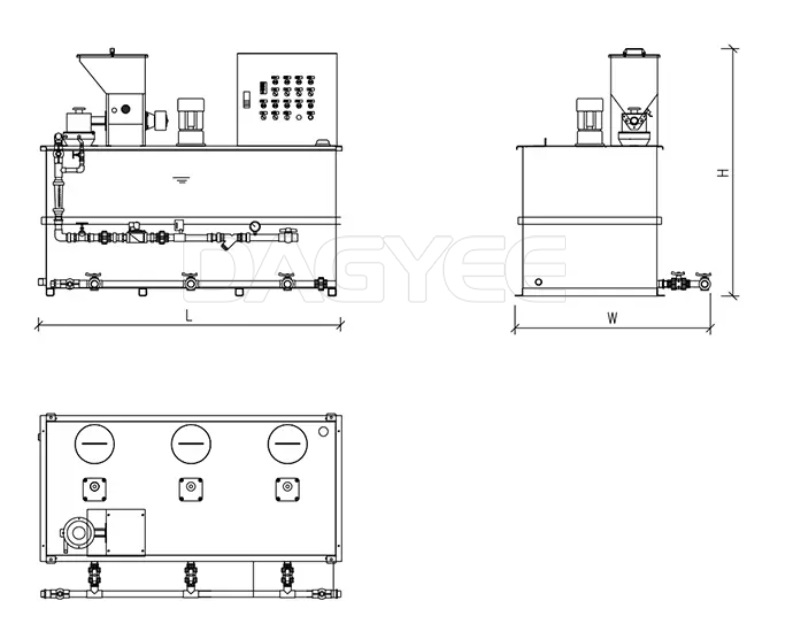
| Model | Capacity L/H | Volume L | Timing H | Dimensions MM | Weight KG | Power KW |
|---|---|---|---|---|---|---|
| DT300 | 300 | 450 | 0.6-1 | 1500*1000*500 | 300 | 1.8 |
| DT500 | 500 | 750 | 0.6-1 | 1500*1000*650 | 420 | 1.8 |
| DT1000 | 1000 | 1500 | 0.6-1 | 2000*1000*900 | 500 | 2.8 |
| DT1500 | 1500 | 2250 | 0.6-1 | 2000*1200*900 | 620 | 3 |
| DT2000 | 2000 | 3000 | 0.6-1 | 2500*1200*1000 | 800 | 3.9 |
| DT3000 | 3000 | 4500 | 0.6-1 | 3000*1500*1000 | 950 | 5.3 |
| DT5000 | 5000 | 7500 | 0.6-1 | 5000*1500*1000 | 1250 | 7 |
| DT10000 | 10000 | 15000 | 0.6-1 | 4800*1800*2000 | 3600 |
7 |
Polymer preparation unit advantage
Lower Maintenance & Downtime: No moving parts in the mixing process along with the durable DFXa peristaltic or gamma/ XL diaphragm pump means fewer breakdowns and less frequent repairs.
More Efficient Polymer Usage: Venturi mixing & static mixer ensure optimal polymer activation, reducing chemical waste. Consistent dosing improves treatment efficiency, lowering operating costs.
Ease of Operation & Automation: Multiple control modes (Manual, Analog, Contact, Auxiliary) allow simple or advanced operation. 4-20 mA and alarm outputs enable remote monitoring and integration with SCADA/PLC systems.
Compact & Easy Installation: Lightweight and space-saving design allows easy integration into existing site locations without major modifications. Simple piping and electrical connections make setup fast and easy.
Reliable Performance: Handles various polymer types (emulsion, solution, low molecular weight). Works across a range of flow rates (60–600 GPH) and pressures (up to 100 PSIG).
Reduced Energy Consumption: Low-energy mixing minimizes power usage, leading to cost savings.
Safe & Operator-Friendly: No high-speed mechanical parts, reducing risk of injury. Designed for low-maintenance operation, allowing operators to focus on other tasks.
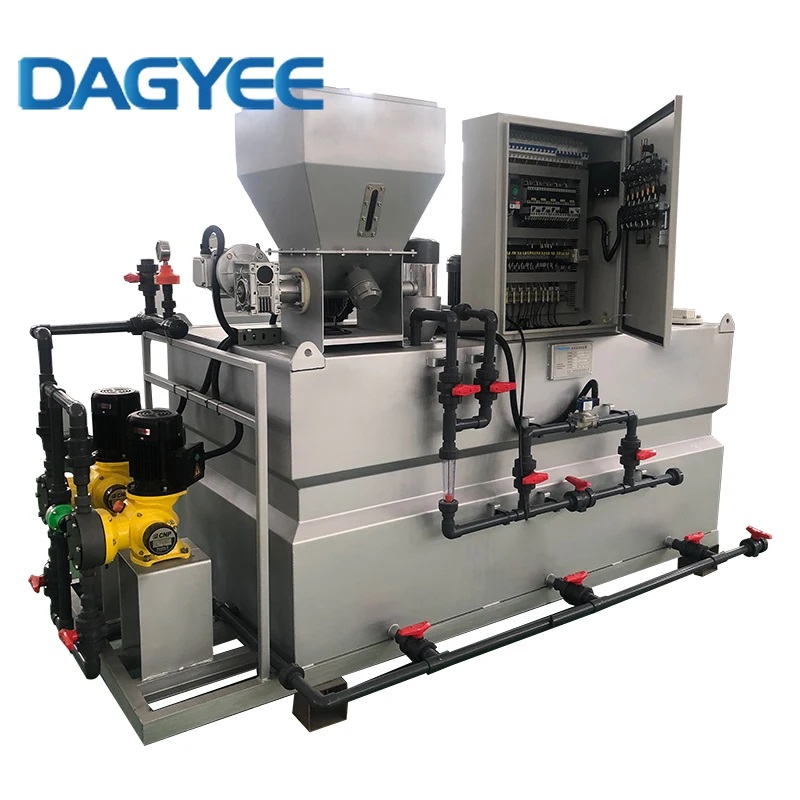
Polymer preparation unit feature
Consistent high-quality flocculant solution
The raw material dosing is linked to water flow to ensure that the final flocculant concentration remains constant.
Prevents unnecessary over-dosing
Dosing is linked to incoming waterflow.
Optimal design
Separate sections for make-up, maturation and solution storage.
Clot prevention
The end of the dosing auger is heated to prevent flocculant granulate from absorbing moisture from the air.
Convenient
The make-up parameters can be set in the control panel.
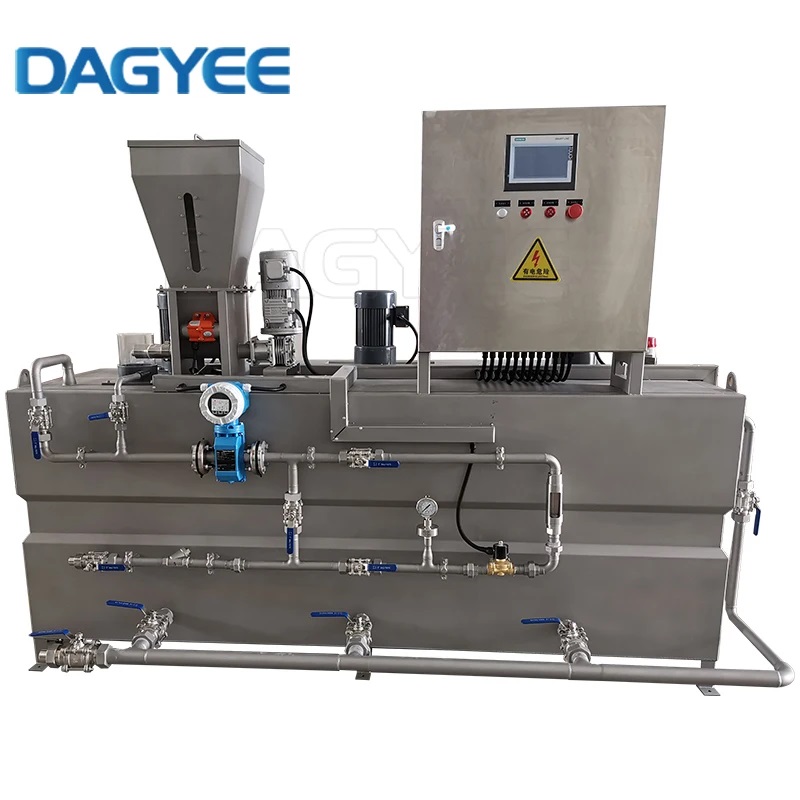
Polymer preparation unit application
The use of polymers or floculants considerably improves the separation process between the solid/liquid phases for applications in:
Water treatment: Flocculation of industrial and drinking water
Wastewater treatment: Physico-chemical treatment
Sludge treatment: Centrifuges, filter press to improve dewatering
Paper industry: retention agent
Various other industries: chemical, petrochemical, quarry, etc.
These flocculants, in powder and emulsion form, are very high molecular weight polymers. To ensure efficiency of the separation process, the preparation of the dilute polymer solution (2 to 5 g/l) is critical. The POLYPACK® unit employs rigourous technical standards and features which ensure optimum and consistent flocculant preparation.
Contact us for customized polymer preparation unit solutions
If you are interested in learning more about our polymer preparation unit or need a customized solution for your water treatment project, please contact our sales team. Our experts will work with you to assess your requirements and recommend the perfect equipment to meet your goals.

Name: Ashely Li
Mobile:+8613961861780
Tel:+8613961861780
Whatsapp:8613961861780
Email:info@dagyee.com
Add:Room 302, Building 11-4, Hongyi Road, Xinan Town, Xinwu District, jiangsu Province, China